
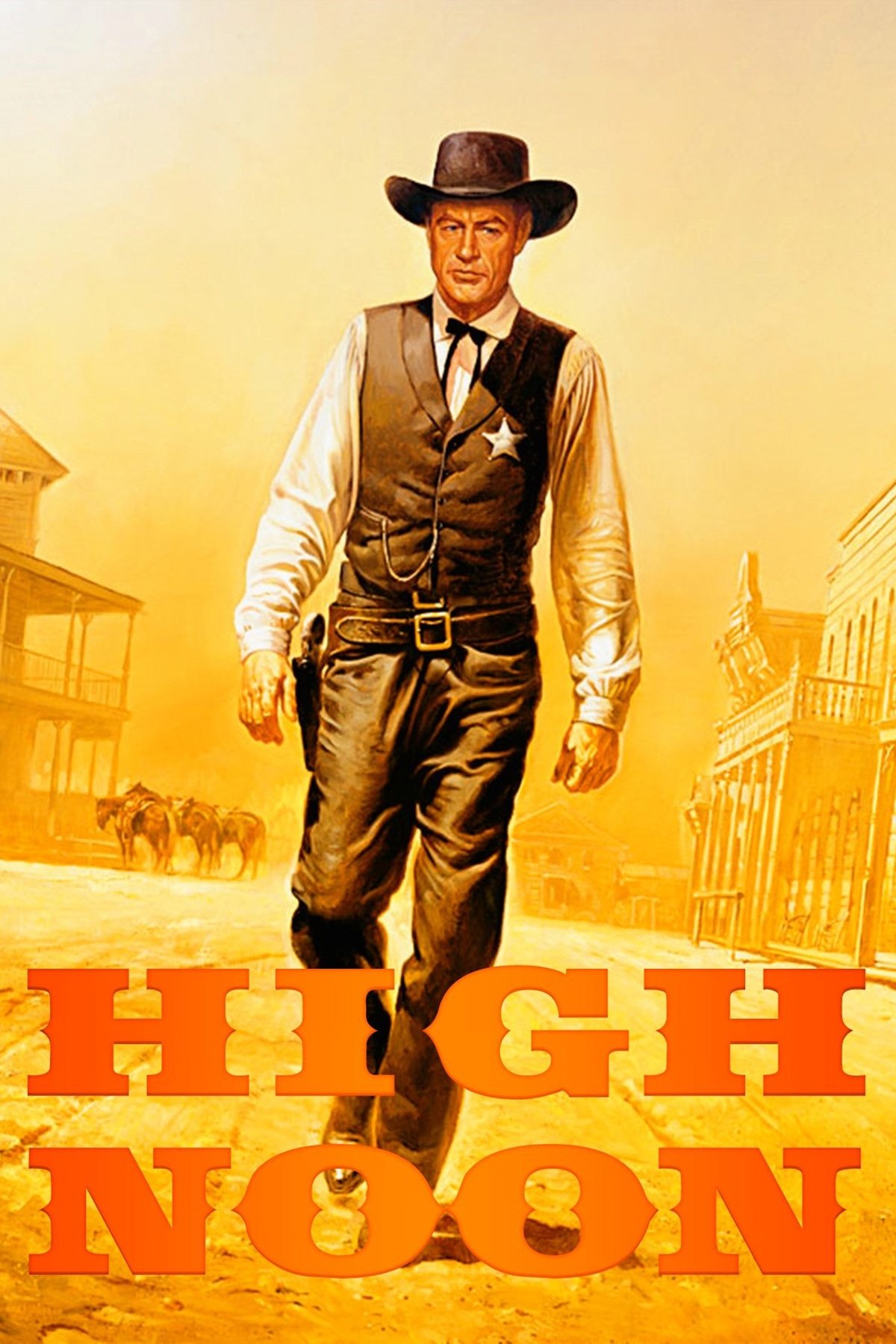
The Historical Landscape
Whenever I revisit High Noon, I’m struck by the ghostly presence of its era—the way its stark imagery seems to flicker in cadence with the headlines and hushed whispers of 1952 America. I can sense the country standing at a crossroads: battered by the ravages of World War II, leery of enemies both foreign and domestic, and navigating a corridor between optimism and dread. This was a time when American certitudes seemed rigid yet precariously balanced—where the glow of the postwar boom illuminated thriving main streets but also cast long shadows of suspicion. The Korean War raged abroad, but at home, another battle simmered: the struggle to define loyalty, morality, and courage on American soil.
I see in the faded newsprint and radio chatter of the early 1950s undeniable tension. The Cold War was not only a geopolitical contest, but a cultural cauldron in which paranoia often boiled over. The fear of Communist infiltration, fueled by vivid headlines and red-baiters with powerful microphones, transformed neighborhoods and industries into theaters of anxiety. The House Un-American Activities Committee summoned Hollywood’s brightest minds to justify themselves, and blacklists severed careers with a whisper or a rumor. In the midst of economic prosperity and technological promise, the air was thick with the sense that one’s allegiance could be challenged at any moment.
Sifting through the texture of those years, I can’t help but think of communities drawing tighter, emphasis hardening on the individual’s responsibility against amorphous threats. There was a reverence for rugged self-reliance, yet lurking beneath this idealism was the knowledge that solidarity could be painfully conditional. As soldiers returned to towns that felt unchanged but were subtly different, and as televisions clicked on in living rooms scarred by trauma, Americans seemed to be renegotiating their social contracts—quietly and uneasily. When High Noon unfurled in theaters, I sense, it met a public deeply attuned to the challenges of standing alone and the cost of moral decisions in unstable times.
Cultural and Political Undercurrents
Delving into the subtext swirling around High Noon’s debut, I’m always compelled by how intimately the film is braided into the cultural anxieties and ideological currents of its year. The specter of McCarthyism cast a pall, both over Hollywood and the broader imagination. There was no escaping the knowledge that to speak one’s mind, or simply remain silent at the wrong time, could mark you as a target. As I watch the film, I can’t keep separate from my mind the reality that director Fred Zinnemann and screenwriter Carl Foreman were both operating beneath the pointed threat of the blacklist. For Foreman especially, those pressures tangibly shaped the story—a narrative forged between reel and real life.
If I put myself in the mindset of a 1952 filmmaker or moviegoer, the stakes feel heavy. HUAC hearings were not background noise; they were upending livelihoods and friendships, turning trusted colleagues into informants or outcasts. The insistence on public displays of fidelity to “American values” ran concurrent with an often unspoken understanding: fail to conform, and you’re on your own. That climate of coercion and ambiguity soaked into the creative process, making every scene, every line of dialogue, feel laden with possible real-world consequences.
I sense, too, a crossroads in the portrayal of heroism. The 1950s, in many ways, demanded an updated mythos to replace wartime bravado. It was no longer enough to fight a clear, external enemy; now, the notion of the enemy had grown amorphous, internal—sometimes even cloaked in the familiar face of a neighbor. What does it mean to do the right thing when the crowd might abandon you, or when the lines between loyalty and complicity blur? I feel High Noon asking me—and, by extension, its first audiences—to consider courage through the lens of American conformity, and above all, isolation. The idea that a principled stand could mean standing utterly alone was not just a dramatic conceit; it was a lived fear for many, including those who made the film.
Beneath the Western trappings, I find the movie wrestling with the price of dissent. As society pressed for outward demonstrations of patriotism, I see in Zinnemann’s framing and Foreman’s script an uneasy defiance: an insistence that justice sometimes asks for a higher loyalty than the crowd. The recurrent clocks ticking down, as the town’s midday approaches, hold dual symbolic weight for me—not only the countdown toward violence, but the drumbeat of adjudication facing so many Americans in committee rooms and studio lots. Whether the characters on screen recognized it or not, the pressure of the unspoken made each minute count twice as much.
The Film as a Reflection of Its Time
When I reflect on my experiences watching High Noon, I can’t help but be moved by the film’s raw confrontation with the loneliness of principle. What resonates most isn’t the inevitability of violence, or even the particulars of the frontier setting, but rather the moral agony of Gary Cooper’s Will Kane as he finds his neighbors, friends, and even his wife unwilling—or unable—to join him. In Kane’s solitary walk through eerily empty streets, I am reminded of the readiness with which communities, frightened by social or political repercussions, often recoil from those who resist consensus.
I interpret the film’s emphasis on silence and self-preservation as a direct reflection of what was happening off-screen in the early 1950s. My sense is that this isn’t a Western about gunslingers and outlaws; it’s a fable about what happens when fear, shame, or fatigue keep good people from aiding those who take moral risks. The townsfolk’s endless rationalizations—they’re too old, busy, scared, or tired—mirror the real-world calculations of many during the blacklist: each weighs conscience against reputation and decides, often, to default to inaction. By giving us scene after scene of doors closing and eyes averted, the film lays bare the emotional and existential cost of civic disengagement.
The clock’s relentless progression toward noon feels, in my view, like a metaphor for historical crisis points, when time to act meaningfully is running out. The ticking amplifies the tension not only for the characters, but for anyone living through an era when delay or passivity could have devastating consequences. I see in those ticks the urgency that defined so many lives in 1952—the sense that history would not wait, and that when it delivered judgment, it would do so with merciless clarity.
Where many Westerns of the period present a universe in which good and evil are easily distinguished, I find High Noon blurring the lines. There is no cavalry charging in, no communal catharsis; justice, such as it is, is a lonely, battered thing. This, to me, is a mirror not of the mythic past but of the present in which the film was made—a present shot through with suspicion, ambiguity, and the exhaustion of repeated ethical trial. Even Amy Kane’s pacifism and her eventual, desperate intervention reflect the era’s divided conscience about violence, sacrifice, and complicity. The film doesn’t offer easy comfort. Instead, it lingers in the gray, echoing the emotionally fraught and precarious morality of its time.
For me, the film is profoundly autobiographical—not only for the creators, but for its era. Carl Foreman wrote a screenplay shadowed by his own blacklisting, and I feel every sting of isolation and betrayal in Kane’s predicament. The film’s ending, with Kane tossing away his badge into the dust, reads as an indictment of a community that failed to live up to its own ideals—a sentiment I see mirrored in the disillusionment many Americans felt about institutions supposed to protect the innocent. If High Noon has achieved iconic status, it’s because, more than most films of its time, it engaged with America’s soul-searching not by offering resolution, but by faithfully dramatizing fear, risk, and the moral cost of silence.
Changing Perceptions Over Time
With every decade that passes, I notice the prism through which audiences view High Noon fractures in new ways. When I talk with cinephiles of older generations, I hear how, for them, the film embodied a parable of courage under fire. The memory of 1950s blacklists might have faded for some, but the story of an honest person beset by cowardice and expediency in others rarely loses its sting. For those closest to the era, I believe the echoes of McCarthyism and the pitfalls of collective conformity remain unmistakable—a cautionary tale hidden in cowboy myth.
I’ve observed that for younger viewers and critics, the specificity of that context sometimes recedes, giving way instead to a more universal interpretation. Today, when I screen the film or revisit critical writing, I see High Noon reframed in light of current anxieties: political polarization, whistleblower dramas, or the challenges facing those who confront institutional rot. The motif of moral clarity versus communal evasion has remained perennially relevant, even as the sources of animosity and the costs of dissent have evolved. I’m intrigued by how often the film is now invoked in debates about leadership, duty, and the burdens of integrity—its metaphorical resonance untethered from black-and-white Cold War binaries, but no less urgent.
Interestingly, I’ve also seen how the film’s ambiguities, once perceived as subversive, have practically become its hallmark. Earlier audiences, particularly in the American heartland, sometimes found its pessimism uncomfortable; the absence of a redemptive community spirit seemed out of step with Western norms. But as society has grown more skeptical about the dependability of heroes or the righteousness of the collective, I find critics and audiences more willing to embrace the film’s bleakness as honest rather than cynical. The notion that a principled stand can make one a pariah, rather than a celebrated leader, feels painfully resonant, especially in eras of social media pile-ons or institutional inertia.
I’m also fascinated by those, such as John Wayne and Howard Hawks, who famously bristled at the film’s thesis—critiquing it as un-American or defeatist. Their resistance was, in itself, a telling artifact of the era: a battle over who gets to define American values and heroism. Over time, as shifting norms have bred a broader appetite for cinematic realism and disillusionment, I sense that the film’s lonely sheriff now reads less as an outlier and more as a forerunner of the anti-hero archetype. No longer is the tale of communal abandonment merely controversial; it’s an acknowledged thread in the fabric of American storytelling—inviting new generations to interrogate the mythologies we inherit and remake.
Historical Takeaway
For me, High Noon is not only a riveting fable of a man facing insurmountable odds; it is a time capsule, thick with the residue of its moment. I come away from each viewing with a greater appreciation for how the film technologized its fears, hopes, and ethical quandaries into cinematic language. The dread of abandonment, the slow strangulation by social conformity, the terrible beauty of standing alone—these are not only the themes of a Western, but the truths of 1952 America in transition.
By locking its gaze on isolation, moral urgency, and the consequences of silence, the film exposes the fault lines running beneath mid-century American society. I believe that more than gunsmoke or horse chases, the real action lies in the townspeople’s equivocations and the sheriff’s reckoning—a story that is as much about contemporary debates as it is about the Old West. It’s impossible for me to divorce the film’s tension from the blacklists, the televised hearings, or the silent betrayals of its time. To study High Noon is to witness a culture struggling with the limits of loyalty, and the burdens of choosing who to stand with when the stakes are sky-high.
Looking back, I feel that the film’s greatest legacy is its refusal to flatter its audience or offer false solace. It honors those who stand up, even (and especially) when others look away. And so, when I sit with the memory of its solitary hero and unblinking moral calculus, I see not only the anxieties of 1952, but the eternal American question about the costs of integrity and the loneliness of real courage.
To see how these real-world elements shaped the film’s impact, you may also explore its reception and legacy.
🎬 Check out today's best-selling movies on Amazon!
View Deals on Amazon