
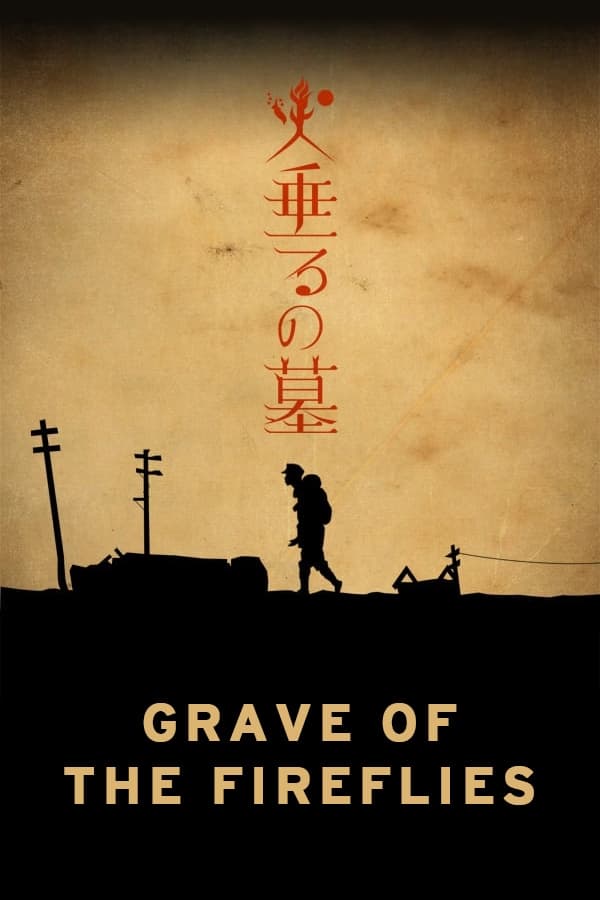
The Historical Era of the Film
When I reflect on the backdrop that gave rise to Grave of the Fireflies (1988), my thoughts are immediately pulled back to the sheer devastation Japan endured during and after World War II. It’s almost impossible to overstate how deeply the war’s destructive force imprinted itself on every aspect of Japanese life. I see 1945 not simply as a year on a calendar, but as a living memory that shaped daily experience for millions. Japan, battered by almost a decade of militaristic expansion and the catastrophic consequences that followed, found itself both physically and morally shattered. The political climate was tumultuous, having gone from loyal imperial rule to complete collapse in the wake of defeat. The nation’s infrastructure—its cities, industries, homes—lay in rubble after relentless aerial bombings and the horrors brought by the atomic bombs dropped on Hiroshima and Nagasaki. The term total war takes on a deeply personal meaning when I consider testimonies from civilians who, like the film’s protagonists, struggled with hunger, loss, and the fragility of their families.
The economic consequences were equally profound. Japan’s economy had been skewed entirely towards military needs throughout the war, and when surrender finally came, starvation and poverty threatened almost every household. Rationing became a grim norm. Children, women, and the elderly—all noncombatants—felt the brunt of these privations. There’s no escaping the sense of isolation: families torn apart, communities left broken, traditional support structures dismantled. I often think about how, in such a setting, notions of trust, social obligation, and basic kindness were tested to their limits. Anyone who’s walked the neighborhoods of Kobe—where the film is set—would know even today the scars and reconstructed streets where entire districts once burned in the air raids of spring 1945. The immediate aftermath created a kind of social vacuum, where survival was paramount and suffering became a quiet, abiding presence for many ordinary Japanese.
Amid all this, the emergence of the Allied Occupation marked a further twist. Occupying authorities imposed strict controls on media, culture, and political life, intent on reshaping Japanese society. The military’s collapse and the reimagining of Japan as a pacifist state strongly influenced public sentiment, adding layers of ambivalence, guilt, and sometimes silent resentment to the collective consciousness. These broader shifts echo throughout the film’s recreation of daily hardship and social breakdown, urging viewers—myself included—to consider the deeply personal costs of such immense historical transitions.
Social and Cultural Climate
Turning from the raw facts of destruction to the texture of Japanese society at the time, I find the tensions of the era incredibly important to understanding the film’s narrative. American occupation brought not only immense change but cultural upheaval as Western forms and values entered into mainstream Japanese life. The role of community—an essential aspect of traditional Japanese culture—was put under strain by sheer necessity. Individual survival started to displace group cohesion, and I sense a slow but perceptible crumbling of the extended support networks that once defined everyday living. Scenes of alienation and indifference in Grave of the Fireflies feel to me less like dramatic exaggerations and more like documentary reportage, born of a period when neighbors, overburdened by their own need, often turned away from one another.
There’s another side to this social context that I find especially poignant: the psychological landscape of postwar Japan. In the 1940s, the trauma of defeat, coupled with the shame of imperial overreach, created an atmosphere heavy with silence about the past. Japanese people had to navigate enormous changes imposed from the outside as they rebuilt their inner sense of identity. I see echoes of this psychological burden in how the children in the film are depicted wandering, searching for meaning and support amid landscapes of destruction. The need to contend with national trauma left a lasting impression on the generation depicted onscreen. People found themselves caught between inherited ideas of sacrifice and the practical reality of immediate, often lonely, survival.
Importantly, children—those least responsible—became the most vulnerable. This was an era when the family structure, though revered, was fragile. I think about how so many families lost breadwinners to war, and children suddenly had to reckon with orphanhood, starvation, and, in some cases, outright neglect by their remaining relatives or society at large. What persists in my mind is the way small acts of compassion or indifference could decide matters of life or death. Social attitudes, shaped by exhaustion, grief, and a pervasive need to move forward, gave rise to both moments of resilience and heartbreaking abandonment—contrasts that are embodied in the social climate running throughout the film.
The following historical factors influenced Japanese society at the time:
- Massive civilian displacement and destruction from firebombing raids
- Acute food shortages and widespread malnutrition
- Breakdown of community bonds under extreme survival pressures
- Psychological trauma and conflicted attitudes toward Japan’s role in the war
How the Era Influenced the Film
Whenever I revisit Grave of the Fireflies, I’m struck by how its narrative choices draw so powerfully from the lived experiences of wartime and postwar Japan. The whole structure of the story—focusing so intimately on two siblings—is, in my view, inseparable from the historical context in which author Akiyuki Nosaka grew up. Nosaka’s own loss and childhood trauma during the wartime bombings of Kobe imbue the film with an authenticity that brings history uncomfortably close. Every frame seems to me a product not just of artistic intent, but of direct response to the reality of total war and its personal costs.
Accuracy in depicting tangible details—rationing, air raid drills, the emptiness of burned-out neighborhoods—demonstrates a commitment on the part of director Isao Takahata and Studio Ghibli to confront the visceral, everyday struggle of civilians. From a production standpoint, I noticed how the animators, historians in their own right, painstakingly recreated street maps, food items, and clothing typical of 1945. The result is a film that feels like a cultural document, reflecting both the pride and the vulnerabilities of the period. Although the industry often gravitated toward either escapist entertainment or patriotic narratives, Takahata’s choice to tell a story about children caught in the machinery of war bucked the trend, offering instead a rarely voiced perspective.
I’m reminded that the film’s portrayal of social breakdown—aunt’s indifference, strangers unwilling to offer food, government bureaucracy—speaks directly to the weakening of old assumptions about mutual aid and family. Whereas earlier Japanese films might have idealized giri (social obligation), this work exposes how overwhelming destruction forced people into moral crisis. The quiet, dignified suffering captured in the animation feels reflective of Japan’s own postwar silence about the war’s costs. The film stands as an artistic reckoning with the question of who bears responsibility in times of collective catastrophe, a question born of the era’s moral ambiguities and cultural soul-searching.
Audience and Critical Response at the Time
When Grave of the Fireflies first premiered, I recall that its reception in Japan was particularly complex. The film didn’t generate widespread commercial enthusiasm at first, which is something I attribute to its close proximity to personal and national pain. Many viewers in 1988 belonged to the very generation that had survived World War II themselves, or grew up in its immediate shadow. Watching such an unflinching depiction of civilian suffering caused many, as I’ve read in firsthand accounts, to reflect on losses they preferred not to revisit. In the broader context of Japanese cinema, where war stories often focused on heroism or wide-scale tragedy, this film’s emphasis on personal, small-scale anguish stood apart. Some critics, confronting their own memories of deprivation and mortality, praised the film’s honesty and restraint. Others felt discomfort, even resentment, at being asked to relive a national wound that had barely begun to scab over.
Internationally, the movie occupied a different space altogether. Viewers, particularly those less intimately connected to Japanese wartime experience, tended to approach it as an artistic revelation. I’ve noticed that non-Japanese critics frequently lauded the film for its mature use of animation—demonstrating, perhaps for the first time to many, that the medium could treat such weighty historical content. As I see it, this outsider’s perspective allowed the film to be received more easily as a universal statement about suffering, innocence, and moral complicity, rather than a painful national autopsy. In both Japan and abroad, though, I observed a gradual hardening of opinion as successive generations encountered the film: some hailed it as an anti-war masterpiece, while others debated the risks of sentimentalizing victimhood or revisiting old wounds. The film thus sparked, and still sparks, profound conversations about war, responsibility, and collective memory, conversations that inevitably circle back to the film’s historical context.
After understanding the factual background, you may want to see how this story was received as a film.
Why Historical Context Matters Today
Whenever I suggest Grave of the Fireflies to younger viewers or new students of film history, I insist that understanding its specific historical context is essential to any genuine appreciation. If you approach the film without knowing about the famine, the firebombing, and the collapse of established order, much of the weight and sorrow the film communicates can be lost or misunderstood. For me, the film is less about spectacle or even narrative tension, and more about bearing witness to the lived realities of a lost Japan—the one that flickered and almost vanished in 1945. By situating the story in such a precise historical moment, the filmmakers ask us not simply to empathize with suffering, but to recognize the collective and individual choices, the utter exhaustion, and the small resistances that defined an era often left behind in national mythology.
This historical consciousness is not just an academic exercise. I see its relevance every time contemporary events threaten to dehumanize or erase those caught in conflict, whether through military aggression, refugee crises, or political upheaval. Grave of the Fireflies stands as a pointed reminder, to me at least, of how civilian experience—the granular details of hunger, loss, and hope—can become submerged in the broad sweep of history unless actively remembered and re-interpreted. The work’s refusal to simplify or glorify offers a critical lens on the dangers of nostalgia, and challenges present-day viewers to confront the recurring cycles of trauma in any society recovering from war.
Equally, the historical setting invites reflection on the evolution of animation and popular culture in Japan. I find that the film’s choice to use animation for such mature material paved the way for future works that challenged boundaries, and it continues to inspire debates about historical responsibility and memory. As Japan undergoes generational change and as memories of World War II recede, films like this one serve as cultural touchstones, drawing out the complicated, often ambivalent feelings that continue to shape Japanese national identity. Recognizing why and how Grave of the Fireflies was made helps me, and I hope others, to read it not just as a story of two children, but as a living, breathing account—a direct descendent of one of the twentieth century’s most wrenching eras.
🎬 Check out today's best-selling movies on Amazon!
View Deals on Amazon