
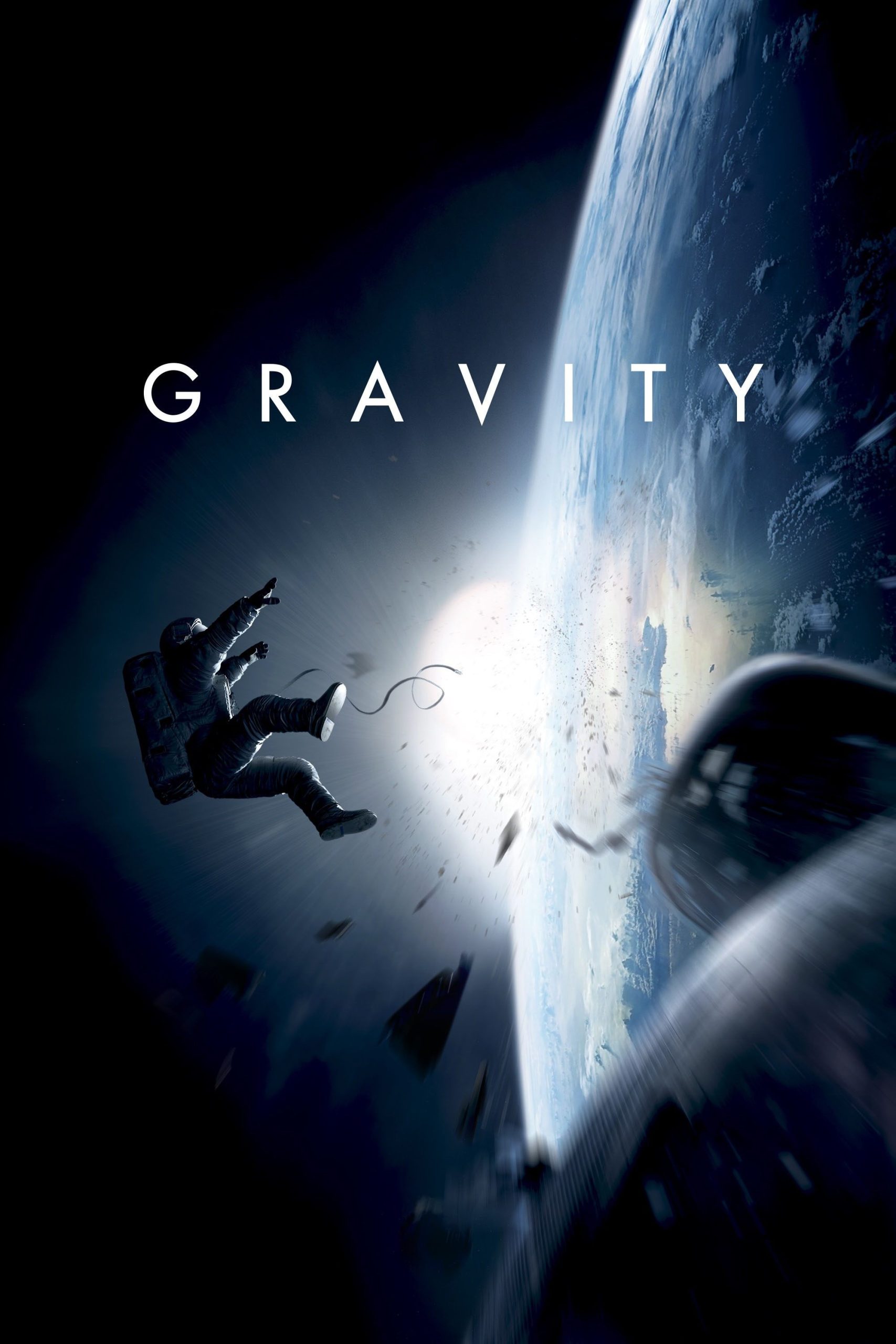
The Historical Landscape
When I recall sitting in the darkened theater, enveloped by the spellbinding visuals of Gravity in 2013, it’s impossible not to associate my memories with a particular moment in cultural and technological history. The early 2010s were a fascinating crossroads: I could feel the pervasive presence of digital technology everywhere—smartphones were no longer new, but inescapable, social media had cemented its role in shaping global conversations, and the world seemed poised on the edge of both incredible connection and profound alienation. By 2013, the aftershocks of the Great Recession still lingered in everyday life; economies were slowly recovering, but a sense of uncertainty, vulnerability, and reevaluation ran underneath much of what I encountered—in headlines, in politics, even in art.
Space exploration, long a source of collective imagination and Cold War bravado, was in the midst of redefinition. I remember the excitement surrounding NASA’s Mars rover landings and private ventures like SpaceX launching test rockets, as well as the wistfulness that accompanied the end of the Space Shuttle Program in 2011. There was a quiet, sometimes mournful acknowledgment that outer space was no longer solely the domain of heroic, government-backed astronauts but a new economic frontier open to private ambition and international competition. The notion of space had shifted from an arena for superpower rivalry to a symbol of both hope and the isolation that can come with human progress. From my vantage, this was a world reveling in technological prowess and yet grappling with the existential weight of all that progress might mean.
This ambivalence—simultaneous awe at human achievement and a growing awareness of our fragility—ran through all corners of popular culture. Films were increasingly marked by a fascination with spectacle made possible through CGI, and Gravity emerged right at the limit of what cinema could visually accomplish. Audiences and critics alike marveled at its technical feats, but I felt there was something deeper at play—a hunger for stories that could address vulnerability in a world of overwhelming connection and complexity. That’s what made Gravity feel so timely: as I watched Sandra Bullock’s Dr. Ryan Stone spin through the infinite void, I recognized the fear and hope of an era unsure of its footing, searching for meaning in the midst of transformation.
Cultural and Political Undercurrents
While watching Gravity, I found myself reflecting on the subtle currents beneath its dazzling exterior. For me, the film’s stark, minimalist dialogue and relentless focus on survival struck a chord with an era marked not by utopian dreams but by resilience in the face of adversity. The aftermath of the 2008 global financial crisis had forced many—myself included—to reevaluate our expectations, to grapple honestly with uncertainty, and to embrace the necessity of perseverance. The optimistic space race narratives of the past had given way to stories of survival, adaptation, and starting anew. In this way, Gravity resonated as a metaphor for the world outside the theater: life as an often solitary struggle against seemingly insurmountable odds, where victory itself is measured in moments of endurance and grace under pressure.
I also became increasingly aware of the film’s dialogue with technological anxiety. By 2013, the world around me pulsed with the rhythms of constant communication—smart phones, social platforms, satellite feeds—but Gravity explores what happens when all these lines of contact are cut. The drifting, unmoored protagonist is hauntingly alone, her voice disappearing into the void. I sensed an undercurrent of fear about what it meant to be truly isolated, even as our hyperconnected reality suggested that such isolation was almost unthinkable. Yet, despite all that technology (so artfully realized through CGI), the essential drama—life, death, and the will to continue—remains profoundly human. For me, this felt like the paradox of the age: a yearning for genuine connection against a backdrop of technological wonder that often only highlighted our existential isolation.
On the political front, I noticed how Gravity sidesteps direct engagement with the usual nationalist narratives of space adventure. The orbital debris disaster is triggered by a Russian missile, yes, but the film is careful to depict the aftermath as a global predicament, with Russian, American, and Chinese technology all part of the arena for survival. In a decade marked by the softening of clear national rivalries—at least compared to the Space Race era—but an emerging anxiety about global interdependence, this approach felt of its moment. I felt it tapped into a contemporary sense of shared vulnerability: when catastrophe strikes in space, as on Earth, borders seem to matter little, and survival requires transcending traditional divides. For me, Gravity carried a quiet but radical claim about the oneness of human fate, a message shaped by the multicultural, interconnected reality of its time.
The Film as a Reflection of Its Time
When I revisit Gravity as a cinematic historian, what stands out to me most is how the film became both a snapshot and a mirror for the anxieties and aspirations of the early 2010s. The choice to center the narrative on Dr. Stone, a female protagonist navigating crisis, revealed a subtle shift in the kinds of heroism celebrated in popular media. I remember how striking it was to see a woman defined not through tropes but through resilience, fear, and the deeply personal process of rebirth. This reflected broader changes outside the theater—conversations about women’s roles in the workplace, in leadership, and in stories themselves were gaining cultural traction. The film’s commitment to a character-focused journey, rather than bombastic patriotism or conventional heroics, felt new and deeply relevant to the era I lived through.
Visually and technically, Gravity was nothing less than a statement about the possibilities of filmmaking at a time when the line between reality and simulation had become beautifully, frighteningly blurred. The immersive 3D, meticulously crafted long takes, and weightless choreography spoke to a world in love with its own technological mastery. Yet, as I watched Dr. Stone hurtle through space, the technological spectacle only served to reinforce the vulnerability and smallness of the individual. It seemed to me that Cuaron was saying: look how far we’ve come, how much we can do—and yet, ultimately, here is a human alone with her breath and her will to survive. For all of the era’s hype about innovation and digital triumph, the film quietly insisted on the primacy of basic, elemental endurance.
I also saw in Gravity a philosophical response to the existential crises of the day. The specter of climate change, geopolitical instability, and economic precarity haunted the world I lived in. The film distilled these challenges into a visceral, stripped-down struggle for regeneration—Stone’s fight to live becomes a metaphor for starting over, refusing to give in to despair, finding meaning in moments of darkness. I think this was the true resonance of the movie: at a time when the future felt so unknowable, when loss and change seemed inescapable, here was a narrative about hope in the void. Walking out of the theater, I felt both a catharsis and a renewed sense of purpose—something I rarely felt from the glossier, more escapist spectacles of the time.
Even the minimalist soundscape—where silence becomes overwhelming, broken only by the intimate sounds of breath, heartbeat, and radio static—captured for me the existential tenor of the decade. Noise, much like the digital saturation of our lives, is stripped away, and what survives is the core experience of consciousness itself. To me, the film’s chosen aesthetic reflected a collective desire to find quiet, authenticity, and clarity; it was a longing for gravity in both a literal and metaphorical sense. In an age often characterized by dislocation and overstimulation, Gravity offered, paradoxically, a kind of stillness and an opportunity for meditative reflection.
Changing Perceptions Over Time
Over the years, my perception of Gravity has shifted, deepened, and taken on new shades of meaning. The initial awe I felt for its technical bravura—the long, breathless takes, the simulated physics, the balletic movement of actors through digital space—has faded somewhat as the novelty of such digital feats has receded in the broader cinematic landscape. Advances in CGI now appear almost routine in blockbuster fare, and films are routinely marketed on the basis of hyperreal visual effects. My lens now rests more on the human center of the story and less on the spectacle that first drew me in.
Retrospectively, I also reconsider the lens of the era through which I first watched Gravity. It was tempting back then to see it as a wholly contemporary artifact, shaped by and responding to the disruption and uncertainty of the 2010s. Yet, with the benefit of distance, I see how the film’s themes are cyclical—cycles of crisis and rebirth, the eternal dance of progress and vulnerability. In turbulent times since its release, from global political upheavals to the COVID-19 pandemic, I have come back to the film and found it newly resonant. Its insistence on persistence, on finding ground after a cosmic free-fall, feels ever more universal as the world continues to navigate crises both personal and collective.
I’ve noticed, too, a subtle shift in how audiences talk about Gravity’s place among space films. Where it once was celebrated as a technological leap, it is now more frequently cited as an example of cinema’s power to create intimacy and subjectivity, even on a cosmic scale. Its use of the long take and first-person perspective, which initially seemed futuristic, now reads as a bridge to more immersive and psychologically nuanced filmmaking trends. For me, this points to the film’s lasting influence on how we tell stories, not just its ability to dazzle with visual trickery.
There’s also a growing willingness to interrogate Gravity’s silences—what is omitted or understated. Critics and viewers increasingly discuss the film’s avoidance of overt political commentary, its use of global technology without deep engagement with the consequences of privatizing space, and the ways it frames rebirth as a solitary journey, absent robust community or social context. Initially hailed for its streamlined, universal focus, it is now, in some circles, seen as indicative of an era fascinated by individual survival rather than collective solutions. My reading of the film has accordingly become more nuanced: I now see not only a paean to human endurance, but also a reflection of the era’s complicated relationship to the very idea of togetherness.
Conversely, the emotional clarity and simplicity of Gravity have, in an age of ever more cynical or fragmented storytelling, grown more valuable to me. Where once I saw the stripped-down narrative as a deficit, now I appreciate it as a testament to the power of elemental storytelling. In moments when cultural discourse feels overloaded or jaded, I revisit Gravity’s stark imagery—the drifting astronaut, the blue planet rising through a viewport—and find a kind of sincerity that feels radical in today’s often ironic media landscape.
Historical Takeaway
If I were to distill a single lesson from Gravity about the era it emerged from, it would be this: the early 2010s were a time of unprecedented technological achievement shadowed by profound uncertainty. The film taught me that these two realities—triumph and anxiety—can coexist, intertwine, and even generate powerful art. In focusing so relentlessly on the isolation, terror, and ultimate rebirth of a single astronaut, Gravity captured the persistent ache of its time: the search for meaning after disaster, the slow climb back to solid ground after a season of free-fall.
I came away from the film with a deeper awareness of the shifting contours of heroism in the contemporary imagination. It wasn’t the white-knuckle bravado of the space race era or the escapism of the speculative future, but an unflashy, determination shaped by loss, resilience, and the hard-won grace of survival. The 2010s may have championed technological frontiers, but they also demanded a new authenticity—a willingness to face the void and, for a time, to simply endure.
For me, Gravity is less a story about space than a meditation on the forces that shaped the decade: relentless change, the fragility of connection, and the stubborn, sometimes lonely insistence that life is worth fighting for. The film’s magic lies in its ability to condense these feelings into elemental images and relentless tension—a story as old as myth, refracted through the lens of twenty-first century anxieties and hopes. Each revisit brings fresh relevance, fresh questions. What does survival mean today? How do we find our footing in a world that can, at any moment, spin wildly out of control?
As I look back, Gravity seems a time capsule of an unsettled, searching era—one as exhilarating as it was uncertain. Its impact continues, echoing the decade’s paradoxes in its embrace of technology, its portrait of isolation, and its belief, however fragile, in the possibility of new beginnings.
To see how these real-world elements shaped the film’s impact, you may also explore its reception and legacy.
🎬 Check out today's best-selling movies on Amazon!
View Deals on Amazon