
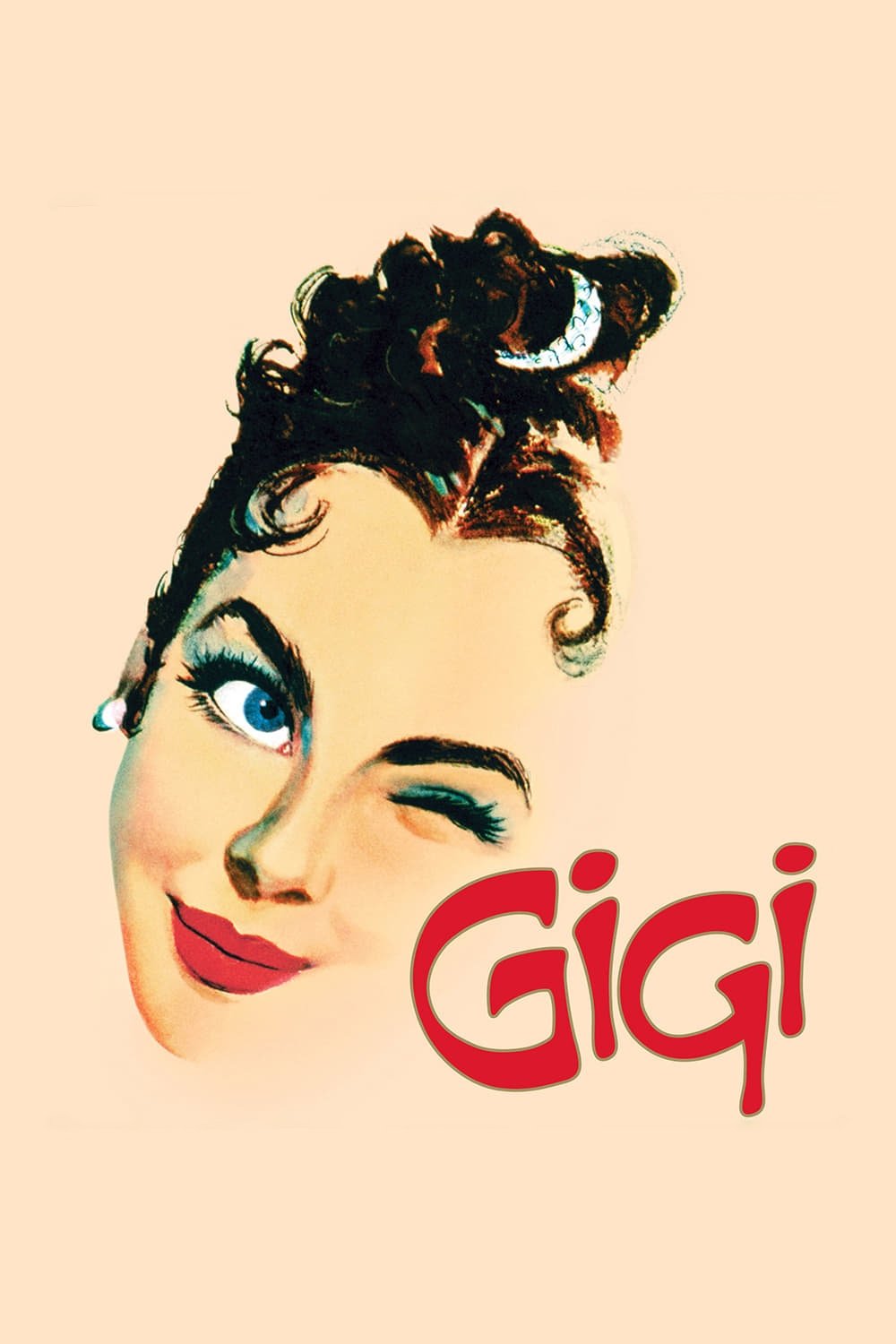
The Historical Era of the Film
Whenever I sit down to revisit Gigi (1958), my mind drifts back to the particular mixture of anxiety and optimism that seemed to define the late 1950s. Watching the film today, I can’t help but feel an almost palpable sense of its production era—the convergence of a post-World War II confidence and the undercurrents of the approaching cultural revolutions. The United States, having emerged victorious and economically robust after the Second World War, was experiencing a period of unprecedented consumer prosperity, and that prosperity radiates through the opulence on screen. In my view, this atmosphere of postwar affluence fueled Hollywood’s appetite for glossy, escapist spectacles, and few films embodied that escapism quite like Gigi.
The political climate during the film’s production fascinates me because it represented a crossroads of tradition and transformation. The Cold War colored so much of American life at the time, intensifying both the patriotic fervor and the quest for cultural dominance. Hollywood was not just looking to entertain Americans—it was also eager to project the nation’s artistic sophistication on the world stage. Gigi, with its French setting and cosmopolitan flair, felt like both a celebration of old-world elegance and a statement of internationalism, all crafted within the safe confines of MGM’s expansive resources.
Looking deeper, I see the economic vigor of the era reflected in the film’s lavish sets and Technicolor brilliance. In a decade marked by suburban expansion and rising wages, movies like Gigi acted as aspirational fantasies. With the spread of television threatening the cinema’s monopoly over entertainment, the industry countered by leaning into spectacle. To me, Gigi’s musical numbers, costumes, and visuals weren’t simply creative choices—they were a strategic response to changing entertainment consumption, attempting to lure viewers away from their living rooms and back into grand, ornate picture palaces.
Socially speaking, the world of 1958 was both looking back and inching forward. While certain traditional codes still held sway, new undercurrents were beginning to tug at them. The “return to normalcy” after years of wartime hardship created a momentary, uneasy calm—a sense that the old ways were not gone but under review. I often feel that Hollywood musicals of this era, Gigi included, are especially interesting for how they capture this push-pull between nostalgia and impending change.
- Cold War tensions directly influenced cultural exports, including film.
- The rise of television forced studios toward larger-scale productions and innovation.
- Economic prosperity allowed for investment in high-budget, star-studded musicals.
- Shifting social mores subtly permeated the arts, foreshadowing the transformations of the 1960s.
Social and Cultural Climate
For me, the social climate humming underneath Gigi’s surface is crucial to understanding the film’s tones and choices. The late 1950s were a paradoxical time in American society: a veneer of conformity and stability rarely concealed the deeper anxieties teeming below. I always notice how, on one hand, Americans were encouraged to cherish family values, suburban bliss, and consumer comforts. Yet, there was also an unspoken awareness that these traditional ideals—so scrupulously advertised in magazines and television programming—were vulnerable to scrutiny, especially among the creative class.
When I watch Gigi, I’m unmistakably aware that the film adapts a French novel about the Belle Époque, a period associated with both artistic exuberance and a rigid social code. The choice to set a showy MGM musical in fin de siècle Paris strikes me as more than an exercise in nostalgia. To me, it represents 1950s America’s fascination with old-world sophistication and glamour—a kind of safe, sanitized foreignness that reassured rather than challenged its audience. Yet, beneath the surface, the story’s preoccupations with courtship, reputation, and the mechanics of love were resonant with the social tensions brewing back home.
What always intrigues me most about this time is the subtle but increasing contestation over gender roles and personal freedoms. I sense that the era’s dominant expectations—women as dutiful wives and mothers, men as providers, strict codes about sexuality—were becoming contestable, but only just. As I see it, the way the film dances around subjects of romance and propriety says as much about 1958 as it does about 1900. I read the gentle treatment of Gigi’s “education” in the film as a coded reflection of attitudes towards women’s roles, sexuality, and the question of autonomy. The musical format and lush romanticism allowed these undercurrents to be expressed without provoking the kinds of controversy that would have dogged a starker, more explicit portrayal.
Cultural trends toward nostalgia were powerful during this decade. I’m struck by how the late 1950s saw a proliferation of works idealizing an elegant, measured past—perhaps as an antidote to the atom age’s anxieties and the swift changes looming on the horizon. The sense of escapism present in Gigi seems to me to have functioned as a cultural balm, inviting audiences to momentarily evade troubling realities, like anti-communist persecution or the earliest tremors of the Civil Rights movement. I believe the film’s success rested, in part, on how it leveraged this longing for a reassuring, neatly ordered world.
How the Era Influenced the Film
Whenever I try to untangle what makes Gigi distinctive, I keep coming back to the unmistakable stamp of its historical circumstances. I see the late 1950s as an era in which Hollywood sought both to reaffirm its own traditions and test the limits of what mainstream cinema could address. The impact of the production era on Gigi appears, to me, in both overt and hidden ways. For instance, I can’t help but notice the film’s painstaking avoidance of potentially controversial elements from Colette’s original novella, which dealt more bluntly with sexuality and courtesanship. In 1958, the lingering effects of the Hays Code—Hollywood’s moral guidelines—were powerful, requiring filmmakers to wrap mature themes in sweetened, romantic guises.
I often reflect on how the Cold War mindset informed the elaborate, wholesome entertainment values of films like Gigi. The underlying imperative was to present American cultural superiority through artistry and sophistication, but without straying into dangerous territory that might draw criticism. Musicals, with their veneer of innocence and harmony, proved ideal vehicles for this strategy. The film’s romantic Paris, rendered with Broadway spectacle and old-Hollywood polish, offered viewers a fantasy of unity and beauty at a moment when global tensions threatened real-world harmony.
To me, the consolidation of the studio system’s resources is profoundly evident in the sheer gloss of Gigi’s production. Large studios like MGM were determined to remind audiences of the grandeur possible only in cinemas, and this is accomplished in every frame of Gigi—the extravagant costumes, the color-soaked sets, the perfectly orchestrated musical numbers. All these details suggest, in my view, that the film’s makers were as concerned with dazzling viewers as with telling a story. This was, after all, a period when film attendance was challenged by television, spurring studios to treat each release as an event. The movie was built, I think, as both a piece of entertainment and as a symbol of the persistence—and resilience—of the American film industry in changing times.
But the historical currents also left their traces on subtler aspects of the film. I often find that the characterization of Gigi, and her arc from playful innocence to mature love, can only be truly understood within the sexual politics of the 1950s. The anxiety about “proper” female behavior rings out in the tension between desire and decorum. In my reading, the film offers both a celebration of youthful romance and a cautious reaffirmation of the prevailing gender order—allowing modern viewers to glimpse the complexities of a society both aware of, and resistant to, its evolving values.
Audience and Critical Response at the Time
One of the most fascinating things to me is how Gigi was received by those who first saw it. If I had been among its original audience members, I might have been swept away by its blend of music, color, and escapist story, as so many were. The film was, by all accounts, met with enormous enthusiasm; critics and moviegoers alike seemed hungry for precisely this kind of luxuriously rendered entertainment. I’ve read accounts of rapturous receptions at premieres, where the mood was celebratory, almost grateful. There’s a certain poignancy in how easily and eagerly 1950s audiences embraced such spectacles, perhaps as a respite from the real-world anxieties they could not always keep at bay.
Awards recognition often serves as a barometer for the intersection of industry trends and cultural appetites, and I am continually struck by Gigi’s remarkable sweep at the 1959 Academy Awards. The film won nine Oscars, including Best Picture—a feat that signaled a widespread appreciation for its achievement. To me, this reflects not only admiration for its technical and artistic qualities but also a collective yearning for reassurance, optimism, and beauty. Audiences, most of whom had grown up through the depression and war years, were especially receptive to stories that seemed to promise stability, happiness, and a sense of order.
Of course, some reviewers noted, even then, that the story’s treatment of gender and class, while elegant, was based in a world already vanishing and perhaps overdue for questioning. But for the most part, Gigi’s initial reception strikes me as proof of the public’s desire for both aesthetic pleasure and predictability in their on-screen world. I reflect on how critics at the time gave special notice to the film’s production design, costuming, and musical numbers, all of which were celebrated as examples of Hollywood’s unrivaled craft.
Reflecting on the mix of critical acclaim and popular appeal, I see Gigi as a cinematic mirror held up to its precise historical moment—a work whose reception tells me as much about the lived experience of 1958 as does the movie itself.
Why Historical Context Matters Today
Whenever I revisit Gigi and offer my perspective as a film historian, I see how understanding the film’s historical and social context completely transforms my appreciation. To watch Gigi merely as a period romance, without knowledge of the forces shaping its creation, risks flattening those layers of meaning. To my mind, films can only be fully understood as living artifacts with deep roots in their own era’s anxieties, aspirations, and limitations.
I find that by examining the historical context surrounding the film, modern viewers—and I include myself here—can recognize how a work both reflects and subtly resists its time. Gigi presents itself as a timeless love story, but in truth, its every frame is steeped in the cultural, political, and economic preoccupations of the 1950s. Looking beyond the story and spectacle, I notice that the boundaries of what could and could not be said about gender, class, and sexuality were delicately negotiated. This underlying tension, for me, is what gives the film its lasting resonance.
When I speak with students or cinephiles about Gigi, I always encourage them to situate the film in relation to 1958’s swirling mix of traditionalism and change. I’ve found that doing so opens up conversations not only about film history but about how cultural products encode—and sometimes quietly challenge—the norms of their day. In confronting the restrictions of the Hays Code, the influence of the Cold War, and the appetite for escapism, Gigi serves as a living document—an invitation to consider how societies use stories both to comfort themselves and to probe the edges of their comfort zones.
By rooting my viewing of Gigi in its own time, I believe I develop a richer, more critical engagement—not merely as entertainment but as an artifact entwined with the hopes, constraints, and dreams of a generation. Recognizing these forces reminds me how every era produces its own myths, fantasies, and blind spots, and how, as viewers, I owe it to both the film and myself to explore those layers as deeply as possible.
After understanding the factual background, you may want to see how this story was received as a film.
🎬 Check out today's best-selling movies on Amazon!
View Deals on Amazon