
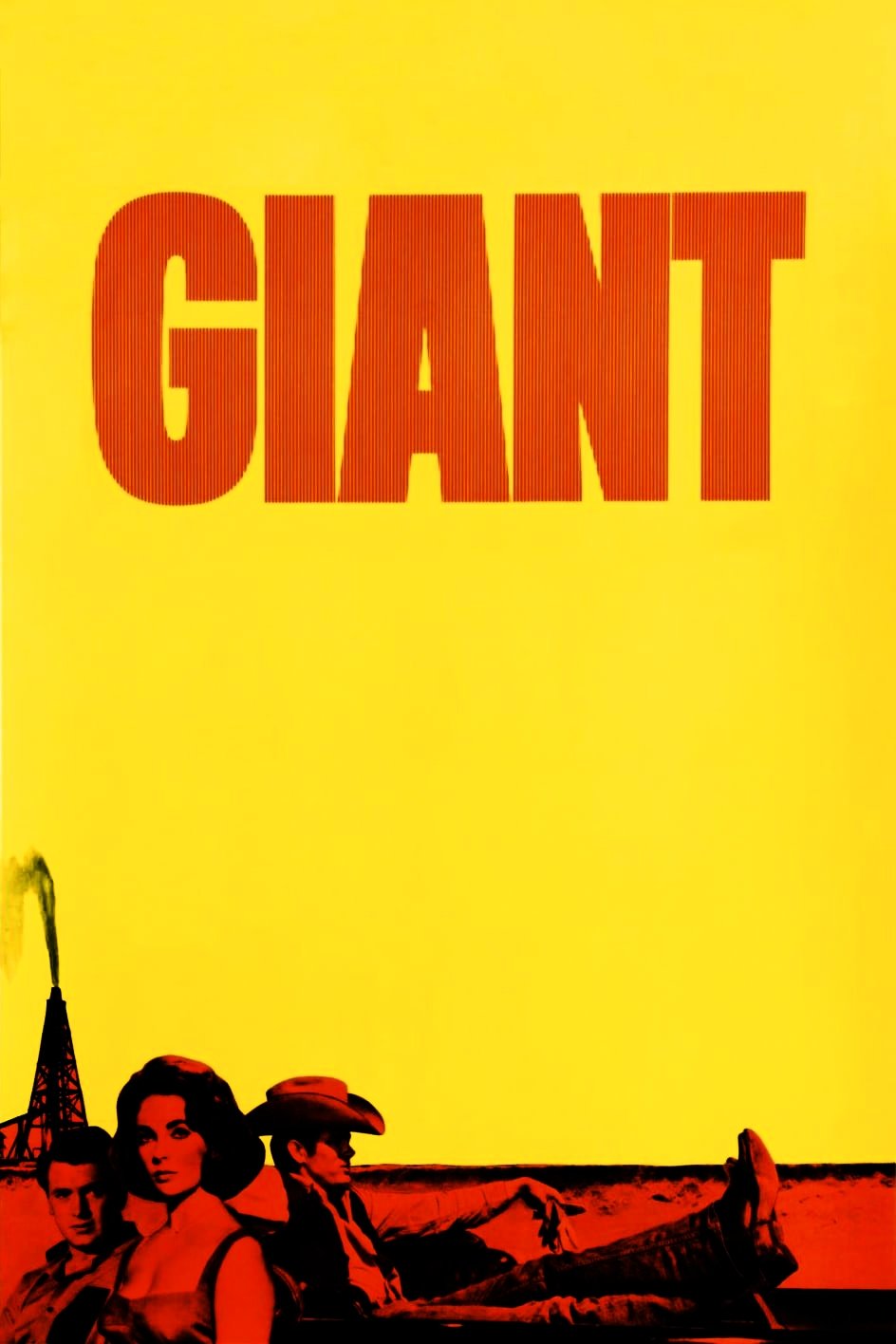
The Historical Landscape
I remember the first time I watched “Giant,” I didn’t just see an old Hollywood epic—I felt as if I’d been handed a time capsule, one tinted by the sun-bleached horizon of postwar America and the dust-streaked pride of Texas. The year 1956 was a peculiar moment to dream big in American cinema: Eisenhower was president, the scars of World War II were still healing—and so were the cracks in the American psyche left by that seismic conflict. Suburbia was mushrooming; television was lapping at the edges of movie theaters. The nation believed, perhaps naively, in its progress, but anxieties simmered under that optimism like a Texas summer—questions of class, race, and gender jostling just out of full view.
Giant’s production and release seemed to me to emerge from the seam between two Americas: the frontier myth still clung to by ranchers and the oil wells whose promise of instant wealth intoxicated the country after the war. Everyone, it seemed, wanted to peer beyond the fence lines—to see what else modernity might bring. But modernization didn’t simply mean more chrome on the Chevy; it meant grappling with the old hierarchies. Texas, as Giant showed me, wasn’t just a backdrop—it was a crucible where old money, new oil, and changing social orders all clashed, sometimes violently, sometimes quietly, but always with a distinct echo unique to that region and era.
When I look at “Giant” in its historical context, I’m struck by how the film stands at this crossroads. Giant’s world is not simply a land of opportunity. It’s a land where opportunity is doled out unevenly, and where those left out—Mexican American workers, women hemmed in by tradition, outsiders seeking to prove themselves—can find both hope and heartbreak. As 1956 America stood on the cusp of the civil rights era and faced the dawn of the feminist movement, Giant both captures the inertia of old customs and the growing momentum of change. Watching it, I can feel the weight of tradition, anchored deep below the ranchland, and the quivering uncertainty as modernity picks at those roots.
Cultural and Political Undercurrents
To me, Giant is nothing if not a swirl of the cultural anxieties and aspirations that preoccupied mid-century America. It’s fascinating how a film, so grand in its visual sweep, is at its core an intimate examination of power—who holds it, how it’s maintained, and how, sometimes reluctantly, it’s lost or shared. I suppose what I find most compelling is how the era’s unspoken questions about race, class, and gender are dramatized through these epic family conflicts. I was born decades after these societal skirmishes ignited, but looking back, the urgency with which Giant addresses them makes me feel their heat.
Racial politics is where Giant never flinches, at least by the standards of its era. Seeing the dignities denied to Mexican Americans in the film’s world felt, to me, like an early indictment of a society on the brink of confronting its own injustices. The children of the ranch help set the stage for generational change—mirroring, in my eyes, the rumblings of the Civil Rights Movement that, just months after the film’s release, would explode into full view. By 1956, Brown v. Board of Education had already begun to reshape schools—but not hearts. Watching Giant, I couldn’t help but think about how those prejudices, quietly entrenched, resisted reform both onscreen and off.
The gender dynamics fascinated me too. Elizabeth Taylor’s Leslie isn’t just ornamentation—she’s an invader of masculine spaces, insistent on her right to opinion and action. As I observed Leslie challenge the patriarchal prerogatives of her new family, I was reminded of the quiet but growing unrest among American women. The whispers of “the problem that has no name”—which Betty Friedan would so famously articulate years later—seemed already to be rustling in Leslie’s discomfort and rebellion. That a mainstream Hollywood film would grant its female lead this much agency suggested to me that, even in an era so defined by conservatism and containment, seeds of discontent were germinating in unexpected places.
And then there’s the film’s treatment of the American Dream—the notion that anyone, regardless of background, could rise through talent or luck. But Giant reveals the steep price of that ascent. James Dean’s Jett Rink is a fascinating figure to me: both a symbol of possibility and a cautionary tale about the isolating power of wealth. The tension between old money (as embodied by Rock Hudson’s Bick Benedict) and the nouveau riche (Jett and his oil derricks) echoes the economic mobility—and instability—of the Eisenhower period, when Old World pedigree was increasingly challenged by upstarts. That anxiety about changing fortunes drove much of the drama both onscreen and in the 1950s national imagination.
The Film as a Reflection of Its Time
For all its sprawling family saga, I found Giant to be, at heart, a mirror held up to postwar American contradictions. It doesn’t pretend that the world inside the Benedict ranch house is fair or just. In fact, I was struck by how often the most devastating moments occur not in gunfights (as you’d expect from a Western-tinged epic) but in conversations over dinner or in chance encounters at the town’s social epicenters. The careful attention to manners, to who sits where and who speaks when, strikes me as a subtle register of the era’s rigid social codes. Even when the characters yearn for change, they are often powerless to break away from these elaborate rituals of deference and exclusion.
As I watched, I realized Giant’s engagement with the theme of legacy feels almost anxious. The looming presence of the land, of tradition, compels each character to measure themselves not just against their peers, but against generations past—and the future they might hope to shape. There’s a sense of responsibility, even fatalism, that pervades every decision. For me, the film captures that mid-century American tension between the worship of tradition and the inexorable tug of progress. The Benedict children, eager to chart their own courses, seem emblematic of all young Americans in the 1950s who were beginning to question the necessity—and the morality—of inherited ways.
But what was even more striking to me was how the film depicts the limits of good intentions. Leslie’s efforts to champion justice for the ranch’s Mexican American workers are earnest, even idealistic, but they’re often stymied by inertia and opposition. Giant’s reluctance to offer easy solutions felt very honest to me; it’s as if the film admits that recognizing injustice is not the same as remedying it. In this way, it seems to herald the frustrations—and the incremental victories—of the social movements that would define the following decades. The scene in the diner, where Bick finally stands up to a bigoted proprietor, resonated with me as one of the rare moments where personal intervention could actually rend the fabric of tradition, however temporarily.
I also can’t ignore how Giant reflects the paradoxes of masculinity in its era. Both Bick and Jett are defined, almost imprisoned, by their performances of manhood—one rigid and aristocratic, the other brash and desperate. Watching their struggles, I thought about how the 1950s idealized the strong, stoic man but quietly undermined him by showing the costs—emotional, relational, even physical—that such expectations carried. The film, perhaps unintentionally, unsettles these gender roles, laying the groundwork for the more self-reflexive, critical cinema that would arise in the decades to follow.
In all of this, I find “Giant” an extraordinarily revealing cinematic artifact. It’s not a clean document of the 1950s, but a palimpsest: layers of hope and anxiety, convention and rebellion, each struggling for dominance just as the characters do.
Changing Perceptions Over Time
Returning to the film after so many years and watching it through the lens of a new century, I’m constantly surprised by how the movie’s reputation and meanings have shifted. When I first learned about Giant, the prevailing wisdom painted it as a lush melodrama—a vehicle for stars like Elizabeth Taylor, Rock Hudson, and James Dean, with the latter’s tragic death ensuring the film’s legendary aura. Much of the contemporary praise seemed to revolve around its grandeur and romance, a classic in the most traditional sense.
Yet as social mores evolved and as scholarship on race, class, and gender advanced, I watched the conversation around Giant transform. Film historians like myself began to revisit its more radical undercurrents: the blunt depictions of bigotry, the critique of patriarchal control, the assertion of women’s agency. What once seemed like subplots or character quirks have taken on central significance for new generations of viewers who are searching less for escapism and more for evidence of how Hollywood—often unwittingly—participated in or challenged prevailing ideologies.
It’s fascinating for me to note how elements that were progressive in 1956 now seem quaint, or even insufficient. The depiction of Mexican American characters, while groundbreaking for its time, now draws scrutiny for its paternalism or limited scope. When I engage with young cinephiles or colleagues, I find our debates focusing less on the film’s technical achievements and more on its blind spots: whose stories were left out, how the narrative sometimes reinscribes rather than subverts certain stereotypes, and what that means for our understanding of history.
Still, there’s a kind of enduring resonance in the film’s gestures toward justice and empathy. I often find myself reflecting on the enduring power of the final diner scene, where Bick’s stand against racism cost him dignity and status in the eyes of a certain old-guard Texas society. For viewers today—aware of both the courage and the compromises inherent in such acts—this moment can read as both inspiring and inadequate. That ambiguity, I think, is part of the film’s staying power.
In conversations I’ve had with historians and audiences, it becomes clear to me that Giant is no longer just a story about Texas, or oil, or family—it has become a living document of how each era reevaluates its inheritance. The film’s reappraisal reminds me that history is never static, and that the meaning of art is always a dialogue between past and present.
Historical Takeaway
When I wrestle with the question of what Giant truly reveals about the 1950s, I’m struck by its ability to dramatize the period’s central tensions and hopes. To me, the film is a portrait of America at a crossroads, unsure of how to reconcile its vast ambitions with its long-standing prejudices. It invites us to see how deeply embedded systems—of race, gender, class—function not just as backdrops to personal drama, but as living elements of a country’s soul.
For all its epic trappings, I see Giant as a fundamentally introspective work. It challenges me to reconsider the myth of the self-made man, the equitability of the American Dream, and the slow, often reluctant progress of social change. In what it chooses to highlight—the struggles of Mexican American laborers, the defiance of a woman demanding respect, the rise and fall of a self-mythologizing outsider—I recognize both the anxieties and the aspirations that shaped the decade. Yet the film doesn’t offer easy redemption. It leaves me with questions: How much can individuals effect change within a system so resistant to reform? Can broken traditions be remade, or only replaced with new forms of inequity?
Ultimately, I believe Giant’s historical significance lies not in providing answers, but in capturing the turbulent spirit of its age. It offers us, across decades, a way to confront the past with clear-eyed honesty—neither shying away from the ugliness, nor denying the possibility of transformation. If the ranches and oilfields of Giant seem frozen in time, the questions they raise certainly are not. Watching the film now, I feel not just a witness to another era’s struggles, but a participant in the ongoing project of understanding what it means to be American—an inheritance as vast, as fraught, and as unfinished as Texas itself.
To see how these real-world elements shaped the film’s impact, you may also explore its reception and legacy.
🎬 Check out today's best-selling movies on Amazon!
View Deals on Amazon