The Historical Landscape
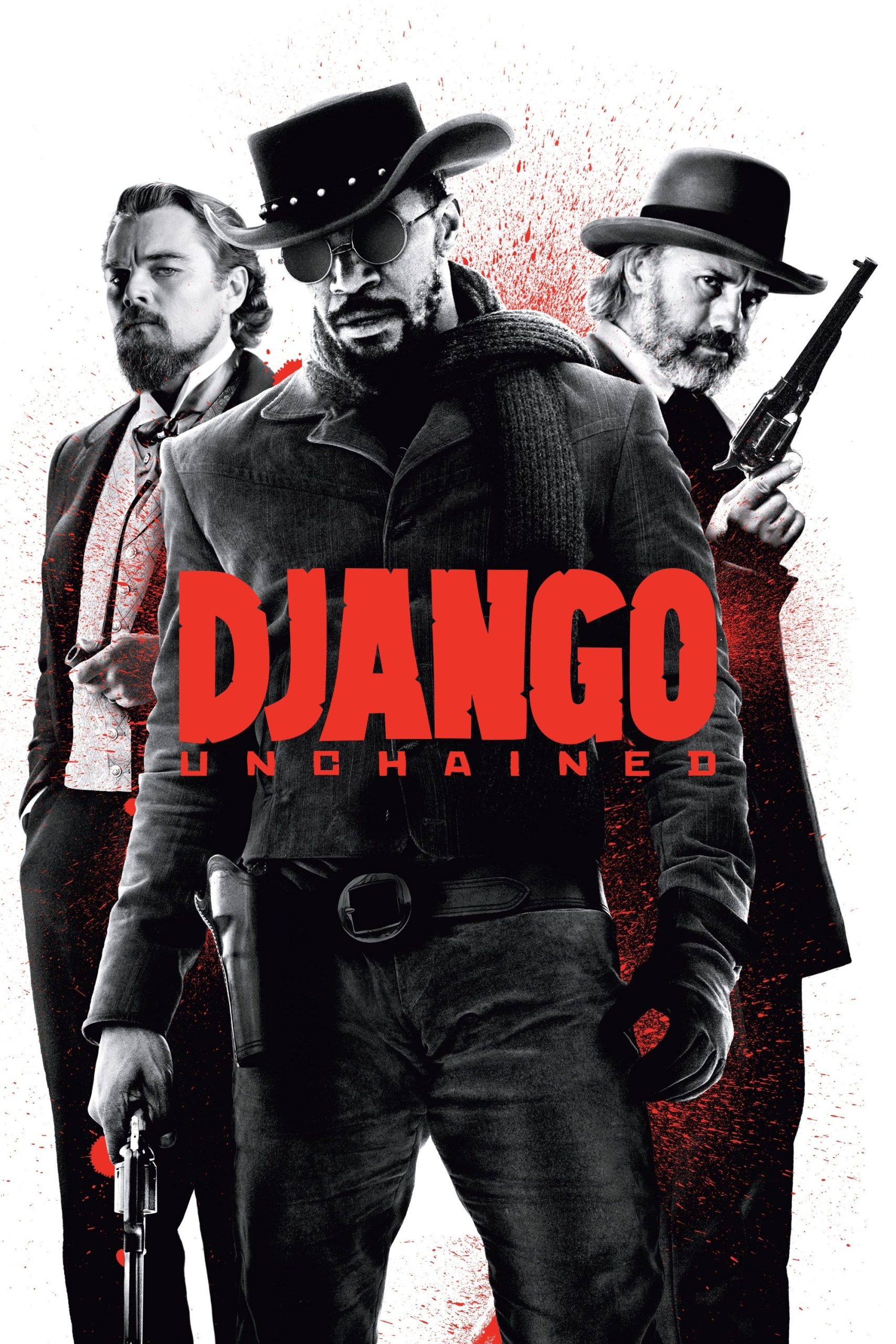
When I first saw Django Unchained in late 2012, I immediately felt the pulse of a world in transition beating beneath the film’s blood-soaked surface. I remember America standing at a crossroads—Barack Obama had just secured his second presidential term, but the country felt far from united. The air was thick with debate about racial progress, gun violence, and the role of popular culture in reflecting or subverting social truths. I saw Django Unchained not as a window into the antebellum South alone, but as a necessary collision between past and present, staged in an era still struggling to define itself through history’s aftershocks.
In 2012, the massive reach of social media transformed the nature of public discourse. My conversations—online and off—felt tinged with a new immediacy, a tendency to push hot topics to the cultural front in real time. Every national event now seemed public, dissected from countless perspectives, and Django Unchained dropped directly into this whirlpool. Its vibrant, unfiltered take on slavery, revenge, and spectacle wasn’t merely provocative; it was a deliberate spark for conversations America was only beginning to have out loud. The Trayvon Martin case had ignited new fire in discussions of race and justice, and I felt artists were listening, recalibrating their works to meet the complexity and rawness of these times. Filmmakers like Quentin Tarantino seized the tools of genre cinema to reinterpret foundational American wounds—in this case, not with subtlety, but with the audacity and gallows humor that would throw audiences off balance, forcing us to confront uncomfortable truths without easy didacticism.
The context of economic uncertainty after the Great Recession also lingered for me as I watched Django Unchained. I felt that Americans—across racial and political lines—were reaching for catharsis, eager to exorcise narratives of powerlessness. The era’s cinema often drifted toward escapist spectacle or nostalgic mythmaking, but Django chose instead to weaponize history itself. As I recall, this was also the period when the rise of the antihero in mass culture mapped perfectly onto a yearning for radical change. Reality felt unstable, and old stories, especially those that propped up ideas of American exceptionalism, faced disruptive scrutiny in the public sphere.
For me, the internet’s democratization of criticism—visible everywhere from longform think pieces to grassroots blogs—gave Django Unchained an arena unlike any before it. Debates over representation and cultural appropriation had become electrified, and it seemed as if every cultural product was being called to account for its politics, intentions, and implications. In this sense, the climate into which Django Unchained emerged was both uniquely volatile and vibrantly creative, demanding films that did more than entertain; they needed to provoke, challenge, and, sometimes, unsettle.
Cultural and Political Undercurrents
Reflecting on Django Unchained through the lens of its moment, I see a crucible in which simmered America’s conflicting desires: the urge to address history’s traumas honestly, and the equally strong impulse to reframe those traumas into something mythic or cathartic. Tarantino’s film, in my eyes, captured a nation’s guilt and fascination with its own violence, set against the backdrop of race relations still defined by legacy rather than closure. I found myself caught between admiration for the film’s bravado and discomfort at its methods—Tarantino’s blending of spaghetti western aesthetics with the brutal realities of American slavery forced me to question not just how the past is remembered, but who gets to tell that story and to what end.
I think back to the years leading up to Django Unchained, when pop culture saw a surge of works reimagining historical injustices—articulated through the lens of the marginalized or the rebellious. The Occupy Wall Street movement, the Arab Spring, and ongoing debates over immigration reform informed how I read cultural texts: everything seemed to swirl with a hunger for revolution, for upending longstanding orders. Films like 12 Years a Slave, which followed immediately on Django’s heels, reflected a collective desire to stop tiptoeing around the ugliest chapters of American history, to instead confront them head-on.
In my experience, Tarantino’s film was especially attuned to the peculiar charge surrounding the Obama era—a simultaneous sense of pride and frustration, as if Obama’s presidency was a mirror reflecting as many unfulfilled promises as realized dreams. I felt Django Unchained straddled this contradiction; its hero’s journey resonated with the country’s desire for triumph over historical oppression, yet its stylized violence and use of the n-word brought into focus continuing arguments over whether such representations offered catharsis, exploitation, or something uncomfortably in-between.
I couldn’t ignore, either, how the film’s soundtrack—an anachronistic blend of old blues, folk, and hip-hop—signaled a distinctly 21st-century way of engaging the past. Just as remix culture flourished in other arts, Tarantino’s choice to meld sonic eras reflected broader trends in cultural production, where authenticity meant less about adherence to linear chronology and more about capturing emotional truth and contemporary resonance. I remember thinking that this approach reflected a society growing more comfortable with irony, but also more self-aware about the responsibilities and dangers of representing trauma in popular art.
The backdrop of intensifying debates about gun control and mass violence also colored my viewing. I was acutely aware that Django Unchained’s shootouts and stylized carnage weren’t simply genre conventions; they echoed, consciously or not, the anxieties of a public grappling with the meaning of violence in everyday life and in their own country’s founding myths.
The Film as a Reflection of Its Time
The first impression Django Unchained left on me was its utter refusal to sanitize history. I found the film’s blend of humor and horror bracingly honest about America’s brutality; rather than coaxing the audience with sanitized images of the antebellum South, it weaponized irony to force attention on the grotesqueness of slavery as both fact and foundational myth. The film’s dialogue—shocking, at times even gleeful in its profanity—struck me as a direct challenge to anyone still invested in whitewashed narratives of the Old South. Tarantino dared viewers to recognize the cinematic celebration of vigilante justice not as an endorsement, but as a demand to rethink how and by whom justice is defined.
What I found most evocative was the way Django Unchained interrogated the mechanics of spectacle. The film seemed to argue, through its relentless mix of pulp fiction tropes and unflinching violence, that the legacy of slavery was not confined to the past but lived on in the American psyche. Watching Jamie Foxx’s Django assert his agency through action, I noticed the ways the film both indulged in and critiqued our appetite for revenge fantasies. This oscillation made me uneasy—was I being invited to enjoy the spectacle of retribution, or to squirm at my own complicity in a culture that packages pain for profit?
I was also struck by how female characters—especially Broomhilda, Django’s wife—were positioned as both catalysts and casualties in the narrative. While the film’s allegorical heroism lay clearly with Django himself, I noticed with some frustration that the rescue narrative echoed older, even paternalistic, tropes about salvation and victimhood. This, too, seemed reflective of an Obama-era tension between progress and the persistence of outdated models for understanding liberation and agency.
Looking back, I see Django Unchained as inseparable from the era’s hunger for stories of Black empowerment, yet equally shadowed by the traps of oversimplification and exploitation that lurked in such representations. While some critics argued that the film allowed Black heroism to finally seize the reins of the Western—an all-too-white genre—others, including myself at moments, perceived risks in treating historical trauma as raw material for pop-culture mythmaking. The subtlety of its critique was sometimes dwarfed by its commitment to provocation, and I became aware of how quickly my enjoyment could be tinged with discomfort.
Within my circle, conversations about Django Unchained were invariably charged. Some marveled at the film’s audacity to show, with little filter, the horrors whitewashed by earlier films. Others recoiled at its spectacle—a discomfort mirrored in national debates over who owns traumatic histories and who profits from displaying them on the big screen. It dawned on me that Django was not simply a reflection of its time, but an amplifier, turning up the volume on ongoing confrontations with race, violence, and justice in America. Its existence in 2012 felt possible only because so many taboos had already been broken, even as so many remained unaddressed.
I can’t remember another film from the period that so vividly exposed my own ambivalence as a viewer—caught between admiration for the film’s wild subversions and awareness of the traumas it both invoked and, at times, arguably exploited. That, to me, is its most lasting sign of the times: the sense that every gesture toward progress in representation invited equal and opposite waves of interrogation, reflection, and resistance.
Changing Perceptions Over Time
Over the years, my view of Django Unchained has wavered, stretched, and, in some ways, matured alongside the evolving cultural landscape. When I revisit the film now, I do so through the lens of movements that exploded after its release—Black Lives Matter, the increased public scrutiny of police violence, and a sharpened focus on intersectionality within discussions of race, gender, and power. The questions I asked myself then have only grown more complex: Does the film still inspire catharsis in its damned-the-torpedoes approach to vengeance, or does it now strike me as glib, risking the trivialization of historical suffering?
In the immediate aftermath, I found Django Unchained controversial, even polarizing, because it dared to mine humor and violence from the darkest corners of American memory. But as the climate shifted and discussions on cultural appropriation and the ethics of representation grew more urgent, I began to recognize the film’s limits. Conversations that once celebrated its subversions now returned with sharper questions: What does it mean for a white director to commandeer the story of Black suffering and liberation? Does the film offer agency to its Black characters, or does it frame their empowerment through lenses filtered by white guilt or cinematic stylization?
What I find fascinating is that Django Unchained started to be seen less as a radical rupture and more as a stepping stone—a moment in the long arc of Hollywood’s reckoning with its own legacy. Films that followed, especially those written and directed by Black artists, felt less inclined to mix exploitation with social commentary. Watching the evolution of audience reactions—especially among younger, more media-savvy viewers—I detected an increasing impatience with old formulas, even those dressed in the garb of irony or pastiche. The emergence of television series and films that tackled similar material with greater nuance or with new narrative agency left me reexamining Django’s place in the canon. Was it a necessary transition or an anachronism masked as progress?
My personal discomfort increased as stories of “white saviorism” were dissected in academic and popular circles. The presence of Dr. King Schultz, for all his subversive twists, seemed more problematic in hindsight—another iteration, though complex, of white mentorship as the engine of Black liberation narratives. When I talk to younger audiences, I detect a new skepticism toward these tropes, and I’ve had to wrestle with the possibility that Django Unchained’s boldness was both its greatest asset and its Achilles’ heel.
Yet, I continue to admire the film’s role as a catalyst. Its willingness to disrupt silence, to provoke, to unsettle—these are not trivial achievements. In reflecting on how Django Unchained has aged, I see it as both a lesson in the risks of audacity without accountability and a snapshot of a culture testing its own limits. The dialogue it inspired—about who gets to narrate history, which traumas are “fit” for entertainment, and how violence is aestheticized—remains, to my mind, invaluable.
Historical Takeaway
Looking back, Django Unchained strikes me less as a definitive statement about race, revenge, or American history, and more as a jagged mirror for its era—reflecting the uneven, often contradictory currents of hope, outrage, and desire pulsing through the culture in 2012. The film, in my estimation, is both product and provocation: a work made possible by the era’s widening appetite for candor, yet inevitably limited by the persistent structures and blind spots of its time.
What I draw from Django Unchained is not a finished lesson, but a record of struggle—creative, ethical, and deeply personal in nature. Its commitment to exposing the brutality at the heart of America’s story resonates not because it arrives at answers, but because it makes questions unavoidable. I find its jaggedness—the refusal to resolve discomfort, the oscillation between catharsis and queasiness—emblematic of a decade wrestling with inherited injustice and the perils of spectacle. Even as I sometimes recoil from its excesses or wish for greater nuance, I cannot deny its honesty in declaring that the past is never past, and that the avatars of progress and regression are often entangled in the same bloody, complicated spectacle.
To witness Django Unchained, now or at its time of release, is to confront the limits and ambitions of the era that produced it—a time when art and argument, grief and entertainment, memory and myth were colliding in unpredictable, sometimes uncomfortable, ways. A decade later, I see the film not simply as a story about the past, but as a living record of a period willing to risk offense in order to avoid silence. Whether Django Unchained ultimately soothes or infuriates me often depends less on the film itself than on my own evolving relationship to the questions it pressed so insistently into the open.
To see how these real-world elements shaped the film’s impact, you may also explore its reception and legacy.
🎬 Check out today's best-selling movies on Amazon!
View Deals on Amazon