
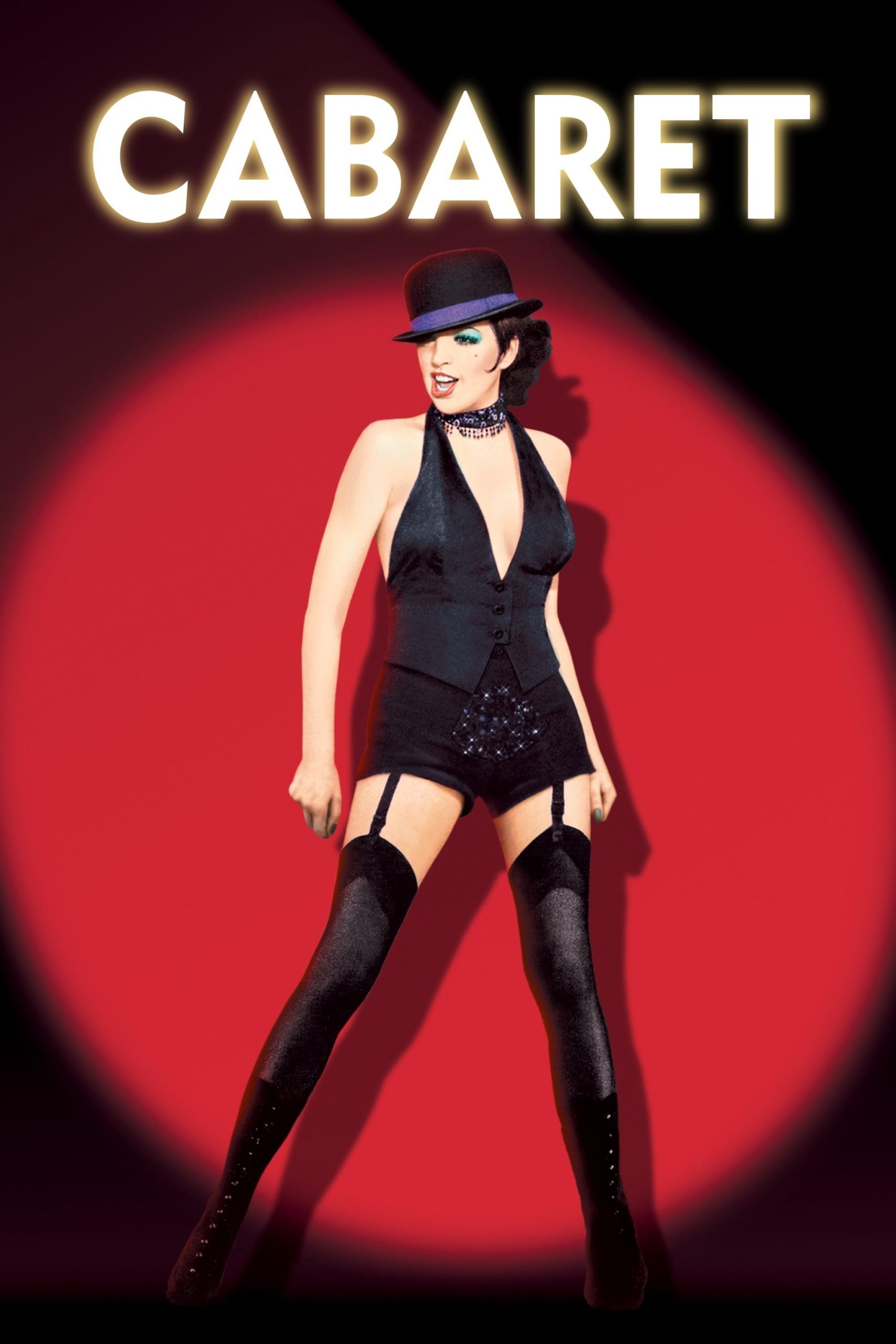
The Historical Landscape
Whenever I step into the dazzling, suffocating world of “Cabaret,” I’m instantly thrust back into 1972—an America asking itself what it now stands for after a decade of relentless upheaval. For me, those spinning lights and shadows in the Kit Kat Klub evoke a society still reeling from the shockwaves of the 1960s: assassinations on television, Vietnam body counts ticking ever upward, Nixon’s voice threading new mistrust into the social fabric. In my eyes, the year “Cabaret” was released wasn’t just about bell bottoms and muscle cars, but about a kind of existential dizziness. The world seemed at once vibrant and hollow, as if the party was finally running low on champagne and the guests were too deep in conversation to notice.
This sensation, which I sense humming through the core of “Cabaret,” is indebted to the growing artistic daring that defined early 1970s Hollywood. Directors weren’t just experimenting with content, but were upending form. The old studio system had crumbled. Now young auteurs prowled the remnants, emboldened by cultural permission to push buttons, invert genres, and openly question power. Vietnam was the ever-present backdrop—a televised war that colored everything. On screens and in streets, there was a jarring juxtaposition of liberation and violence, wild optimism and creeping despair. Films began to dissect, rather than glorify, the American Dream. Disillusionment had become cinematic currency. In “Cabaret,” I detect this spirit most vividly not so much in the plot, but in the texture—the jagged blend of sensuality and fear, longing and decay, staged against a crumbling Weimar Berlin that, to me, always doubles for the anxiety-ridden America of my imagination in 1972.
It’s impossible for me to view the film apart from the broader social shifts happening at the time: women’s liberation crackling on talk shows and kitchen radios, queerness now peeking through the celluloid veil, the sexual revolution running riot among the persistent rubble of postwar innocence. Watching “Cabaret,” I constantly contrast its bracing frankness with the staid musicals of the previous decade. Here was something different—wickedly modern, dirtier, louder, too bold to whisper its truths. When I think about the era of the film’s release, I remember not just the headlines, but the air of painful progress all around, as if culture itself was being remade in real time, one provocative scene at a time.
Cultural and Political Undercurrents
What truly strikes me about “Cabaret” is how the film whirls together the personal and the political. In 1972 America—violent protests, Watergate’s tick-tock, the embers of ‘60s radicalism—I sense a growing hunger for stories that admit moral ambivalence. For me, the Kit Kat Klub isn’t only a decadent playground, but a war zone where artists, lovers, and dreamers attempt to dance through catastrophe. I’m personally haunted by the way the film’s exuberant performances are punctured by raw glimpses of fascism seeping into daily life. It feels as though director Bob Fosse used every syncopated step, every leering Emcee grimace, as a mirror to a culture suffocating on its own contradictions—a culture that, just like Weimar Berlin, felt the ground shifting beneath its feet.
On a gut level, I perceive “Cabaret” as a product of its own tumultuous context. The political paranoia of the early ‘70s seeps into the script’s edges. I interpret the club’s bubble of fantasy as an allegory for escapism under threat—much as Americans tried to shut out the chaos of demonstrations, the war, and the roar of change. The overt queerness of the story, something almost unthinkable in mainstream film just a decade before, speaks to the era’s slow, jagged crawl toward sexual openness. I often find myself marveling at how Liza Minnelli’s Sally Bowles—her wild fragility, her inability to fully reckon with darkness—reflects not only the desperation of Weimar nightlife, but also the confused, urgent quests for identity I imagine countless Americans were undergoing in the 1970s. When she sings “Maybe This Time,” I don’t just hear hope; I hear the edge of panic, the sense that history itself might be closing in.
To me, the undercurrents don’t flow in just one direction. “Cabaret” feeds on the flirtation with nihilism common to an America no longer convinced of its own righteousness. The specter of authoritarianism—the everyday grotesquerie of the rise of Nazism—felt (and still feels) like a warning, a coded fear that the bright lights won’t last. I’m reminded, watching certain scenes, of the period’s gnawing suspicion that the postwar party was ending, and that innocence, once shattered, could never be recovered. The artistic license Bob Fosse wielded—his willingness to slice through audience comfort—echoes the broader era’s appetite for self-interrogation through risky, subversive pop culture.
The Film as a Reflection of Its Time
For me, the bones and sinew of “Cabaret” are inseparable from the world outside the theater in 1972. The film is a time capsule not only of Weimar Berlin, but also, disturbingly, of America at the crossroads of self-knowledge and self-destruction. What I notice most is not the literal parallels, but the emotional atmosphere. There’s a kind of gleeful doom in both the film’s choreography and its narrative, a willingness to stare directly at moral ambiguity—a disposition I associate with post-counterculture exhaustion.
When I see the diverse patrons of the Kit Kat Klub clinging to pleasure as history’s storm gathers, I sense the same mixture of confusion and recklessness that I read about in the post-’60s American psyche. I perceive the club’s stage as an echo of real-world escapism—everything from television to psychedelics to sexual experimentation. There’s an honesty, even a kind of masochism, in exposing hypocrisy so vividly. I’m always struck by how the film refuses simple answers: its portrayal of bisexuality, abortion, and romantic ambivalence was and remains uncommonly frank. That, to me, signals a film in step with the spirit of confession saturating the early ‘70s, a need to drag what was hidden into the spotlight, consequences be damned.
I also find the film’s claustrophobic, cabaret-bound structure deeply telling. Unlike the sprawling, optimistic musicals of old, there’s almost no escape here. Nearly every major event is filtered through performance, as if to reinforce that reality itself has become untrustworthy, mere fodder for another act. This artistic choice seems a direct response to an era plagued by doubts—doubts about authority, about progress, about the stories a nation tells itself. For me, “Cabaret” is not simply a cautionary tale about fascism—it’s a manifesto about modernity’s fragility. Its refusal to comfort feels, in retrospect, like a brush with prophecy.
There’s also something fundamentally 1970s in the film’s aesthetic. I constantly return to its harsh lighting, garish costumes, and camera angles that disorient rather than reassure. It’s a long way from the lush romance of “The Sound of Music.” Fosse’s direction is jagged, unsentimental, sometimes jarringly cold. The artifice is always visible—a choice, I think, meant to unnerve. This reflects, for me, a broader artistic movement: New Hollywood’s skepticism about illusion, a tendency to show the seams and wires supporting the fantasy. “Cabaret” is showbiz with the gloss stripped off, and I experience this as a blunt confession about the world’s performative masks in an age where trust had become a scarce commodity.
Changing Perceptions Over Time
Over the decades, I’ve watched as “Cabaret” has slipped and shifted in the public imagination. When I talk to those who first saw it in the glare of 1972, they often recall its shock value, its bracing honesty about sexuality and evil. But from my later-born vantage, it’s equally fascinating to observe how younger audiences have parsed its meanings. What once played as explosive has, in some circles, mellowed into a statement of historic progress—a marker on the road to LGBTQ+ representation, gender conversation, and mainstream artistic daring.
Personally, I’m always aware of how our present shapes what we see in the past. In the years following its release, “Cabaret” was dissected by critics as a sign of the times—a film too daring for its own good, maybe even too bleak. Today, I find that same bleakness reclaimed as a badge of authenticity. Its artistic risks, once divisive, now often feel visionary. I sense that the film’s treatment of Sally Bowles’ abortion, her bisexual relationships, and its frank depiction of anti-Semitism have accrued new resonance as subsequent generations revisit the twentieth century’s unresolved traumas.
I also notice a shift in how the film’s politics are discussed. Where earlier audiences may have read the film as a simple warning against fascism, I’ve seen modern commentators draw more nuanced connections to the cultural crises of their own moments—the rise of populism, the reemergence of hate-fueled politics, and the persistent allure of escapism in the face of dread. My own interpretation has deepened, especially in the wake of recent global unrest: the warning “Cabaret” offers about the dangers of denial, about the peril inherent in detaching pleasure from responsibility, feels ever more urgent. I’m left wondering if its original viewers understood how keenly its questions would outlive its era.
There’s also a certain self-consciousness today that overlays any discussion about historical representation in cinema. I find that the film’s daring now gets discussed not only in terms of narrative, but in the political mechanics of who gets to tell which stories, and how. As I watch new generations grapple with art and its responsibilities, “Cabaret” seems both a relic and a touchstone—a film that knew the cost of pretending nothing was wrong, and turned that knowledge into music and smoke. Our changing perceptions, to me, don’t dilute its power; they only confirm its restless, unsettling vitality.
Historical Takeaway
When I sit with all these impressions, I come away from “Cabaret” with a renewed respect for its sly, unflinching honesty. The film didn’t just dramatize Weimar Berlin’s fateful descent; for me, it became a kind of coded letter from the 1970s to the future—an artifact of an anxious, divided, but still yearning culture. What speaks to me loudest isn’t the particulars of history, but the emotional truths the film scrawls between the lines. “Cabaret” taught me that the veneer of civilization, however glossy or seductive, is always thin, always in need of vigilance. It dramatizes how decadence, when unmoored from ethical engagement, can become a lullaby sung over growling catastrophe.
There’s a lesson, as I see it, about the traps of escapism. The shattered illusions of the Kit Kat Klub, soundtracked by pounding jazz and frantic applause, remind me of how fragile a society’s sense of security can be. I learned from “Cabaret” that art, even at its most entertaining, can carry venom and warning in its veins—that the most memorable stories refuse to flinch from the shadow. For a culture teetering on the edge, as 1972 most certainly was, the risks the film took seem not only artistically audacious, but historically essential.
Reflecting on “Cabaret” now, I feel the ways it continues to echo through our current anxieties. I see in it an argument for awareness, for the courage to look unblinkingly at both beauty and horror, and for the necessity of action when history starts to rhyme. In its glitter and despair, I find a case study in how film can serve as both mirror and warning: a song, a shiver, and a lasting question for the future. That is what “Cabaret,” in all its complexity, still teaches me about the time of its making—and perhaps about our own.
To see how these real-world elements shaped the film’s impact, you may also explore its reception and legacy.
🎬 Check out today's best-selling movies on Amazon!
View Deals on Amazon