
The Historical Landscape
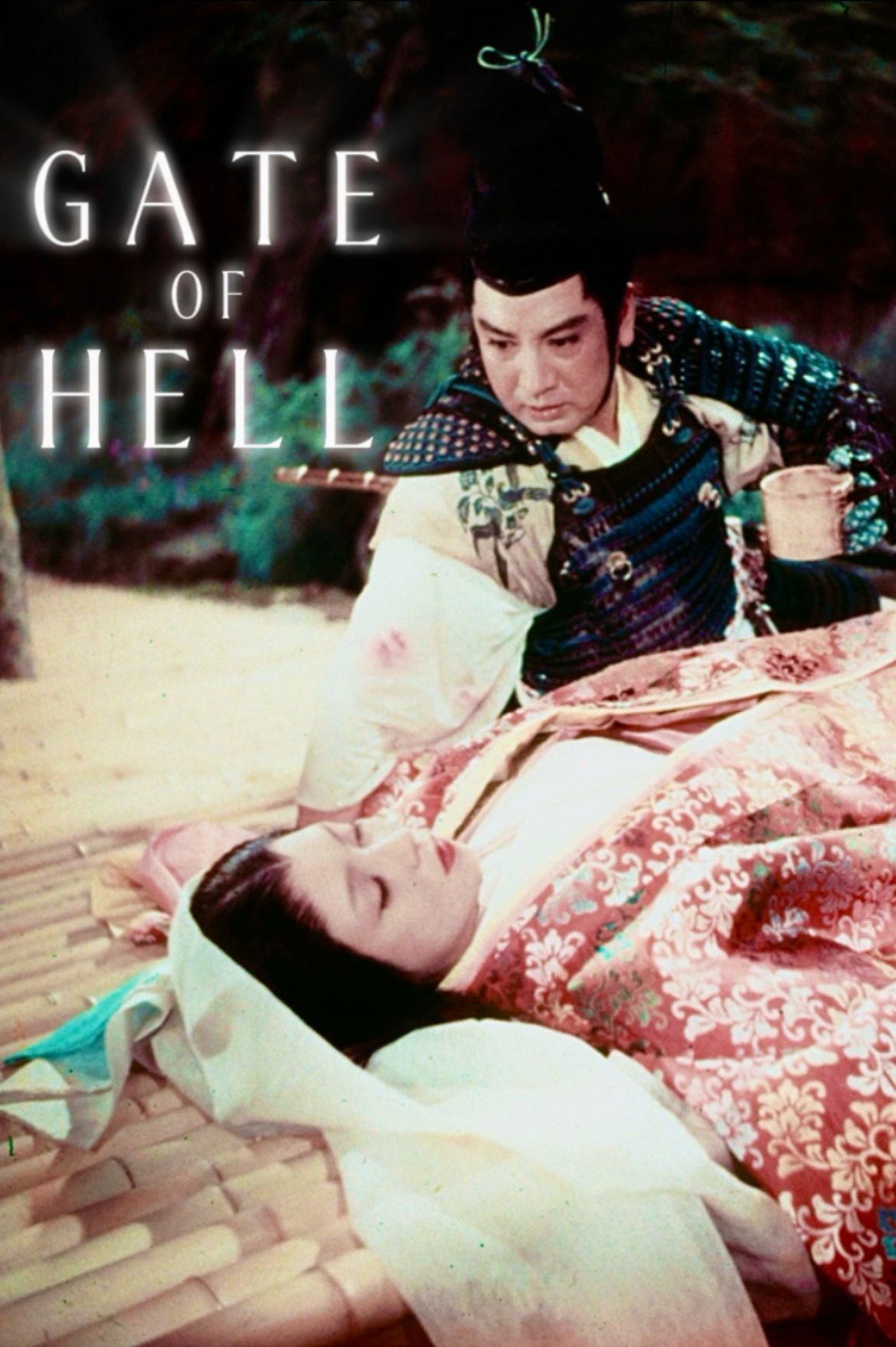
Gate of Hell has always struck me as a time capsule—yet not just of feudal Japan, but, more tellingly, of the early 1950s in which it was born. I can never watch its lacquered color palette or listen to its measured silences without hearing the echo of a nation reeling from the thunderclap of defeat and rebirth. The Japan of 1953, I’ve learned, was not simply picking up the pieces after World War II; it was being asked—sometimes gently coaxed, sometimes forced—to recast its entire identity. The film’s breathtaking visuals, so carefully orchestrated by director Teinosuke Kinugasa and immortalized on Eastmancolor stock, reflect more than cinematic ambition. For me, they seem to shout a kind of national yearning: an ache to find beauty and dignity in the aftermath of humiliation and loss.
When Gate of Hell appeared, Japan was only a year out from American Occupation. The cities still wore scars that were both physical and psychological. I’ve read accounts and watched newsreels from this time; there’s a pulsing energy in the streets—a hunger for normalcy, but also for artistic expression unbound by foreign censors’ eyes. Film, perhaps more than any other art form, became the country’s public stage. New studios sprang up, directors experimented with international co-productions, and award shows began to seek out Japanese work for global recognition. In this world, Gate of Hell, with its lush period costumes and tragic romance, was radical for reasons that only make sense when I remember how starved postwar Japan was for native cultural affirmation. I feel the pressure of time in every frame: the need to show something distinctly Japanese to both local audiences and the wider, suddenly attentive world.
What I find most vivid about the early 1950s is the constant negotiation between old and new. Japan was rebuilding faster than any Western observer predicted. The government, wracked with economic hardship, pushed modernization: consumer electronics, new educational models, construction projects that razed old neighborhoods. And yet, everywhere you looked, there was nostalgia and fear—an anxiety that too much change would sever the nation from its soul. In this crucible, the idea of returning to classical Japanese stories and settings in cinema wasn’t simply aesthetic; it was political. I see Gate of Hell as emerging from this ambivalence, loaded with urgency—its Heian period poetry serving as a protective amulet against the whirlwind of Americanization and cultural forgetting.
Cultural and Political Undercurrents
When I peer beneath the shimmering surfaces of Gate of Hell, I can’t ignore the crosscurrents that shaped its creation. To my mind, the film is haunted by ghosts: not just those of its tragic characters, but the spirits of a society trying to reconcile its militarist past with a coerced democratic present. After years of occupation, forced pacifism, and the reconfiguration of everything from school textbooks to the very notion of emperor, there was a longing to reaffirm something essentially Japanese—something that could survive both defeat and occupation. I find the choice to adapt a medieval legend telling, because it allowed for the safe expression of deep anxieties about honor, loyalty, and unruly desire, without directly confronting the traumatic events of the recent past.
For me, the story’s core—a samurai’s obsession conflicted against the immovable force of a married woman’s fidelity—is intensely political. I see it as an indirect dialogue with Japan’s struggle to redefine masculine ideals in a new era. The defeated soldiers of the Imperial Army returned home to a society in which the old codes no longer fit. Many, I’ve discovered, felt emasculated, their identities upended. Whether intentional or not, Kinugasa’s film presents a samurai who cannot secure what tradition claims he’s owed, whose violence leads only to isolation and loss. This, I believe, mirrors Japan’s confrontation with its own militarist myth; the old assertions of power and entitlement are revealed to be hollow, even destructive. Watching Morito unravel, I can’t help but think of the broader crisis of masculinity and authority echoing through the country’s boardrooms, barracks, and homes.
The film’s production was also shaped by globalizing forces; its emergence coincided with the sudden arrival of Western eyes. For years, Japanese films were rarely exported, but with festivals such as Cannes and Venice inviting domestic works, producers began to imagine cinema as a bridge to the world. I find it significant—and rather moving—that Jidaigeki films such as Gate of Hell weren’t just nostalgic exercises; they became ambassadors, charged with presenting a sanitized, elegant version of the nation’s past to audiences hungry for “exotic” spectacle. Yet, underneath that exoticism, I sense a negotiation over national self-image. The decision to use rich color, for example, wasn’t merely technical boast; it was a visual statement. Showing off silk and ritual with almost defiant precision, Gate of Hell seemed determined to insist, “This is our tradition, rendered with as much artistry as anything from the West.”
On a more personal level, I marvel at how the film’s narrative is undergirded by questions of duty and autonomy—issues that must have preoccupied a society wrestling with Western imports like constitutional democracy and individual rights. There’s a resignation hanging over the story, as though everyone is caught in the machinery of fate. To me, this reflects the paradox of postwar existence: a people abruptly awarded political freedoms yet still bound by invisible chains of social expectation. Kesa’s refusal of Morito’s advances is not just an act of marital fidelity; it is, I feel, a quiet assertion of self against overwhelming structural force. To watch her hold her ground, even at the cost of her life, is to glimpse the early stirrings of a more modern, autonomous Japan emerging from the ashes of its old order.
The Film as a Reflection of Its Time
When I revisit Gate of Hell, I’m always struck by how it does more than stage a distant past. The Heian setting isn’t just décor; it operates as allegory. I see a dialogue between eras, a visual argument about morality, power, and the price of unchecked desire. The film’s meticulous attention to ritual and form feels to me like a reflection of a society seeking order after chaos, clinging to codes to make sense of a world upturned by war. This is no mere escapism. Rather, I interpret it as an impulse to find stability by reaching back to supposedly unbreakable norms—a way to map a future out of the patterns of antiquity.
For me, the film’s color design alone is a profound historical document. As one of the earliest Japanese productions shot in color, Gate of Hell uses its palette not simply to dazzle, but to project national confidence. Every shimmering kimono and golden screen signals a country ready to assert its place in a world dominated by Western visual standards. I see in those colors a metaphor for recovery—a country battered and humiliated finally able to put its riches and aesthetics on brilliant display. The film’s international acclaim, including the Palme d’Or and Academy Award, was proof that Japan’s self-image was being rebuilt in dialogue with the outside world, and on its own refined terms.
At the same time, I find the central tragedy of Gate of Hell impossible to divorce from the confusion and anxiety of postwar gender roles. Morito’s destructive obsession has always suggested to me a society unsure how to handle the contradictions of power and impotence. The film’s depiction of a woman’s refusal and a man’s rage over denied possession resonates with stories I’ve read about gender relations in 1950s Japan, where women were stepping into public life amid lingering patriarchal attitudes. In that sense, the formal beauty of the film’s surface is always shadowed by an undercurrent of desperation—both the character’s and the nation’s. Kesa’s resistance, offered with calm dignity, projects a kind of future possibility: a Japan capable of moral courage, rather than simply obedience and sacrifice.
I am also drawn to the film’s treatment of violence and consequence. Unlike the grand battle epics or the vengeful bloodlettings of contemporary jidaigeki, Gate of Hell is almost meditative in its portrayal of suffering. When violence erupts, the camera lingers on aftermath rather than spectacle. It’s as if the film is inviting me, and by extension its original audience, to reflect soberly on the costs of passions unchecked by conscience. This seems to me an unmistakable echo of postwar reckonings, when every family had lost someone and memories of devastation lurked in every street. There’s a collective mourning here, disguised in the particulars of a legend. I sense the film urging its viewers to choose mercy over might, introspection over assertion.
Curiously, Gate of Hell’s careful construction of “Japaneseness” feels to me both proud and defensive. Its ritualized dialogues and deliberate slowness have the air of a country instructing outsiders—see our elegance, our spiritual depths, our talent for restraint. Yet, beneath this, I detect a flicker of insecurity, a worry that such traits might be seen as outmoded—or worse, irrelevant—by a new breed of global citizen. The film, therefore, reflects the tension of a society staking its future on the preservation and repackaging of its past. The result, to my eye, is an object that is both artifact and argument, a cinematic plea for relevance dressed in imperial silks.
Changing Perceptions Over Time
I’ve watched Gate of Hell’s reputation evolve, and each decade offers up a new lens. In its earliest years, audiences and critics largely viewed it as a triumph of artifice—the visual splendor, the rebirth of Japanese high culture after war’s devastation. At the time, and especially to those outside Japan, the film seemed a lavish pageant: an ambassador for a country re-introducing itself in living color. I can imagine how breathtaking it must have been for cinema-goers in the 1950s, whose idea of Japanese film had been confined to black-and-white, and whose understanding of Japanese tradition was limited by wartime propaganda and ignorance. The film wowed not just for its story but for its colors—a technical leap that seemed to foreshadow Japan’s coming economic and creative boom.
Yet, as decades have passed and new social movements have shaken both Japanese and global audiences, my own reading has grown more layered and critical. I now see that Gate of Hell’s outward celebration of classical values is more fraught than it first appeared. Later generations—myself included—have come to recognize that the film’s romance is deeply unsettling, that its meditation on honor and self-sacrifice conceals the shadow of oppression and violence. Academic critics in more recent years have written about the film as an example of postwar gender anxiety, noting how its heroine’s virtue is only meaningful in the face of male entitlement and threat. I find older readings, which celebrated Kesa as the perfect wife and martyr, have yielded to more ambivalent, sometimes uncomfortable debates about complicity and victimhood.
I am also conscious of how shifts in global politics reframed the film’s meaning. During the 1980s “Japan Inc.” boom, when anxieties about Japanese economic power ran high in the West, some critics began to see Gate of Hell as a knowing performance of timelessness—an argument for Japanese uniqueness in the face of modernization. By contrast, in the 21st century, younger viewers have been more likely to approach the film as a document of postcolonial identity: a work expressing anxiety about being seen and understood by foreign eyes. I recognize that what looked self-assured in the ‘50s now appears, to some, as a performance shaped as much by international expectation as by internal need.
As a viewer shaped by contemporary ideas about storytelling and justice, I am even more aware of what the film omits. Today, its gender dynamics feel overdetermined, its silence on class and the fate of the lower orders conspicuous to me. Yet, paradoxically, I also appreciate it more—not as a faultless masterpiece, but as a window onto the crossroads of a nation remaking itself amid extraordinary turmoil. Each time I return to Gate of Hell, I bring a new historical consciousness, aware that my questions reflect the ongoing conversation between past and present, original intention and evolving interpretation.
Historical Takeaway
I always return from Gate of Hell with the sense that I’ve glimpsed a moment when cinema was called upon to heal, to assert, and to imagine. The film, for me, is a record of Japan’s traumatic yet creative rebirth: a country forging new scripts for itself while still in the grip of loss and uncertainty. I see in its every gesture—the slow unfolding of a fan, the anguished exchange between lovers, the gleam of precious fabrics—a desperate attempt to anchor identity against the tides of modernity and external gaze. In that light, the historical lesson is not limited to the story onscreen; it shines forth from the very act of making and displaying such a film at such a time.
What Gate of Hell has always taught me about its era is the complicated labor of recovery: the need to present an unbroken lineage between a glorious (even if partly imagined) past and a disputed present. The film lays bare the challenge of showing oneself to the world—not just in defiance, but with vulnerability. Through its shimmering surfaces and tightly wound passions, I have come to appreciate how postwar Japan struggled to project dignity and continuity, even while questioning every piece of received wisdom. Gate of Hell, then, is not simply a costume drama; it is the documentary evidence of a reckoning, caught between beauty and anxiety, self-renewal and self-invention.
After years of contemplation, I now see Gate of Hell as a prism—one through which the urgent hopes and secret fears of an era are refracted and memorialized. It whispers to me of a people learning, painfully and bravely, to speak in both their own voice and the world’s tongue. That negotiation—so raw in the film’s making—is the essence of its historical legacy. The more I watch, the more I realize that every line of dialogue, every glimmer of silk, is haunted by the double consciousness of a culture both eager and afraid to be seen. This is what lingers, long after the ending: the sense of watching a civilization, and not merely characters, come to terms with history through the language of the moving image.
To see how these real-world elements shaped the film’s impact, you may also explore its reception and legacy.
🎬 Check out today's best-selling movies on Amazon!
View Deals on Amazon