
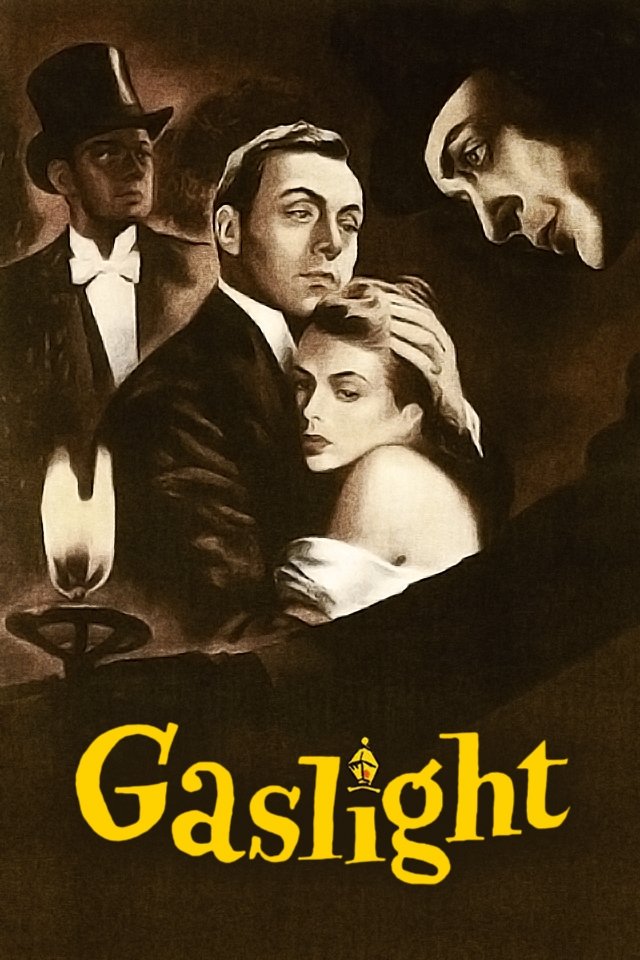
The Historical Era of the Film
Nothing quite transports me back in time like immersing myself in the history surrounding a film, and Gaslight (1944) feels like a product of the swirling uncertainty and transformation gripping the world during its creation. When I first studied the year 1944, I felt the pulse of a planet still entrenched in the chaos of World War II, a conflict altering the very fabric of daily life across continents. In the United States, I’m constantly struck by the sense of heightened vigilance and intense resourcefulness; wartime rationing affected everything from food to fabric, and the collective morale alternated between anxiety and hope as Allied forces moved across Europe. The political climate vibrated with both determination and exhaustion, as the Roosevelt administration navigated the endgame of a global struggle while managing the home front’s patience and resilience. Politically, the film industry operated under a unique pressure—balancing morale-lifting entertainment with the unspoken obligation to reflect the moment’s seriousness.
Economically, those war years had a paradoxical effect on Hollywood cinema. While other industries languished or shifted focus, the movie business boomed, driven by a public looking for both escape and meaning. I’ve always found it striking that the production era was marked by incredible constraints due to government-mandated material shortages, censorship from the Hays Code, and a shifting labor force as many men served overseas. Studios like MGM, which produced Gaslight, seemed to thrive in this adversity, crafting stories that carefully resonated with contemporary themes. Social conditions, meanwhile, reflected an America in flux: women were taking on new roles, standards of propriety were shifting, and uncertainty crept into even the most familiar domestic spaces. This background provides such a fertile stage for the psychological intrigue and domestic unease so deeply embedded in Gaslight’s fabric.
Social and Cultural Climate
For me, grasping the film’s social and cultural climate makes its nuances even more resonant, particularly when I look at the dominant anxieties shaping 1940s America. The aftermath of the Great Depression still lingered in memory, making personal security and social stability precious commodities. It always fascinates me how prevalent a kind of low-boil unease was beneath the apparent optimism; issues like trust, authority, and the fragility of relationships played out not just on screen but in everyday American life. The war fundamentally altered gender expectations—during my research, I was struck by how women started to fill traditionally male-dominated roles in manufacturing and administration, contributing to both empowerment and new sources of tension.
Culturally, film and media of the 1940s responded to these anxieties in varied ways, yet were always circumscribed by the Production Code that dictated what could be depicted onscreen. Concerns over subversion, deception, and even psychological manipulation made their way into the public consciousness and entertainment alike. Urbanization and the transformation of domestic life only heightened a sense of intrusion and surveillance—anxieties that Gaslight deftly mirrors in its confined settings and psychological ambiguity. Against this background, I sense an audience both craving reassurance and drawn to stories acknowledging the vulnerability beneath the surface of normal life.
- Wartime gender shifts
- Heightened anxiety about trust and authority
- Influence of the Production Code on storytelling
- Desire for escape mixed with realism
Even the rise of psychology—an emerging cultural force—found expression in popular culture, fueling interest in the motives and reliability of the self, a thread I notice running vibrantly through the film’s construction and audience interest.
How the Era Influenced the Film
I’ve always found it fascinating how the bruises of a historical moment find their way into cinema, often in details directors and writers might not even realize. When I consider Gaslight’s story of manipulation and psychological abuse, I can’t help but see echoes of the era’s widespread uncertainties. The film’s plot—revolving around a woman whose sense of reality becomes destabilized—felt to me like an intimate dramatization of broader social disorientation. So much of what defined the mid-1940s, whether the ambiguity of information during war or the shifting norms governing gender and domestic life, informs the film’s claustrophobic tension.
I notice that the strong presence of female agency—or, more pointedly, its denial—aligns closely with the mixed signals women were receiving in American society. The contrast between public celebration of women’s wartime contributions and private insistence on their subservience made stories of gaslighting particularly potent. The domestic sphere, coded in the film with rich Victorian details and constrained interiors, operates as a microcosm for a society grappling with questions of trust, authority, and hidden motives. Production budgets, costuming, and even the film’s shadow-soaked cinematography speak to both the economic constraints and creative ingenuity required under wartime conditions.
The wider interest in psychology at the time is something I find especially significant. The growing influence of psychoanalysis was making its way into mainstream narratives, and Gaslight channels that fascination with trauma, memory, and the tenuous nature of “reality.” The manipulation of Paula’s sanity serves as both an individual tragedy and an allegory for a population learning to question previously unshakable certainties. I think the film’s success at incorporating such dense contemporary anxieties without sacrificing suspense is a real testament to the sophistication of studio filmmakers responding to their historical moment.
Audience and Critical Response at the Time
From my research into audience and critical reactions, I get a strong sense that Gaslight struck a nerve precisely because of the historical undercurrents it evoked. Wartime viewers approached the cinema as both sanctuary and mirror, and responses to Gaslight reflected that duality. Moviegoers of 1944 had been primed by real-world propaganda and uncertainty to respond keenly to stories about trust and deception, and many found the film’s psychological intensity to be both thrilling and disturbing. The word-of-mouth I’ve encountered in archival sources, such as newspaper reviews and personal letters, reveals how closely viewers identified with Paula’s plight, often relating it to broader feelings of anxiety and doubt that shadowed their own lives.
Critics, for their part, lauded the film’s technical virtuosity, particularly its moody atmosphere and compelling performances. I’m always drawn to the historical detail that Gaslight enjoyed nominations at the Academy Awards, and that Ingrid Bergman’s portrayal resonated so powerfully with contemporary understandings of trauma. Many reviewers explicitly referenced the production era, noting the ways in which the story’s psychological complexity felt timely in a world battered by gaslighting propaganda and the uncertainty of war. Some, of course, pushed back against the film’s darkness, suggesting that audiences might prefer lighter fare during such grim times, but even these voices acknowledged the power of the film’s resonance. Ultimately, the mixture of discomfort and catharsis audiences experienced seemed deeply intertwined with the historical context from which the film emerged.
Why Historical Context Matters Today
The longer I study film history, the more convinced I become that understanding the historical context adds immense richness to any viewing experience. For Gaslight, this is especially true. When I watch the film with an awareness of its roots in the social, political, and economic pressures of the 1940s, each scene acquires new layers of significance. I start to see how the film’s preoccupation with doubt, manipulation, and psychological instability isn’t merely a narrative device but a reflection of the collective state of mind at a pivotal moment in modern history. Understanding the pressures of wartime America, the turbulence of gender relations, and the impact of emerging psychological theories allows me to read the story not just as a personal drama but as a subtle commentary on a world in flux.
This context transforms the characters for me; Paula’s experiences feel less like isolated fiction and more like a pointed allegory for anyone struggling to make sense of a rapidly changing reality or to locate a stable sense of self amid external upheaval. Contemporary viewers might miss how audiences in 1944 would have understood the stakes of her predicament in light of wartime propaganda and the pervasiveness of misinformation—realities shaping both public life and personal relationships. The film’s technical and artistic choices, too, become much more evocative when I remember the constraints and innovations demanded by the era, from set design to the use of light and shadow.
I believe that returning to the historical context of a film like Gaslight is less about nostalgia and more about deepening the conversation between past and present. Many of the anxieties it illuminates—about truth, power, and identity—feel as urgent now as they did in the 1940s. For me, appreciating this context is both a form of homage to the artistry that made the film possible and a tool for understanding each era’s unique challenges. These perspective shifts are why historical analysis remains central to my approach; it helps me see both the movie and myself, as a viewer, situated within the broader currents of history.
After understanding the factual background, you may want to see how this story was received as a film.
🎬 Check out today's best-selling movies on Amazon!
View Deals on Amazon