
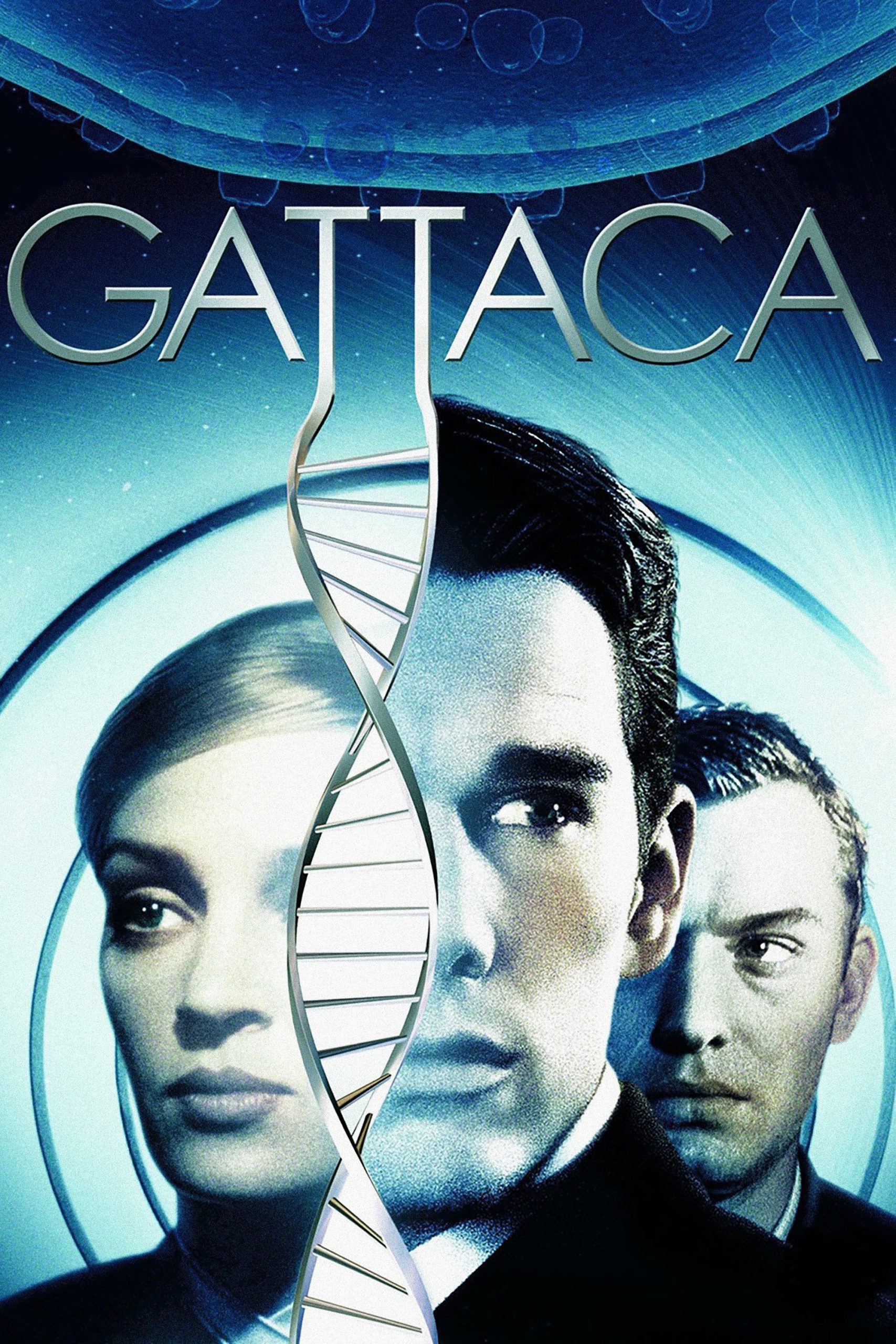
The Historical Era of the Film
Whenever I revisit Gattaca (1997), I’m immediately drawn back to a particular kind of late-1990s anxiety—a specific mixture of hope and unease that permeated the era’s political, economic, and social conditions. The late twentieth century, especially the 1990s, felt like a transitional epoch, a pivot away from Cold War certainties and toward a world increasingly defined by new technologies, rapidly changing economic realities, and simmering questions about the future of humanity itself. I observed that the decade was marked by unprecedented economic optimism in the United States: unemployment rates were low, the tech sector was booming, and a sense of post-Cold War triumphalism colored American self-perception. I saw people who genuinely believed that, with the right tools, almost anything was possible. It was easy to buy into the promise of Silicon Valley and the endless expansion of the internet.
But underlying that optimism, I also sensed persistent doubts. Political debates about what it meant to be a “global citizen” were intensifying. Leaders like Bill Clinton and Tony Blair talked of a “Third Way,” trying to manage the competing demands of free market capitalism and the social safety net. Economic globalization was reshaping manufacturing and labor, creating both winners and losers in startlingly rapid fashion. In daily conversation, I remember people marveling at the new pace of change but also expressing worry about who might be left behind. There was a growing chorus of concern about privacy, job security, and the fate of personal identity in a world of relentless competition and, increasingly, genetic technologies.
One crucial historical factor stood out: the Human Genome Project. Initiated in 1990 and making headlines throughout the decade, the project sought to map human DNA in its entirety. By 1997, when Gattaca was released, the public was both awed and cautious about the revolutionary potential of genetic engineering. Newspapers routinely ran stories about “designer babies,” gene therapies, and the ethical dilemmas they posed. I recall conversations and editorials wondering if future societies would use genes to sort human worth, a fear that sits at the heart of Gattaca’s narrative.
At the same time, the shadow of earlier political debates on bioethics lingered. The Reagan-Bush era had stoked a culture war around topics like abortion, reproductive rights, and the definition of life itself. In this environment, Gattaca felt like both a prophecy and a cultural mirror, drawing on active debates that dominated not only the news but also dinner tables and university lecture halls. I found the tension between scientific advancement and ethical responsibility to be one of the hallmarks of the production era, especially as new biotechnologies began to blur the lines between the public and the private, the social and the biological.
Looking back, the period when Gattaca was made was not only teeming with technological optimism—a new frontier in Silicon Valley and genomics—but also charged with political debate and economic reorganization. The social contract itself was in flux, and this uncertainty, for me, pervaded the film’s entire sensibility. It’s as if Gattaca condensed all that end-of-century hope and dread into one distilled vision that refused to let its viewers look away.
Social and Cultural Climate
When I reflect on the social and cultural climate of the late 1990s, what strikes me most is the shift in how people thought about individuality and identity amidst technological advancement. Dominant social attitudes were shaped by a curious mix of techno-optimism and growing skepticism regarding where these innovations would lead us. I recall intense public focus on genetic engineering and the prospect of transforming not just medicine but the very concept of what it meant to be human. These ideas were no longer the province of science fiction; they had become dinner table topics, discussed with a mix of fascination and alarm.
Popular culture reflected this unease. From Dolly the sheep’s cloning in 1996 to the constant headlines about breakthroughs in genetic testing, there was a real sense that engineering our biological destiny was suddenly within reach. I remember how movies, television, even magazines of the period expressed both celebration and suspicion toward these advances. At the same time, the 1990s saw a surge of concern about discrimination and social stratification. Issues of race, class, and access were discussed with increased urgency, dovetailing unexpectedly with fears about the rise of a new biologically-based social hierarchy.
The aspiration for a meritocratic society collided with the realization that new technologies could cement existing inequalities or even create new, insidious forms of discrimination. I saw people wrestling with the possibilities of a world where one’s value might one day be reduced to a string of nucleotides. In that way, Gattaca spoke directly to concerns I sensed everywhere—the fear that society might use the veneer of scientific progress to justify the reemergence of eugenic ideas under a new guise. No one wanted to revisit the horrors of early twentieth-century eugenics, but the technological tools now existed to make “soft eugenics” culturally acceptable, hidden behind terms like “optimization” or “enhancement.”
Beyond the genetic, the era’s broader obsession with self-improvement permeated everything from pop psychology to fitness culture and the explosion of self-help literature. The constant injunction to maximize one’s potential seemed both exhilarating and exhausting. I think this cultural trend is embedded deeply within the world of Gattaca, where the boundaries between self-improvement and social engineering become disturbingly thin.
Underlying these trends was the ever-present concern about privacy and surveillance. The accelerating digitization of records, the dawn of the internet era, and the shift toward tracking and quantifying every aspect of life created anxieties about personal autonomy that I still remember discussing with my peers. Gattaca, in its own austerely stylized way, gave visual and narrative form to these fears, offering a society where nothing about a person could escape scrutiny—a logical extension of the dominant social attitudes and cultural anxieties of its time.
How the Era Influenced the Film
The historical circumstances that shaped the 1990s directly influenced almost every aspect of Gattaca’s production and story, at least as I interpret it. Rarely do I see a film so tightly linked with the immediate preoccupations of its day: the rise of biotechnology, debates around determinism versus free will, and the persistent question of what constitutes a “worthy” life. The Human Genome Project and Dolly the sheep weren’t just news stories—they were the material from which the film’s world was built. I can’t help but think that the filmmakers, like many of us, regarded this historical landscape not merely as backdrop, but as a challenge: What will society do once it possesses the godlike powers science promised?
The production design and narrative choices—cold, clinical, yet elegant—drew from a contemporary aesthetic I associate with late modernism and the optimism, as well as the sterility, of technological advance. I always feel that the world of Gattaca is devoid of clutter, appropriately stripped down to its genetic essentials, mirroring the decade’s recurring desire to “streamline” and “optimize” everything from business to personal life. There’s a sense in which the characters themselves embody that tension: at once liberated by progress and crushed beneath its expectations.
For me, what’s significant is how the film’s concept of “valid” versus “invalid” echoes the era’s real debates around insurance, access to education, and the meritocratic myth. I remember heated discussions about whether genetic information should be used to deny someone a job or insurance coverage—debates that would soon influence actual legal frameworks, like the Genetic Information Nondiscrimination Act passed a decade later. Gattaca’s presentation of a future ruled by genetic discrimination directly channels those social anxieties, rendering them personal and urgent in the stories of its characters.
The casting of Uma Thurman, Ethan Hawke, and Jude Law feels to me very much of its moment—the photogenic icons of the era’s specific brand of idealized youth and talent. Their performances, marked by an undercurrent of brittle ambition, give form to a generational fear that the yardsticks for success, always shifting, might one day be hardwired into our very DNA. The film’s minimalist score and period-ambiguous set design reinforce an in-between state, not quite contemporary but not fully “future,” in a way that places it precisely at the crossroads of the 1990s imagination.
- Completion of the Human Genome Project was imminent
- Debates on biotechnology dominated headlines
- Concerns around insurance and employment discrimination based on new tech emerged
- Recent memory of eugenics policies influenced ethical debates
Through these choices, I see Gattaca less as a prognostication and more as a direct response to the rapidly shifting ground of its production era—a cinematic record of the moment when humanity anxiously peered into the genetic future and wondered what kind of world was about to be born.
Audience and Critical Response at the Time
Immediately after its release, I observed that Gattaca didn’t set the box office alight, but to me this always seemed less an indictment and more a sign of how challenging, even uncomfortable, its questions were for mainstream audiences in 1997. Many people I knew at the time were drawn in by its cool visual style and the star power of its cast, but seemed unsure what to make of the film’s austerity and the uncompromising bleakness of its vision. Even so, the critics whose opinions I respected recognized the film’s ambition almost immediately. I recall reviews describing Gattaca as a “chilling parable” and “eerily plausible,” often singling out its exploration of discrimination and personal agency as especially prescient. Still, there were others who found its approach too distant or cerebral, faulting its measured pace and clinical tone.
For me, audience reactions also reflected broader cultural divides. Some saw the film’s depiction of genetic determination as a timely warning, arriving as debates raged around cloning, gene therapy, and the possibility of patenting human genes. Others shrugged off its speculative scenario, convinced that the legal and ethical safeguards of modern democracy would prevent such dystopian futures. What I found most striking was how quickly the film found a devoted following among students, bioethicists, and those involved in policy—even as it puzzled or disappointed casual moviegoers in search of more conventional thrills.
My sense is that, with time, Gattaca’s reputation grew, especially as real-world controversies over privacy, surveillance, and genomics caught up with its vision. The film’s slow-burn critical acclaim reflected a growing appreciation for its willingness to ask hard questions. I think of Gattaca now as a film that offered its initial audience a glimpse of an emerging set of ethical and societal problems—problems for which, even today, there are still no easy answers.
Some historians and commentators, myself included, have looked back and remarked on how the film’s relative lack of commercial success was because it was, in some respects, ahead of its time. The conversations it anticipated—about genetic discrimination, privacy, and the boundaries of scientific progress—continue to unfold in the decades since. I see its reception now as emblematic of how art can serve as both a mirror and a warning, shaping the discourse long after the initial lights come up.
Why Historical Context Matters Today
Whenever I share my thoughts on Gattaca, I find that understanding its historical context makes the film click into place in a way that nothing else does. I’ve often argued that Gattaca’s resonance comes not just from its narrative, but from its position at the fault lines of the 1990s—where decades of genetic research, bioethical arguments, and increasing faith in technology met head-on with the very real worry about what those changes might do to the fabric of modern society. For someone coming to the film today, appreciating this background helps explain why so many of its concerns feel not just futuristic but startlingly current.
The fears—and hopes—that informed the film are now part of public consciousness. When I consider ongoing debates about CRISPR gene editing, data privacy, and inequality in access to medical advances, I see Gattaca not as a relic, but as a living document. Knowing how close the film’s production era ran to actual historical turning points gives added gravity to its questions. It’s one thing to watch a dystopia unfold onscreen; it’s another to understand how closely it maps onto the world its creators inhabited and anticipated.
For me, this historical lens also deepens my empathy for the characters. Realizing that the world of Gattaca emerged from anxieties about meritocracy, discrimination, and the potential return of eugenic logic brings home the fragility of the systems we take for granted. I notice how, without this context, it’s easy to reduce the film to a grim curiosity—another cautionary tale among many. Armed with knowledge of the era, I see it instead as a product of urgent debate, imbued with the hopes and fears of people wrestling with the meaning of progress.
I’m convinced that films like Gattaca are best appreciated when we connect them to the lived experiences, political choices, and cultural debates of their time. What once seemed speculative or remote now feels alarmingly near. To me, tracing Gattaca’s emergence from its own historical soil doesn’t diminish its impact—it amplifies it, reminding us that the questions of who counts, who decides, and on what basis are never settled, never finally resolved. They’re inherited with every new generation, encoded in the DNA of both our science and our art.
After understanding the factual background, you may want to see how this story was received as a film.
🎬 Check out today's best-selling movies on Amazon!
View Deals on Amazon