The Historical Landscape
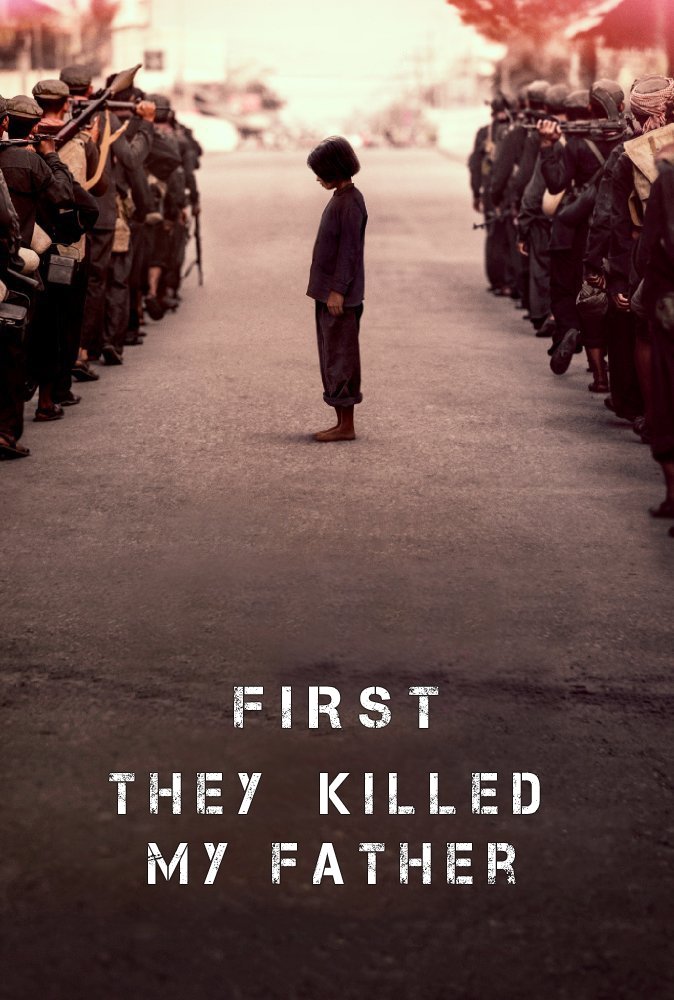
Whenever I revisit “First They Killed My Father,” I’m always struck not just by what it shows about Cambodia’s tragic past, but by what it reveals about the global sensibilities of the late 2010s. When the film emerged in 2017, the world seemed to be at a crossroads, both connected and divided in ways that felt unprecedented to me. I remember that year vividly—the omnipresence of screens, the increasingly urgent conversations around refugees and immigration, and the hunger for stories that bridged divides. There was a palpable yearning for honest narratives, especially those excavating uncomfortable truths from the margins of history. People sought authenticity, craved voices that had previously been silenced. “First They Killed My Father” arrived as social media, streaming services, and global news cycles were weaving the personal into the political, pushing the stories of survivors, immigrants, and witnesses onto the world stage.
I think about how the decade leading to the film’s release was marked by intense global migrations. The Syrian refugee crisis dominated headlines, and debates around borders and belonging saturated public discourse in the United States and Europe. This context gave Angelina Jolie’s adaptation of Loung Ung’s memoir an unexpected resonance. The very act of telling this story—undaunted, uncompromised, and in the Khmer language—felt, to me, like a testament to that era’s evolving ideas about representation, agency, and cross-cultural accountability.
Looking back now, 2017 was also a moment when Hollywood and the wider film industry reckoned with their blind spots around race, gender, and nationality. Producers and audiences alike were interrogating the biases embedded in whose stories got told, and how. #OscarsSoWhite trended recurrently, pressuring studios to greenlight projects from and starring people of color. Documentaries and feature films began to steadily move beyond simplistic, Western-centric perspectives. In this fertile but uneasy atmosphere, “First They Killed My Father” not only emerged as a work of historical remembrance, but also as a cultural intervention—a corrective to years of cinematic erasure and simplification of Southeast Asian trauma.
It’s hard to overstate the power I felt in witnessing a story of the Khmer Rouge era told predominantly through Cambodian eyes, shaped by a Cambodian-American voice and enacted by Cambodian actors. At a time when nostalgia for Western power was colliding with calls for restitution and accountability, the very existence of this film marked a shift. And it was a shift that had very specific roots in the swell of global awareness, identity politics, and the re-examination of imperial histories that defined the era of its release.
Cultural and Political Undercurrents
For me, “First They Killed My Father” sits at an intersection where memory meets activism. By 2017, it was impossible to ignore how culture and politics were mutually shaping each other. From women disclosing abuse through #MeToo to renewed debates around colonial culpability, there was a collective urge to lift the veil on what had been hidden or whitewashed in history. This wasn’t just a matter of entertainment; it was a matter of ethics. I felt this at every turn—in the films that won awards, the books that captured bestseller lists, and the conversations happening in coffee shops and classrooms.
In this spirit, the film’s genesis can’t be separated from larger debates around authorship and whose lens gets to define trauma. I remember being struck that Jolie, herself an outsider to Cambodia but the adoptive mother of a Cambodian child, worked hand-in-hand with Loung Ung and the local creative community. It wasn’t simply a Western auteur’s gaze; it was a collaboration that sought to avoid the pitfalls of exploitation and voyeurism. As someone who has long analyzed the ethics of storytelling, I recognized that this film’s production was, in itself, a political statement. It wasn’t just about depicting the horrors of the Khmer Rouge years—it was about demonstrating a new model of authorship, a cross-cultural solidarity that reflected the aspirations and anxieties of the era.
Thinking back, I also associate the film with the Trump administration’s rise and the accompanying surge of toxic nationalism and anti-immigrant rhetoric. The United States, along with much of the world, was embroiled in heated arguments about whose agony deserved empathy and restitution. I remember how many viewers read the depiction of childhood resilience and forced displacement in “First They Killed My Father” as a comment on contemporary crises. The film felt current in a way it might not have a decade earlier; its child’s-eye view became a kind of mirror, challenging audiences to reconsider their own responsibilities in the face of distant suffering.
There was another undercurrent, too: the democratization of film production and distribution. Netflix’s involvement signaled that this story, rooted in Cambodian pain, could find a global audience outside traditional distribution constraints. I see this as emblematic of an era where screens, streaming, and viral word-of-mouth gave underrepresented stories unprecedented reach. The barriers that once kept films like this marginalized in festivals or international sections were dissolving, reshaping who was allowed to tell their truths—and who was expected to listen.
The Film as a Reflection of Its Time
When I reflect on “First They Killed My Father,” I see not just a film about surviving atrocity, but a work inexorably shaped by the unresolved reckonings of its release era. What stands out to me most—not in the plot details, but in the film’s very form and focus—is the effort to center Cambodian subjectivity, memory, and trauma without translation for Western comfort. I was moved by the commitment to the Khmer language and local casting, a choice that, to me, signaled a sea change in how stories from the developing world could be told for a global audience. No longer was Southeast Asian tragedy to be translated solely for Western consumption; instead, there was a drive to honor the dignity and interiority of the people who lived it.
In the late 2010s, films like this seemed to respond directly to a growing impatience with representations that only skirted the surface of historical trauma. I felt a hunger for depth, for films that asked audiences to witness rather than merely observe. Watching “First They Killed My Father,” I noticed how every frame was suffused with a sense of immediacy and immersion—painful, yes, but also restorative. It offered no Western saviors, no easy fix for the viewer’s discomfort. In many ways, I saw this as a challenge thrown down to the industry, urging filmmakers and audiences alike to confront uncomfortable histories without the filter of distance or the balm of catharsis.
There’s something in the rhythm and silence of the film that, for me, echoes the meditative, sometimes maddening ambivalence that characterized public conversations about violence and justice in its release era. The film rarely offers explicit explanations or contextual lectures about the Khmer Rouge. Instead, it trusts viewers to make sense of horror through the eyes of Loung, the young protagonist. To my mind, this isn’t just an aesthetic or narrative strategy; it’s a larger reflection of the time’s belief in trusting survivor testimony and privileging the gaze of the oppressed over the comfort of the privileged. The 2010s were dominated by memoirs, first-person journalism, and confessional literature, all ways of situating lived experience at the heart of understanding. The film internalized this ethos, dramatizing atrocity without the detachment of historical distance.
What I find equally significant is the film’s refusal to flatten Cambodian suffering into a singular or monolithic narrative. The focus on familial separation, the psychic toll of systematic dehumanization, and the resilience found in small, everyday choices—these elements resonated with the era’s broader grappling with trauma, from war zones to the #MeToo movement. In my view, “First They Killed My Father” made visible the connective tissue between individual memory and historical catastrophe, and in doing so, mirrored the collective attempt to reconstruct fragmented identities in a world reeling from constant upheaval.
Changing Perceptions Over Time
As someone who’s studied the ebb and flow of cinematic reputations, I’ve noticed that “First They Killed My Father” looks different depending on when—and why—it’s watched. Upon its release, I remember critics lauding its authenticity and emotional impact, while some questioned the authorship dynamics and whether it fully transcended its famous director’s presence. At the time, conversations tilted toward the novelty of Jolie directing in Khmer, and the ways her celebrity might amplify or overshadow the Cambodian voices at the film’s core. In those early reviews, the mood was cautiously optimistic—a sense that while not perfect, the film marked progress in global storytelling.
But as the years have passed, I’ve observed new layers emerging in how viewers approach the film. The intense debates about cultural appropriation, which surged in the late 2010s, have since become more nuanced. Now, when I introduce the film in seminars or discussions, audiences are less preoccupied with Jolie’s fame and more interested in the nuts and bolts of collaboration: How did the filmmakers share authority with Cambodian artists? What does ‘authenticity’ mean when trauma is filtered through multiple lenses? There’s an evolving appreciation for process and participation, rather than just product.
I also think shifting global anxieties have changed the film’s resonance. In the years following its debut, with ongoing refugee crises, the war in Ukraine, and the persistence of mass migration, there’s a keener sensitivity to stories of displacement and survival. I listen as young viewers—many from immigrant and refugee backgrounds—draw parallels between Loung’s fragmenting world and their own experiences or inherited narratives. The film has quietly transitioned from an artifact about Cambodian history to a broader meditation on loss and resilience, seen through prisms that keep multiplying with time.
Revisiting critical discussions, I find that early skepticism about Netflix as a “serious” film platform has evaporated. Now, in classrooms and festivals, the film stands as a marker of streaming’s legitimation of meaningful, risk-taking cinema. The accessibility that once drew suspicion now feels indispensable, part of a larger democratization of historical storytelling. I see the film invoked alongside titles from other regions—Syrian, Rohingya, Central American filmmakers—an emblem of a wave that didn’t crest but kept swelling.
Historical Takeaway
What lingers for me, above all, is how “First They Killed My Father” distills the spirit of its era—a time when global cinema began to earnestly reckon with its responsibilities to memory and justice. The film’s textured, unsparing gaze reflects not only Cambodia’s pain, but also a moment when audiences around the world became willing to look squarely at histories they’d previously averted their eyes from. To me, its greatest lesson lies in the method as much as the message: the prioritization of local voices, the refusal to dilute trauma for easier consumption, the insistence on bearing witness from within rather than without.
For those of us who track the history of cinema, the film’s release stands as a watershed—an inflection point after which stories like Loung Ung’s were no longer peripheral, but central. It’s a reminder, every time I watch it, of the ways contemporary anxieties, yearnings, and debates shape not only what gets made, but how we come to terms with our collective pasts. The historical takeaway, for me, is as much about process as outcome—the transformative potential unleashed when empathy is coupled with accountability, and when trauma is rendered legible on its own terms, not just for the comfort of the audience but for the dignity of those who endured it.
To see how these real-world elements shaped the film’s impact, you may also explore its reception and legacy.
🎬 Check out today's best-selling movies on Amazon!
View Deals on Amazon