
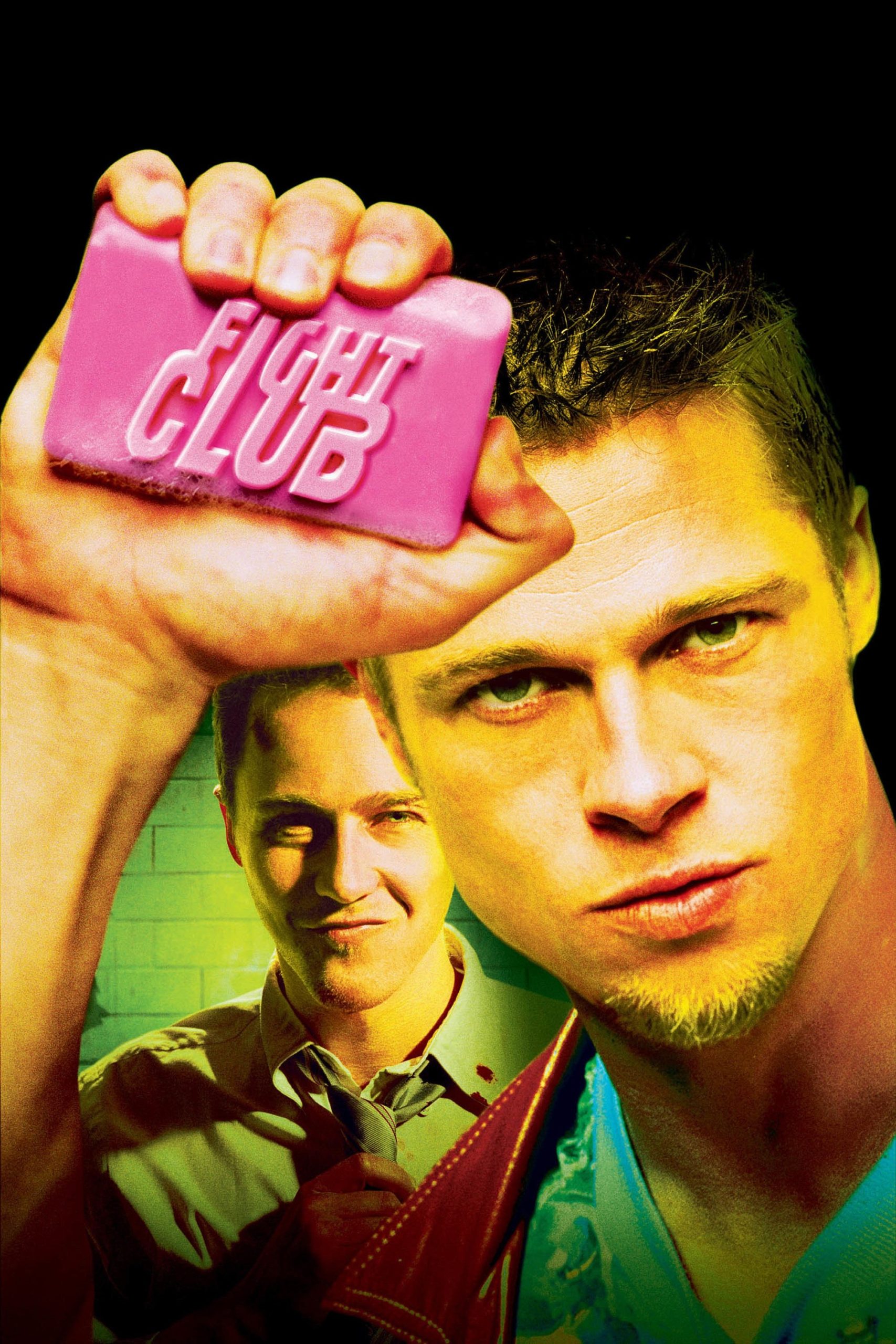
The Historical Era of the Film
Looking back at the moment when Fight Club (1999) burst onto the screen, I’m struck by how much the political, economic, and social turbulence of the late 1990s informed my reading of the film. The decade’s final years were shaped by a peculiar blend of optimism and disaffection. Political stability characterized much of the Clinton administration in the United States—there was a booming economy, low unemployment, and for a while, a generalized sense of American prosperity. Every time I watch the film, I’m reminded that this surface sense of wellbeing masked deeper anxieties: questions about identity, value, and purpose in a rapidly changing, increasingly digital world.
For me, the years leading up to the film’s release felt like a buildup of contradictions. On one hand, the economy thrived with dot-com ventures, stock markets soared, and consumer confidence was robust. On the other, there was a growing unease about material excess and empty promises of personal fulfillment through consumption. The Cold War had ended, leaving Americans without a clear enemy; as I see it, an existential sense of instability flickered beneath the shiny exterior of American life.
Against this backdrop, political scandals—most notably the impeachment of President Clinton—served as a reminder that trust in institutions was fragile, and public disillusionment simmered just below the surface. Yet, despite these scandals, the government itself seemed relatively unthreatened by outside forces. What fascinated me about late 1990s America was how it combined stability with a pervasive sense of something missing, an undercurrent best described as cultural malaise.
The social context, too, bore unique elements: urbanization was accelerating, alienation and loneliness became public talking points, and I noticed more people discussing the void felt in supposedly fulfilled lives. This was also the era when technological change—the early internet and mobile phones—started to alter daily routines and personal connections. In all these ways, the political, economic, and social context was ripe for a film that challenged the prevailing sense of comfort and forced viewers like me to confront the less comfortable side of late twentieth-century life.
Social and Cultural Climate
For me, the dominant social attitudes of the late 1990s were defined by contradictions. Everywhere I turned, the cultural conversation oscillated between triumph and dissatisfaction. It was common to hear people talk about self-improvement, therapy, and consumer choice as paths to happiness, but just as often, those promises rang hollow. A growing skepticism toward advertising and the beauty industry, coupled with the rise of “slacker” culture, made me acutely aware of the gap between public ideals and private realities.
New forms of masculinity—and an intense anxiety about what it meant to “be a man”—were taking center stage. Watching friendships and relationships in my circles, I picked up on a sense of lost purpose among younger men, who often felt out of sync with both traditional masculine roles and the softer, more introspective models suggested by emerging cultural trends. American media in this era seemed endlessly preoccupied with questions of identity, from reality television’s unscripted chaos to the endless articles dissecting gender roles and corporate ennui.
I was also deeply aware of the personal cost of the so-called “American Dream.” The consumerist boom was both exhilarating and oppressive. The rise of big-brand retail, the homogenization of cities, and the emphasis on material goods as substitutes for authentic connection all seemed to leave people, myself included, with a quiet, unspoken longing for something real. This climate of mass marketing and manufactured desire made rebellion and nonconformity so much more alluring—even necessary.
Amid these contradictions, public discussions of mental health became more prominent. Support groups became fixtures in popular culture, and therapies of all kinds proliferated. At the same time, conversations about violence—whether in the news, in entertainment, or within society itself—seemed to reach a fever pitch. The sense that society was both safer and more volatile than ever became a paradox I couldn’t ignore.
- Rise of consumer culture and global branding
- Masculinity crises and shifting gender norms
- Increased visibility of mental health issues
- Digital technology changing communication
Pop culture, from the music I was listening to (grunge, alternative rock) to magazines on every newsstand, reflected these tensions and desires. In retrospect, it’s obvious to me that the dominant mood was one of profound questioning, and that a film like Fight Club could only have emerged in such restless cultural soil.
How the Era Influenced the Film
When I think about the way the historical moment shaped every aspect of Fight Club, I can’t help but see it as a snapshot of late 1990s disillusionment. The very structure of the film, with its unnamed protagonist and unreliable narrative, echoes the era’s craving for authenticity and fear that everything—work, relationships, even the self—had become a commodity. I see the protagonist’s crisis as inseparable from the social climate he inhabits: a world obsessed with material possessions, but starved for meaning.
From my perspective, the era influenced the film’s exploration of masculinity just as powerfully. I witnessed, both in art and life, the struggles of men confronting a loss of traditional roles. The popularity of self-help books and men’s groups, ranging from New Age therapy to hyper-masculine “boot camps,” reflected a desperation for guidance. I remember reading think-pieces about the supposed “death of the American male”—a phrase that seemed to haunt the airwaves and popular culture in the years around 1999.
Fight Club’s stylistic and narrative choices also mirror its time. The film’s kinetic editing, digital effects, and hyperactive style strike me as direct responses to the media-saturated reality of the late nineties—the kind of reality where everything can feel both real and simulated, urgent and empty. The soundtrack’s aggressive electronica, its product placements, its cool cynicism: all of these feel rooted in a moment when brands seemed to shape as much of my personality as family or culture did.
Even the film’s production—its willingness to shock, to break the fourth wall, to court controversy—reflects a historical moment when American cinema was testing boundaries. As I see it, Fight Club could only have existed at a time when the film industry was willing to bet on complex, adult-oriented stories, trusting audiences to wrestle with uncomfortable questions rather than offering easy answers. The influence of nihilism—an outlook that questions traditional values and meaning—manifests throughout the film, and for me, it’s a direct consequence of the decade’s paradoxes: prosperity and emptiness, peace and tension, visibility and alienation.
Audience and Critical Response at the Time
I vividly recall the shockwaves Fight Club sent through audiences and critics. The late nineties were not an era where films like this were common, and the movie’s brutal honesty polarized viewers. I remember some critics condemning its violence and perceived nihilism, calling it irresponsible or even dangerous, while others praised it as a vital exploration of modern malaise. On a personal level, I saw how friends, classmates, and filmgoers debated whether the film was a celebration or a critique of rebellion—it felt like cultural fault lines emerging in real time.
For many in my circles, the film struck a raw nerve. Young men, in particular, related viscerally to the depiction of corporate life as soul-crushing—a vision of the modern world I often heard echoed in my own conversations. The film’s metaphors and images, like the famous fight scenes or references to support groups, quickly became cultural touchstones. I remember seeing its most provocative lines emblazoned on T-shirts and quoted in discussions about what it meant to be authentic in a pre-packaged world.
Not everyone was receptive, though. Critics whose voices I respected, such as Roger Ebert, raised concerns about the potential glorification of violence, questioning whether the film might inspire the very nihilism it sought to portray. Mainstream reactions were split, and box office numbers reflected that ambivalence—Fight Club was far from a runaway hit upon initial release. But even from the start, I sensed it would have staying power; word-of-mouth quickly transformed it into a kind of countercultural lightning rod, especially among those frustrated by the era’s social and economic realities.
I remember the earliest DVD releases creating a sense of community among viewers who felt misunderstood or alienated, turning Fight Club into something larger than a movie—an emblem of generational discontent. For better or worse, the film’s reception mirrored the tensions and confusions of its time, giving voice to feelings I rarely saw addressed elsewhere in popular media.
Why Historical Context Matters Today
For me, understanding the historical context behind Fight Club sheds light on its continuing relevance and deepens my appreciation every time I revisit the film. When I watch the movie now, its questions about consumerism, masculinity, and alienation take on even greater weight precisely because I know the anxieties that shaped it were not just passing fads, but deep currents in late twentieth-century society. Recognizing the backdrop of pre-millennial tension allows me to see why the film’s critique of modern life landed so powerfully—why it felt like a wake-up call, or perhaps a warning.
Today, with social media, gig economies, and digital consumption dominating so much of daily life, the film’s concerns seem eerily prescient. I find that understanding where these questions came from—what made them so urgent at the time—gives me critical insight into why the film continues to speak to audiences decades later. It’s not just nostalgia; it’s a reminder that the struggles depicted in Fight Club are part of a larger historical conversation about who we are and what we value.
Appreciating the film’s context also helps me push past surface readings of shock or controversy. Rather than seeing Fight Club as simply violent or confrontational, I understand it as an artifact of a particular moment: a society grappling with abundance and emptiness, confidence and skepticism. Knowing the political and economic backdrop gives me a framework for interpreting not only the film itself but also the way audiences—myself included—respond to its provocations.
In my view, historical context transforms Fight Club from a story of personal crisis into an exploration of what it means to inhabit a world that offers both everything and nothing. The questions raised by late 1990s society remain unresolved; I see the film as a mirror reflecting anxieties that are only more pronounced today. By situating the movie in its original era, I gain both perspective and empathy—not just for its characters, but for my own place in a world where the search for meaning is, if anything, even more complex now than it was then.
After understanding the factual background, you may want to see how this story was received as a film.
🎬 Check out today's best-selling movies on Amazon!
View Deals on Amazon