
The Historical Landscape
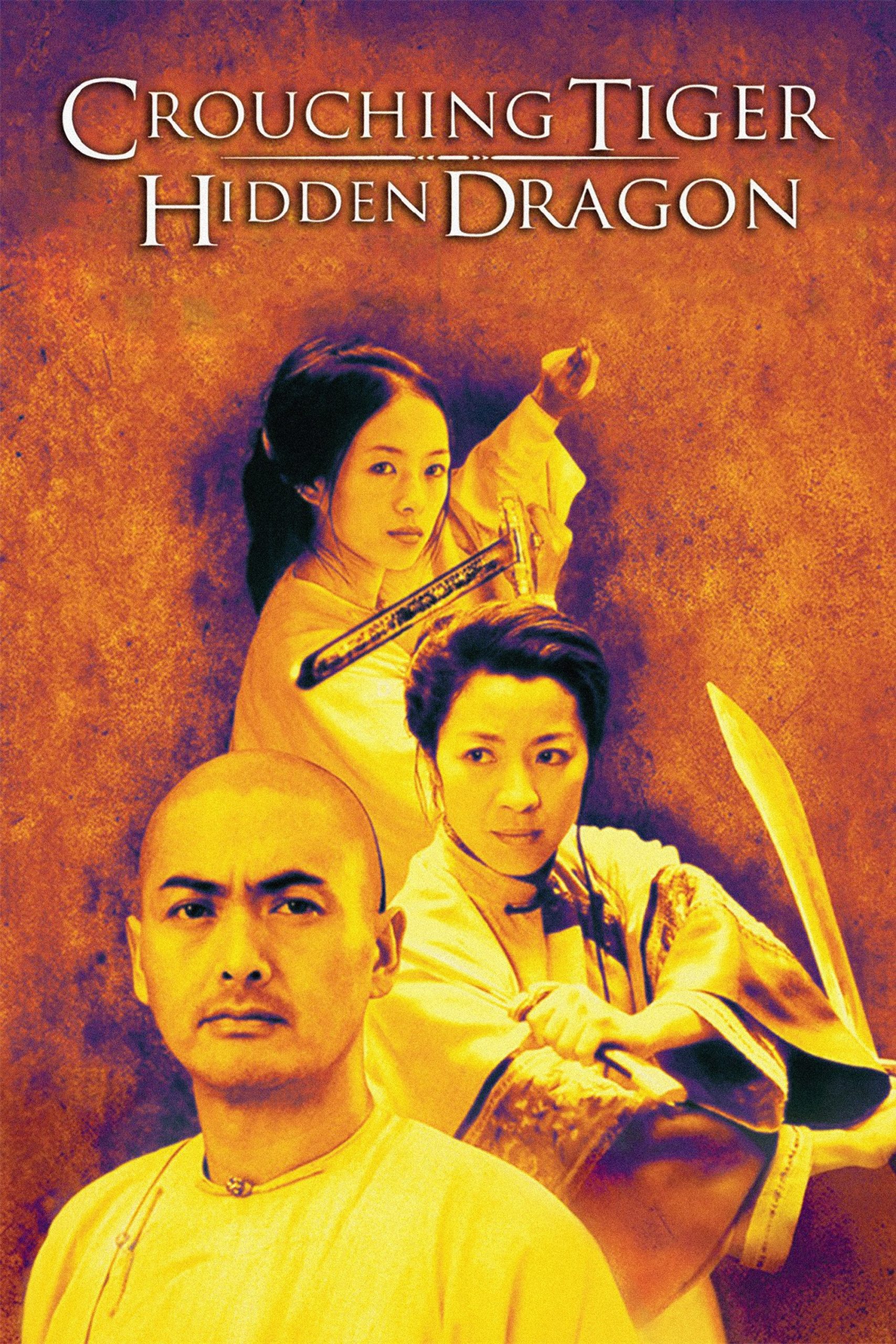
Whenever I revisit Crouching Tiger, Hidden Dragon, I’m transported not only to the poetic landscapes of ancient China but also to a specific moment at the turn of the millennium—a slice of time shaped by both ambivalence and aspiration. The film’s global debut in late 2000 wasn’t just an artistic event for me; it was an encrypted message about the era’s dizzying speeds of cultural convergence. The late 1990s and early 2000s marked the world’s headlong rush into digitization, connectivity, and globalization. I remember a feeling of breathlessness, watching as borders dissolved on the internet, economies interwove, and Hollywood, under the weight of megablockbusters, seemed to saturate everywhere. Yet, paradoxically, there was a growing hunger for stories from farther shores—a curiosity for authenticity amid uniformity, roots beneath the swirl of global sameness.
Asia, in my eyes back then, was no longer a mystical periphery; cultural exports from Hong Kong, Japan, Korea, and China beckoned curiosity, blurring lines between cultural centers and so-called margins. Meanwhile, in Hollywood, martial arts had cycled from camp to cult, but not yet to the mainstream respectability that Crouching Tiger, Hidden Dragon would demand. The Y2K anxieties were fading fast, replaced by dreams of a hyperconnected world—this was the dawn of DVDs, the chatter of Napster downloads, and the stuttering excitement of streaming video. I sensed that, beneath the allure of futurism, the appetite for stories steeped in nostalgia—myth, legend, and tradition—had deepened. In these shifting tectonics, I don’t just see the era’s contradictions; I feel them humming beneath the film’s surface, ready to erupt with each balletic leap and whispered word.
Cultural and Political Undercurrents
Peeling back the layers, I find that Crouching Tiger, Hidden Dragon emerged from a tapestry of social and political dynamics that were hard to ignore. Asia’s economic rise, and especially China’s entry into the World Trade Organization within a year of the film’s release, seemed to signal a global rebalancing of power. For years, I had watched Western films filter Chinese and Asian cultures through exoticization, but suddenly there was talk, in the artistic and political spheres alike, of partnership and parity. Ang Lee, as a Taiwanese-born director who navigated both Eastern and Western cinema, felt to me like the perfect mediator for this cultural dialogue—neither occupying a single national identity nor bound by just one cinematic tradition. The film’s very existence was a testament to doors opening, not just economically but imaginatively.
In the West, the late ’90s had grown restless with the monocultural, and there was an emerging recognition of multicultural narratives—not always gracefully handled, sometimes commodified, but nonetheless present. I recall that year as a time of identity debates, both personal and national. Chinese New Year festivals and “Asian cinema” retrospectives proliferated among mainstream audiences precisely because of this cross-cultural thirst. At the same time, China itself was reconciling breakneck modernization with deep historical currents—its film industry transitioning between the Fifth and Sixth Generations, grappling with how to reconcile state-sanctioned visions of tradition with bold, sometimes subversive, artistic voices. I feel the push and pull of those debates in every frame of Lee’s film: the tension between duty and desire, tradition and reinvention, surface harmony and inner turbulence.
Gender, too, was mutating in public consciousness. The late ’90s and early 2000s were awash in conversations about feminism, post-feminism, and the evolving portrayal of strength. I found that Crouching Tiger, Hidden Dragon didn’t simply ride these currents, but braided them into its DNA. Not since the wuxia films of Cheng Pei-pei’s (herself a significant presence in the film) golden era had I witnessed narratives where women’s agency was explored so robustly. The very ethos of “wuxia” suddenly became a vessel to examine societal norms—especially a time when Western action heroines were rare, and the idea of women overtly expressing physical prowess and emotional autonomy was still a negotiation. I felt Lee’s layering of classical and contemporary, East and West, masculine and feminine, as a deliberate catalyst for these transformations, reflecting and shaping how we saw ourselves at the turn of the century.
The Film as a Reflection of Its Time
Every time I watch Crouching Tiger, Hidden Dragon, I sense an artistic manifesto for the hybrid, interstitial identities of its epoch. There is something almost uncanny in how Ang Lee wove the DNA of a millennia-old Chinese literary tradition into a cinematic language meant for twenty-first-century eyes. The film, for me, isn’t an act of nostalgic regression, but a forward thrust—a negotiation with heritage in the era of digital acceleration. The narrative’s preoccupation with secrecy, longing, and hidden power mirrors, to my mind, societal anxieties lurking beneath the surface of globalization’s promises. The characters—even the legendary warriors—grapple with inexpressible desires and the betrayals of tradition, mirroring how millions worldwide navigated the collision of inherited values with rapidly shifting modern realities.
I found the aesthetics deeply significant. The orchestrated sword fights, as choreographed by Yuen Woo-ping, never felt like spectacles divorced from storytelling; rather, they conjured a longing for beauty within chaos, a pursuit I see reflected in how people aspired to contextualize rapid change in the world outside the cinema. Cinematographer Peter Pau’s lush landscapes—bamboo forests, moonlit deserts—seem less like backdrops and more like invitations for the viewer to imagine a lost wholeness that, at the millennium, felt just out of reach. As an observer of history, I read these choices as cinematic yearnings for unity amid fragmentation, for meaning beneath the velocity of transformation.
Even the choice of language—Mandarin, with an international cast—struck me as prescient. It was contentious at the time, with some Western critics noting the “accented” Mandarin of Chow Yun-fat and Michelle Yeoh, but to me, this literal and figurative hybridization was the film’s beating heart. The film resided nowhere and everywhere between nations and tongues. What I saw was a commentary on diaspora consciousness: belonging to many homes at once, yet never entirely at ease in any. Lee’s decision to universalize martial-arts myth in this way not only democratized Chinese cultural imagery for global audiences but also pointed toward the ways the world itself was becoming more interconnected—and, sometimes, more uncertain about the meaning of home and origin.
When the film exploded at the global box office, and especially when it made history at the Oscars, I felt it bore witness to a West finally ready—however fitfully—to accept stories that didn’t begin with its own reference points. The film’s emotional restraint, its intertwining of strength and vulnerability, seemed an antidote to the sarcasm and bravado that defined much of American cinema at the time. For audiences, its rhythm of yearning, sacrifice, and wistfulness resonated precisely because so many were searching for meaning amid the noisy promises of the digital age. Lee’s work became a mirror: simultaneously mythic and modern, local and planetary, embodying the confusion and promise of its era.
Changing Perceptions Over Time
If I’m honest, the way I—and the world—read Crouching Tiger, Hidden Dragon has morphed over the last two decades. In the moment of its release, I felt exhilarated: here was a Chinese-language film vaulting over boundaries, winning not only festival adoration but populist applause across continents. Initially, it was seen as a rare but possible evidence of cultural permeability, a creative leap both for Asia on the world stage and for Hollywood as an institution. The discourse, at the time, wrapped itself around technical bravura and box office surprise as much as cultural import. The word “cross-cultural” was whispered everywhere, often with awe, sometimes with suspicion. For me, there was exhilaration, but also a twinge of melancholy; I wondered whether the mainstreaming of wuxia would erode its sense of otherness, whether appropriation would trump understanding.
Over the years, I found that the film’s perceived significance has evolved in tandem with rising global awareness of both China’s power and its internal contradictions. With hindsight, its mythic China has been scrutinized for romanticizing the past, for glossing over the historical realities of gender and class, or for smoothing over ethnic fault lines in favor of gorgeous abstraction. Some contemporary viewers, I’ve noticed, are tougher on its language and exoticism, holding it to higher standards of authenticity and representation than audiences did in 2000. At the same time, the film’s gender dynamics—which felt revolutionary at the time—are now parsed through more nuanced feminist critique: the tensions between agency and repression, the costs of tradition, and the bittersweetness of desire left unfulfilled.
In my own experience, I see the film now as a kind of palimpsest: layers of meaning written atop one another, each new decade revealing something unanticipated. After #MeToo and rising global conversations about gendered storytelling, the sadness that permeates the lives of Yu Shu Lien and Jen Yu reads not just as fate, but as an indictment of the invisible rules that cage women, even those with extraordinary gifts. The mythic “Jianghu” of the film—the martial world—is no longer just escapism for me; it’s also a metaphor for liminality, for the “in-betweenness” that defines much of 21st-century life.
Where I once saw a bridge, I now see a corridor—narrow, perilous, illuminated by fleeting moments of connection and radical possibility. As the world’s attitudes toward Chinese power fluctuate, so too does the nostalgia and suspicion projected onto stories like this. Watching the film in a post-pandemic world, after waves of anti-Asian sentiment and renewed debates about representation, I feel its layered meanings only deepen, acquiring both ache and urgency as time goes by.
Historical Takeaway
If I try to draw out what Crouching Tiger, Hidden Dragon teaches me about its era, I come away with more than just a sense of cinematic mastery or cross-cultural achievement. What lingers for me is both the thrill and the anxiety of a world in flux—the sense that identities, traditions, and stories were being re-imagined in real time by people acutely aware that history was accelerating around them. Lee’s film, for all its airborne grace, feels rooted to me in the earth of the late 20th and early 21st centuries, irrigated by the hopes, fears, and contradictions that defined those years.
It reveals to me a moment when global and local, past and future, were not opposites but partners in a restless, uneasy dance. The film helped inscribe a faith—perhaps naïve, but deeply emboldening—in the possibility of translation: not just between languages or genres, but between people, histories, and longings. In watching it now, I remember a world bravely, foolishly attempting to reconcile the ache for continuity with the momentum of change. The weightlessness of its warriors, leaping across rooftops and treetops, comes to symbolize for me the era’s greatest dream: to escape gravity without forsaking the ground from which we spring.
To see how these real-world elements shaped the film’s impact, you may also explore its reception and legacy.
🎬 Check out today's best-selling movies on Amazon!
View Deals on Amazon