
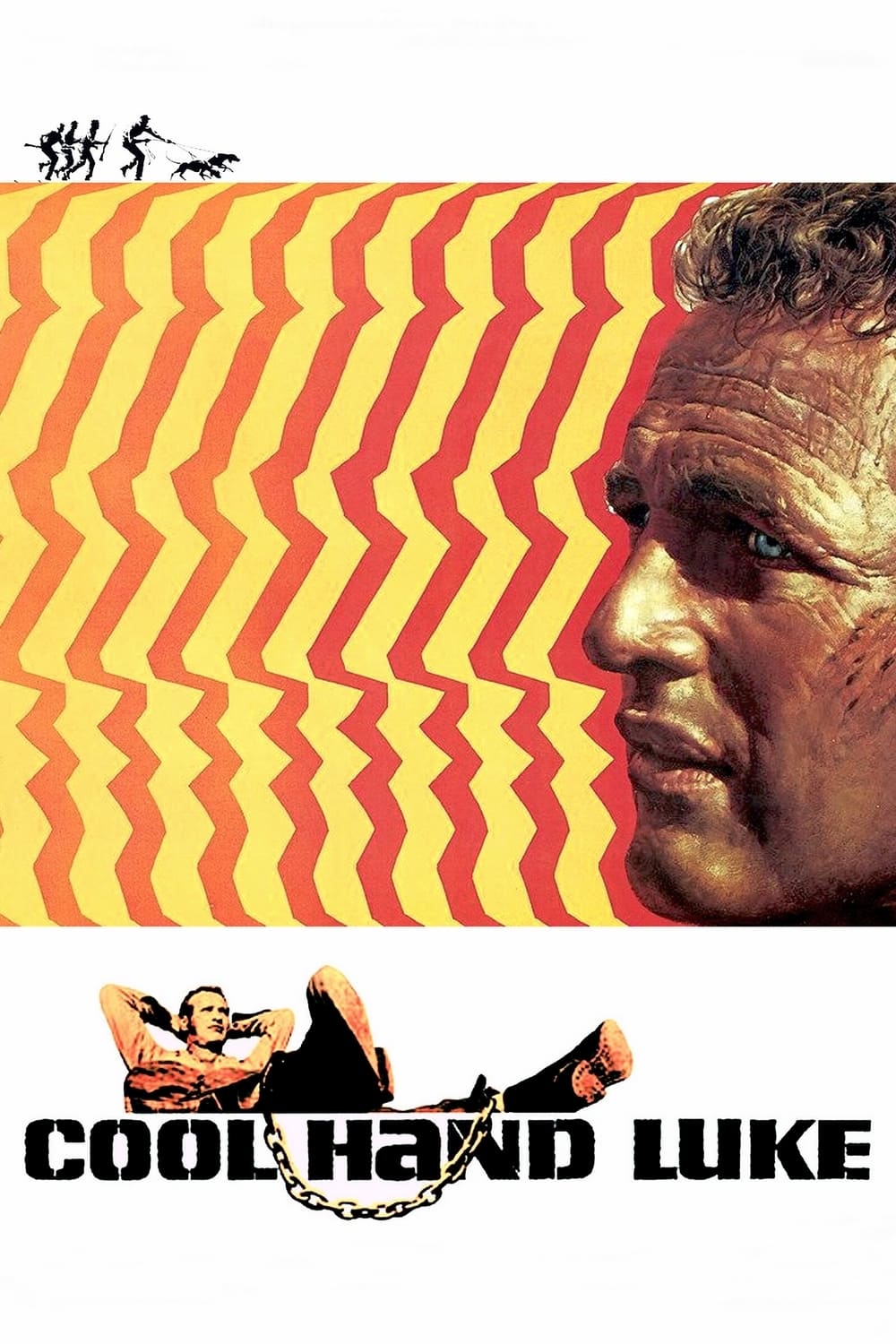
The Historical Era of the Film
Whenever I revisit “Cool Hand Luke (1967),” I immediately find myself transported back into one of America’s most turbulent and questioning decades. To me, the late 1960s still feel distinct: both restless and electric, bound by undercurrents of hope and volatility. This was the era of the Vietnam War, a conflict that invaded the living rooms of the American public through nightly news broadcasts, amplifying public distrust in government authority. The Cold War heightened national anxieties, with the threat of nuclear escalation always present in the collective consciousness.
The economic picture painted a different, sometimes contradictory story. On one hand, the United States was prosperous, riding out the post-World War II “golden years” into the middle part of the decade. Yet, on the social front, many groups felt excluded from these privileges. As I look back, I see how rising consumerism clashed with grassroots pushes for civil rights, and how the intensifying antiwar movement brought new urgency to debates over freedom, power, and individual dissent.
I’m struck by how political unrest colored virtually every cultural moment of the period. Racial tensions were high: the Civil Rights Act of 1964 and the Voting Rights Act of 1965 were newly minted, but calls for deeper, more meaningful change just kept growing. Meanwhile, young Americans became politically awakened, challenging norms that had defined U.S. society for decades. From college campuses erupting with protest to ordinary families grappling with shifting social expectations, I see the era as an intricate web of upheavals—each one shaping how people related to authority, discipline, and justice.
At the time of the film’s release, the long shadow of the preceding decade—the 1950s, with its emphasis on conformity and stability—was still present, but clearly eroding. I can’t help but notice how the contradictions of material comfort amid social strife provided a ripe backdrop for films asking hard questions about the individual’s place in a rapidly changing society.
Social and Cultural Climate
Thinking back to mid-to-late 1960s America, I am reminded of how every mechanism of culture seemed turbocharged with self-examination. The counterculture was in full bloom, and the “generation gap” was more than a slogan—it was an everyday reality. The dominant social attitudes still clung to ideas of respectability and order, but younger people, and indeed a growing portion of the general population, were openly questioning traditional sources of authority. I often reflect on how these years were defined by blatant contradictions: a love of liberty coexisted with harsh punishments for nonconformity.
One of the starkest tensions I witness in the historical record flows from the growing distrust in institutions—prisons, the police, military brass, and other symbols of state power. Hippie and beat cultures, with their embrace of freedom and skepticism, seemed to many authorities like an existential threat. There was a popular fascination with outlaws and rebels, both real and fictional, suggesting a widespread ambivalence about what it meant to follow—or break—rules.
Looking at the cultural trends extending beyond politics, the late 1960s offered an explosion of music, art, and literature that prized self-expression over obedience. The likes of Bob Dylan and the Beatles, but also literary voices such as Ken Kesey and Jack Kerouac, embodied a move away from the polite, rule-bound 1950s. Even in more traditional communities, the media’s portrayal of anti-heroes and flawed protagonists was taking hold. I recognize that the culture at large was recalibrating its moral compass, with radical ideas about justice and individuality circulating more widely than ever before.
Women’s and civil rights movements were in flux. While the Equal Rights Amendment had not yet passed, and many norms still relegated women and minorities to the background, their growing agency was shifting social attitudes. The themes of isolation and fraternity that I identify in the period’s cultural production seem to mirror the desire for new connections and understandings amid old structures falling apart.
- Vietnam War protests sparked widespread public debate
- Civil Rights Movement confronted systemic injustice
- Media and pop culture increasingly celebrated individualism
- Distrust in authority grew across economic classes
Above all, the sense of alienation from and confrontation with authority figures, and the longing for personal dignity in the face of impersonal systems, felt palpable to me as I trace the social climate of the “Cool Hand Luke” era.
How the Era Influenced the Film
I’m constantly struck by how films both reflect and refract the times in which they’re made. When I examine “Cool Hand Luke,” I see the crucible of its time shaping nearly every aspect of its production and narrative choices. The portrayal of Luke, a character who remains almost stubbornly individualistic and irreverent against a backdrop of strict discipline, feels to me inseparable from 1960s anxieties about obedience, conformity, and the power of the state.
I remember reading that Donn Pearce’s source material—drawn from his own prison experiences—had deep roots in post-war stories of disenfranchisement and frustration. But as the filmmakers adapted this for a 1967 audience, I sense that they infused it with the contemporary, restless energy of the civil rights movement and the culture of protest. The chain gang itself is a potent symbol, and it’s hard for me to miss its resonance with ongoing debates over incarceration, justice, and race that haunted American headlines during the decade.
From a production standpoint, I find it fascinating that the film’s visual style—harsh, sun-bleached, almost oppressive—mirrored the nation’s mood. The chain gang’s Southern setting also reminds me how the South had become a battleground for the soul of America, as racial violence and the struggle for equality made front-page news. Yet, the film is not overtly political in a polemical sense. Rather, it captures the zeitgeist of the late ’60s by depicting resistance as both heroic and tragic, a notion that saturated public consciousness as America questioned the wisdom and moral legitimacy of its institutions.
I’m often most compelled by how the film refrains from clear victories; it resists giving its protagonist a neat, happy ending. This feels central to the production era’s broader cultural skepticism—by 1967, audiences expected less and less neatness from their heroes. Cool Hand Luke’s story exists at the crossroads of hope and exhaustion, much like the America that birthed it.
Every time I rewatch it, I notice how its minor details—the language, the rules, the orderliness of the prison, the almost arbitrary cruelty of authority—echo real 1960s anxieties about personal autonomy. Through Luke’s struggle, I understand how art and history intertwine, each amplifying the other’s resonance.
Audience and Critical Response at the Time
It always intrigues me how a film’s earliest viewers reflect the mood of its era more than the film itself. When “Cool Hand Luke” hit theaters, I gather that its reception was marked by a mix of respect, discomfort, and fascination. Critics seemed to appreciate its craftsmanship—its deliberate pacing, its performances, especially Paul Newman’s quixotic, unbreakable Luke. The character’s anti-authoritarian stance called to mind, for many, the larger mood of national restlessness.
In letters, columns, and interviews from the time, audiences express a complicated identification with Luke as an everyman underdog, especially as college campuses and city streets filled with protestors demanding their voices be heard. Some viewers, steeped in traditional values, may have found the film’s portrayal of authority figures unsettling or troubling. Others, especially younger viewers, embraced its sardonic take on the futility of senseless rules and the dignity of stubborn opposition, even when that opposition seemed doomed.
I’ve always found it particularly telling that Newman’s performance came to personify the outsider’s struggle against overwhelming odds. Popular publications highlighted the film’s repeated references to nonconformity, suffering, and punishment, which echoed the period’s deep-seated fears and hopes. “Cool Hand Luke” carved a space in American film history as a movie that took real risks, celebrating the ambiguity of rebellion without trying to resolve it too neatly for viewers’ comfort.
Financially, the film performed well, but its impact was most deeply felt in the way it entered the lexicon: phrases like “What we’ve got here is failure to communicate” became cultural touchstones, often evoked when followers and leaders clashed. After all, in the heated climate of the late 1960s, communication failures between institutions and individuals dominated national headlines.
After understanding the factual background, you may want to see how this story was received as a film.
Why Historical Context Matters Today
Looking back on “Cool Hand Luke” through my lens as a film historian, I realize how necessary it is to ground such a work in its original moment. Without appreciating the social climate—the way people struggled for voice and dignity during the 1960s—I think much of the film’s emotional force can slip by undetected. When I hear modern audiences discuss Luke’s stubbornness, his refusal to accept arbitrary suffering, I often wish they could feel, even briefly, the generational and cultural exhaustion that haunted 1967.
I find that the film gains immeasurable depth when you remember the headlines that accompanied its release: marches on Washington, escalating war protests, assassinations of major figures, and new legislation that promised (but didn’t always deliver) equality. Against this background, the movie’s scenes of rebellion, punishment, and (sometimes fleeting) camaraderie seem to rise beyond mere entertainment. They become a living document of an American moment when rebellion felt both necessary and, at times, achingly futile.
For me, understanding the historical context is not some academic exercise but a way to feel the movie’s pulse. When I consider its reception, its setting, and the personalities behind its creation, “Cool Hand Luke” takes on a new immediacy—a work alive with the conflicts, doubts, and hopes its initial viewers brought with them. Context allows me to answer the silent questions posed by Luke’s story: Who gets to rebel, and at what cost? Why do societies demand conformity, and what happens to those who won’t yield?
As I continue to share and discuss this film in classrooms, screenings, or with friends, I find myself gathering from the past the lessons most needed in the present. I see “Cool Hand Luke” as both a window into the dilemmas of 1967 and a mirror reflecting contemporary concerns about justice, authority, and the worth of individual resistance. The film endures for me not only because of its artistry, but because its historical roots keep it vital—anchoring its meaning so that, even half a century later, viewers can feel the urgency that first brought it to life.
🎬 Check out today's best-selling movies on Amazon!
View Deals on Amazon