
The Historical Landscape
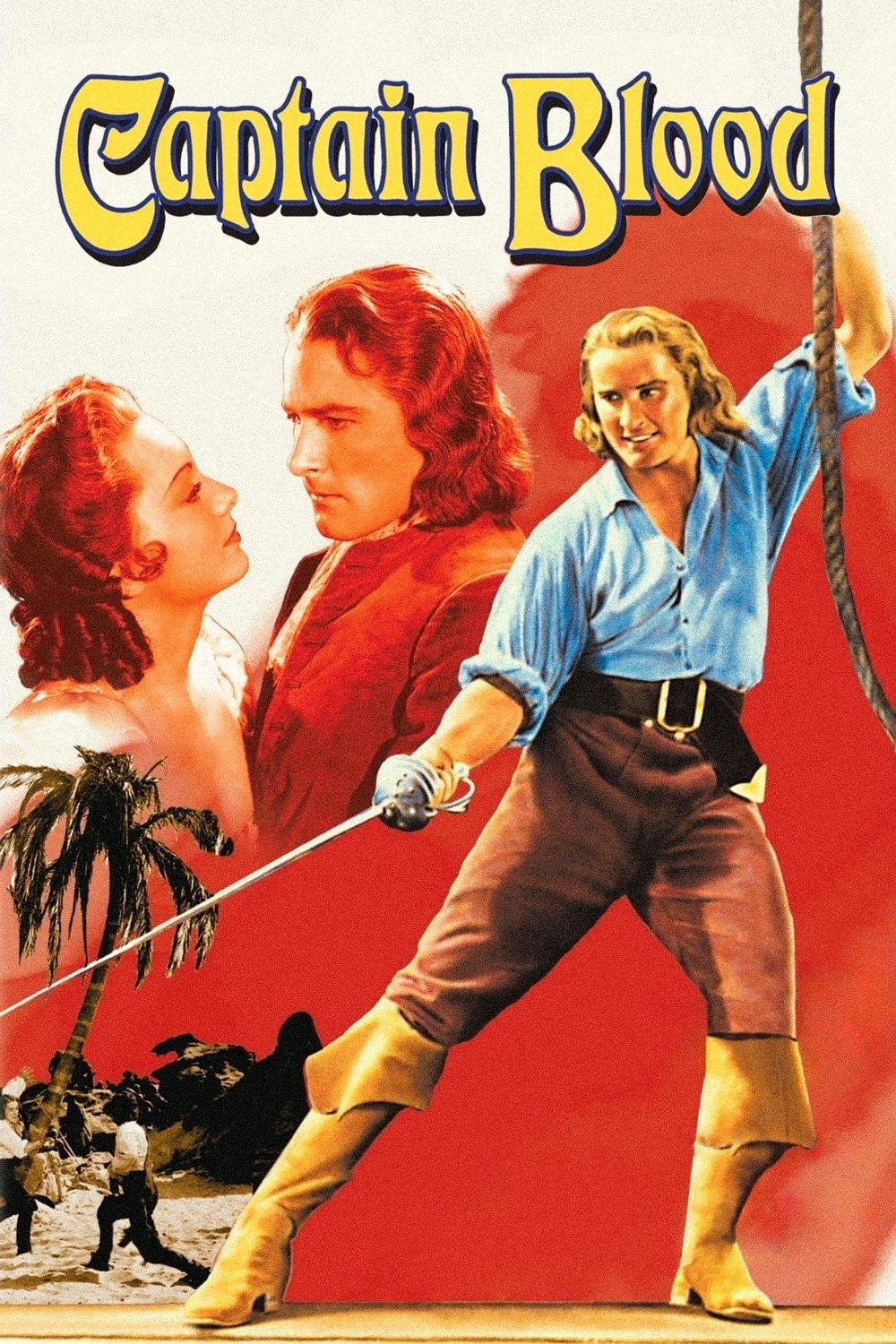
Whenever I revisit “Captain Blood,” I find myself swept not just into the story’s rousing high-seas escapism, but into the vivid pulse of the 1930s. Viewing this film through the historian’s lens, I sense all the undercurrents and upheavals of its era swirling just beneath the surface. The movie sailed into American theaters in 1935, a year etched with uncertainty: the Great Depression continued to cast its shadow across the country, economies worldwide sputtered, and public morale drifted between hope and despair. In Europe, the drums of fascism were growing louder. While I watch Errol Flynn—newly catapulted to stardom—stride across the deck with that blend of idealism and mischief, I feel how the world itself was starving for heroes, for cinematic transports that rescued audiences from the every day grind of hard times and gathering fears.
For me, the mid-1930s are inseparable from both worry and yearning. Across the United States, breadlines and unemployment weighed on families; the New Deal reforms of President Franklin D. Roosevelt offered signs of recovery, but doubts nagged at every corner. Mass media, including Hollywood, was charged with bolstering public spirits. At the same time, censorship cameras rolled—Hollywood’s Production Code, known as the Hays Code, took full effect in 1934, shaping how stories could address (or avoid) crime, passion, authority, and rebellion. When “Captain Blood” burst onto the scene, I see it as an answer to this landscape: exuberant but tightly controlled, politically resonant but cloaked in swashbuckling spectacle.
The atmosphere outside the theater was restless. Europe was tangled in its own crises, with Hitler securing ever more power in Germany and Italy controlled by Mussolini’s regime. The threat of another world conflict was more than distant thunder; it was an anxiety creeping into headlines and dinner-table conversations. Hollywood was by no means immune. The very industry that produced “Captain Blood” felt both the restrictions and the responsibilities of storytelling during such times. To me, this sets the tempo of 1935: an age of yearning escapism haunted by insecurities, with art stepping in as both balm and warning.
Cultural and Political Undercurrents
Every time I delve into “Captain Blood,” I sense how the swirl of subconscious cultural and political forces shaped its voice. The Depression-era public’s longing for fairness, justice, and agency forms the bedrock upon which the film’s themes are built. Here I see an America grappling with questions of power—who has it, who abuses it, who deserves it. When the film’s protagonist, wrongfully condemned and transformed into a pirate-leader, wages his battle against tyranny and corruption, I can’t help but recognize echoes of the common man’s struggle against the entrenched systems that failed him during the Depression years.
The Hays Code hangs heavy in the background of my experience. Hollywood censors demanded that films uphold a moral order: crime must not be shown to pay, virtue must be rewarded, authority must ultimately remain intact. Yet, as I study “Captain Blood,” I’m struck by how the narrative manages to channel not only the yearning for justice, but the spirit of rebellion—without ever entirely crossing those prescribed boundaries. There’s a bracing undercurrent of populism, even radicalism, that I believe mirrored real-world frustrations. The spectacle of an oppressed figure transforming into a righteous avenger couldn’t help but resonate with audiences bruised by unemployment, foreclosures, or the collapse of social safety nets. To me, Blood’s revolt against colonial overlords and corrupt legal authorities is thinly veiled social commentary, a coded embrace of the underdog hero at a time when many Americans felt adrift and powerless.
On another level, I see Captain Blood’s world as a crucible where old European hierarchies and the promises of the New World collide. As a historian, I’m always alert to how adventure films project their anxieties and futures onto imagined pasts. Here, the film’s colonial setting—complete with allusions to monarchy, slavery, and imperial exploitation—acts as a stage for American audiences to contemplate and rewrite their own destinies. I notice how themes of forced labor, displacement, and reluctant heroism rang truer during a decade when migration, relief camps, and social upheaval touched so many U.S. lives.
The presence of Erich Wolfgang Korngold’s lush score, a quintessentially European contribution from a refugee composer, offers another layer. So many creative forces behind the camera were themselves immigrants or exiles, haunted by rising fascism or economic disaster back home. I feel the film’s sense of urgency, its insistence on freedom and resistance, as a reflection of real peril facing the world’s democracies. And yet, Hollywood wrapped these warnings in the trappings of romance and spectacle, making them palatable—almost invisible—to average viewers. In this way, “Captain Blood” emerges, for me, as both a product and a critique of its era: a safety valve for political discontent, cleverly cloaked in cinematic bravado.
The Film as a Reflection of Its Time
I find “Captain Blood” to be a sort of shimmering funhouse mirror of its time—stretching, compressing, and refracting the anxieties, ideals, and contradictions of the mid-1930s. The film’s escapist trappings are so intoxicating that it’s easy to lose sight of how deeply it is rooted in its own social reality. Yet to my eyes, the narrative’s every detour—redemption, revolt, the celebration of individual ingenuity—drips with the language of the era’s dreams and frustrations.
Watching the transformation of Peter Blood from victim to victor, I am reminded of the Depression’s relentless winnowing process. The idea that adversity could forge a nobler character, that survival demanded wit and moral backbone—these themes never felt more urgent than during years when survival itself was an open question for millions. In conversations with older cinephiles and historians, I’ve discovered that this sense of transformation is what gave “Captain Blood” its particular charge for 1930s audiences. Flynn’s antihero embodies not only the promise of triumph, but also the fear that a hostile system might reduce any man to mere commodity or criminal. His success isn’t just a victory over villainy; it’s wish-fulfillment for anyone who feared history might make them disposable.
Even the film’s romantic subplot, always a staple of the swashbuckler, takes on deeper resonance for me when considered in its historical context. Amid the hardships of the Depression, dreams of rescue—by love, by luck, or by fate—became powerfully attractive. The fleeting possibilities of crossing class lines or reclaiming lost status had real analogues in national conversations about mobility and opportunity. Olivia de Havilland’s character, while very much a fixture of her time, also offers, to my mind, a subtle critique of both feminine expectation and the possibility of partnership across divides. Though the script is laced with conventions, there’s an unmistakable longing in the film for new social possibilities, and for the breakage of ossified hierarchies—be they martial, economic, or romantic.
The very texture of the film—the grand sets, the swelling scores, and above all, the spectacle of swordplay and shipboard rebellion—speaks to a yearning to escape but also a desire to believe in something larger than oneself. I don’t see “Captain Blood” as mere comfort food. Instead, as I parse its imagery, I find a deep need for hope and reassurance that justice, however delayed, could be achieved amid disorder. The swirling rapiers and flaring sails look backward to another age but speak directly to an audience looking for signs that the world’s turbulence could be navigated, not merely endured.
I often remind myself that films like “Captain Blood” are not empty fantasy, but a dialogue with their viewers—a way of giving shape to collective anxieties and aspirations. Every time I rewatch it, I hear the unspoken question of 1935: Can the oppressed forge their own destiny? And each swashbuckling triumph feels like a resounding, if temporary, yes.
Changing Perceptions Over Time
It never ceases to fascinate me how a film’s meaning can transform with each generation. When I engage with “Captain Blood” today, my experience is shadowed not only by flashes of contemporary politics but by a growing recognition of the film’s subtler complexities. For mid-century viewers, the story was an adrenaline rush—an antidote to privation and malaise. But as decades slipped by, and as I grew more aware of the intricacies of race, empire, and historical memory, my understanding deepened and sometimes darkened.
In graduate seminars and casual conversations alike, I’ve noticed that my generation brings fresh questions to the table: What does it mean that Blood’s heroism is constructed amid systems of forced labor and colonial exploitation? How do we reconcile the film’s spirited defiance of tyranny with its romanticization of the imperial world? I find myself unsettled by moments that once slid past me. Today, the film’s treatment—or rather, erasure—of enslaved and marginalized peoples is impossible to ignore. Watching with a contemporary eye, I see that the universalizing rhetoric of virtue and pluck often rested on a foundation of exclusion.
Yet “Captain Blood” is also—perhaps inadvertently—a key to understanding both the progress and the pitfalls of American mythmaking. Each time I encounter a new wave of viewers—cineastes, postcolonial critics, or those seeking nostalgia—I’m reminded that the movie’s appeal endures, but so does its capacity to reflect contemporary discontents. When civil liberties or democratic values are in question, I find a renewed urgency in Blood’s quest for justice. But I also sense caution: stories of just rebellion can as easily become screens for ignoring uncomfortable truths about power, authority, and complicity.
I’ve watched “Captain Blood” shift, too, as new filmmaking styles and heroic archetypes emerge. Errol Flynn’s dashing idealism strikes some viewers today as naive; others read him as a proto-antihero, a figure whose charm is inseparable from the corrupt world he navigates. The soundtrack, once revolutionary, now evokes an earlier confidence in the redemptive power of spectacle—a confidence that, in our more ironic age, feels both quaint and instructive.
In the course of archival screenings, I’ve met viewers older than myself for whom the film is inexorably linked to family memories—watching in palatial theaters, first dates, Saturday matinees. To these audiences, “Captain Blood” is less a window onto history than a vessel of nostalgia, a time machine offering passage to a different America. Yet to young viewers and scholars, the very elements once heralded as escapism have become prompts for new critiques: Why this hero, in this world, at this time? And what remains unsaid beneath all the derring-do?
Historical Takeaway
When I step back from the swash and buckle, from the pulse-pounding duels and grand overtures, what lingers with me is the film’s function as a historical prism—not just a product of 1935, but an active conversation with its own moment. “Captain Blood” is more than a tale of gallant piracy and romance; it is a document encoding the hopes, fears, and contradictions of the Depression decade. For me, the greatest lesson is how even the most flamboyant of entertainments can bear the weight of history. I see in its every frame a society grasping for agency, even as it contends with systemic forces far larger than any single protagonist.
The film teaches me that stories matter, not only as diversions but as their own kind of social action. Watching Captain Blood, I feel the urgent wish of its makers—and its original audiences—to believe in a code of justice that transcends brute force. This desire is shadowed, for my modern gaze, by all that the film elides: the brutalities of colonialism, the partiality of its liberations, the silences of race and class. And yet this, to me, only intensifies its value as a historical text. It records not only what a culture hoped for, but also what it chose to forget.
Ultimately, reflecting on “Captain Blood,” I gain a sense of the double-edged legacy of mythmaking during troubled times. The story’s resilience over nearly a century reminds me that people will always flock to stories of resistance and renewal, but also that every age redrafts its heroes and villains to suit its needs. When I teach this film, or simply return to it for myself, I find new layers to excavate—lessons about spectacle, yes, but also about the powerful interplay between public anxiety and private fantasy. “Captain Blood” remains, for me, a testament to a time when history itself seemed up for grabs—and a reminder that, in the darkened hush of the theater, people have always turned to dreams as maps for survival.
To see how these real-world elements shaped the film’s impact, you may also explore its reception and legacy.
🎬 Check out today's best-selling movies on Amazon!
View Deals on Amazon