
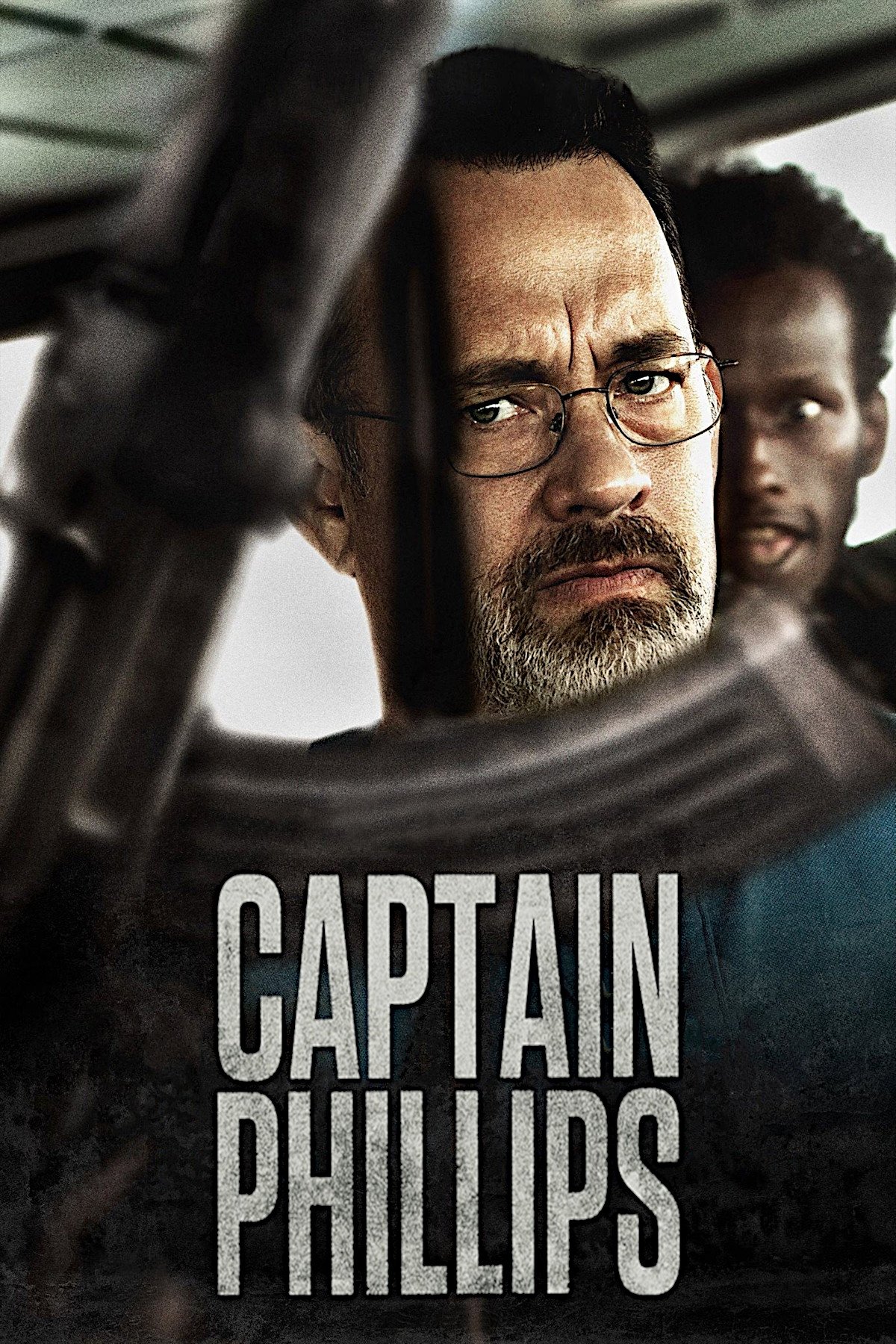
The Historical Era of the Film
Whenever I revisit Captain Phillips (2013), I cannot help but be pulled back into the specific global moment in which it was produced. That year, the world had been deep in the ripple effects of both the 2008 financial crisis and the long-running Global War on Terror. As I watched the news and read the papers at the time, there was a palpable sense of uncertainty and anxiety cutting across political and economic discussions. Piracy—particularly off the coast of Somalia—had come to symbolize for me a collision between the vulnerable, deregulated economies of the developing world and the seemingly impenetrable might of global commerce. While reading about such incidents was one thing, seeing that tension dramatized against the backdrop of increasingly polarized politics in the United States and Europe gave the story an immediate relevance that is difficult to overlook.
I recall the world’s powers were still actively engaged in debates about intervention and sovereignty. In 2009, not long before the film’s production era, the real Maersk Alabama hijacking occurred, thrusting Somali piracy into the global spotlight. Chronic instability in the Horn of Africa, a legacy of postcolonial fragmentation and failed statehood, contributed to a situation in which piracy became, for some, a last economic resort. This reality collided with the interests of Western nations dependent on uninterrupted maritime trade. Globalization had made the world smaller, but it also made its inequalities more visible. These were not just stories, for me, about crime on the high seas; they were stories about the aftermath of civil wars, the predatory exploitation of resources by foreign companies, and the complex flows of capital and desperation that defined the era.
On the home front, the debate about national security versus civil liberties was fierce, and the threat of terrorism, whether real or perceived, had seeped into the collective consciousness. Against this tense backdrop, Captain Phillips depicted an American crew’s confrontation with Somali pirates not just as an isolated act of criminality, but as a microcosm of broader global forces. The socio-economic disparity of the time, coupled with technological advancements that allowed for unprecedented media coverage, heightened the global impact of such events. For me, watching the film in 2013 felt less like looking into the past and more like staring directly into the headlines of that very moment.
Social and Cultural Climate
The social and cultural climate that shaped Captain Phillips (2013) was one thick with paradoxes. On one hand, there was an overwhelming sense of interconnectedness defined by rapid advances in digital technology. I remember feeling acutely aware that the world’s stories, tragedies, and conflicts could erupt anywhere and arrive immediately on my phone or computer screen. Social networks turned global incidents into local points of discussion. It was against this intricate web of shared experiences and information that I saw collective attitudes toward security, immigration, and “the other” become increasingly fraught.
I witnessed a period where the Western world was wrestling with uncomfortable questions about globalization’s winners and losers. The Somali pirates portrayed on screen were not monsters, as some headlines might have led me to believe, but young men operating in a world without viable economic choices. The social discourse about piracy, migration, and security was rarely straightforward. In the United States, immigration and border protection were dominating political conversations, while European audiences were watching their own governments tackle waves of maritime migration. There was, to my mind, a growing tendency in popular culture to draw clear lines between “us” and “them,” and yet a simultaneous curiosity about the roots of global inequality.
Alongside these anxieties was a widespread culture of surveillance and risk management. I noticed that, in the years leading up to and following 2013, Hollywood had become fascinated with dramatizing incidents rooted in reality, especially those involving threats to American citizens. There was an appetite among audiences for films that could serve as both vicarious thrill rides and opportunities for reflection. The cultural climate was marked by the rise of what I think of as “docudrama realism”—a style that tried to balance gripping narratives with factual, documentary-like detail, perhaps as a way to court credibility in an increasingly skeptical public sphere.
- Globalization intensified empathy and suspicion across cultures.
- The aftermath of the financial crisis sharpened social divides.
- Media coverage of real hijackings shaped public perceptions.
- The popularity of realistic, fact-based films peaked.
What stands out most to me from this period is how urgently social issues—immigration, economic dislocation, terrorism—found their way into the stories people wanted to see. The characters in Captain Phillips were caught in a web spun by forces far beyond their control, and as a viewer in 2013, I felt compelled to grapple with the very same issues in my own sphere of life and discussion.
How the Era Influenced the Film
When I reflect on how the era directly shaped Captain Phillips, I am struck by the film’s insistence on realism and its refusal to offer simple answers. The focus on procedural detail—the specific steps the crew took, the protocols they followed, the ways the U.S. Navy and SEALs responded—mirrored a culture obsessed with operational precision in the wake of events like 9/11. I sense in the film a persistent echo of the era’s concern for homeland security and its belief in the efficacy of disciplined, technological responses to crisis.
The production values of Captain Phillips owe much to both its historical moment and the cultural hunger for authenticity. Director Paul Greengrass, known for his documentary sensibilities, was part of a wave of filmmakers who sought to collapse the boundary between fiction and reportage. This approach resonated with me as someone fatigued by melodramatic narratives and looking for media that echoed the texture of reality. The authenticity I found in the film—down to the casting of non-professional Somali actors and the raw emotional timbre of Tom Hanks’ performance—felt directly linked to a production era that valued depth, subtlety, and immersion over spectacle.
At the same time, the global financial crisis and its social aftershocks made storytelling about economic desperation more urgent and immediate. Somali piracy was not addressed as an abstract problem but as the product of systemic inequality and state collapse. I noticed that, although the focus remained largely on the American crew, the pirates existed as more than just antagonists. The narrative pressured me to glimpse, however briefly, the world as they knew it. This gentle shifting of perspective was a marker, for me, of a filmmaking era trying to grapple honestly with the humanity on both sides of a crisis.
Watching interviews with the filmmakers and reading production notes at the time, I saw how the film’s creators had been influenced by contemporary debates about foreign intervention and humanitarianism. From my vantage point, this built a richer, more challenging film—one less concerned with villains and heroes, more invested in the tragic dimensions of global entanglement. The details of the era shaped even the smallest production choices, setting the film apart as a document of its time rather than a work of mere entertainment.
Audience and Critical Response at the Time
The first time I sat with an audience to watch Captain Phillips, I felt the tension in the auditorium: here was a film that brought real events hauntingly close. In 2013, discussions about piracy, security, and international law were ongoing, and I recall the film being received with both admiration and some controversy. Critics tended to laud its realism, with special commendation for Tom Hanks’ portrayal of the stoic yet deeply vulnerable Richard Phillips. For many viewers, myself included, the film succeeded in transforming a sensational news story into a nuanced, emotionally resonant experience.
I heard conversations both in film circles and public forums about the way Somali pirates were depicted. Some, including Somali expatriates, expressed frustration that their voices and stories still seemed marginalized, no matter how much the film sought empathy. As I debated the film’s merits with others, I recognized how complex and unsettled these questions remained. Critics like me saw value in the film’s attempt at authenticity, but questions about representation and the ethics of telling real-life stories persisted.
At the box office, the film performed impressively, buoyed by a hunger for suspenseful factual dramas. I read reviews that emphasized its relevance to contemporary anxieties about global risk, with several noting how the film resonated strongly in a post-9/11, globalized world. The broader filmgoing audience, I observed, was captivated by the tension and the moral ambiguity the story evoked. Awards season attention, including multiple Oscar nominations, reflected the critical consensus that the film had struck a nerve in the collective psyche. Its robust reception—both popular and critical—signaled to me how cinema could act as a forum for processing shared historical anxieties.
Why Historical Context Matters Today
For me, understanding the historical context of Captain Phillips unlocks a far deeper appreciation of its narrative and its emotional power. The film is not merely a depiction of piracy at sea, but a window into the anxieties, solidarities, and divisions that defined the world of 2013. Each time I revisit the film, I am reminded of how closely it tracked questions that still trouble my era: What responsibility do wealthy nations bear for instability abroad? How do ordinary people become swept up in cycles of violence and desperation largely created by forces beyond their control?
By situating the film within its specific political and cultural climate, I am able to read its details—its procedural realism, its focus on economic precarity, its invitation to empathy—with new clarity. In my view, the film’s impact is inseparable from the context of its production: its recognition of globalization’s crosscurrents; its uncertainty about the boundaries of moral judgment; its hesitancy to cast simple heroes or villains. I find that the film’s historical roots lend it a troubling, contemporary urgency—one that persists as modern headlines echo with stories of humanitarian crises, piracy, and global inequality.
When I discuss films like Captain Phillips with students or colleagues, I always argue that separating a work from its time risks missing the conversation it was trying to have. The film is a product of its moment, and its resonance with me—and with the audiences of the time—comes not just from its craft but from its willingness to confront the world as it was, in all its uncertainty and danger. My engagement with the film deepens when I consider not only what it shows but how and why its makers chose to show it in 2013.
Ultimately, what keeps Captain Phillips fresh in my mind is not only its suspense or its craftsmanship, but its capacity to reflect back to me the questions and contradictions of the era that shaped it. As global politics and economics continue to evolve, the film’s context remains a crucial interpretive tool, reminding me that the stories we tell are always, in some sense, about the worlds we inhabit.
After understanding the factual background, you may want to see how this story was received as a film.
🎬 Check out today's best-selling movies on Amazon!
View Deals on Amazon