
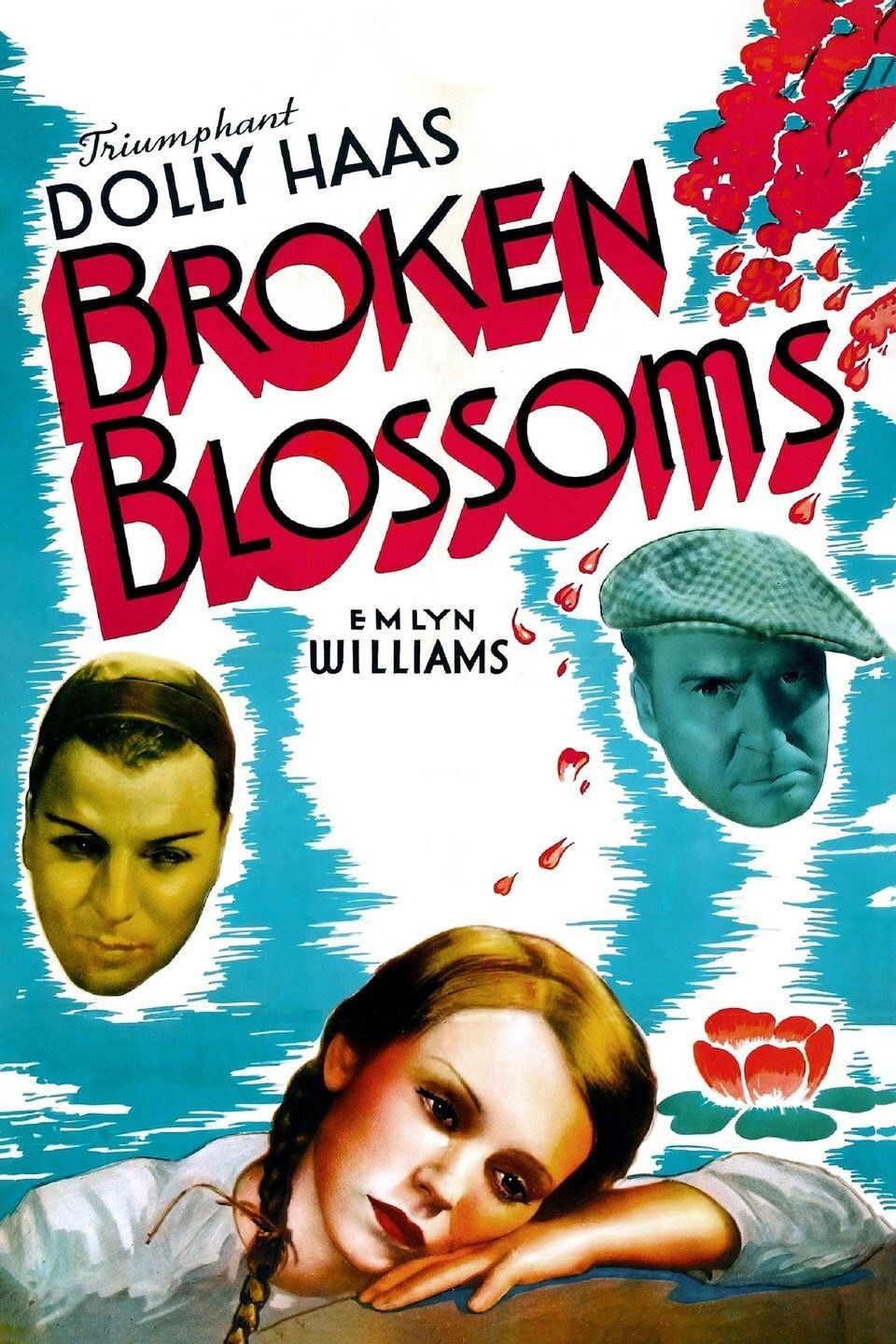
The Historical Era of the Film
From the first time I watched Broken Blossoms (1919), I felt as if I was peering through a time-warped window into a world on the verge of transformation. The film emerged at the tail end of World War I, a moment that, for me as a film historian, is woven with a sense of global unrest and profound uncertainty. In 1919, the political climate was heavy with the after-effects of the Great War, with nations and individuals alike trying to process the trauma of unprecedented violence and loss. I see the economic landscape as marked by simultaneous hope and hardship: millions of returning soldiers were attempting to reintegrate into society while nations grappled with postwar debts and labor unrest. The United States, specifically, stood at the doorstep of the “Roaring Twenties,” yet the shadow of the 1918 influenza pandemic and the war’s aftermath cast uncertainty over everyday life.
What’s always been striking to me is how this postwar crossroads also coincided with enormous shifts in the American social order. The process of urbanization accelerated, drawing people into crowded cities where class divides became more visible. The labor movement was asserting itself with strikes, while women were on the cusp of securing the right to vote. The social climate was tense, balancing on the fulcrum between tradition and modernity, with anxieties about changing roles—especially for women and immigrants—playing out both in daily life and popular culture.
On a technological front, the world of filmmaking itself was rapidly evolving. Hollywood was just assuming its dominance, but the artistic and narrative forms of the medium were still being shaped by silent-era pioneers. For me, viewing Broken Blossoms knowing its production era adds an extra layer: this was a time when film was just beginning to realize its potential as a legitimate art form and a vehicle for social commentary. The limitations and innovations of silent cinema, in my eyes, are inseparable from the era’s larger currents of reinvention and experimentation.
Social and Cultural Climate
Reflecting on the social climate that surrounded Broken Blossoms, I can’t help but see a convergence of heightened anxieties about race, immigration, and the place of outsiders within American and British society. As I delve deeper, it becomes clear that the 1910s were rife with tensely held prejudices, often directed at Asian immigrants and other so-called “foreigners.” The United States had enacted the Chinese Exclusion Act decades earlier, and, to me, that legacy of discrimination lingered, surfacing in restrictive immigration quotas and mainstream suspicion toward all that was “other.” In Britain, where the film is set, similar xenophobic feelings toward Chinese and other minorities colored urban life, especially in the bustling, multicultural docklands of London’s East End.
Mass entertainment played a role in reinforcing such stereotypes, but I also recognize how film could challenge them by presenting stories that cast a sympathetic eye on marginalized characters. At the same time, this was an era obsessed with the exotic and the unfamiliar. The Western fascination with the “Orient,” what I think of as Orientalism, wasn’t just a literary or cultural fad—it was an undercurrent within politics, consumer goods, fashion, and, naturally, cinema. This fascination, however, was often more about fantasy than reality, and it came at the cost of reinforcing one-dimensional images of Eastern cultures.
On the domestic front, societal morality was under tight surveillance. I see the early twentieth century as an age when the forces of censorship were rising, particularly with the movement toward what would become the Hollywood Production Code in the following decade. The presence of poverty, child abuse, and interracial relationships on screen was enough to stir controversy. Films that dared to approach social taboos, like Broken Blossoms, were simultaneously marketed as “morally instructive” yet drew the ire of morally conservative elements in society.
It’s also worth emphasizing that, while change was in the air, deeply embedded Victorian and Edwardian values still governed much of public life. Gender roles, sexual norms, and the idea of national superiority were fiercely defended. When I look back at 1919, I see an era straining toward modernism but weighed down by the inertia of centuries-old prejudices and rigid social codes.
- The aftermath of World War I and its psychological scars
- Rising urbanization and class stratification
- Racial and xenophobic tensions, especially anti-Asian sentiment
- Increased visibility of women’s and labor movements
How the Era Influenced the Film
Whenever I analyze why Broken Blossoms took the particular form it did, I tend to see the hand of history guiding nearly every creative choice. The film’s narrative, which centers on a Chinese immigrant in London and a local working-class girl, cannot be separated from the contemporary fascination with the “exotic.” For me, director D. W. Griffith’s decision to focus on a cross-cultural relationship was both a product of the era’s Orientalist imaginings and a subtle critique of the rampant racism I know was commonplace in both British and American societies.
I notice how the characters themselves reflect the anxieties and hopes of their day. The gentle, pacifist figure of Cheng Huan seems to echo the postwar yearning for peace and understanding after years of brutality. At the same time, the film’s depiction of physical and emotional brutality—especially through the figure of Battling Burrows—mirrors my sense of how violence and trauma, made starkly visible by the war years, permeated the popular imagination. The squalid setting of the Limehouse district evokes, for me, the real urban poverty that plagued industrial cities and the way it could fuel social division.
From a production perspective, I see the era’s limitations and opportunities reflected in the film’s innovative use of lighting, sets, and cinematography. Broken Blossoms utilized soft focus and tinted frames to create what I feel is a dreamlike, lyrical quality—a technical poetry that was only possible because filmmakers were pushing against the boundaries of the silent medium. Griffith’s choice to largely avoid intertitles and rely on visual storytelling struck me as evidence of how the silent era was come into its own, adapting to a rapidly changing society.
What also stands out to me is the film’s negotiation with nascent film censorship. Given the period’s strict moral codes, I think it’s remarkable how Broken Blossoms navigated issues like child abuse and cross-racial affection. The melodrama, so integral to the film’s emotional impact, is a testament to how filmmakers could use heightened emotion as a form of social commentary in an era when speaking directly was not always permissible.
The resulting film, for me, captures the historical contradictions of its day: sympathy and prejudice, the innovative and the conventional, aspiration and anxiety. It’s a tapestry woven from the threads of its moment, each decision shaped by the larger social forces and collective memories of a society in transition.
Audience and Critical Response at the Time
I’ve always been fascinated by how Broken Blossoms was received by its first audiences. When I sift through accounts and reviews from 1919 and the early 1920s, it becomes clear to me that the film struck a complex chord. In the immediate aftermath of the war, many viewers were deeply moved by its gentle advocacy for compassion and its depiction of human suffering transcending borders. I believe this emotional resonance was heightened by a social climate weary from loss and searching for comfort in stories about resilience and kindness, even when set within a framework of tragedy.
However, my research also reveals that there was significant discomfort and debate sparked by the film’s more controversial elements. It both captivated and scandalized, especially with its frank portrayal of domestic violence and its focus on a relationship between a Chinese man and a white, working-class girl. Critics at the time were divided: some praised Griffith for his artistry and courage in handling difficult subjects, while others balked at what they saw as exploitation or sensationalism. The use of a white actor, Richard Barthelmess, in yellowface was largely accepted at the time—an aspect that, from my viewpoint today, signifies how normalized certain racial practices were within the industry and society.
In urban centers with diverse immigrant populations, I’ve found evidence that audiences were particularly attuned to the film’s racial themes, though reactions varied by region and community. Some progressive voices welcomed its attempt at humanizing “the other,” but many mainstream reviews still leaned on stereotypes. In less cosmopolitan areas, censors sometimes demanded edits or banned the film outright for supposed immorality, particularly concerning its violence.
What stands out to me about this era is how the movie-going experience itself was changing. Theaters were becoming opulent, presentations elaborate, and cinema was becoming recognized as not just entertainment but as a kind of social lifeline. Broken Blossoms, for all its controversy, contributed to cinema’s emergence as a legitimate artistic and moral forum.
Why Historical Context Matters Today
The more I return to Broken Blossoms, the more convinced I am that understanding its historical context profoundly shapes my modern appreciation. When I consider how this film navigated the social, cultural, and political landscape of 1919, it’s clear to me that its ambitions and contradictions cannot be separated from the era of its birth. Acknowledging the fraught but fascinating interplay between art and its historical moment adds depth and texture to every viewing.
Today, when questions of representation and systemic prejudice remain so urgent, I find it necessary to approach Broken Blossoms as both a product of its time and a participant in ongoing dialogues about race, gender, and social violence. The choices that might seem foreign—or even troubling—to me and other contemporary viewers are, from my perspective, invaluable clues to the cultural mindset of a century ago. For example, the film’s use of yellowface is, to me, a reminder of how even progressive stories could be tangled in wider currents of exclusion and simplification. At the same time, I recognize the film’s gestures toward empathy as genuinely radical within its milieu.
By immersing myself in the film’s historical backdrop, I feel equipped to better understand both its innovations and its limitations. I notice how the subtle choices in setting, character, and mood are direct responses to the era’s anxieties. This context reshapes familiar stories, pressing me to question my assumptions about what “progressive” or “regressive” meant across generations. There’s a certain humility I experience in tracing these legacies forward, watching how cinema, society, and social justice evolve together.
For viewers and historians alike, I see historical context as a living bridge, connecting present questions with past dreams and disappointments. Whenever I rewatch Broken Blossoms, the context I bring with me not only enriches my encounter but enables me to hold the film’s contradictions and achievements in honest conversation with each other. In my work, I’ve found no more essential tool than a well-developed sense of history for building empathy—not just for films, but for all the people and periods that shaped them.
After understanding the factual background, you may want to see how this story was received as a film.
🎬 Check out today's best-selling movies on Amazon!
View Deals on Amazon