The Historical Landscape
When I first encountered “Butch Cassidy and the Sundance Kid,” I felt as though I’d slipped through a crack in time—a sensation unique to films born in moments of dramatic social flux. The summer of 1969, when this movie graced American theaters, was a restless juncture: a year when the Moon landing consumed global headlines but anxieties about the earthbound things—war, trust, freedom—filled American living rooms. For me, the world this film stepped into was flush with contradictions. The counterculture pulsed through mainstream society, war protests turned dusty quad lawns into soapboxes, and old guard institutions seemed suddenly unmoored. This was the tail end of the sixties—when the hopeful risk-takers and disillusioned skeptics coexisted, sometimes uneasily, in the same bodies. I can’t watch “Butch Cassidy and the Sundance Kid” without weighing it against such a backdrop—when everything felt up for grabs, and a Western, of all things, wound up feeling as modern as the headlines of its day.
The world of the late sixties, as I see it, was split wide by both possibility and exhaustion. The Vietnam War raged on and refused to conform to tidy narratives. Revolutionary energy fueled much of youth culture, but so did a growing sense of cynicism—a suspicion that maybe change would come at too high a toll, or not at all. Neil Armstrong’s lunar footprint left an imprint of hope amid nightly television images of napalm streaking across Southeast Asia. The country was bustling, but the bustle was anxious, self-questioning. Even in art, a generational divide was palpable; the optimism infusing postwar cinema had withered, and new voices were searching for meaning—or distraction—in more ambiguous stories. I always feel that films of this era almost desperately refracted the turbulence around them, and none did this with quite the same sly wit and melancholy as “Butch Cassidy and the Sundance Kid.”
When I consider the American frontier myth, I think of how the Western genre always mirrored contemporary anxieties, and by 1969, this mirroring felt especially pointed. Traditional Westerns of the forties and fifties had trotted out manifest destiny, extolling a simple, rugged heroism. By the late sixties, though, manifest destiny appeared more as something to be questioned than celebrated. Against the civil rights movement, assassinations, and generational rifts, the old optimism of the genre seemed almost quaint. Watching the film, I notice traces of a nation wrestling with its own myths; the bandits at the center of the story, rambling eccentrically toward their downfall, never feel quite at ease with the fading West or the mechanized future nipping at their heels. The film’s bittersweet tone echoed what I perceived as national nostalgia colliding with the certainty that there could be no going back.
Cultural and Political Undercurrents
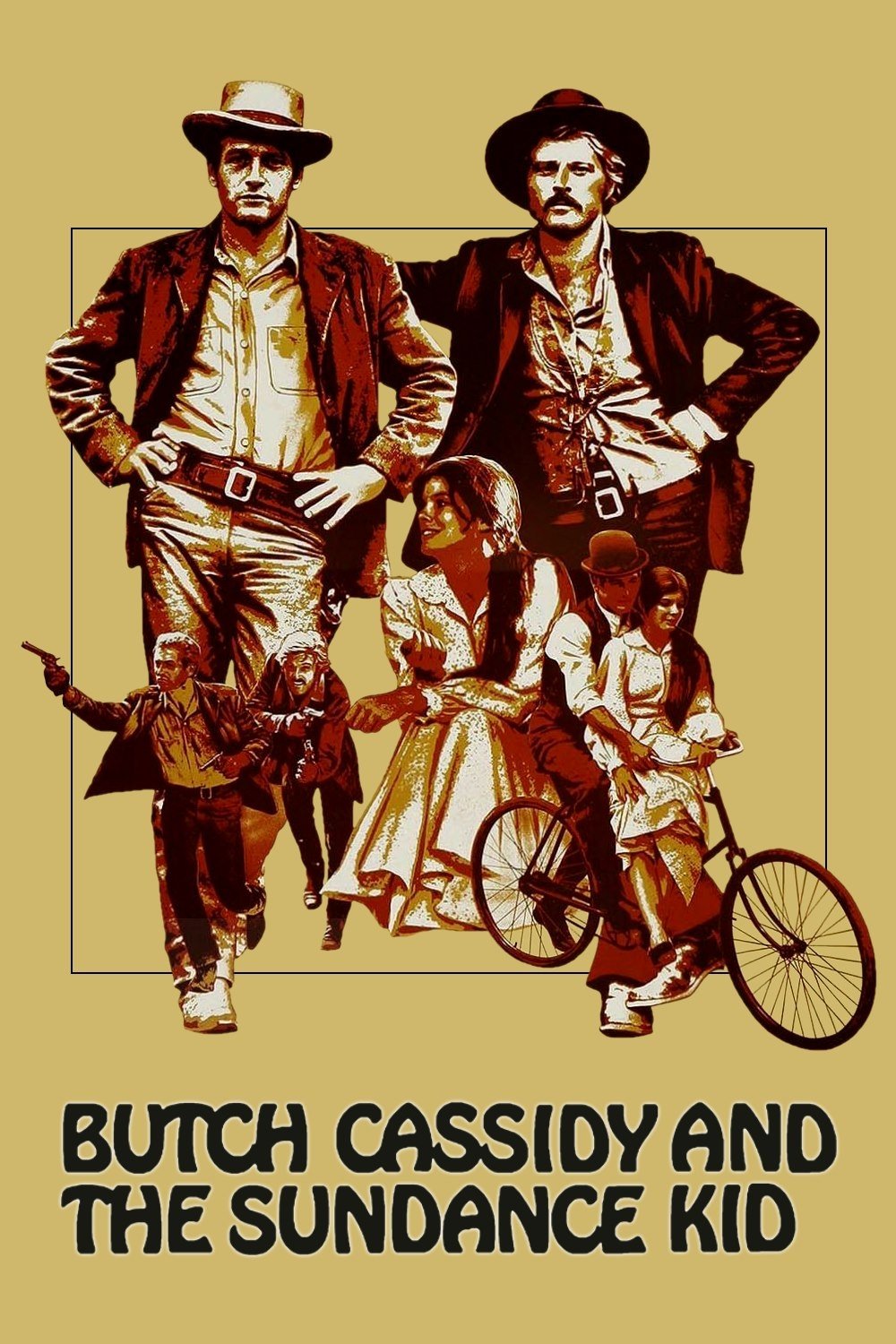
What stands out most to me about “Butch Cassidy and the Sundance Kid” is its sly subversion of the rules. At a time when American youth were openly resisting the draft, and trust in political institutions was crumbling, the film gave us outlaws who are easy to love—playful, resourceful, and not entirely willing to accept the “rules” of the game. I always get the sense that this wasn’t merely storytelling; it was a knowing wink at a generation rebelling against authority. In this sense, the duo’s choices and contradictions mirrored the choices American society faced: whether to cling to old certainties or to duck under them, make for the unknown, and hope for the best. The casual humor between Butch and Sundance felt less like comic relief and more like the gallows wit so many people, weary from social upheaval, wielded as a shield against uncertainty.
The tension between tradition and change is woven through every frame, in ways I find more revealing with each viewing. When the Pinkerton agents—implacable, faceless figures of “the law”—pursue our protagonists, I read a metaphor for the era’s anxieties about surveillance, conformity, and the tightening grasp of institutions over the individual. The relentless chase, which modernizes the old Western pursuit into something almost paranoid, seems to echo what I imagine many Americans of the late sixties felt: that forces beyond their control were closing in, whether on campus or in the corridors of power. I’m always struck by how the film seems less about romanticized banditry than about the impossibility of escaping the modern world’s reach—a theme at the core of sixties discontent.
It’s not just politics that shaped “Butch Cassidy and the Sundance Kid.” The sexual revolution and the new codes of interpersonal relationships simmer in the film’s playful but ambiguous love triangle. I notice how Etta, more self-possessed than many of her on-screen predecessors, reflects the era’s slowly changing gender expectations. She is no mere damsel; she is a schoolteacher, a partner, and a witness, and while her autonomy is still limited by the conventions of her time, a contemporary viewer can’t miss the film’s subtle nods toward the changing status of women. The film doesn’t settle for classic hero/villain binaries either—it trusts in ambivalence, hinting at the moral grayness that defined so much of late-sixties art. This blurring of boundaries was part cultural necessity, part creative liberation, and all of it speaks directly to my own sense of this restless period.
Music, too, functions in this film as a conduit for cultural change. Burt Bacharach’s score, most memorably in “Raindrops Keep Fallin’ on My Head,” still strikes me as a signal that this isn’t your father’s Western. There’s something almost disorientingly modern about seeing two outlaws in turn-of-the-century America while a gently irreverent pop tune drifts through the background. For me, this choice perfectly encapsulates the era’s willingness to smash together divergent artistic expressions—to place cowboy hats alongside counterculture ballads and let the resulting frisson speak for itself. It’s a detail that seems trivial until you recall how hard Hollywood had resisted change; suddenly, the film’s whimsy feels radical.
The Film as a Reflection of Its Time
Each time I revisit “Butch Cassidy and the Sundance Kid,” I’m reminded that what looks like nostalgia is really a lens onto contemporary unease. The film’s protagonists may inhabit a dusty, pre-automobile West, but they talk, joke, and scheme with a humor and self-awareness that screams late-sixties. In that sense, I detect the filmmakers’ refusal to simply recreate the past—instead, they harness the conventions of the Western to interrogate what happens when the world turns against those who made their own rules. The story’s focus on transition—the twilight of the Wild West, the dawning of a new, rational order—so snugly fits the spirit of 1969, when chaos and transformation seemed the only constants. I always read the film’s themes as a reflection of the shrinking frontiers Americans of the late sixties faced, literal and metaphorical alike.
What affects me most, though, is the way “Butch Cassidy and the Sundance Kid” gently mocks the machinery of myth-making. There is a pervasive awareness throughout the film that legend is just a construct—Butch and Sundance are neither noble outlaws nor evil men, but improvisers swept along by circumstance. To me, there’s a whiff of resignation as much as rebellion in their actions; the film’s humor and fatalism go hand in hand. This sensibility echoes the outlook I associate with 1969—a suspicion that stories of clear-cut heroism no longer applied, replaced by something murkier, even absurd. The bullet-riddled final freeze frame, with Butch and Sundance charging into uncertainty, strikes me as the only ending possible in a time when the future was radically unknowable.
I notice, too, the film’s approach to violence—quick, shocking, often underscored by jokes or ironic dialogue. Compared to earlier Westerns, where violence had moral clarity, here it lacks grandeur. This stripped-back, almost anticlimactic treatment reminds me of the era’s pop cultural skepticism toward established authority and simplified moral tales. The violence is neither sanitized nor celebrated; it’s just another fact of life in a world indifferent to its heroes. For viewers in 1969, many of whom witnessed nightly broadcasts from Vietnam, this tonal shift must have been intensely familiar. The film’s humor is a defensive gesture—a way to resist the mounting seriousness of the outside world, or at least to endure it.
Watching the interplay between Butch, Sundance, and Etta, I see a dynamic deeply inflected by the evolving American understanding of intimacy and camaraderie. Their bond is more about loyalty amid uncertainty than the self-sacrificial bluster of old Western partnerships. Their laughter under pressure, their banter in the face of danger, read to me as coping mechanisms—so much like those of fellow travelers through a turbulent era. The triangular relationship resists easy definitions, and this refusal feels of a piece with a generation unwilling to abide by old scripts about love, friendship, or gender roles. For all the film’s playfulness, I’m repeatedly hit by the undercurrent of loss—loss of innocence, of arcadian simplicity, of workable myths—just as so much of 1969 America mourned what had been left behind, willingly or not.
Changing Perceptions Over Time
When I cast my mind back to my earliest memories of the film, I recall how easily it was mistaken for a breezy buddy comedy with horses and shootouts. Only later did I recognize just how subversive and self-aware it truly was. In its own time, the film’s irreverence and genre-blending style signaled to young viewers that Hollywood had finally met the new era head-on. Yet with the passing decades, as Westerns have faded from mass consciousness and the flashpoints of the late sixties have receded from memory, responses to the film have also migrated. What once seemed daring and iconoclastic now carries a bittersweet nostalgia, re-contextualized as a bridge between a vanished America and the world that followed. I find the film’s tone—neither fully elegiac nor celebratory—has aged with surprising grace, taking on layers it could scarcely have had upon release.
I observe a generational divide in the film’s reception, one that speaks volumes about shifting societal values. For earlier audiences, Butch and Sundance may have felt like lovable rogues, but still fundamentally outside the boundaries of “real” heroism. For those shaped by Vietnam, Watergate, or the fading promises of the sixties, the duo became avatars of resigned rebellion—flawed, pragmatic, and oddly endearing in their inability to change the world or themselves. For younger viewers now, the film is often a discovered relic, more an exploration of style, genre, and irony than a vital political artifact. What I find striking is how its ambiguity—once a marker of artistic modernity—feels gently reassuring next to the relentless cynicism of contemporary culture. Where once it subverted expectations, today it provides comfort, reminding me that even as times change, our fascination with those who question the rules rarely fades.
After decades, lines like “Who are those guys?” resonate in new ways. For first-time viewers, perhaps raised on contemporary antiheroes, there is an irony in the film’s lasting appeal: far from being superseded by grittier, more violent genre entries, it endures precisely because it is wistful and tongue-in-cheek. I’ve noticed that its humor plays differently now—sometimes seen as charming, at other times archly removed. The dynamic between Butch, Sundance, and Etta, too, is colored by new conversations about agency and partnership in film. For some, it’s a time capsule, for others, a template. Either way, it continues to invite debate about whether the “end of the West” was just another way of talking about the end of certainty, or the beginning of something still taking shape.
What’s most rewarding for me is watching how “Butch Cassidy and the Sundance Kid” remains a touchstone in discussions of cinema’s space between nostalgia and critique. Its refusal to grant its heroes triumph or clarity seems fundamentally honest—and this, I think, is what allows it to keep speaking to audiences, however distanced they are from its own moment of birth. Every time I revisit it, the film seems to grow less about the past and more about what the past means to us now, in the context of our own moment’s turbulence.
Historical Takeaway
What I ultimately glean from “Butch Cassidy and the Sundance Kid” is not just a snapshot of change, but a meditation on how change feels from the inside. It is a film stitched together from questions rather than answers, always glancing over its shoulder even as it looks for escape routes. No piece of late-sixties cinema, in my view, better captures the intersection of hope and resignation, faith in improvisation, and melancholy for what’s irretrievably lost. Looking back, watching Butch and Sundance veer toward their legend—but never quite becoming it—I am reminded of the difficulty and necessity of letting go. This is a film that knows, even as it plays with its own legends, that the world that created them has changed beyond recognition; any heroism left is fleeting, run through with self-doubt and laughter in the dark.
To me, “Butch Cassidy and the Sundance Kid” is not merely about men out of time, but about a society caught between myth and reality. It reflects an epoch that questioned not only its stories but its storytellers; it offered an escape, yes, but an escape laced with reminders that even freedom comes with a price. Perhaps what marks the film out as an emblem of its age is the way it lets uncertainty reign—never tying off the loose ends, never promising restoration. It’s this embrace of the unresolved that feels truest to what living through the late sixties must have felt like: exhilarating, unforgiving, and forever tilting toward the new. My takeaway is always that, whether we see ourselves as outlaws or bystanders, our stories rarely turn out as we planned but tell us precisely what we need to know about who we were and what we hoped to become.
To see how these real-world elements shaped the film’s impact, you may also explore its reception and legacy.
🎬 Check out today's best-selling movies on Amazon!
View Deals on Amazon