
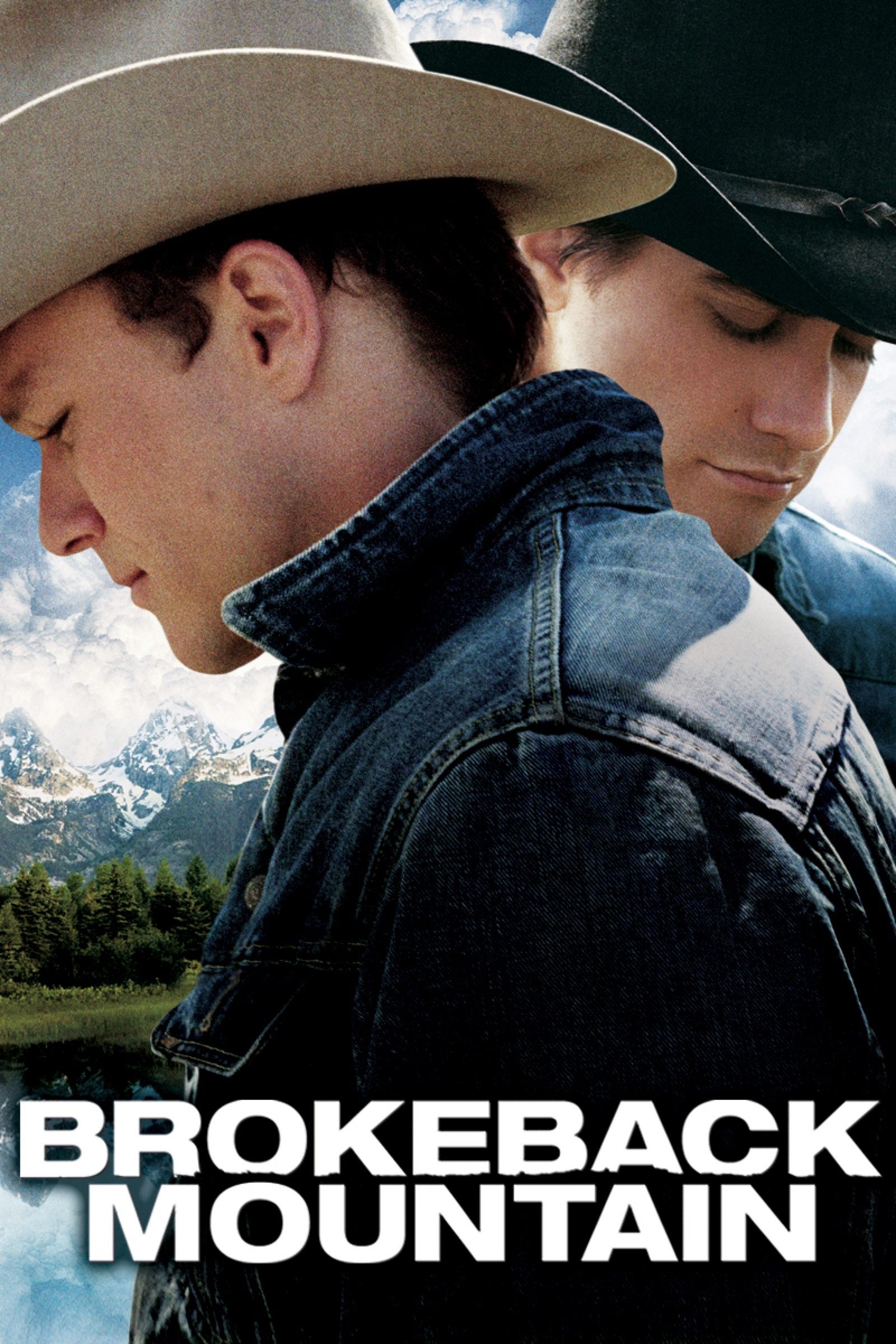
The Historical Landscape
There are moments in life when I discover a film that feels as if it crystallized a shift already buzzing in the air — “Brokeback Mountain,” when I first saw it in 2005, struck me as precisely that kind of harbinger. I remember the mid-2000s as a liminal space: a social world in the United States caught awkwardly between progress and stubborn prejudice, hope and backlash. While technological connectivity was accelerating at a dizzying pace, the echo of older social mores still rang with surprising clarity, often in conflict with the conversations dusting off old taboos around identity. “Brokeback Mountain” landed right at the crossroads.
That era was awash with contentious debate around LGBTQ+ rights, and I felt it in nearly every headline. The Massachusetts Supreme Judicial Court had ruled in favor of marriage equality in 2003, sending shockwaves through the country. By the time Ang Lee’s film arrived, half of my acquaintances seemed to be fighting over same-sex marriage amendments, either cheering for their passage or decrying them as regressive. Media, too, was beginning to fracture into echo chambers, reflecting the broader polarization. I remember watching TV talk shows stoke “values voter” narratives — the red-state/blue-state dichotomy became shorthand for cultural division. What I felt most was a sense of waiting: nobody was sure which way the country would tilt next, so every cultural artifact became both a mirror and a battleground.
Hollywood, meanwhile, was negotiating its own contradictions. While independent cinema occasionally touched on queer narratives, mainstream films tiptoed around the subject — or, more often, deployed LGBTQ+ characters as sidekicks or comedic asides. Award shows still seemed designed for dramatic, heteronormative triumphs. When I try to recapture the environment into which “Brokeback Mountain” emerged, I remember a film community daring to glance toward new frontiers but with eyes still shaded by caution. The arrival of Lee’s romantically tragic Western, especially from a major studio with recognizable leads, felt almost jarring within this landscape. It threaded the line between the heritage of classic American cinema and the inklings of a new moral reckoning, offering an invitation (and, for many, a challenge) to watch the past and present collide.
Cultural and Political Undercurrents
What still haunts me today is how “Brokeback Mountain” seemed to absorb and radiate the contradictions of its time on a molecular level. On one hand, I sensed a longing for tenderness and authenticity within the film’s story — an anti-macho, intimate rendering that subverted the very bedrock of American Western masculinity. On the other, I could feel the relentless pressure of the culture wars humming underneath, infusing even the quietest scenes with unspoken threats. It was impossible for me to watch Ennis and Jack without hearing the broader din: the court cases, the religious rhetoric, the “defense of marriage” ads that blanketed the Midwest and the South.
I remember how discussions about the film quickly spilled from art-house theaters into family living rooms. There was persistent anxiety: could a film like this, adapted from Annie Proulx’s short story, “legitimize” relationships that, in some states, were still criminalized within living memory? For many, the film’s setting — rural Wyoming and Texas — layered an extra charge, because these were landscapes mythologized as both ruggedly romantic and fiercely resistant to change. In every debate, I recognized the real fear of disruption: families, communities, and even entire industries clinging to a past that, for some, provided stability but, for others, enforced silence or exile.
Yet, in my view, the undercurrents ran deeper still. “Brokeback Mountain” arrived in a decade grappling not just with sexuality, but with changing norms around emotionality, gender, and self-expression. I’d grown used to seeing male protagonists channel aggression, control, or haunted ambiguity, rarely grappling with vulnerability. The film’s quiet audacity was how it let its men hurt, cry, and yearn — in a way that resonated with younger generations beginning to pick at the fraying thread of stoic masculinity. The rise of blogging — the “personal essay” era of the internet — gave license to public vulnerability, and suddenly it felt not so out of place to watch two cowboys collapse into each other’s arms. I felt the tectonic plates of representation begin to grind, sometimes painfully, towards the acknowledgment of complexity over caricature.
As political debates over “family values” sputtered on, I also felt a new urgency in the cultural conversation about whose stories were allowed to be told — and who was allowed to tell them. The film, with its A-list actors and Oscar campaign, became a lightning rod, but it also held a mirror up to an industry, and a society, negotiating whose pain and passion mattered. I could see, in the stories surfacing around the film, how deeply America’s anxieties about authenticity, legitimacy, and longing for connection ran beneath the surface.
The Film as a Reflection of Its Time
Every time I return to “Brokeback Mountain,” I am struck by how it functions as both a product and a refutation of its historical moment. This is not just because it dares to place queer love at the center of a genre long devoted to cishet mythmaking, but also because of the way its very construction — spare dialogue, weighty silences, lingering shots of vast, indifferent landscapes — echoes the isolation that I felt many queer people still experienced in the early 2000s.
The film’s approach to love and loss is marked by both caution and defiance. I see this as symptomatic of a broader hesitancy: a belief among filmmakers (and, perhaps, the audience) that mainstream America could stomach only so much explicitness, only so much confrontation. It expresses what I felt then, among friends and community members who were not “out” at work or to their families, a recognition that desire and isolation frequently coexisted. Characters like Ennis represent a kind of internalized repression I saw echoed in cultural narratives about LGBTQ+ people struggling between their own longing and the threat of public exposure. The choice to set the story in the American West, with its sweeping, unyielding horizons, served for me as the perfect canvas for rendering this dynamic: the land is vast, but the space for authentic connection is perilously small.
Watching the film with friends in 2005, I recall the nervous energy in the theater — a tension not unlike what I imagine its protagonists felt, always scanning the horizon for danger. The film’s tragic arc, for me, felt inextricable from the specific dangers of the era: hate crimes, “don’t ask, don’t tell,” and the lingering trauma of the AIDS crisis made it impossible to watch the final act without a sense of mounting, almost inevitable doom. I found myself reflecting on how many queer stories, in mainstream cinema at least, were permitted only if tinged with agony or loss — a narrative pattern that reflected both artistic caution and commercial calculation.
But I also perceived a quiet, hopeful revolution. The film’s popularity signaled that the appetite for complex, empathetic portrayals of LGBTQ+ lives had grown. I observed people who, only a few years earlier, would have dismissed such a work, discussing Ennis and Jack’s relationship with genuine sympathy. The love story at the film’s heart, for all its melancholia, strained against historical constraints. Its artistry — Lee’s meditative pacing, the unshowy performances of Heath Ledger and Jake Gyllenhaal — leaned into emotional specificity, suggesting to me that the days of generic coding and subtext were finally fading.
I also detected a tension unique to this era: the sense that progress was tantalizingly close, yet heartbreakingly elusive. When Jack dreams of a life shared openly, I see a clashing of eras — old strictures shimmering under the surface, even as a new possibility beckons. The film’s ending offers no neat resolution, just as the debates and aspirations of the time remained unresolved, hanging in the national consciousness like a question mark.
Changing Perceptions Over Time
Over the years, I’ve watched as perceptions of “Brokeback Mountain” have evolved along with the society that produced it. In the years immediately after its release, many critics and viewers — myself included — viewed it as daring, even radical for its willingness to mainstream a queer romance. It felt like a crack in the facade of what American cinema (and by extension, American society) would accept, and the discourse reflected both the exhilaration and the backlash of that moment. I remember heated arguments over whether the film was too cautious or, conversely, too explicit for a mainstream audience. Some friends bemoaned its tragic ending, reading it as an affirmation of the “bury your gays” trope that had hounded LGBTQ+ media for decades; others saw profound artistry in its refusal to succumb to wish fulfillment.
As time passed, and especially in the wake of landmark events such as the Obergefell v. Hodges decision in 2015, the film’s tragedy began to feel less like a direct commentary on present-day repression and more like a time capsule of a particular form of heartbreak. For younger viewers (and sometimes for myself, rewatching with the benefit of hindsight), the film’s caution started to seem almost quaint. What once felt disruptive now appears, in certain lights, as oddly gentle, even conservative in scope. It’s been fascinating to see how today’s films and shows, shaped by more open conversations about queer love and family, have redefined the boundaries of representation, sometimes making “Brokeback” seem a necessary but transitional work — the crossing of a frontier, but not the arrival at a promised land.
Still, I have found that its emotional power endures. The film’s resonance has shifted as it has been recontextualized: now I often see it discussed not just as a cultural intervention, but as an elegy for a specific kind of secret, stolen love. For many, particularly those who lived through the era, the story holds pain — but also a form of recognition that newer, more openly celebratory films cannot quite evoke. I sometimes sense frustration among critics who wish the film had been braver, or had ended differently; equally, I see gratitude for a work that, in its time, carved out space for acknowledgment, empathy, and mourning.
What has surprised me, watching successive waves of commentary, is how the film’s meaning keeps shifting in tandem with broader cultural developments. In recent years, conversations about intersectionality, trans representation, and racial diversity have reframed “Brokeback Mountain” as both foundational and incomplete. Younger filmmakers often cite it as a touchstone, while also critiquing its limitations. I recognize how historical context makes it possible to both revere and revise the film’s legacy, to treat it as a stepping stone towards the more expansive, joyful stories that audiences crave today.
Historical Takeaway
Reflecting on “Brokeback Mountain” as a historical artifact, I am struck by how vividly it distills the hopes and fears of the mid-2000s. The film teaches me that history is never just about what happened, but about how people felt — their secret dreams and their public silences. For all its quietness, or maybe because of it, the film lays bare the chasm between what was possible and what remained out of reach for so many. It tells me that even in eras of uncertainty, art can carve out sanctuary spaces, moments suspended between repression and visibility, terror and tenderness.
It was not, as some hoped, the “end” of repression or secrecy, but a signal that these conversations could move from margins to center. To watch the film again, years later, is to witness the progress — and the pain — of a culture in flux. What I take away most is a sense of gratitude that, through its artistry and its imperfections, “Brokeback Mountain” preserved a snapshot of a world on the cusp of change. It reminds me that historical transformation is often incremental, built from moments of risk and the slow accumulation of empathy. Its enduring power stems not from providing clear answers, but from capturing the raw longing for authenticity that defined its era — a longing that, in many ways, still echoes today.
To see how these real-world elements shaped the film’s impact, you may also explore its reception and legacy.
🎬 Check out today's best-selling movies on Amazon!
View Deals on Amazon