
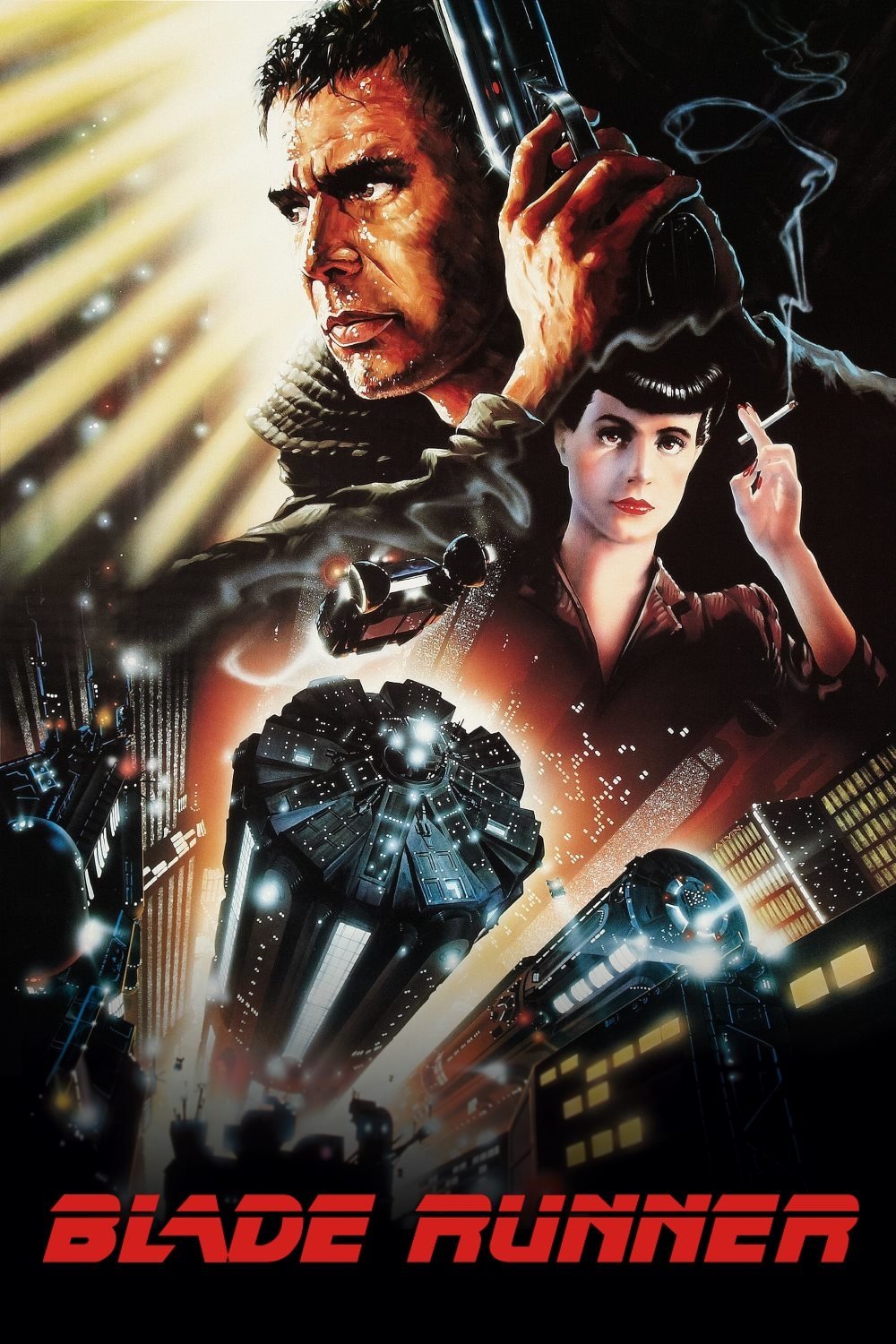
The Historical Landscape
I can never shake the smoky, neon-lit image of Los Angeles from “Blade Runner” out of my head—rain falling in perpetual dusk, strange dialects echoing through crowded streets, and everything coated in a sheen of synthetic melancholy. It’s impossible, for me, to unwind the film’s look and feel from the moment it was born: 1982, a time I see as uniquely fraught, teetering between analog traditions and a looming, digitized future. When I watch “Blade Runner,” I’m reminded just how much of its DNA comes not from the far-flung year 2019 it depicts, but the very real anxieties and wonders permeating the early 1980s.
To my eyes, the early ’80s appear as a threshold era. The Cold War still cast long shadows across public consciousness, and nearly every science fiction film seemed haunted by the possibility of nuclear annihilation. Economic turbulence was everywhere; recession loomed, jobs changed or vanished altogether, and across the US, cities grappled with the aftereffects of deindustrialization. Technology, especially, captured the imagination and the fears of people around me—personal computers were just edging into the marketplace, but the promise of a high-tech era was already crowding out old certainties. As someone born into the analog world, I have always seen “Blade Runner” as a cinematic premonition: a city, and a society, both dazzling and broken, straddling old and new in ways that felt as precarious in the theater as they did outside on the rain-slicked streets.
Whenever I revisit the film, I’m struck by how distinctly it carries the scars and dreams of its time. It’s a world that feels post-American, almost post-human—a polyglot, sprawling metropolis inflected by a mixture of Western decline and Eastern ascendancy, modeled visually and sonically after the fears and fascinations of a world in flux. Detroit’s collapsing auto industry, Japan’s economic miracle, Reagan’s America racing to close the “technology gap”—all these threads wind through the film’s landscape like the cables and ruins of its skyline. For me, these are not just sci-fi set dressings, but crystallized anxieties and hopes, rendered with painterly care.
Cultural and Political Undercurrents
When I look beneath the film’s rain-soaked surface, I’m always pulled toward the cultural and political frictions of the era that formed it. The social landscape of the early 1980s hums with an unstable energy: technological escapism clashing with economic dread, individualism wrestling against alienation. “Blade Runner” was shot during a time of moral panic about corporate power and the vanishing line between humanity and machinery. The dread of multinational conglomerates, unchecked capitalism, and environmental decay, so present in the film, seem to me less like prophecies and more like commentaries on what people were already feeling in the streets around them.
As I see it, the film channels apprehensions about a shifting world order. The influx of Japanese culture and capital into American cities—at the time a source of both fascination and xenophobic anxiety—is stitched into every frame. Ridley Scott’s vision of future Los Angeles, teeming with Asian script and multicultural crowds, always reminds me of the trade tensions and cultural negotiations that were commonplace in the airwaves and headlines. These weren’t idle predictions but reflections of an America anxious about losing its postwar dominance and uneasy in a rapidly globalizing world.
But there’s another layer that always grips me: questions about the nature of identity and what it means to be alive. The debate over bioethics, which raged through the late ’70s and early ’80s—sparked by advancements in genetics, medicine, and computing—sits at the center of “Blade Runner’s” replicant dilemma. I find the replicants’ struggles to assert their personhood eerily parallel to the decade’s uncertainties about artificial intelligence, genetic engineering, and the morality of technological progress. The ethical puzzles of the film echo real debates that filled intellectual journals and dinner tables alike, as people tried to grapple with the fear that technology might outpace humanity’s ability to make moral sense of it.
In the backdrop, the environmental degradation etched into every polluted sunset and crumbling building in the film resonates with memories of the burgeoning ecological consciousness of the era. I can’t watch those city vistas without thinking back to the harsh air of ‘80s Los Angeles, the acid rain warnings, the love affair with chrome and concrete giving way to a fear that nature was retreating and would not soon return. The visuals and anxieties are inseparable for me; every frame hums with the pulse of its moment.
The Film as a Reflection of Its Time
For me, “Blade Runner” isn’t just a product of 1982, it’s an x-ray of that moment’s deepest uncertainties—and also its wildest imaginations. Far from the utopian visions that dominated much of pre-Star Wars science fiction, Scott’s Los Angeles is a place of decay, overpopulation, and exhausted dreams; its citizens shuffle through lives watched over by the unblinking gaze of corporate overlords. Watching the film years later, I’m convinced it drew less from speculative fiction and more from what was already visible on the urban horizon.
Take the replicants themselves. When I first saw Roy Batty and Pris, I didn’t just see robots; I saw anxious meditations on the meaning of labor, citizenship, and even protest, all issues that colored the early Reagan years. The replicants’ quest for meaning—and rebellion against the corporations that created and dispossessed them—always struck me as an indirect commentary on worker alienation and a growing sense, among many, of being replaceable in a shifting economic order. The synthetic humans are engineered for disposable labor, harvesting resources and serving in wars, before being “retired” when inconvenient. In their desperation, I hear echoes of my own unease about a world increasingly run by algorithms and distant powers.
The omnipresence of Tyrell Corporation is, in my mind, a direct reflection of the era’s fascination and paranoia with corporate gigantism. The company’s pyramidal towers cast shadow on every district and destiny; inside their walls, the fate of entire classes of beings is decided. This has always evoked memories for me of the public skepticism surrounding General Electric, IBM, and other behemoths of the time—culprits or saviors, depending on who you asked. In this future, power has detached itself from the state, pooling instead in boardrooms and skyscrapers well above the reach of the street-bound masses. It’s chilling, but also uncannily familiar to anyone who has ever eyed the skyline and wondered who really runs the city.
Environmentally, “Blade Runner” is the manifestation of the anxieties I remember from my earliest brushes with environmental consciousness. Acid rain and endless night weren’t only haunting images—they were lived realities for many Americans, especially in manufacturing cities facing ecological collapse. I’ve often thought that the desaturated palette of the film, its polluted breaths and ailing animals, were all meant to crystallize that mid-century fear: that the future might be bleak not because of war, but because of inattention and hubris.
Still, what sets “Blade Runner” apart for me is not its fear of technology, but its ambivalent longing. The film aches for a lost humanity even as it idolizes its dreams of the machine. Its soundtrack, Vangelis’s sorrowful synthesizer elegy, is a love letter to analog and digital imaginations colliding in a crossfade. The sense of nostalgia for the irretrievable past—old architecture, snatches of out-of-fashion music, even the tired detective who feels out of step with his own time—reminds me of how quickly decades can disappear beneath the bright crush of novelty, leaving us wondering what exactly slipped away.
Changing Perceptions Over Time
Returning to “Blade Runner” over the years, I’m constantly struck by how differently it reads as the world changes. At its release in 1982, I remember its chilly reception—critics and audiences alike seemed unsure what to do with its brooding pessimism and philosophical murkiness. Many dismissed it as ponderous or visually overwhelming, and I recall thinking at the time how often great films are recognized only in retrospect. What was once viewed as a warning about technology now feels like a lament for lost connection, and the questions it raises about artificial life and identity have only grown more urgent.
The rise of globalization gave me new eyes for the film’s multicultural cityscape. In the 1980s, some saw the hybridized Los Angeles as dystopian or threatening—a city overrun by “the other.” Decades on, as cities have become more proudly pluralistic and boundaries between cultures blur, I find myself reinterpreting this aspect of the film as both cautionary and oddly prescient. What felt like an exaggerated fantasy to many in 1982 looks, in some lights, like an accurate snapshot of the world we now inhabit—messy, vibrant, fractious, and interconnected beyond measure.
Technological developments have certainly changed how I view the film’s central dilemmas. The questions about artificial intelligence, once academic musings, have acquired a sharper, even urgent, edge in an era of rapid machine learning, digital surveillance, and debates about “real” versus “artificial” consciousness. Whenever I hear discussions about the risks of AI surpassing human control, I return to the pathos of the replicants—hunted not because they are machines, but because they threaten the boundary between human and not-human, a boundary becoming ever fuzzier in daily life. The film’s ambiguity now feels less speculative and more like a commentary on headlines I read every week.
Perhaps most striking is the evolution of empathy as a theme in the film. In the early 1980s, the replicants seemed to me largely allegorical, an exploration of what distinguishes humans from technological creations. Today, in a world more attuned to issues of inclusion, identity, and rights, I find myself—and, I suspect, other viewers—responding differently. The struggles of the replicants echo contemporary fights for recognition and personhood, whether for marginalized human groups or for the ethical treatment of sentient beings we may design in the future. The film’s ambiguity regarding Deckard’s own humanity, which once seemed a clever twist, now feels like a profound unraveling of the categories on which so much of my sense of self was built.
Of course, the aesthetics of the film have also migrated from shocking futurism to a kind of retro-chic. Once a vision of dystopian excess, the rainy neon and noir trench coats have become iconic, even imitated. I can’t help but consider how the film’s style has infiltrated everything from video games to fashion editorials—its blend of old Hollywood glamour and new wave tech seen as both a warning and an inspiration. What once looked like the collapse of the world, now sometimes looks like a blueprint for style itself. I marvel at how quickly dystopias can become desirable, how warnings mutate into aspirations.
Historical Takeaway
When I pull back from the technical brilliance of “Blade Runner”—from the hypnotic visuals, the haunting score, the performances carved from silence and longing—what stays with me most is what it reveals about its own provenance. I see it, now and then, as a film that chronicled its dreams and doubts before those dreams and doubts became visible to everyone. It has taught me that the future, for all its seeming novelty, always rises from the compost of contemporary troubles and yearnings. In 1982, “Blade Runner” made visible anxieties about technology, globalization, ecological collapse, identity, and meaning that have only become more pressing with time, but it also did something subtler: it exposed the loneliness and hope at the heart of an era poised on the edge of transformation.
I think of the film often as a time capsule—not just an artifact of worries, but a record of how we imagine ourselves surviving change. It reminds me that every era thinks of itself as standing at the end of something—and at the threshold of something else. “Blade Runner” looked past shiny optimism to the cost of technological progress, but it also left open a space for empathy and meaning in a world obsessed with the artificial. For me, its legacy lies not only in its predictions or its style, but in its stubborn insistence that we ask, over and over, what it means to be alive when even our creations demand answers.
To see how these real-world elements shaped the film’s impact, you may also explore its reception and legacy.
🎬 Check out today's best-selling movies on Amazon!
View Deals on Amazon