
The Historical Landscape
When I first encountered Green Book in 2018, I wasn’t just watching a film about the 1960s civil rights era—I felt like I was tracking a cinematic barometer of the United States as it stood at the end of the 2010s. That year carried its own peculiar tensions. Wherever I turned, it seemed American society was engaged in a tangled debate over how to confront its own history and who gets to author that narrative. In many ways, Green Book struck me as a product of a distinctly transitional period—one foot in the optimism of the Obama era and the other planted in the volatile, polemical climate that had emerged post-2016. News headlines were saturated with partisan struggles, bitter reckonings with racism past and present, and endless arguments about representation in media. I remember feeling as though every major Hollywood release was not just entertainment, but a kind of referendum on the nation’s conscience.
The entertainment landscape in 2018 felt more scrutinized than ever before. Conversations about who tells which stories dominated the industry. There was a growing sense, in the air I breathed and the online forums I frequented, that the academy and audiences were at a crossroads. In fact, discussions around the Oscars were less about which film deserved to win and more about who had the right—or legitimacy—to craft a particular narrative. The #OscarsSoWhite movement still echoed loudly, while new hashtags like #MeToo had already reshaped not just who appeared on screen, but how stories were expected to be framed. Cultural authenticity, intersectionality, and the accountability of filmmakers were no longer optional conversation topics. So, when Green Book premiered, I couldn’t help reading the film through the lens of a country that seemed obsessively self-aware, yet also deeply divided over how (and whether) to address the wounds of its past.
This was a time, too, when discussions about race relations in America had spilled out of academic circles and onto the national stage. Monument removals, police violence, and resurgent white nationalism were all part of the zeitgeist. Never, in my adult life, did I feel history’s shadow so palpably press against contemporary culture. Art, I noticed, was urgently recruited to the cause—sometimes celebrated or weaponized depending upon its perceived alignment with the currents of change. Green Book, arriving at this moment, seemed born out of both nostalgia for old models of cinematic reconciliation and anxiety about whether those models were still adequate to the times. I saw it less as a portal into the 1960s, more as a strangely revealing mirror for the 2010s.
Cultural and Political Undercurrents
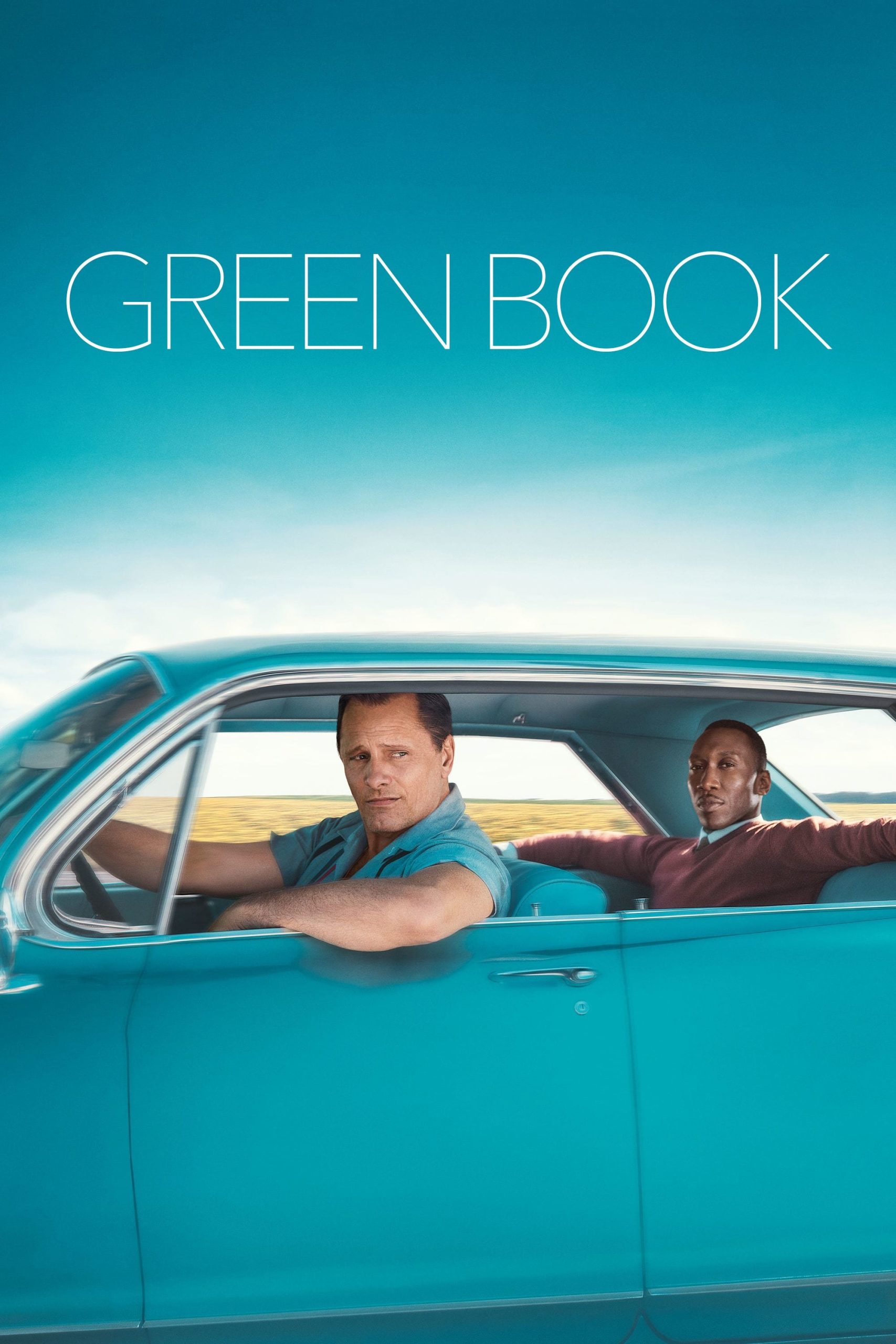
What stood out to me most about the context in which Green Book was made wasn’t just the political turmoil of its release year—it was the kind of yearning I sensed in American popular culture to find solutions, or at least comfort, amidst complexity. The film’s narrative—a working-class Italian-American chauffer developing friendship and mutual respect with an African-American classical pianist as they travel through the Jim Crow South—felt to me like a conscious invocation of the “healing” arc, the sort that had once dominated Hollywood’s depictions of race. But throughout 2018, I witnessed how such arcs were now met with skepticism and sometimes outright derision. It seemed, to me, that audiences and critics increasingly balked at stories that offered racial reconciliation as the climax, particularly if that journey was presented in a palatable, crowd-pleasing package.
I was especially attuned to how entrenched debates around representation charged every aspect of the film’s production and reception. There was a groundswell—the most forceful I can remember—demanding that stories about marginalized people be authored by those with lived experience. Discussions raged online and at film festivals about “ownership of story,” and I personally sensed a loss of innocence in how audiences processed tales about the civil rights movement. Minority filmmakers and critics, whose voices I followed eagerly, often critiqued projects they saw as re-centering white perspectives, even if the intention was bridge-building. The fact that Green Book was co-written by the son of the real-life Tony Vallelonga and directed by Peter Farrelly, both white men, loomed large in these dialogues.
Politically, the United States was grappling with a whiplash from the perceived progressivism of the previous decade to the explicit nativism of the Trump era. I remember witnessing daily reminders—on social media, in op-eds, in heated conversations among friends—that the myth of a “post-racial” America was just that: a myth. The resurgence of movements like Black Lives Matter drove home the urgency, and also the frustration, that comes when old wounds are papered over by conciliatory narratives. Accordingly, Green Book emerged as a flashpoint, almost accidentally—I don’t believe the filmmakers anticipated quite how fraught the ground had become. For me, the story’s relatively gentle confrontation of racism seemed at odds with the rawness I encountered in the wider media landscape, where demands for accountability and justice rang far louder than calls for mutual understanding.
Even in the film industry, there was a sense that the “old ways” of Hollywood storytelling were being audited by a new guard. I found myself comparing Green Book to contemporaneous work by filmmakers such as Barry Jenkins and Ava DuVernay, whose approaches felt more urgent, visceral, and willing to cede authority to Black perspectives. I remember a growing impatience—shared even by older critics I admired—with motion pictures that privileged white enlightenment over the agency of Black protagonists. In this atmosphere, Green Book almost read like a Rorschach test: Did you see it as well-meaning, retrograde, naïve, or quietly radical? The answer often depended on which portion of this divided cultural moment one identified with.
The Film as a Reflection of Its Time
From the very first scenes, I felt Green Book was calibrated, perhaps unconsciously, to the unsettled mood of its release year. What struck me most wasn’t the plot itself, but how painstakingly the film seemed to avoid conflict too raw or unresolvable, and how this seemed to stem from a zeitgeist apprehensive about open wounds. The film chose empathy and humor as its currency, seeking common ground through anecdotes, food, and music rather than ideological confrontation. I suspect this was not just a choice for mass appeal, but a reflection of the era’s yearning for connection in an atmosphere thick with division and suspicion.
As someone preoccupied with how films encode the anxieties and desires of their moment, I noticed how Green Book framed progress—not as the outcome of systemic change, but of small, personal breakthroughs. I experienced this as distinctly characteristic of late 2010s liberal optimism: the notion that racism is a solvable problem of ignorance or misunderstanding between individuals, rather than embedded power relations. At a time when political debates frequently devolved into accusations and defenses, Green Book seemed almost utopian in its faith that a series of warm, awkward, and sometimes funny shared moments could dismantle centuries of oppression. As a historian of cinema, I saw this as the relative comfort of consensus-seeking liberalism, still clinging to the idea that society’s most pressing ills could be managed through interpersonal goodwill.
Yet, what I also found fascinating was the undercurrent of conservatism—or perhaps nostalgia—in this approach. In a period that was loudly reconsidering who deserves the storytelling microphone, the film returned to the “buddy road movie” model more familiar from the 1980s and 1990s. I remember a sense of déjà vu, of stepping into a formula that had become fraught with critiques, especially after films such as Driving Miss Daisy and The Help faced revised historical scrutiny. Was this, I asked myself, an act of resistance to contemporary disquiet, or simply a sign that Hollywood was still catching up to a more radical cultural shift?
As a participant in these cultural debates—watching, reading, debating—I couldn’t miss the film’s attempts to navigate the “mainstream comfort zone.” Realist but not harsh, optimistic but not naïve, Green Book struck a chord precisely because it offered a kind of balm. Still, I was keenly aware, especially in conversations with younger viewers, that this balm left many dissatisfied. For some, the film’s method of personalizing historical trauma felt evasive, even complicit in the tendency to look away from deeper injustices. For others, myself included at times, it simply mapped the contours of a liberal imagination that believed in progress without always recognizing the cost or difficulty of genuine change. Ultimately, watching Green Book in 2018 felt like witnessing a snapshot of a culture negotiating with itself—unsure, but hopeful that bridging divides didn’t have to be painful, or political, or even especially truthful, so long as the intention was sincere.
Changing Perceptions Over Time
Looking back at the weeks and months after Green Book’s release, I recall how quickly critical conversations moved from warm applause to uneasy interrogation. When the film took home the Best Picture Oscar, I felt a tension in the air: the kind that arises when the old guard celebrates a triumph just as the next wave threatens to crash over them. In the immediate aftermath, I sensed that many mainstream critics and casual viewers embraced the film’s optimism, grateful for a story about friendship and endurance—especially in a media environment that so often felt bleak and contentious. For audiences tired of never-ending conflict, Green Book appeared to offer a reprieve.
But for me, and for many others I followed in critical circles, the congratulations soon gave way to growing ambivalence and, for some, outright frustration. I remember reading editorials and think pieces from Black reviewers and cultural historians—pieces that forcefully challenged the film’s perspective and argued that it perpetuated a pattern of recentering white experience. People questioned the accuracy of certain historical depictions, especially regarding Don Shirley’s life and agency. It was as though the initial emotional pull of the story couldn’t quite withstand the rigor of a culture more attuned to the dangers of nostalgia and erasure. I saw heated debates on social media, where Green Book was alternately hailed as a necessary balm or derided as a missed opportunity.
Since its release, I’ve noticed that younger audiences, particularly those raised on a more robust diet of social critique within media, view the film as an artifact of transition—something earnest, perhaps, but already out of step with what they expect from historical storytelling. The idea that friendship alone can overcome structural racism reads, for many, as a relic from an earlier time, more akin to classic Hollywood fantasies than the harsh realities depicted by filmmakers committed to exposing deep-seated inequity. I’ve personally witnessed classroom discussions where Green Book functions less as a guidepost and more as a cautionary tale about the limits of good intentions in storytelling.
Ironically, I think the film’s legacy is now less about its narrative and more about the context of its reception—a lightning rod for debates over what stories get told, who tells them, and who gets to decide which stories matter. For me, the ripples of its release remain instructive; what was once greeted as sentimental and inspiring is now more often dissected for its blind spots. In my view, the complex afterlife of Green Book highlights the rapid evolution of expectations for mainstream cinema and the increased willingness of audiences to interrogate cherished narratives.
Historical Takeaway
What, then, can I say Green Book ultimately reveals about the era in which it was made? For me, the film stands as a testament to a hopeful, but profoundly uneasy, moment in American cultural history. Its popularity speaks to a lingering desire for simple moral clarity in a world that seemed, and seems still, increasingly complex. Watching it, I felt the pull of an older, more comfortable myth—a faith that goodwill and personal connection could unravel systemic evils. Yet, as its reception aged, the conversation around Green Book forced me to recognize the costs of clinging to such myths, especially when new generations are asking graver, more complicated questions of history and art.
I find myself returning to that sense of contradiction: the coexistence, in 2018, of genuine longing for unity and a growing impatience with surface-level reconciliation. Green Book lays bare the cultural crossroads of its time—caught between nostalgia for healing narratives and the bracing, sometimes uncomfortable, demand for structural change and authentic representation. Its journey from beloved crowd-pleaser to contested symbol feels, in hindsight, almost inevitable given the shifts underway. As I reflect, I see the film not just as a snapshot of where America stood, but as a point of departure, a measure of both the old stories we tell ourselves and the new ones emerging from the trenches of contemporary life.
To see how these real-world elements shaped the film’s impact, you may also explore its reception and legacy.
🎬 Check out today's best-selling movies on Amazon!
View Deals on Amazon