
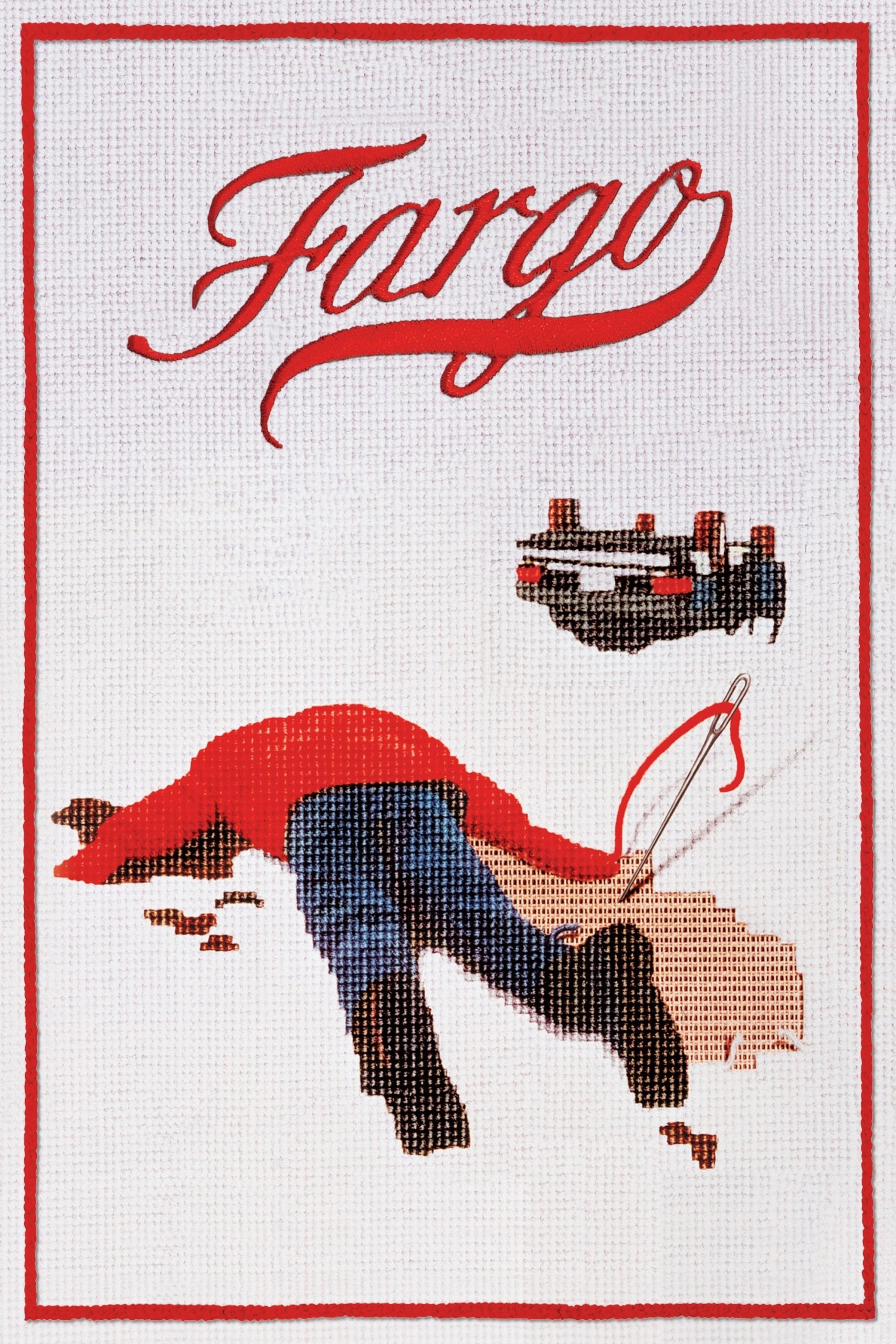
The Historical Landscape
I remember the mid-1990s as an era caught between old fears and new ambitions. The Cold War, that ominous backdrop of the previous decades, had faded into memory, replaced by a certain midwestern optimism and suburban complacency. Technology started to promise an interconnected utopia—and yet, there remained this pervasive undercurrent of banality and frustration in American daily life. That’s precisely why Fargo struck me so seductively strange when I first encountered it in 1996. The film’s snowy, unyielding plains and the gentle, unaffected small talk of its characters seemed at once familiar and utterly alien. I saw in it a world on the verge of something—perhaps cultural, perhaps moral—adrift between the innocence of an old America and the cynicism creeping on the horizon.
Economic confidence ran high; the dot-com bubble hadn’t quite burst, and conversations often turned towards innovation and opportunity. At the same time, I often sensed a grasping for authenticity—a desire to reclaim or reimagine a regional American identity threatened by a rapidly globalizing culture. Grunge had softened into mainstream alternative, indie filmmaking was flourishing, and the nation seemed eager to rediscover a kind of storytelling that didn’t require skyscrapers or supermen. In this climate, Fargo felt both retro and radical: a crime story unfolding in snow boots and parkas, far from the glamor and grit of the usual Hollywood settings. It captured, for me, the quietly brewing anxieties of my generation—an age where small places could harbor big secrets and ordinary people might find themselves teetering on the edge of the unthinkable.
The broader context colored my perception of the film’s soundtrack, its dialogue, and its very setting. The Midwest, with its frosty roads and folksy cadences, suddenly pulsed with menace and dark irony. I wasn’t alone in finding the film’s deadpan violence and offbeat humor a perfect reflection of an America searching for meaning in unlikely places. Our collective gaze had turned away from the grand clashes of ideologies and towards something subtler—that nameless tension lurking beneath placid surfaces.
Cultural and Political Undercurrents
What struck me most upon reflection was how Fargo seemed born from the contradictions of the era’s political mood. In the waning years of the twentieth century, America grappled with competing narratives about crime, morality, and the authenticity of “ordinary folks.” The film’s release coincided with a swell of true-crime fascination—a genre exploding on late-night cable, in tabloids, and on newly popular talk radio programs. I saw Fargo channeling these cultural obsessions, not with bombast, but through its quiet, almost mundane, unraveling of a kidnapping gone absurdly wrong.
Politically, this was also an America wrestling with questions of trust. After Watergate and Reagan’s sunny yet morally complicated years, and on the eve of the Clinton impeachment drama, I felt an ambient skepticism about institutions—be they law enforcement or the nuclear family. Fargo plays with these anxieties: its central figures are not the glamorous outlaws or jaded detectives of earlier noir, but an awkward car salesman and a heavily pregnant police chief who is as competent as she is unassuming. When I watched Frances McDormand’s Marge Gunderson go about her methodical investigation, her small-town decency seemed both an antidote and a subtle critique of the era’s moral ambiguity.
I also couldn’t ignore how Fargo quietly subverted expectations about gender and power. In an industry still saturated by male antiheroes and femme fatales, the film offered a woman whose authority and wisdom came from empathy, not bravado. To me, Marge Gunderson embodied a kind of American feminism taking root in the 1990s—pragmatic, unshowy, and deeply humane. Her presence was revolutionary precisely because she refused to be defined by the tropes that so often hemmed in women on screen.
Beyond gender, there was a regionalism that felt almost political in its insistence. The Coens, themselves Midwesterners, reveled in the accents, mannerisms, and landscapes of that world. I recognized this as a subtle pushback against cultural homogenization, a celebration of local flavor at a time when the national conversation grew increasingly coast-centric. The film’s frozen lakes and diners were less backdrop than battleground: here, American identity itself was up for negotiation.
The Film as a Reflection of Its Time
For me, Fargo didn’t just depict the 1990s; it dissected the moral contradictions at the heart of the era. The film’s narrative, laced with equal parts humor and horror, seemed to say: dark things can fester in the nicest places. It was a challenge to that decade’s easy optimism, a reminder that beneath the surface—of a marriage, of a community, of a country—there lingered unresolved desperation and deceit.
What resonated most deeply was the juxtaposition of violence and banality. When I recall Jerry Lundegaard, played with such flustered ordinariness by William H. Macy, I see him less as a villain and more as an embodiment of 1990s malaise: hungry for more, but unable to transcend his own mediocrity. His failures and betrayals play out not in neon-lit back alleys, but in homespun settings—dealership offices, living rooms cluttered with toys, fast-food parking lots. Crime doesn’t explode; it creeps, and in doing so, it reveals the fragility of the era’s self-assured normalcy.
Fargo also exposed the limits of that decade’s belief in self-reinvention. The 1990s extolled reinvention, both national and personal, with the belief that anyone could become anything. Yet, the film coolly undermines that dream: Jerry flounders in his schemes not because the world is stacked against him, but because he cannot escape his ordinariness. His moral failures are small and cumulative, rooted in the plausible yet poisonous dream of “getting ahead.” When I saw the Coen brothers guiding viewers through this subtle critique, it felt like they were puncturing the mythos of the American dream at its snowiest edge.
At the same time, the character of Marge Gunderson’s resilience seemed to radiate from another American tradition. Her steady, matter-of-fact pursuit of justice spoke to the enduring (if sometimes corny) faith in the decency of ordinary people. In the hands of a lesser director, this might have come off as parodic, but instead, it felt—at least to me—like a direct conversation with the decade’s contradictory yearning for both irony and sincerity. Marge’s quiet warmth, contrasted with the coldness of those around her, underscored the yearning for moral clarity that I felt lost in mainstream culture at that moment.
I also sensed the film responding—perhaps inadvertently—to the 1990s’ swirling media environment. Sensational headlines battled with tongue-in-cheek self-representation; earnestness was often met with a smirk. Fargo straddled this divide perfectly: its “true story” prologue, famously fabricated, both mocked and paid homage to the era’s obsession with authenticity. I often return to this playful sleight-of-hand as a perfect encapsulation of mid-’90s America: eager to believe, yet always suspecting a trick.
Changing Perceptions Over Time
I’ve watched Fargo undergo a surprising transformation in the public consciousness. On first viewing, it felt shockingly novel—a Coen Brothers oddity that unsettled and amused in equal measure. Over the years, as violence on screen has grown both more explicit and less meaningful, I find myself returning to Fargo for its rare ability to blend dread with genuine affection for its characters. What once seemed regionally quirky now strikes me as a measured meditation on universal themes of decency, failure, and the choices we make under pressure.
As American society has shifted—experiencing the anxieties of 9/11, the financial crises, and the mounting polarization of recent years—I sense that Fargo has aged into a kind of elegy for what once seemed fixed and familiar. The Minnesota nice, with its passive-aggressive edge, now feels less like comic relief and more like a metaphor for how we handle discomfort and look away from our collective troubles. Younger viewers, I’ve noticed, often read the film’s humor as darker, its violence as more chilling, and its portrait of small-town life as bittersweet rather than pure.
When I show the film to students today, I’m often asked about its insistence on failed men and competent, good-hearted women. The cultural conversation about gender has moved far beyond the 1990s, and yet, Marge Gunderson remains a quietly radical figure. Contemporary viewers tend to see her not as a novelty, but as a symbol of hope in a world grown weary of antiheroes. What once read as subversive now feels affirming. The same is true for the film’s regionalism—its unapologetic embrace of the Midwest, once mocked as “flyover country,” has been reconsidered as a necessary corrective to the cultural hegemony of the coasts.
Technological change has also colored our perceptions. The film’s pre-internet atmosphere—characters depend on phone booths, paper records, and face-to-face confrontations—now seems almost prehistoric. I find this slows the film down in a way that is both comforting and unsettling: evil arrives not from online message boards or global networks, but from the banality of financial trouble and poor decisions. In a digital age, Fargo reminds me how human folly, as well as grace, are irreducible to algorithms and viral trends.
The legacy of Fargo has been extended through television adaptations and countless imitators. Each new iteration draws from the well of quiet dread and cracked humor that the original established; yet, none, in my estimation, capture the precise tension of the 1990s—a world balanced precariously between naivete and knowingness. The film stands as both a period piece and a living, evolving artifact of cultural anxieties, forever colored by the lenses through which we view it.
Historical Takeaway
After years of rewatching and reinterpreting Fargo, I’m left with a belief that few films are as attuned to the ambiguities of their moment. It captured, for me, the twilight of collective American confidence: the realization that violence was not the exclusive province of big cities or exotic underworlds, but could arise wherever ordinary people found themselves cornered by desire or despair. The film’s bloodshed, inflected with humor and pathos, serves as a kind of warning—a gentle, wintry rebuke—against the allure of shortcuts and the erosion of community trust that marked the late twentieth century.
Yet Fargo is not merely a dirge for lost innocence. It offers a vision of hope lodged within the everyday, embodied most touchingly in Marge Gunderson. Her resilience isn’t theatrical or bombastic, but lived—an insistence that kindness and clarity will outlast even the coldest winters. I see in her a tribute to the quietly radical possibilities of goodness, a reflection of the era’s search for anchors in a sea of uncertainty.
In many ways, then, Fargo stands as both mirror and critique: showing me, again and again, how the 1990s wrestled with its contradictions, its shifting morals, and its longing for meaning amid the ordinary. It remains a testament to the era’s anxieties and aspirations—a darkly funny, quietly profound reminder that history is not always made by heroes and villains, but by the choices of imperfect, deeply human people navigating uncertain times.
To see how these real-world elements shaped the film’s impact, you may also explore its reception and legacy.
🎬 Check out today's best-selling movies on Amazon!
View Deals on Amazon