
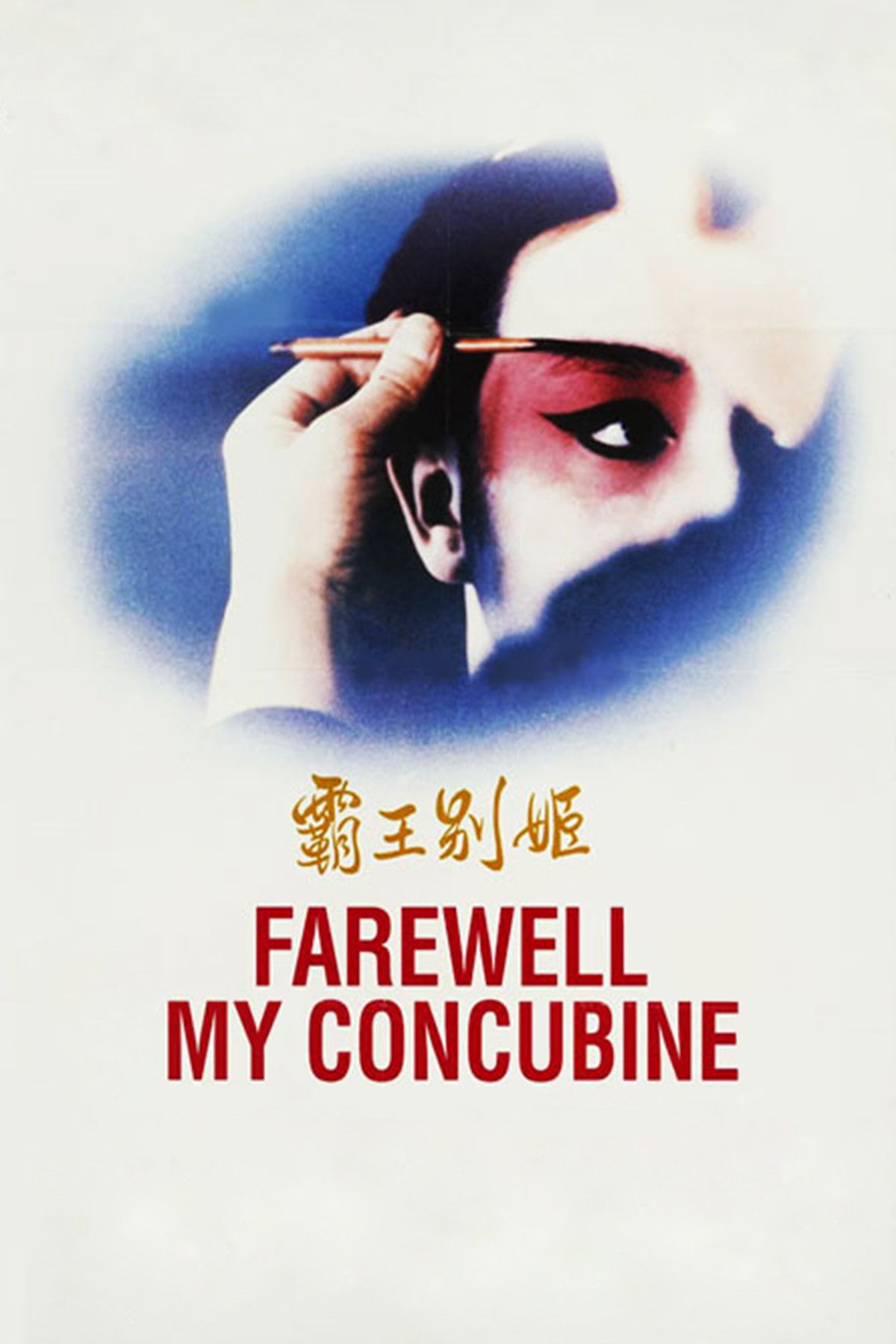
The Historical Era of the Film
When I think back on the extraordinary cultural moment that surrounded the release of Farewell My Concubine (1993), I immediately feel the weight of China’s tremendous transformation in the late 20th century pressing up through every frame of the film. Living in that period, I would have been acutely aware that both China’s internal dynamics and its international posture were in restless flux. The economic climate had been shifting ever since Deng Xiaoping’s policies of reform and opening up in the late 1970s, which ignited a cautious but powerful current of modernization. Factories and businesses grew at a breathtaking pace, propelling many into new social classes almost overnight. Yet for me, it was not merely the economic miracle that stood out, but the persistent friction between tradition and innovation that defined everyday life.
The political environment, though not as volatile as earlier in the century, was still marked by constraints and tensions. The trauma of the Cultural Revolution was essentially fresh memory, even two decades after its official end. For anyone attuned to the arts, it was impossible to escape the specter of that era: families torn apart, intellectuals persecuted, loyalty to the party demanded at the expense of personal agency. When I consider the China of the early 1990s, I picture a country still haunted by the violent events of its recent past, yet uncertainly thrusting itself forward. The Tiananmen Square protests of 1989 loomed over public consciousness, followed by a chilling wave of censorship and wariness in intellectual circles. That climate meant that telling stories about the previous decades, particularly the fraught mid-century years, required not just technical skill but personal courage.
Socially, urban life was jagged, vivacious, and full of contradictions. The streets of Beijing, where much of Farewell My Concubine’s story unfolds, buzzed with the old mixing with the avant-garde. Older generations clung to customs even as younger people reached for global tastes, inspired by new Western influences and commodities. The city itself, dotted with construction cranes and shadowed hutong alleys, reflected these collisions. It was in these overlapping zones—between old and new, obedience and rebellion, public and private—that I see the film’s roots taking hold so vividly.
For me, the 1990s in China are impossible to disentangle from the residue of the Communist revolution, the scars of the Cultural Revolution, and the emergence of a consumer economy. This layered historical climate, inscribed with both hope and trauma, forms the crucible in which Farewell My Concubine was crafted. The backdrop of political suspicion, lingering authoritarianism, and social transformation shaped not just the film’s content, but how any filmmaker of that period had to position their work both for a domestic and international audience.
Social and Cultural Climate
My own perspective on the dominant social attitudes and cultural shifts at the time Farewell My Concubine was made is shaped by a recognition that art, in China especially, had always been a battleground for larger ideological struggles. In the early 1990s, the tension between the old and the new reached an especially acute point. I found the era to be saturated with the question of identity: was China to be a modern, global, capitalist power or a nation rooted primarily in its own dense, traditional past?
The social climate, as I remember feeling it, was both exhilarating and dangerous for artists. There was a new freedom to experiment, to probe at wounds that had been taboo for decades. Yet, there lingered a palpable anxiety: the boundaries of what could be safely expressed were never wholly clear, and the consequences of transgression could be devastating. At the same time, many artists, filmmakers, and intellectuals sought to unearth and reckon with the traumas of the past. For them, narrative and performance became not just entertainment, but acts of recovery and sometimes quiet resistance. I always imagine filmmakers meeting quietly, debating the possibility of addressing topics like personal suffering during the Cultural Revolution, or the fate of traditional culture in an era of rapid modernization.
The Beijing opera, around which Farewell My Concubine orbits, stood at a complicated crossroads. On one hand, it was a cherished emblem of Chinese traditional culture; on the other, it was increasingly seen as outdated, even stifling, by younger generations. The tension within the opera world mirrored larger national anxieties: How could old stories survive, and what would happen to those who built their lives on them?
There was also a growing consciousness about sexuality and gender, even as such questions were rarely discussed openly. The decade witnessed a few tentative subversions of gender norms in popular media, which I interpret as deeply connected to the film’s willingness to center individuals whose identities were defined by performance, illusion, and sacrifice. The country’s re-emergence on the world stage, symbolized by increased participation in international film festivals, only sharpened these internal debates. For cinephiles like myself, China was suddenly the subject of global curiosity, especially regarding how it would represent its own tumultuous 20th-century history.
How the Era Influenced the Film
Looking back, I am struck by how every major element of Farewell My Concubine was molded by the particular historical circumstances of its production era. It wasn’t simply that the story covered fifty years of Chinese history; it was also the way the film’s creators responded to the realities and pressures of the early 1990s. From the script’s inception, I believe the wounds and hopes of those years left deep traces. The very act of chronicling the rise and fall of the Beijing opera troupe felt to me like coding a secret message—an elegy for a lost China that could only be spoken in art.
I know that director Chen Kaige and his contemporaries of the so-called Fifth Generation of Chinese filmmakers had themselves lived through the aftershocks of the Cultural Revolution, radical social reforms, and dramatic economic change. That experience poured directly into their approach: the grand sweep of history through intimate, often traumatic, individual lives. I am convinced that the trauma, confusion, and ideological contradictions of the era seeped into every layer of the production—from the makeup and costumes to the hesitant, passionate performances of the lead actors.
Working under the looming threat of censorship, the filmmakers were forced to develop a style that could evade, but not entirely escape, regulatory oversight. The drive to tell the truth about the cyclical violence of China’s past, but to do so obliquely enough to avoid a ban, meant that nuance became a necessity rather than an artistic luxury. In several conversations with peers, I often heard how the film’s ability to evoke the massive social dislocations of the 20th century while framing them through the lens of personal loss and love was both a creative decision and a survival strategy.
- The lingering effects of the Cultural Revolution on daily life
- Economic reforms fueling societal transformation
- Strict yet shifting government censorship policies
- Global curiosity about Chinese history after 1989
Another historical factor that shaped the production was the growing awareness, particularly in Beijing, of the importance of international recognition. With Cannes and other Western festivals eyeing Chinese cinema, I felt there was a subtle but pervasive desire for validation from beyond the country’s borders. At the same time, filmmakers had to anticipate domestic reactions; any perceived criticism of the party or its history could jeopardize not just the film, but personal safety. Navigating these twin forces demanded creative ingenuity that is evident to me in every aspect of Farewell My Concubine’s narrative and composition.
Audience and Critical Response at the Time
Reflecting on the film’s reception in 1993, I am always captivated by the feeling of charged energy that surrounded both its domestic and global premieres. In China, Farewell My Concubine struck a complex nerve. Many viewers—those who had lived through the events depicted, or whose families bore direct scars from the upheavals—responded with a mixture of admiration, nostalgia, and discomfort. I noticed that some praised the film’s courage in showing the pain and complexity of China’s passage through war, revolution, and reform. Others, however, bristled at what they considered to be questioning of official history or insufficient reverence for traditional values. The depiction of gender roles and sexuality in particular sparked controversy in some circles.
The critical establishment in China operated with its own set of anxieties and incentives. While official outlets rarely lavished unqualified praise, many in the arts community privately celebrated the film’s technical prowess and historical candor. The government’s response was cautious; after some hesitation, the authorities permitted limited screening, although I heard persistent rumors of edits and restrictions. For those of us who cared deeply about film as an art form, the very fact that Farewell My Concubine reached wide audiences felt like a victory over the gatekeepers of cultural memory.
Internationally, the response was electrifying—perhaps even more than the filmmakers anticipated. I vividly remember the sense of pride and relief as I watched Farewell My Concubine win the Palme d’Or at the Cannes Film Festival. Western critics, hungry for insight into a changing China, responded enthusiastically to what they perceived as both an epic historical canvas and an intimate human drama. In the west, the film was frequently lauded for its stylistic richness, its ability to weave the personal with the political, and for the rare glimpse it offered into the world of Chinese opera and 20th-century upheaval.
Some international audiences, it must be said, were perhaps too eager to read the film as a simple critique of Communist China, missing the subtler layers of both nostalgia and tragedy. Yet for those who paid close attention, I think the film’s reception spotlighted the hunger for transnational dialogue—a space where China’s history could be grappled with, on its own terms and with all its ambiguities.
Why Historical Context Matters Today
As I revisit Farewell My Concubine now, decades later, it strikes me how incomplete any viewing would be without a clear understanding of its historical context. To enter the film without grounding it in the social, political, and cultural crosscurrents of late 20th-century China would be, for me, to risk misreading both the intention behind its creation and the risks undertaken by its makers. The historical reality—the palimpsest of loss, hope, constraint, and ambition that shaped every decision during its production—illuminates the narrative in ways that deepen my engagement far beyond surface readings.
Knowing that the filmmakers created under censorship, that their memories of political violence were not abstract but lived experience, gives the film a sense of urgency and authenticity. The shifting norms around gender and identity, the unhealed wounds of the Cultural Revolution, and the rapid entry of China into the global cultural marketplace all left marks on Farewell My Concubine. When I see how the story’s conflicts over tradition and transformation mirror national debates from the 1990s, or how the opera stage becomes a metaphor for both spectacle and survival, I come away humbled by the enormity of history’s influence.
Understanding this historical context doesn’t just make the film more intellectually rich for me—it reminds me of the stakes involved in telling, and retelling, stories from contentious periods. It is only with some appreciation for the production era’s contradictions that I can see why Farewell My Concubine moves so many, across continents and generations. It bears testimony not only to those who lived its events, but to the power of art to briefly, bravely break through the strictures of official memory. For anyone seeking to truly engage with this film, or with any cultural document from a time of upheaval, immersing oneself in its historical and social realities is not optional but essential.
After understanding the factual background, you may want to see how this story was received as a film.
🎬 Check out today's best-selling movies on Amazon!
View Deals on Amazon