
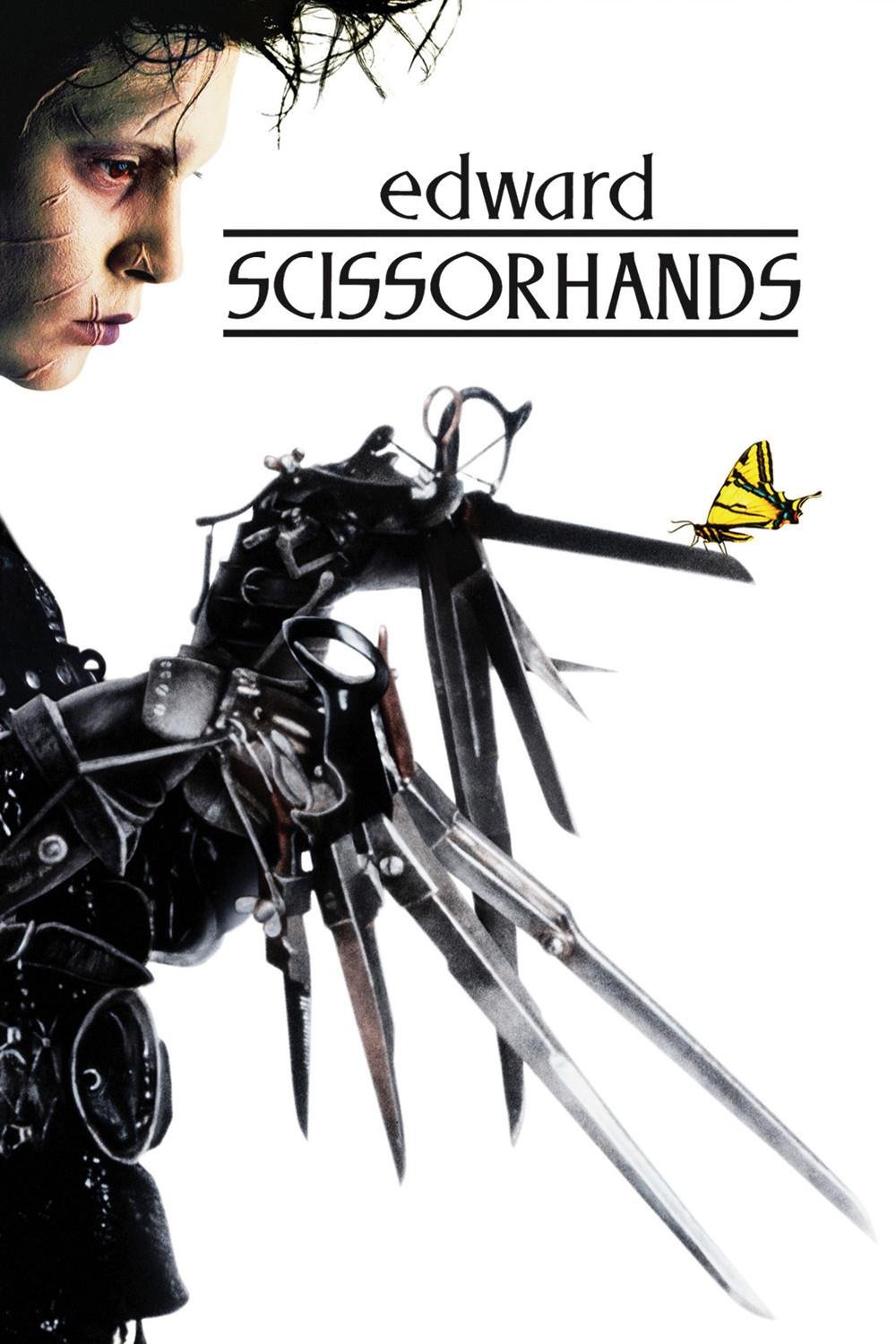
The Historical Landscape
Whenever I revisit “Edward Scissorhands,” my mind drifts back to those waxy years of transition at the dawn of the 1990s, an era both flush with optimism and shrouded in quiet anxiety. I remember watching neighborhoods sprawl out like checkerboards, their identical homes perched upon the promise of security and sameness. The late 1980s had unfurled a tapestry ambiguous with its prosperity: on paper, the economic indicators sang a cheery tune, yet there seemed to be a kind of yearning just beneath the surface—a hunger for something more textured and authentic than plastic siding and carefully mowed lawns.
The country was emerging from the Reagan era, which had lasted all through my adolescence. It was a time marked by a twin devotion to moral conservatism and to the shiny ideals of individual success. Yet as the decade gave way, I noticed in pop culture a subtle backlash—a sense that relentless optimism no longer told the whole story. I remember 1990 as the year the Berlin Wall had already fallen and the Cold War was unspooling, gently, across television sets in living rooms like my own. There was relief, but also the birth pangs of the unknown, as the old certainties unraveled and possibilities bloomed, untamed and a little frightening.
Into that peculiar moment, I recall “Edward Scissorhands” arriving almost like a fragile snowflake—something easily missed by anyone only scanning for the juggernauts. Its suburban vistas echoed the landscapes I saw from car windows, but they shimmered with a pastel fantasy, lacquered in nostalgia yet undercut by unease. It fascinated me that this was a film so invested in gentle oddity at a time when blockbusters flexed their might through spectacle and machismo. Looking back, I feel Tim Burton’s story drew deeply from the contradictions swirling around the turn of that decade: surface order, underlying loneliness, suburban entrapment, the innocence of outsiders set upon the altar of conformity.
Cultural and Political Undercurrents
Peeling away the diorama of “Edward Scissorhands,” I saw currents swirling far beneath its whimsical façade. For me, the early ’90s were years when debates about what it means to be American pulsed everywhere—from the Supreme Court to sitcoms, from campaign ads to backyard barbecues. There was a heightened surveillance around the notion of “normal”: what kinds of families, behaviors, and expressions could be publicly displayed, which could be tacitly tolerated, and which were to be shunted aside. Living through this, it was clear that the cult of the suburb still ruled: those cul-de-sacs promised sanctuary, but they also demanded obedience to unsaid norms.
I recognized in the film’s visual language the anxieties around difference that were everywhere at the time. Homogeneity in dress, in taste, in manner—these were social currencies traded in the hope of securing belonging. Yet I also sensed, in those same years, a growing unrest, a mounting frustration with roles that seemed too brittle, too prescribed. The AIDS crisis, still an open wound in 1990, had already exposed the cruel limits of suburban empathy, turning the idea of outsiderdom from quirky abstraction into fierce, aching reality for many Americans. Watching Edward’s gentle struggle for acceptance, I could not help but hear the echoes of these conversations—about compassion, about the many forms of exile that were lived behind those repeated front doors.
The political world was shifting, too. George H. W. Bush occupied the White House, carrying forward the banners of genteel society, family values, and a carefully managed vision of American decency. Yet a younger generation, raised on cable television and restless music, was quietly revolting against both conservatism’s genteel hypocrisy and the culture’s newly commercialized rebellion. I recall seeing the yearning for sincerity emerge in art and film, a hunger for deeper feeling, for spaces where heartbreak and longing could be aired without derision. “Edward Scissorhands” struck me as a story knitted together from these contradictions—cushioned by nostalgia, yet ready to bare its wounds. The film’s pastel, dreamlike aesthetic offered fable, but its wounds and longing were distinctly of that moment: 1990, with its cautious hope and restless loneliness.
The Film as a Reflection of Its Time
For me, “Edward Scissorhands” distilled the psychic tension of its era into one unforgettable image: an outsider, heartbreakingly gentle, wandering an antiseptic paradise that promises harmony but always delivers exile. The suburb was both setting and symbol—technicolor lawns hiding the monochrome anxieties of uniformity, of small talk weaponized into exclusion. I found it uncanny how the film’s highly stylized sets managed to both celebrate and critique the Eisenhower-era Americana that resurged in the late ’80s and early ’90s—an era obsessed with remembering itself in glossier, tidier forms. Burton’s pastel suburb, to my eyes, is both Eden and prison: it offers beauty only at the steep price of sameness.
Watching the film, I felt the ache of loneliness that seemed to haunt so many in that moment—despite, or perhaps because of, the era’s obsession with image management. Edward, with his bladed hands and wordless longing, became to me a vessel for all those who struggled to conform, who learned that vulnerability would be met with kindness so long as it entertained, but cruelty the moment it breached comfort. To my mind, this dynamic—celebrating the strange only in doses that could be repackaged as quaint—spoke directly to late 20th-century America’s narrow bandwidth for real difference. It was a period when queer expression, racial otherness, and non-normative identities were staring to finally demand space. Yet, overwhelmingly, the guardians of mainstream culture demanded neatness and manageability; “Edward Scissorhands” painted with a tenderness all the ways that difference was harvested, beautified, then cast aside once it threatened the surface calm.
I was struck by how the film’s gentle romanticism and fairy tale structure belied a deep skepticism about American friendliness. The communal curiosity about Edward initially feels warm, but I soon recognized it as a double-edged sword: the community’s embrace is conditional, their affection skin-deep. This dynamic mirrored what I saw in public debates of the period—about immigration, about “family values,” about who could join the party and on what conditions. I marveled at the way Burton gently critiqued these themes, not through polemic, but by painting a world so invitingly perfect it cannot help but betray its own emptiness.
What resonated with me most, though, was the film’s insistence on the beauty of imperfection. This was an idea gaining traction as the new decade stretched ahead. Amid all its fantastical stylization, I found the message had a barbed clarity: the true horror lay not in the hands that could rend and create, but in the softness of people who, faced with difference, default to fear. This quiet pessimism infused much of the art I loved from that moment in history—a distaste for easy resolutions and a recognition that nostalgia, for all its luminosity, could just as easily suffocate as sustain.
Changing Perceptions Over Time
As years unspool, I find myself returning to “Edward Scissorhands” for comfort, but also to measure how the film’s metaphors have shifted as the world has changed. In those first years after its release, I remember interpreters focusing tightly on the visual and emotional audacity—praising Depp’s vulnerability, marveling at the suburban nightmare, dissecting the gothic romance. To me, it felt as if the film was received as a sweet, vaguely tragic fable, its more subversive elements half-hidden beneath its stylized surface.
But as conversations about identity, inclusivity, and normativity deepened in the decades that followed, I found new generations of viewers beginning to see “Edward Scissorhands” less as a gothic fantasy and more as a parable about the costs of policing difference. I have heard younger voices focus on Edward’s queerness—not in a literal sense, but as a symbol for all who are othered. Today, to watch the film is to encounter a mourning for the empathy that is withheld from outsiders, a longing for acceptance that feels, if anything, more urgent as debates about acceptance and tolerance have grown louder and more fraught.
There have also been moments when the film’s nostalgic palette has come under sharper critique, as I talk with colleagues and students who were raised in the aftermath of its era. Some now see the pastel paradise with less affection, noting how suburbia’s promises of safety were never universal—how the America invoked by the film’s style was always exclusionary, always haunted by those it left out. I notice too that what once passed as gentle eccentricity now reads to many as a pointed meditation on neurodivergence and disability: Edward’s struggles speak to a culture still learning—slowly, painfully—to recognize difference not as threat, but as a resource.
The enduring popularity of “Edward Scissorhands,” as I reflect, arises from its adaptability. With each new crisis—be it economic, political, or cultural—I find new depths of resonance in its gentle protest against societies that prize order over empathy. The shift in interpretation mirrors our changing anxieties: no longer only about conformity, but also about isolation, about the dangers of a world obsessed with perfection and control while denying the value of the misfit, the wounded, the incomplete.
Historical Takeaway
Sifting through my memories and critical observations, I remain convinced that “Edward Scissorhands” is not merely a fairy tale of love and loss, but a time capsule, tenderly engineered to preserve the anxieties and delicate hopes of its moment. I see the film as crystallizing the sense of longing that shaped America as it teetered between past and future: a longing to be special, to be seen, to belong—without forfeiting the oddities and rough edges that make us real. When I watch it, I am transported to a moment when the suburban dream was still for sale, but the cracks in its foundations were beginning to show.
The lessons I glean from the film about its era remain hauntingly simple: surface unity can be as dangerous as division, and the masks societies require often conceal deep reservoirs of pain and gentleness. What I find most revealing is how Burton’s vision made room for viewers to recognize themselves in the figure of the outsider—not as monsters, nor as saints, but as everyday people whose difference, if only it were treasured, could heal the wounds at the heart of the community.
For me, “Edward Scissorhands” embodies the ache of transition—between the old, safe stories that no longer satisfy and the uncharted narratives yet to emerge. In the dazzling, uneasy landscape of 1990, it offered a kind of dream logic that felt more honest than realism, more poignant than protest. It remains, to this day, a subtle, bittersweet mirror of a culture on the edge of reimagining itself, reminding me that every age clings to its outsiders until it’s ready, at last, to recognize itself in them.
To see how these real-world elements shaped the film’s impact, you may also explore its reception and legacy.
🎬 Check out today's best-selling movies on Amazon!
View Deals on Amazon