
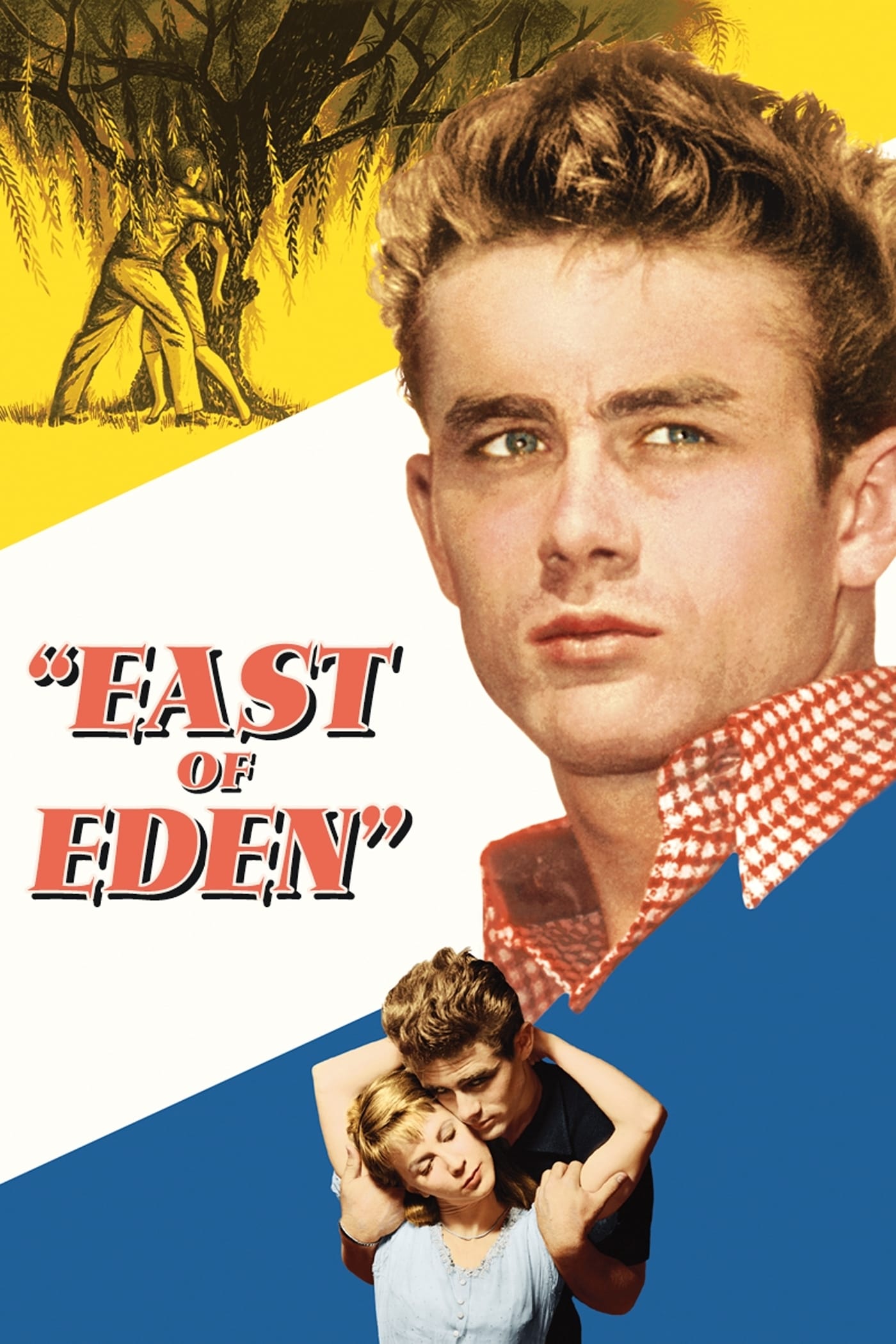
The Historical Era of the Film
Whenever I revisit East of Eden (1955), my thoughts are immediately drawn to how distinctly it reflects mid-century America—a period marked by seismic cultural, political, and economic shifts. For me, the backdrop against which the film was both set and produced can’t be separated from the charged atmosphere of 1950s America. Emerging just over a decade after the end of the Great Depression and World War II, the world into which the film was born was at once hopeful and uncertain. America found itself at the center of a burgeoning global order, with its optimism fueled by postwar economic prosperity, yet tempered by deep anxieties brought about by the Cold War.
The era’s political climate is especially striking to me. Senator Joseph McCarthy’s anti-communist crusades were at their height, and those dark, suspicious undercurrents wove their way into every corner of American life—from local communities to Hollywood studios. The bite of McCarthyism meant that even works of fiction became battlegrounds for ideological loyalty, and there was an ever-present tension between creative freedom and political caution. I sense this nervous energy in many studio productions from the time, as filmmakers sought to navigate the treacherous waters of public expectation and government scrutiny.
On a broader social plane, American society in the mid-1950s was dealing with a rapidly changing family structure and community dynamics. The war had pulled millions from rural to urban settings, women into the workforce, and returning veterans back into a reshaped domestic landscape. Prosperity sparked the “baby boom,” but also created pressures for conformity in idyllic but sometimes stifling suburbs. Social norms, especially those concerning gender, authority, and individuality, were enforced more rigidly than ever. This constant negotiation between maintaining tradition and adapting to change, for me, pulses through the era and is echoed within the film’s emotional tenor.
Economically, the era saw major growth; the postwar boom fueled material comfort for many ordinary Americans, aspiring homeowners, and families flush with new consumer goods. Yet, beneath that surface, remnants of prewar hardship lingered, particularly in rural communities like the one depicted in Steinbeck’s original novel. These economic nuances grounded the landscape of moviegoers at the time, and I always feel the subtle tension between nostalgia for an agrarian past and excitement for the possibilities on the horizon.
- The impact of postwar economic prosperity
- The chilling effect of McCarthyism on Hollywood
- Changing American family and community dynamics
Social and Cultural Climate
When I ponder the social and cultural climate that shaped both the story and production of East of Eden, it’s clear to me that the 1950s were brimming with contradictions and undercurrents of restlessness. Although the decade is often remembered for its neat suburban lawns and rigid gender roles, I’ve always felt its reputation for conformity only tells half the story. In reality, there was a growing tension—the kinds that spilled out in generational clashes, the stirrings of the early Civil Rights Movement, and subtle challenges to traditional authority.
I often think about how the family unit, while outwardly stable, was actually undergoing profound transformation. Women, having tasted independence during the war, were caught between societal pressure to return to domesticity and their own ambitions. Teenagers, a newly-minted social category, began to push back against their parents’ expectations, sparking early signs of the so-called “generation gap.” To me, the beginnings of rock ’n’ roll and the cult of the rebellious youth—emblematic in other contemporary films—come from the same unsettled climate into which East of Eden emerged.
This was also an era marked by a subtle but profound preoccupation with morality and “Americanness.” I see how fears of internal subversion fed into both private and public life. Hollywood, facing the backlash from the House Un-American Activities Committee, doubled down on producing films that explored questions of integrity, loyalty, and community responsibility—sometimes as a direct response to accusations of permissiveness or subversion.
However, what strikes me most about the time is the climate of emotional restraint that pervaded the culture. Displays of open conflict, deep feeling, or non-conformist opinions were often discouraged. And yet, beneath the placid surface, I sense eruptions of anxiety and longing—famously captured, for me, in the burgeoning fields of psychoanalysis and popular self-help. As I watch the intense family conflicts and socially taboo desires depicted in East of Eden, I can’t help but view them as deliberate affronts to the cultural pressure toward emotional uniformity and discretion. The film becomes, in my eyes, a reflection of midcentury America’s struggle to balance personal authenticity with communal approval.
How the Era Influenced the Film
I’m always struck by the ways in which the broader era undeniably shaped the creation, tone, and storytelling techniques of East of Eden. The choice to adapt John Steinbeck’s 1952 novel during an age rife with suspicion and uncertainty feels, to me, intensely symbolic. Steinbeck’s work, which was already a nuanced exploration of family, morality, and belonging, struck a nerve with filmmakers confronting their own anxieties.
I find it especially noteworthy that director Elia Kazan was at the center of Hollywood’s fraught relationship with political oversight. His decision to testify before the House Un-American Activities Committee, naming former colleagues, cast a long shadow over his career and the reception of his work. For me, the very act of Kazan bringing such a powerful, intimate story about conflict, guilt, and forgiveness to the screen is a reflection of his own need—and that of his contemporaries—to explore, if not atone for, their internal and societal struggles. I feel that the film’s treatment of alienation and familial rupture is inseparable from Kazan’s public and private battles during this contentious period.
The casting of James Dean, so raw and unpredictable, also stands out to me as emblematic of a changing cultural moment. Dean’s emotional vulnerability and antiheroic presence mirrored the growing spirit of rebellion among American youth. That early spark of anti-conformity in the 1950s was embodied in performances like his, which broke from Hollywood’s more controlled, mannered star personas. The very style of acting—open, wounded, uncertain—reminds me of the era’s uncertainty. I often see Dean in this film as the living embodiment of the conflicts simmering beneath America’s glossy veneer.
The era’s shadow hangs over even the technical aspects of the film. Filmed in Technicolor and the then-novel CinemaScope, East of Eden leveraged cinematic innovation to emphasize its emotional and visual grandeur. But these innovations, to me, also signal Hollywood’s postwar push to recapture audiences eager for spectacle and meaning in the face of competition from television. The scale and ambition of the film seemed, to my eyes, designed to reassure postwar audiences of the movies’ cultural importance—even as they wrestled with very modern uncertainties about their place in a changing world.
Audience and Critical Response at the Time
Reflecting on the film’s original reception, I’m always fascinated by how contemporary audiences processed East of Eden’s blend of traditional and radical elements. When the movie debuted, postwar Americans—both those who had read Steinbeck’s novel and those new to the story—greeted it as something profoundly different from the studio dramas of the previous decade. Audiences, I imagine, were drawn both to the old-fashioned moral struggles and the potent portrait of modern alienation brought to the screen by Dean and his castmates.
I’ve read countless accounts of the initial critical response, which often fixated on the boldness of Kazan’s direction and the electric unpredictability of James Dean’s performance. Some critics lauded the film’s attempt to grapple with difficult psychological and familial issues, while others were unsettled by its emotional rawness and frankness. There was, I think, a clear generational split: older moviegoers admired the film’s dramatic scope but sometimes bristled at the unruly energy embodied by Dean, while younger viewers felt riveted by his openness. For me, these divergent reactions underscore the broader cultural split in 1950s America between upholding tradition and embracing a more unsettled, searching spirit.
I can’t ignore the film’s subsequent reputation—it became a touchstone for those who felt the strictures of 1950s society too confining. Its continued critical reassessment indicates how its boldness found a more welcoming audience as cultural attitudes softened in the 1960s and 1970s. To my eyes, East of Eden landed as a thunderbolt in its time: controversial, divisive, and compelling, all precisely because it captured the frictions of a society on the cusp of dramatic change.
Why Historical Context Matters Today
I’m convinced that to truly appreciate East of Eden now, one has to keep its historical context front and center. Watching the film through the lens of 1950s anxieties and aspirations, I see its characters’ struggles and emotional upheaval in a new light—not just as personal melodrama, but as expressions of forces much larger than themselves. That tension between longing for stability and yearning for self-definition, to me, is at the very heart of America’s midcentury identity crisis.
Understanding the McCarthy era, postwar prosperity, and the evolution of American youth culture allows me to read each scene as a kind of coded message, crafted both for contemporary audiences and for later generations. For instance, whenever I see Dean’s wounded, rebellious face, I am reminded of all the undercurrents of dissatisfaction that would soon erupt in the social movements of the 1960s. The family dynamics, the suspicion of “outsiders,” and the anxiety about belonging—all register more vividly for me when I consider what was at stake in the decade’s larger cultural debates.
It’s this realization that keeps East of Eden alive in my mind as more than a period piece. The film speaks both to and beyond its time because it was born from real, historical pressures. Its lasting resonance, as I see it, lies in its uncompromising honesty about the costs of conformity and the need for understanding between generations. When I frame the story with these historical realities, its emotional impact only deepens; the characters become ciphers for an era and, in turn, for the unresolved questions that continue to echo in American life.
After understanding the factual background, you may want to see how this story was received as a film.
🎬 Check out today's best-selling movies on Amazon!
View Deals on Amazon