
The Historical Landscape
I remember the first time I encountered “Drive My Car,” the world around me was cracking open in ways I’d never imagined. The year 2021 will forever conjure in my mind the swirl of pandemic anxieties, a society tethered to its screens, and the uneasy sense that time itself had thickened, each day bleeding into the next. I see “Drive My Car” as a film so steeped in its particular moment that to watch it is to taste the era’s anxious stillness. When I think back to that period, glimpses of deserted cityscapes, masked faces, and conversations mediated by caution dominate my mental snapshots. The motion of the world had slowed, but my awareness of cultural nuance amplified—I found my senses hyper-attuned to stories that dared to address the new silences in our collective lives.
Cinema in 2021 bore this pall; theaters flickered in and out of operation, and most of us attended to films not in the shared hush of a darkened room but curled on couches, laptops perched on knees. There was a searching quality, a hunger for meaning among the uncertainty, that seemed to suffuse not just my conversations, but the very kinds of films that resonated—a gravitation toward works unafraid of stillness, unfinished conversations, and stories designed for long contemplation. “Drive My Car” entered my life with that rare willingness to trust viewers with the heavy and unspoken, drawing its power from the haunted hush of our times.
Releasing amid Japan’s own grappling with the COVID-19 pandemic, as well as the wider reckoning with mental health and loss worldwide, the film landed in a culture wearied by sustained trauma but also quietly yearning for connection. I felt, observing the ways people around me responded to the film’s meditative pace and melancholic beauty, that we were all searching for films that reflected our emotional fatigue, our pandemic-borne introspection, and our longing for honest reckoning with grief. The era of “Drive My Car” is one marked by global pause, difficult introspection, and a complex negotiation between isolation and the painful necessity of personal disclosure.
Cultural and Political Undercurrents
As I reflect on the social and political context threaded throughout “Drive My Car,” I am struck by how precisely the film maneuvers through the deep undercurrents of its time. The Japan I observed from afar in 2021 was contending with fault lines exposed by years of economic uncertainty, a rapidly aging population, and a persistent cultural reticence to vocalize personal pain. I felt these realities in every measured silence and every glance out the car window as I watched the film; loneliness, grief, and restraint were not merely plot points but the emotional environment many of us, across continents, inhabited.
There was something particularly Japanese about the way “Drive My Car” interrogated the limits of self-expression, and yet, paradoxically, it seemed to tap into a global current. I saw in its characters—so skilled at hiding darkness behind careful politeness—a reflection of a world where people had grown adept at masking their trauma, not just literally with face coverings, but emotionally in the aftermath of disaster. Having spent months watching governments and neighbors each wrestle with how much vulnerability to reveal, I recognized myself in those elliptical dialogues and glancing confessions.
In the political atmosphere swirling around the film’s release, the conversation was increasingly dominated by questions of empathy, inclusivity, and the need to listen more deeply—an ethos I found mirrored in the film’s choice of multilingual theater rehearsals and cross-cultural performances. It was, for me, chillingly contemporary in its vision of communication across divides. That insistence on listening, on translating not just words but intentions and silences, felt inextricably linked to the global urgencies of the moment. I read the film as a deliberate commentary on how much of the post-2020 era had become an extended attempt to communicate across gulfs of loss, distance, and incomprehension.
Even in its treatment of gender, sexuality, and emotional labor, I felt “Drive My Car” working through the knotty themes dominating the global artistic conversation. The power imbalances between the sexes, the burden of emotional caretaking, and the slow march toward honest disclosure were all, for me, sharply resonant with the #MeToo aftershocks and the increased focus on mental health that gained traction during this period. Every time I returned to the film, I was reminded of the rising insistence in contemporary society—both in Japan and elsewhere—that old forms of silence could not endure, that the time had come for speaking the unspeakable, even if only in hesitant, half-choked whispers.
The Film as a Reflection of Its Time
For all its deliberate slowness, “Drive My Car” feels to me like a film tangled up in the tectonic shifts of early-2020s life. Rarely have I seen a movie that better captures the ambient ache of an era disrupted, nor one so attuned to contemporary ideas about healing, communication, and the struggles of living with persistent absence. Watching the film, I was jolted by how closely Yusuke Kafuku’s measured grief mirrored the difficulty I myself felt in articulating the amorphous sorrow of those years.
What astonished me most was the way the film rested in silence and negative space, foregrounding the daily business of healing—not with cathartic climaxes but through routine, repetition, and reluctant companionship. I felt as if the film were asking: in a moment when traumas have accumulated faster than answers, can simply being with another person constitute a kind of salvation? The answer it offers is touchingly conditional, honest in its acceptance that some wounds do not close, and that meaning must be forged, day after day, through acts of mundane perseverance.
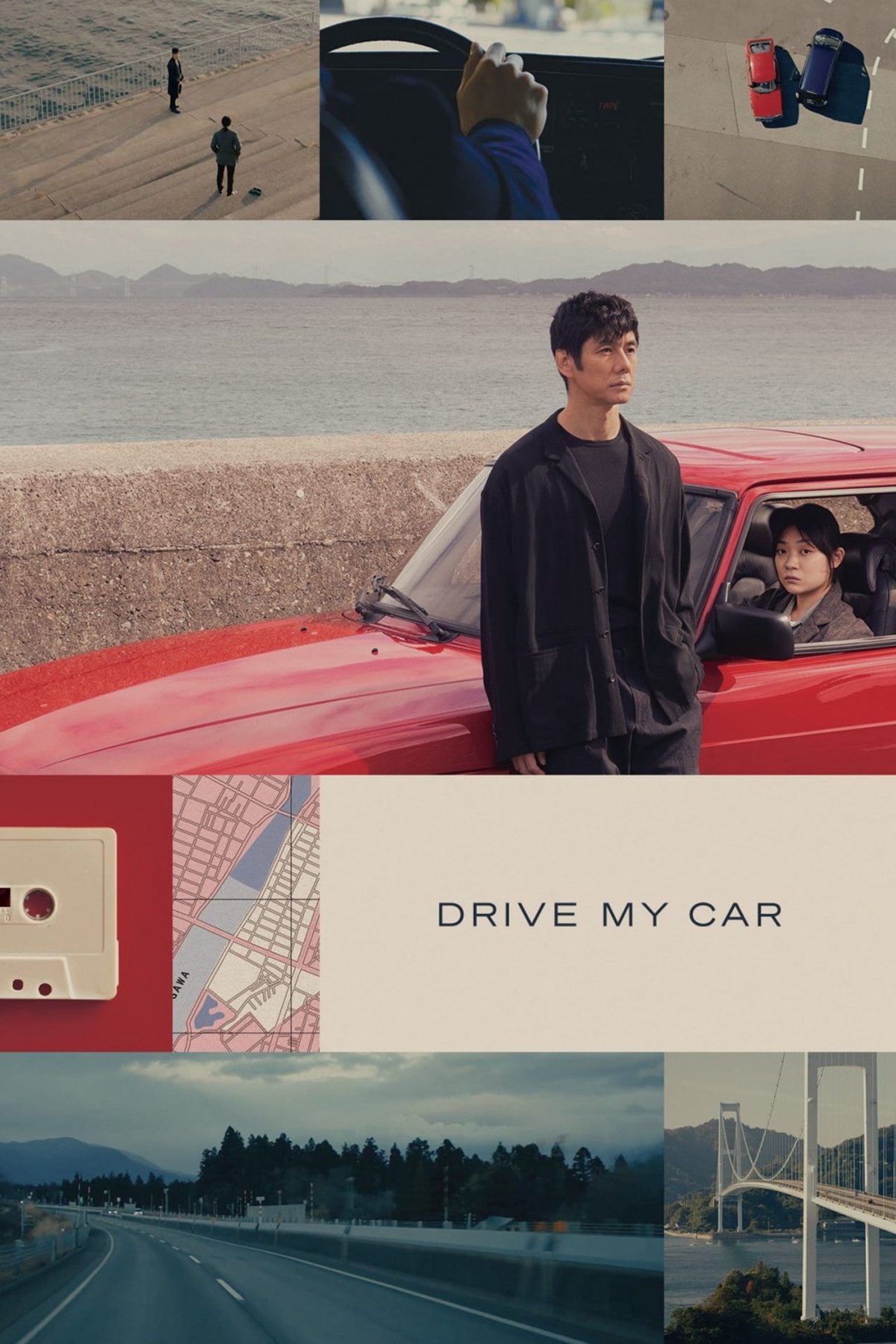
Its use of the car as a liminal space struck me as emblematic of the disjointed temporalities of the COVID era. As I watched Kafuku and Misaki sharing confined journeys—at once together and apart—I recognized the paradoxical new intimacy of relationships built in isolation, where ordinary interactions have become freighted with longing and unresolved history. The car’s circumscribed world, drifting through landscapes of winter and memory, seemed a perfect metaphor for the suspended reality through which many of us were traveling: enclosure and exposure mingled for months on end.
It is impossible, to my mind, to separate the narrative’s emotional arc from the broader context of how we were, collectively, reconfiguring our understanding of loss and healing. The film’s emphasis on rehearsal, repetition, and performance resonated for me as a subtle nod to the ways in which daily life—flattened into predictable routines—became performance art in the months of isolation. What many saw as minimalist storytelling, I felt as a document of coping; communication became as much about what could be rehearsed and practiced as about what was spontaneous. In the tentative relationship between Kafuku and his driver, Misaki, I saw a model for pandemic closeness: cautious, built on shared understanding rather than grand declarations, precious in its ordinariness.
I came to understand “Drive My Car” not as a film about monumental resolutions but as an ode to the slow accumulation of trust, and to the ways in which, in the absence of old certainties, we were all stumbling toward new ways of being together through hardship. The film—so sensitive to the passing of time, so invested in the possibility of translating pain—felt like one of the truest mirrors I have ever held up to the bewildering world of 2021.
Changing Perceptions Over Time
A film crafted in and for its moment often finds its meanings shifting as months and years unfurl, and “Drive My Car” is no exception. My initial readings of the film—steeped in pandemic consciousness, driven by the prickly necessity of proximity—have evolved as the immediacy of global crisis has receded. When I returned to the film a year later, for instance, the suffocating quiet felt less like a necessity and more a deliberate artistic choice, a way to heighten the stakes of everyday interaction.
Among my peers and in the cinephile conversations I’ve observed, the film’s reception has broadened as audiences have gained some distance from the acute period of isolation. If, at first, the film seemed a study in post-pandemic trauma and its actors ciphers for collective shell-shock, with time many—including myself—have come to appreciate the timelessness of its inquiry. I have watched as later viewers, far enough out from the thrum of pandemic anxieties, have found in it not only a portrait of a wounded present but a statement about grief, art, and communication that transcends its origins.
What strikes me now, looking back, is how readily the film’s minimalism, once so tightly bound to our historical context, has come to feel like a broader declaration about the limits of words and the power of acts. The trauma and reticence that once felt wholly symptomatic of 2021 have become, within a few short years, part of an ongoing conversation about how we as humans process and perform our sorrow, and how we learn, across cultural and linguistic divides, to listen even when speech fails.
Critically, I have noticed that the film has become a touchstone not just of its moment but of art’s ability to address what is unfixable in life. Where early reviews often fixated on its relevance to our COVID-conditioned sensibilities, later readings—including my own—have shifted toward its universal resonance, its meditation on the messiness of relation, memory, forgiveness, and the act of creation. As Japanese and international audiences alike have engaged with its layered ambiguities, I have found myself marveling at the film’s capacity to adapt to our changing needs—first, as a balm for psychological crisis, and later, as a probing question about whether complete understanding is ever possible.
For those of us who saw it at release, “Drive My Car” will always carry the aura of its era: a hushed world, half-paused, struggling to move forward. But what I see today, when I reflect on my journey with the film, is something richer. It is a document of a moment—not frozen in time but breathing with an understanding that pain, silence, and unfinished stories accompany us long after the world restarts.
Historical Takeaway
If there is a single thing that “Drive My Car” teaches me about its time, it is that art, at its most honest, is always an act of listening. I am left with the sense that in 2021, amid unprecedented uncertainty and fracture, people yearned for spaces in which ambiguity was not merely tolerated but honored. The film’s willingness to resist closure, to sit with irresolution, and linger in difficult, untranslatable emotion proved—at least for me—a vital antidote to the era’s impulse to simplify, rationalize, or escape.
What I carry forward from “Drive My Car” is the conviction that its appeal was not in the answers it offered, but in its boldness to pose questions in the vernacular of its time: What does forgiveness look like in a world perpetually interrupted? How do we coexist with the ghosts of what cannot be said? Watching the film was, for me, less an act of extraction—scouring for meaning—than an invitation to see my own complicated feelings echoed and dignified.
I believe that when future historians look back at films like this, they will not only trace the contours of pandemic anxiety, cultural reserve, or the global recalibrations post-2020, but also sense a profound shift in how we came to value the quiet work of healing. “Drive My Car” did not try to solve the problems of its age. Instead, it captured—with a delicacy that still moves me—life as it is lived in recovery: incremental, uncertain, and infinitely precious.
To see how these real-world elements shaped the film’s impact, you may also explore its reception and legacy.
🎬 Check out today's best-selling movies on Amazon!
View Deals on Amazon