
The Historical Landscape
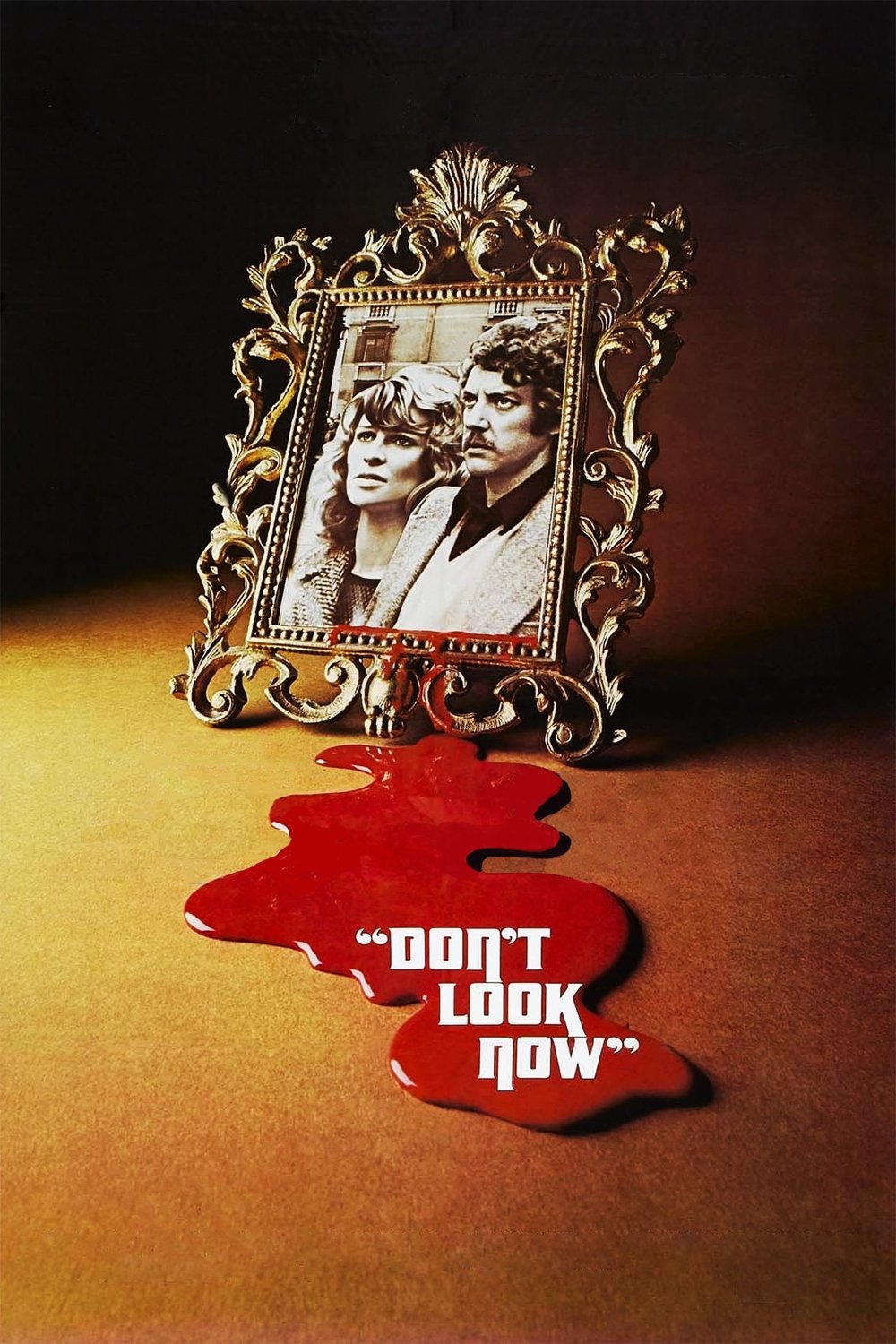
When I first encountered “Don’t Look Now,” I was immediately struck by how its atmosphere seemed to pulse with the anxiety and uncertainty that defined the early 1970s. Looking beyond its gothic veneer, I began to see an authentic imprint of the world that birthed it. I can’t approach Nicolas Roeg’s film without the noise of that era echoing in my mind—an era after revolutions both social and cinematic had left their indelible marks. By 1973, modern Europe was reeling from a decade of protest, counterculture, and disillusionment. I often imagine how a film like this would feel in a more stable climate; as it is, I always sense the world teetering slightly off balance right beneath the surface.
For me, Venice in “Don’t Look Now”—decaying, labyrinthine, half-submerged—is unmistakably a relic of Old Europe caught in the throes of something new and abstractly threatening. I’ve read countless accounts from that period describing a collective fatigue with grand narratives and institutional authority. The postwar optimism that swept through the continent was, by the early 1970s, giving way to cynicism after stinging economic crises and the grotesque aftermaths of failed utopias. I recall that the oil shock loomed over the decade, and inflation gnawed at day-to-day life, eroding a sense of security. The world seemed battered by change nobody fully understood or controlled.
Cinema, especially European cinema, was responding in kind. I always think of the way filmmakers began breaking with classical storytelling. There was this hunger for realism, ambiguity, and a kind of psychological truth that older films rarely embraced. Directors like Roeg, whose background as a cinematographer gifted him a sense of visual poetry, were finding new shapes for narrative, blending chronology, and layering meaning through montage and ellipses. “Don’t Look Now,” with its nonlinear edits and jump-cuts, feels like an artifact of a world where certainties have collapsed and the center has failed to hold.
Venice in winter, wet and deserted, is important not just as a setting but as a mood. It mirrors the hushed, apprehensive air of the contemporary world. I can’t help but connect Roeg’s morbid, drifting city—perhaps the film’s most vital character—to the era’s fascination with decline: the fading grandeur, the ghosts of a more confident age, the sense that beneath the surface, everything is slowly rotting away. Growing up reading about the period, I’ve always associated the early ‘70s with a kind of beautiful disquiet, a search for new forms that might express what old ones could not.
Cultural and Political Undercurrents
When I reflect on “Don’t Look Now,” I’m compelled to ask: what was haunting the world in 1973 that found such eloquent echo in this film? To me, the anxieties vibrating beneath its surface are as much political as they are personal. The early ‘70s in Europe were a strange, unmoored time. Italy, where the film is set, was deep in the “Years of Lead,” marked by domestic terrorism, political assassinations, and violent social unrest. Even if Roeg’s narrative does not directly address such events, I find myself sensing their shadow. There’s a dread lurking at the periphery, as if the next turn in Venice’s maze might suddenly erupt with chaos.
Culturally, this was the age of shifting attitudes toward death, sex, and the body. The sexual revolution had upended old-fashioned morals, yet with liberation came confusion and unease. When I watch the infamous love scene between Julie Christie and Donald Sutherland—raw, awkward, and utterly mundane—I can’t help but see it as a choice rooted in the moment’s ethos. It’s neither exploitative nor idealized, but startlingly frank. I always feel it’s as if the film is pushing back against cinematic decorum, embodying the era’s desire to confront experience directly, without filters or illusions. That explicitness feels less like sensationalism and more like a refusal to prettify human pain.
It’s impossible for me to separate “Don’t Look Now” from the state of the family in 1970s Western society. Divorce rates had climbed, traditional family structures had been called into question, and grief was no longer something to be swept under the rug. The film’s central couple is tormented by the death of their child, a trauma rendered with such emotional candor that it often makes me uncomfortable. I sense something broader at play—a society just learning to admit its own anxieties about loss, vulnerability, and the inability of social institutions to provide answers.
Venice itself, in these years, was both an emblem of cultural achievement and an anxiety-laden warning. I remember reading about how the city was believed to be sinking, a potent metaphor for Europe itself as it faced the collapse of certainty and the rising tide of the unknown. The title—“Don’t Look Now”—resonates for me as a kind of warning, not just to the characters but perhaps to viewers of the time: better not to stare too deeply into the abyss, lest you see the old world’s demise more clearly than you can bear.
The Film as a Reflection of Its Time
Watching “Don’t Look Now,” I feel as though I’m peering through a filter glazed with the melancholy and confusion that defined its era. The film’s refusal to offer comfortable explanations—preferring to leave viewers dangling in the uneasy space between grief, superstition, and fate—strikes me as deeply emblematic of the cultural mood of the early 1970s. This wasn’t a time that trusted in neat resolutions or redemptive conclusions. Roeg’s narrative structure, so fractured and recursive, seems to echo a historical moment when the old storylines no longer rang true.
For me, the most compelling aspect of the film is how it treats reality itself as unstable. Memories bleed into the present, premonitions masquerade as recollection, and the future seems already written in a way that cannot be escaped. I’ve always found this sense of fatalism reflective of the period’s spiritual exhaustion. After a decade of utopian hopes and revolutionary dreams, I get the impression that many saw history as having ground to a halt. Progress—a word once spoken with confidence—had become a source of anxiety. The film’s finale, in all its tragic inevitability, feels to me like an acknowledgment of powerlessness in the face of forces we cannot master or even name.
Another way “Don’t Look Now” mirrors its time is in how it plays with genre. After the repression of earlier decades, horror had become newly respectable—a vehicle for psychological realism rather than cheap thrills. What interests me is the film’s blending of supernatural suggestion and domestic drama. The paranormal happenings are inseparable from intimate loss. I sense, in the messy overlap of the two, that Roeg is capturing not just personal grief but the larger psychic malaise stalking the early 1970s. The era’s doubts and uncertainties are made flesh in the film’s uncanny details—mysterious twins, elusive figures in red, the city’s inscrutable waterways.
I can’t help but notice how the film’s visual strategies embody the era’s preoccupation with fragmentation and surveillance. The cutting is jagged, glimpses are fleeting, and meaning is always just out of reach. To me, this speaks to a broader suspicion of appearances—a knowingness that what we see is never the whole story. As societies in the West began wrestling with the revelations of Watergate, Vietnam, and domestic upheaval, filmmakers like Roeg seemed to channel the collective sense that truth was elusive, even deceitful. I come away from “Don’t Look Now” haunted by the idea that, in this period, no vantage point was truly secure.
Changing Perceptions Over Time
Whenever I revisit “Don’t Look Now,” I’m reminded that films, like people, gather new meanings as they age. When the movie first appeared, I think it must have startled its audience: its blunt sexuality, nonlinear narrative, and emotional rawness were ahead of what mainstream viewers were accustomed to. I’ve read period reviews that struggled to reconcile the film’s artful style with its disturbing subject matter—many seemed unsure whether to classify it as art cinema or psychological thriller. In those early years, I sense a hesitancy to fully embrace Roeg’s disorienting approach.
With distance, my reading of the film has changed along with everyone else’s. What once seemed shockingly modern now feels richly atmospheric, almost classical in its portrait of doomed humans striving for meaning in a world without clear answers. I remember talking with other cinema historians who, like me, have come to see “Don’t Look Now” as prescient. Its bold use of montage, its sexual frankness, and its treatment of grief resonate even more powerfully as cultural taboos have dissolved. The world is less shocked, but perhaps more attuned to the depth of sadness at the heart of the story.
I’m always interested in how new waves of viewers reframe the film. For many younger audiences, I’ve noticed, the focus has shifted from its supernatural trappings to its depiction of trauma and memory. Discussions today often center on the couple’s inability to communicate, the way unresolved sorrow shapes present perception, and the blurring of reality and hallucination. I interpret this as a reflection of our contemporary preoccupations: a growing emphasis on mental health, psychological realism, and the idea that the “monster” may be within rather than without.
I also sense that “Don’t Look Now” has become a touchstone for art-house directors and scholars fascinated by ambiguity—a quality the ‘70s cherished after the certainties of previous generations had evaporated. The film’s influence seems only to have deepened; I now spot echoes of Roeg’s structure and mood in a host of contemporary works, from the elliptical narratives of post-millennial horror to the postmodern obsession with unreliable memory. Where early critics saw confusion, I see a necessary reflection of lived experience in an uncertain world. The film endures not just because it shocks, but because it asks the right questions—questions that have only become sharper with age.
Historical Takeaway
Whenever I think about “Don’t Look Now,” I return to the sense that it can only have been born from the confusion, decay, and hesitant hope of the early 1970s. For me, the film is no simple ghost story. It’s an artifact of a society staring down the limits of progress, struggling to make sense of personal and political catastrophe, and searching for solace in the ruins of certainty. I’ve always been moved by how the film refuses to offer closure—its ending looping back on itself, its ghostly visions resisting interpretation. Such ambiguity would have felt radical at a time when so many were losing faith in the very idea of straightforward answers.
What I learn from “Don’t Look Now” is that the anxieties of an age seep not just into newspapers and manifestos but into the textures of its art. I see in Roeg’s Venice the weathered, haunted psyche of postwar Europe; in the grieving couple, the exhaustion of a culture wrestling with its own traumas. The film stands as an invitation to face what frightens us, to acknowledge that loss—personal, social, or aesthetic—is inevitable, and that there may be meaning only in the search for meaning itself. As someone who spends much of my life tracing history through images, I find “Don’t Look Now” speaks volumes about the fragility, beauty, and terror of a world between eras.
To see how these real-world elements shaped the film’s impact, you may also explore its reception and legacy.
🎬 Check out today's best-selling movies on Amazon!
View Deals on Amazon