
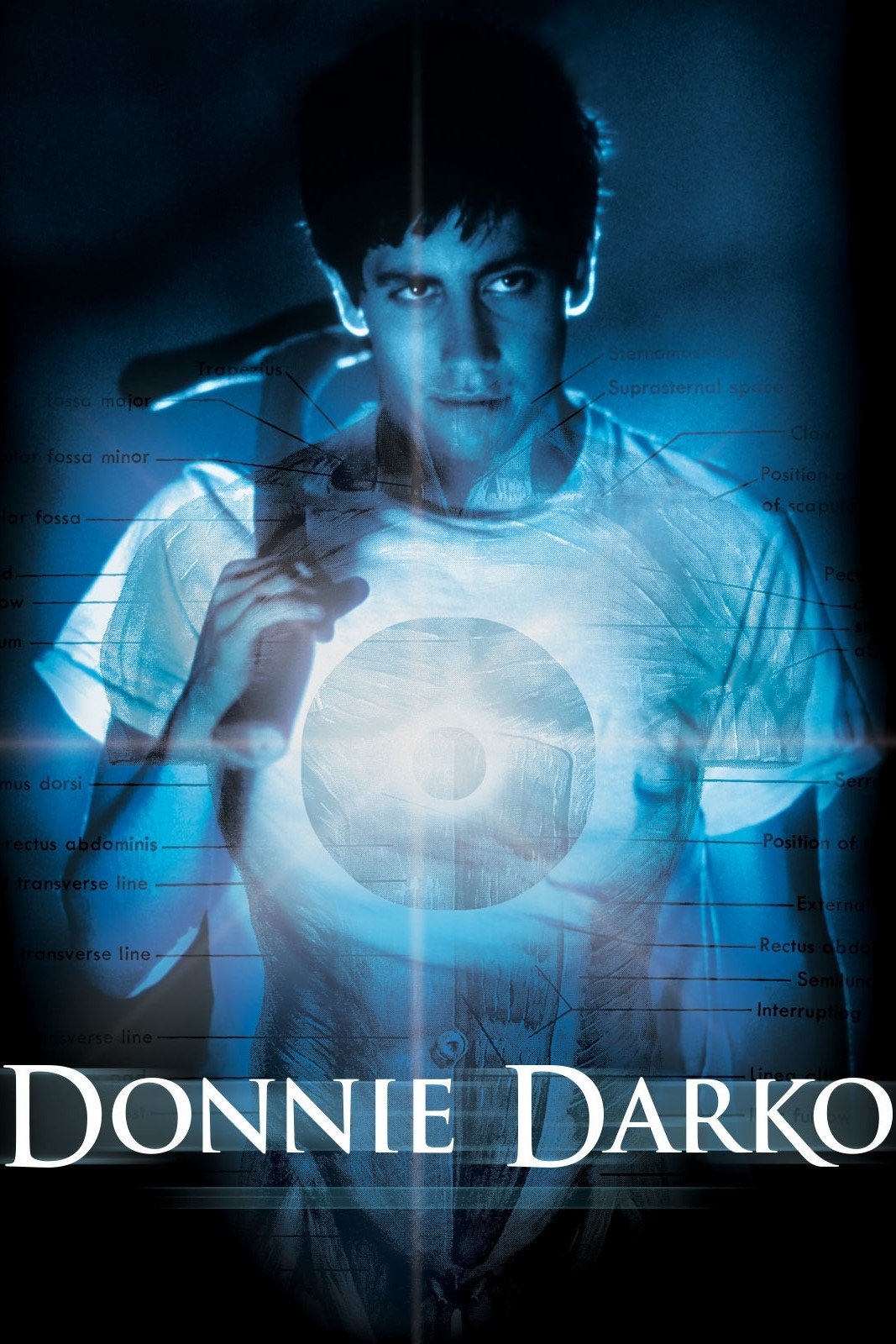
The Historical Era of the Film
Every time I revisit Donnie Darko (2001), I’m immediately pulled back to the atmosphere of late 1990s and early 2000s America—the moment the film was conceived and brought to life. That turn-of-the-millennium period felt weighted by a peculiar sense of transition, both hopeful and uncertain. Politically, I remember the tail end of Bill Clinton’s presidency leading into the unexpectedly contentious Bush-Gore election. The Cold War anxieties that colored earlier decades had seemingly faded into the background, replaced by a cautious optimism in the Clinton years’ economic boom. Yet underneath, I could sense real anxiety lacing the national mood, particularly as the dot-com bubble began to wobble and burst. The country was prosperous, but a tech-fueled uncertainty pervaded the business and political climate.
The world before September 11, 2001, which is exactly when Donnie Darko was released, felt markedly different. There was an undercurrent of innocence and even complacency, as the U.S. faced little perceived threat on the global stage. The sense that something might disrupt the prevailing order seemed remote—so much so that cultural focus shifted inward, dissecting suburban malaise and existential boredom. The political scene, too, leaned toward moderation; there was gridlock, but nothing that felt existential. Yet, as I recall, there was an increasing fascination with the shadowy side of suburbia, which mirrored a growing national curiosity about what happened beneath polished surfaces. Economic growth gave teenagers like me unprecedented access to media and technology, while at the same time complicating generational divides and deepening questions about authenticity and reality.
These weren’t just abstractions; they bled into everyday life. Technological integration was reshaping how young people—like the ones depicted in Donnie Darko—interacted with the world. The dark humor, latent paranoia, and restlessness that I saw in the film seemed almost like a weather report for the social and cultural climate defining the end of one century and the start of another.
Social and Cultural Climate
The dominant social attitudes and cultural trends of the late 1990s and early 2000s, as I lived through them, had a unique blend of cynicism and nostalgia. Teenagers like the ones I knew were confronted with so many mixed messages: unwavering faith in technology, anxiety about authenticity, and a nostalgic longing for an imagined simpler past. There was a profound preoccupation with mental health, albeit one that was rarely discussed openly. I found American suburbia brimming with contradictions—families aspiring to a 1980s ideal of normalcy, but kids grappling with alienation, traumatic memories, and a lack of communication.
There’s no overstating the influence of pop culture during this time: television and music shaped identity as much as traditional institutions. Reflecting on the era when Donnie Darko was made, I remember the prominence of MTV, alternative rock, and the rise of cult shows like The X-Files. These forms of media questioned authority, flirted with the supernatural, and made the bizarre feel familiar. In the aftermath of the 1999 Columbine High School shooting, the tension between youthful rebellion and the fear of violence in schools became part of the national conversation. Conversations about teenagers’ struggles often seemed to teeter between earnest concern and moral panic.
- Widespread anxiety about youth culture and violence
- Heightened interest in mental health but persistent stigma
- The clash between suburban ideals and underlying discontent
- Impact of late 1980s nostalgia in early 2000s media
This was also a time when I saw a strong undercurrent of skepticism toward authority. Whether it was resistance to the strictures of high school, disillusionment with politics, or suspicion of parents and teachers, I felt a palpable generational divide. The cultural climate was saturated with references to Reagan-era conservatism, a kind of looking backward that oddly mirrored the film’s own period setting. Simultaneously, postmodern irony shaped how people discussed feelings of alienation and depression. All these forces made Donnie Darko resonate for those of us who experienced adolescence at the turn of the millennium—as if the film gave voice to things most wouldn’t admit aloud.
How the Era Influenced the Film
Looking at Donnie Darko through a historian’s lens, I’m convinced that the era’s specific circumstances are woven tightly into the story and its characters. The film’s suburban setting is distinctly rooted in late 1980s America, yet the lens is unmistakably that of the early 2000s—a kind of retroactive gaze that both lampoons and mourns the optimism of the Reagan years. I see Richard Kelly, the director, drawing on the *Reaganomics* era’s promises of security and family stability, only to puncture them with undercurrents of mental illness, surreal foreboding, and adolescent confusion.
For me, the production era is reflected in the film’s willingness to blend genre—science fiction, teen drama, black comedy—in a way that just wasn’t common prior to the indie film explosion of the late 1990s. I sense the influence of independent filmmaking culture, with its characteristic risk-taking and dismissiveness toward mainstream formulas. The way Donnie Darko’s narrative resists closure and embraces ambiguity fits perfectly with the skepticism that shaped my generation, especially in a context where *postmodernism* had seeped into popular consciousness. Films were no longer required to deliver simple answers or heroes; they could ask questions and live with uncertainty.
I also notice how the script’s exploration of therapy, medication, and existential angst mirrors growing public awareness about mental health. At the time, these topics were just starting to be discussed outside of private, stigmatized settings, yet they were still wrapped in secrecy and shame. When I watch the characters struggling to communicate—parents bewildered by their children, teachers trapped by bureaucratic demands—I see a mirror of the educational and familial structures in my community, where the desire for genuine connection often collided with institutional constraints or social expectations.
The film’s temporal dislocations, hallucinations, and fatalism also seem to reflect the broader cultural anxieties of the era—the sense that reality was bending, or that certainty was out of reach. The production’s use of nostalgic 1980s music not only anchors the setting but underscores these feelings, drawing on the bittersweet sense of loss and longing for an imagined past. I find the sets, costumes, and references act as more than mere period detail; they’re tools for examining the gap between what the past promised and what the present delivered. This tension between surface and depth, hope and resignation—so pervasive at the start of the new millennium—is, in my view, the core of what shapes the film’s atmosphere.
Audience and Critical Response at the Time
When Donnie Darko first hit theaters, I was struck by how quietly it landed on the popular consciousness. The contemporary audience response was colored by timing: Released in October 2001, just weeks after the September 11 attacks, the film’s dark narrative and apocalyptic imagery seemed almost too raw for many viewers. The national mood was profoundly altered—fear and patriotism eclipsed introspective explorations of alienation or doom, so the film’s initial box office was tepid. I remember many critics and audiences struggled to process its tone, torn between fascination and confusion.
Despite the tepid initial reaction, there was a powerful undercurrent of appreciation that grew through word of mouth, college screenings, and—fittingly for the era—the early internet. I watched as Donnie Darko became a touchstone for a generation that felt language could never fully capture their confusion or sense of impending catastrophe. Some critics praised its inventiveness, calling it mesmerizingly strange and emotionally honest, while others found its ambiguity frustrating or self-indulgent. Still, for every detractor, there was a passionate fan who saw in the film a kindred spirit—an artifact that articulated their own frustrations with authority, nostalgia, and the uncertain future.
For me, the fact that the film’s cult following emerged almost entirely outside of traditional channels is crucial. The political and social climate made theaters hesitant to show films that didn’t fit a neat patriotic or reassuring narrative, yet home video and online forums (a novelty at the time) created alternative spaces for interpretation and debate. The dialogue around the film, especially as DVDs included director’s commentary and deleted scenes, began to reframe it as a statement about not just adolescence but the anxieties of the era itself. It was as if Donnie Darko anticipated the national mood’s shift from complacency to dread, something that only deepened in the following years.
Why Historical Context Matters Today
In my experience, knowing about the historical context of Donnie Darko radically transforms how I understand and appreciate what’s on screen. To watch the film from the perspective of its production era is to encounter an artifact etched with the changing contours of American identity—a restless, in-between feeling that shaped young people at the close of the 20th century. I believe the film’s lasting impact owes as much to its emergence from a moment of national reckoning as to its innovative aesthetics. Without a sense of how political, economic, and cultural forces weighed on its creation, it’s possible to overlook just how personal and incisive its vision feels.
For those of us who lived through that transitional period, revisiting Donnie Darko offers a chance to track how private confusion and public unrest intertwine. I see the shadows of Y2K panic, the unease of a country on the brink of seismic change, and the limits of the American suburban dream. The film’s resonance today, as mental health discussions have moved further into the mainstream and skepticism toward authority has remained strong, makes me think that its historical context is essential—not just as a backdrop but as an active force shaping character and theme. Donnie’s story, his skeptical voice, and the apocalypse he sees all gain clarity when viewed through the lens of their own moment in time.
If I try to strip the film from its historical moment, some of its richest layers start to fade. I miss how it tapped into the confusion and anxiety that guided teenagers—myself included—through the early years of the century. When I bring the history back into focus, I see not just a cult artifact but a living, haunted document of an era that bridged hope and uncertainty, security and subconscious fear. Understanding this context deepens the film’s cultural resonance and situates Donnie Darko as something more than a puzzle; it becomes a sonic echo of the world that made it necessary.
After understanding the factual background, you may want to see how this story was received as a film.
🎬 Check out today's best-selling movies on Amazon!
View Deals on Amazon