
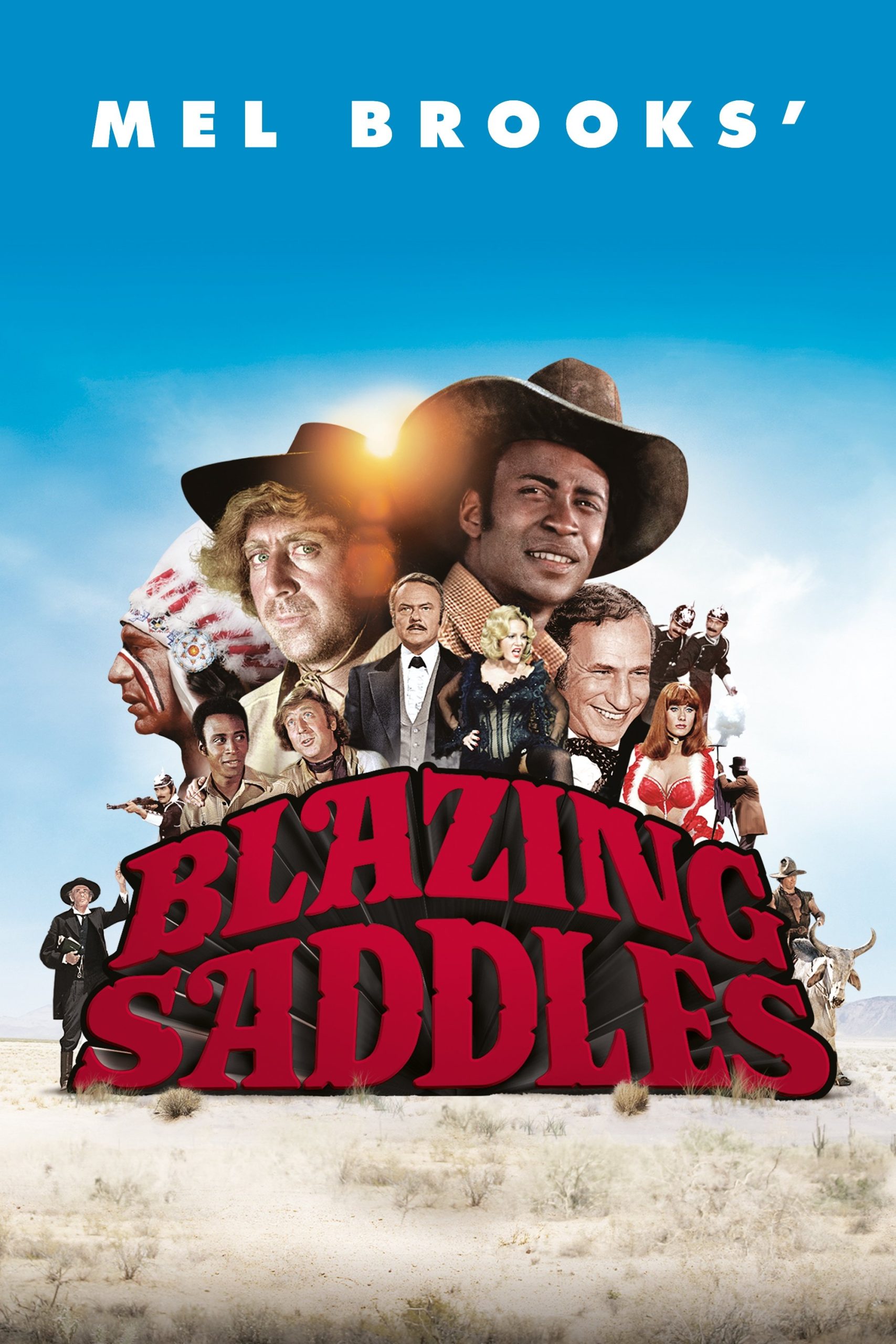
The Historical Landscape
Every time I revisit Blazing Saddles, I find myself thrown, not just into the American West of its setting, but into the strange, restless, and crackling political climate of the early 1970s. I can almost feel the backdrop of 1974 breathing through every satirical line and explosive punchline. This wasn’t just an era of flared pants and Watergate headlines—it was an America teetering between nostalgia for the Old West and the winds of cultural revolution. When I try to describe the period in which the film debuted, what strikes me most is the sense of disorder and boldness threading through public consciousness. The Vietnam War was winding down, but its aftershocks—anguish, mistrust, generational rifts—still rippled through dinner tables and streets. News anchors served up images of political betrayal and protest movements with nearly every broadcast. It was hard, I imagine, to know what to believe in, or where the nation was heading.
But culture was never content to sit still. I’m always reminded of how the 1970s, while marked by shadow, also roared with a new, confident absurdity. Everywhere I look in the films and satire of the time, I see creators testing boundaries, poking holes in old myths, and holding authority to the fire. To my eyes, the early 1970s were about reckoning with the sanitized narratives that Hollywood—and America itself—had long peddled. The Western was a cherished genre, yet it was tired, threadbare, steeped in unreconciled racism and mythologies that no longer matched the country’s direction. Against this backdrop, Mel Brooks didn’t just make a “Western parody”—he made a wild, feverish, almost anarchic experiment that hurled a mirror at the era’s contradictions and blind spots.
Walking through the cultural landscape of 1974 feels, for me, like traversing the borderlands between eras. There was fear in the air—the fear of American decline, certainly, but also a hope that old systems could be questioned, even upended. Race relations were raw, much of society still reeling from the violence and victories of the Civil Rights Movement. The very act of talking about racism on the big screen could feel like trespassing in dangerous territory, and yet, that’s exactly the risk Brooks and his collaborators embraced. I sense an almost electric defiance in the film’s willingness to ridicule power structures and mock the violence and ignorance that shaped both the real and mythic American West.
The mid-70s, to me, radiate an uneasy energy—equal parts exhaustion and rebellious creativity. Blazing Saddles could only have exploded into the world in a moment gritty enough to question its own myths, irreverent enough to laugh through the pain, and searching enough to recognize that surviving as a country sometimes meant cracking open uncomfortable truths on the largest stage possible. In that sense, the film is inseparable from the era that gave it breath.
Cultural and Political Undercurrents
As I watch the film through my historian’s lens, I’m most haunted by the undercurrents that swirl beneath its surface humor. Blazing Saddles is not just uproarious—it is a defiant product of a time when American anxieties about race, identity, and authenticity refused to shuffle off quietly. The Civil Rights Movement had achieved remarkable victories by the early seventies, but I see in the film an acknowledgment that legislative gains didn’t magically erase prejudice from the American psyche or popular culture. The casual racism and coded language that flood Brooks’s script point not just to the West of the past, but to the subtly and overtly racist systems the country was still striving to confront in 1974.
I sense the pulse of second-wave feminism echoing in the film’s treatment of power and representation, too. The Hollywood that produced Blazing Saddles was overwhelmingly white and male, fiercely resistant to change—even in satire, women’s roles remained confined, and yet the film’s lampooning of brothels, “Governor Lepetomane,” and burlesque parodies exposes, with unmistakable irreverence, the hollowness of gender roles and expectations. Watching Madeline Kahn’s performance as Lili Von Shtupp, I feel the giggling, knowing laughter of a generation of women used to being playthings on screen, suddenly in on the joke.
But perhaps the most profound undercurrent rippling through the film is the post-Watergate disillusionment that hung over nearly every national conversation. For me, Blazing Saddles incarnates the impulse to laugh at authority when that authority has revealed itself to be so deeply fallible, even corrupt. I think audiences of the time were in desperate need of ways to process the betrayals and failures of politicians, and the film’s gleeful lampooning of local and state leaders felt eerily resonant—almost a catharsis for a country whose leaders had so recently been exposed as clowns (or worse).
I can’t ignore the powerful, if sometimes crude, way the film weaponizes the language of bigotry. The relentless dropping of racial epithets and stereotypes is impossible to divorce from the country’s long history of both casual racism and Hollywood whitewashing. Where some might only hear shock value, I hear a calculated, era-specific provocation—a way of holding a funhouse mirror to the very language and attitudes society preferred to ignore, thereby forcing a sort of mass reckoning, one guffaw or gasp at a time.
And at the same moment, I think about how the popular culture of the seventies frequently sought solace in nostalgia. The Western genre itself was a form of escape—yet Brooks refuses to let the audience escape. Instead, he takes the comforting tropes of cowboys and frontier towns, deconstructs them, and scatters the pieces with chaotic glee. By remixing the West with slapstick and self-awareness, he attacked some of the very myths Americans used to shelter from their present-day anxieties. In the process, he exposed just how thin that comfort could be.
The Film as a Reflection of Its Time
Having watched Blazing Saddles with new eyes over the years, I’m continually stunned by how completely it embodies the contradictions and questioning spirit of the period. When I see Bart, the first Black sheriff in the movie’s fictional town of Rock Ridge, stride onscreen in that sheriff’s star, I don’t just perceive the film’s narrative choice—I hear the tumult of American streets where the demand for Black representation and justice was still echoing. That casting decision wasn’t just subversive; it was deeply political, a thumb in the eye of the sanitized, all-white Westerns that had populated American screens for decades.
The film is riotous, unruly, and at times offensive to modern sensibilities, but that’s also what makes me see it as so perfectly symptomatic of its era. In 1974, taboo-busting humor was a tool for exorcising the old ghosts; Brooks handled racism, sexual innuendo, and violence in a way that was both unfiltered and trying to expose exactly what it targeted. I find this approach exhilaratingly direct, if also dangerously close to the edge. The early seventies had not yet evolved to today’s sensitivity toward representation, but there was an appetite among many (if not all) viewers to see hypocrisy publicly skewered, even—especially—if it drew blood.
I’m often struck by the scene in which Bart and his sidekick Jim deploy intellect and resourcefulness to outwit the town’s bigots, themselves too blinded by prejudice to recognize their own foolishness. This is where the film’s critique feels most biting to me: Brooks doesn’t let anyone off the hook. He exposes not only institutional racism but also the complacency and stupidity that allow it to fester. Viewed against the turmoil of school desegregation, busing protests, and a creeping awareness of embedded prejudice in courts and schools, the film’s satire becomes a kind of cultural artifact—one that reveals just how insidious those problems still were.
And I cannot forget the anarchic finale, where the fictional world of Rock Ridge explodes into the set of a Hollywood musical, then spills out into the real world. Whenever I watch that sequence, I get the sense that Brooks and his team are shouting: “The story we tell about America is a story built on artifice. It is as much invention as it is history.” It’s an audacious, raucous reminder that the illusions of the “good old days” can be torn down, and underneath lies confusion, contradiction, and—hopefully—new possibilities.
I rarely think of Blazing Saddles as just a comedy. Its irreverence, for me, is a rebel yell: a product of its time and a reflection of deep cultural uncertainties. Beneath the slapstick is a serious—albeit riotously delivered—challenge to the façade of righteousness that dominated American storytelling. I see Brooks as both a trickster and chronicler, using chaos and humor as a flashlight in the country’s dark corners.
Changing Perceptions Over Time
When I talk with younger viewers today, I’m often reminded how dramatically the cultural meaning of Blazing Saddles has shifted. The first time I showed the film to a group born after the turn of the millennium, they were aghast—even offended—by the open bigotry in the dialogue. It’s a profound testament to how standards have changed that what was once considered radical satire is now frequently viewed as too abrasive, even regressive. I frequently find myself explaining that the intention, for Brooks and his writers, was not endorsement but exposure—and that the risk of using racially loaded language was, in the moment of 1974, an act of daring. But I always have to acknowledge: what felt like social critique then, can, through modern eyes, appear as merely replicating the harm it sought to mock.
For me, this evolution is both heartening and complex. The distance between my own first viewing—when its subversiveness felt unmistakable—and the way it’s understood by others now makes me think about satire’s limitations and the freight it carries across generations. I still see the film as trying to slap audiences awake, forcing confrontation with prejudice by making it unmistakable, grotesque, and absurd. Yet, in today’s world, with language more scrutinized and representation policed by far keener sensibilities, those jokes don’t always translate as intended.
In fact, I’ve watched as some critics now frame the film as a relic at best—one whose humor is anachronistic, whose insights have been superseded by more nuanced inquiry into American racism. I recognize the gap, and to me, it signals progress: that society has, in some ways, grown more empathetic, less willing to let “it was just satire” serve as an excuse. Still, there’s a historical richness to the film’s outrage that I think deserves preservation, even as we outgrow some of its methods.
I’ve noticed too that, over the decades, nostalgia for Blazing Saddles has competed fiercely with critique. For every viewer who laughs anew at its lampooning of the Western genre, there are others who recoil from its language and imagery. This division is not, in my mind, a failing of the film, but evidence of how it holds up a shifting mirror to America’s changing face. Sometimes I feel that, regardless of reception, the film’s legacy is precisely to make us uncomfortable—then and now.
What fascinates me is how the film continues to surface in debates about what comedy is “allowed” to do, and whether satire that appropriates offensive speech ever lands as intended. The era of Brooks, Richard Pryor (who co-wrote the script), and Carlin was one that authorized comedians to drag America’s ugliest truths into the footlights. Today’s era sometimes recoils from that spectacle. I see this as neither good nor bad, but as the inevitable churn of culture, always debating what risks are worth taking to force collective self-reflection. Blazing Saddles, for better or worse, is still part of that argument.
Historical Takeaway
When I think about what Blazing Saddles has ultimately taught me about the era of its birth, I’m struck by how sharply it exposes the anxieties, ambitions, and paradoxes of 1970s America. I see a country grappling with its own history—uncertain whether to revere or dismantle the mythos that had, for so long, kept uncomfortable truths at bay. The audacity of the film, its willingness to lay bare bigotry and puncture nostalgia, feels like a mark of a society both weary of its illusions and hopeful for renewal. I’m left with the impression that, for all its failings, the film is an unmistakable relic of a moment when the wounds of war, racial struggle, and loss of innocence ran close to the surface, and art responded by wounding back—through laughter, yes, but also through relentless exposure.
I’m constantly reminded that the social critique woven into Blazing Saddles was not subtle, but it didn’t need to be. The urge was not to soften history’s blows, but to confront them, and perhaps—through absurdity and farce—to begin to exorcise their power. For me, the film crystallizes an era when boundaries were being tested at every level: identity, authority, even the myths that had long kept the American story tidy. In its wildest moments, I sense the fervor of artists who knew that the only way to take down sacred cows was with dynamite, not a scalpel.
So in the end, what I carry away is a sense of both historical rootedness and ongoing relevance. Blazing Saddles is not simply a comedy artifact; it is a cultural x-ray, illuminating the fissures and aspirations of a country in flux. Each time I revisit it, I find myself grateful for its unruliness, even as I recognize the pain it risks. For anyone searching to understand the fever dream that was post-sixties America—its disappointments, its hopes, its desperate laughter—this film stands as a monument, built not just of jokes, but of bold, unafraid questions.
To see how these real-world elements shaped the film’s impact, you may also explore its reception and legacy.
🎬 Check out today's best-selling movies on Amazon!
View Deals on Amazon