
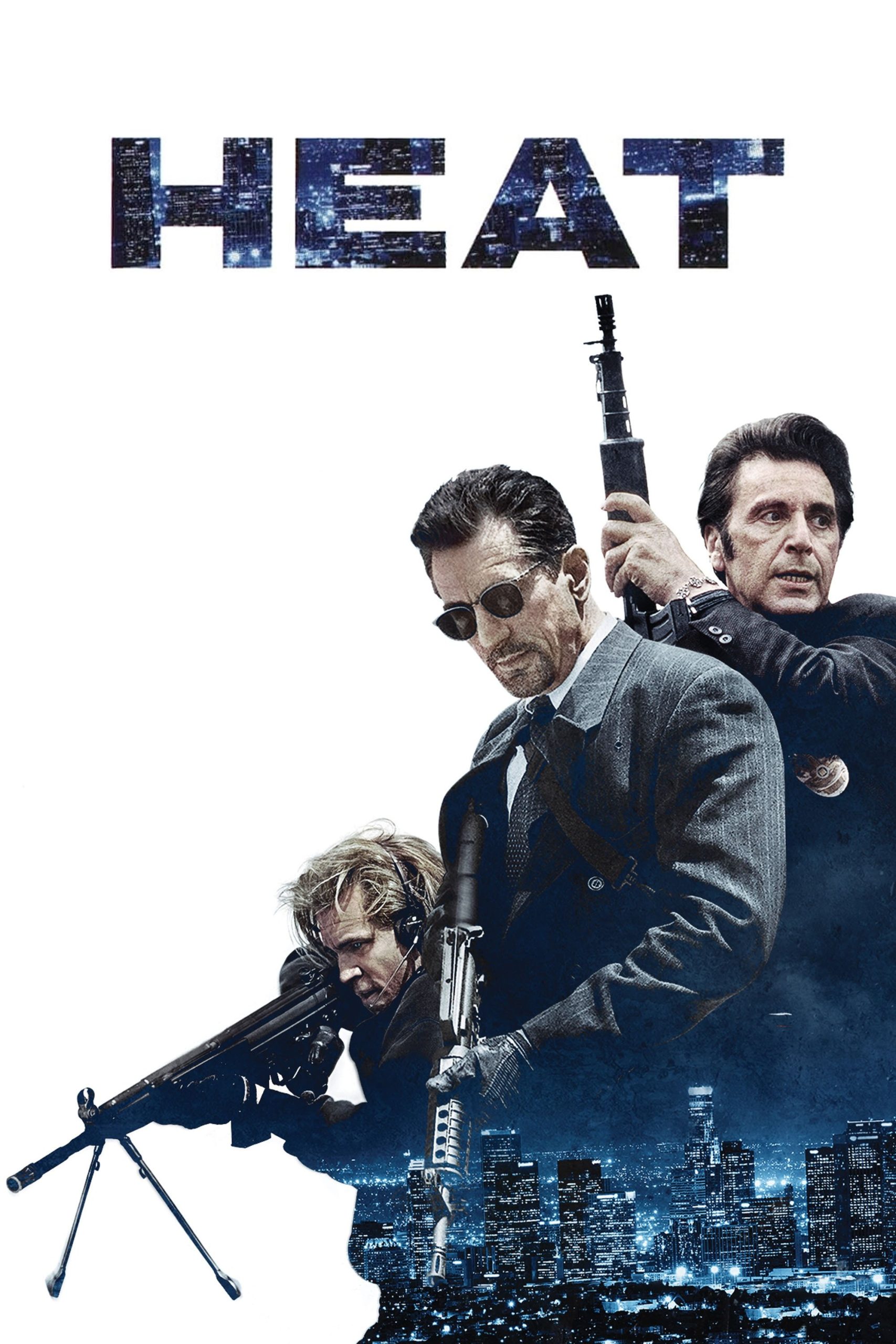
The Historical Landscape
Whenever I revisit Michael Mann’s Heat, I can’t help but feel like I’m opening a time capsule from the trembling edge of the twentieth century. I remember the first time I saw it—those brooding, rain-glazed Los Angeles streets said more to me about the anxious mid-1990s than any news clip or magazine cover. Heat isn’t just set in a particular year; the entire look, feel, and emotional weather of the film are steeped in the energies of the era surrounding its release. The mid-90s were a crossroads in America: the Cold War was over, but the promised peace dividend had proven elusive. The economy had rebounded from the early decade’s recession, yet unease simmered about the cost—rising inequality, hollowed cities, and a new breed of urban anxiety made tangible by both sprawling suburbia and persistent inner-city decay.
I often think about how the 1990s felt suspended between old certainties and new ambiguities. When Mann released Heat in 1995, nobody knew the internet would soon upend daily life; cellphones were still status symbols rather than appendages. Crime itself, especially in Los Angeles, carried a particular stigma—echoes of the LA riots, media-fueled panic over gang warfare, and public anxiety about police brutality all loomed over the city’s psychic landscape. Looking back, the film’s nightscapes and harsh daylight seem like a commentary on a metropolis wrestling with its own reflection, searching for solid ground as social and economic certainties dissolved. The city depicted feels anonymous yet particular—a pointillist snapshot of an era rapidly fading into something more nebulous.
There was also a broader cinematic conversation happening at this time. I remember living through an era when mainstream American movies were drifting away from clear-cut morality. The line between hero and villain kept blurring; films like Pulp Fiction, Seven, and L.A. Confidential expressed a cultural weariness, an acknowledgment that contemporary life was a negotiation between chaos and routine. Heat emerged out of this climate, at once an action procedural and an existential meditation on the fading American dream. The era’s economic optimism—stock markets rising, new media empires forming—stood in contrast with a growing sense of alienation, mirrored by the film’s lonely men, shifting familial structures, and continual struggle for meaning beyond survival and success.
Cultural and Political Undercurrents
What lingers most powerfully for me, years after my first viewing, is the way Heat seems haunted by forces beneath its surface. I can’t separate my experience of the film from the mood of cultural introspection that dominated the second half of the 1990s. The Rodney King verdict and subsequent riots still reverberated through LA; the O.J. Simpson trial pressed further on the public’s trust in police, the courts, and the myth of a just, orderly America. The city on screen feels defined as much by division as connection—fragmented by geography, race, and class, but also by a deeper, less visible moral and psychic dislocation.
This sense of fragmentation was, to my mind, the undercurrent running through so many cultural texts of the period. When I watch the film today, I’m pulled back to the debates of my youth—the zero-tolerance crime policies of the Clinton administration and the Three Strikes law in California. These weren’t just policy shifts; they reshaped the urban experience, tightening the grip of law enforcement and intensifying the consequences of crossing certain lines. Heat abstractly processes these realities through its study of men at extreme edges: hardened detectives and professional thieves whose codes precede and nearly supersede the state itself. I see in their dance a meditation on authority and criminality—one not so different from what was transpiring in legislative chambers and city halls.
I’m also reminded how late-90s masculinity, so pervasively scrutinized in the aftermath of third-wave feminism and shifting gender roles, takes shape in the film’s brooding silences and unspoken brotherhoods. The protagonists embody a kind of stoicism that struck me as both an ideal and a pathology—an attempt to reconcile vulnerability with the pressure to stay implacable. For me, Heat isn’t just about cops and robbers; it’s about men trying to decipher how to live in a world that keeps changing the terms of engagement, a question that plagued so much of the national discourse just before the millennium. In their loneliest moments, I see that broader portrait of America—impressive, wounded, and profoundly uncertain.
Technology, too, exerts a subtle but unmistakable influence, highlighting a transitional moment before the digital age truly took hold. Whenever I think back on the film’s detailed heists and methodical police work, I see echoes of a society still caught between precision and chaos, between analog methods and the encroaching future of surveillance, interconnected networks, and virtual frontiers. The city is mapped by habit and repetition, by bodies moving through space rather than algorithms parsing data—a last flourish before CCTV, GPS tracking, and digital forensics redefined the balance of power between hunter and hunted. That tension—nostalgic yet prescient—often feels to me like Mann’s subtle commentary on the edge America was living on, not quite ready for what the new century would demand.
The Film as a Reflection of Its Time
Watching Heat now, what I see most clearly is how nakedly it reveals the preoccupations of its decade. I feel the weight of economic aspirations and anxieties, particularly in the film’s obsession with professionalism, discipline, and the constant search for advantage in a society where the rules keep changing. To me, Neil McCauley and Vincent Hanna are more than adversaries—they are two sides of the same coin, acting out a drama of meritocracy in a world that promises plenty but delivers only to the most obsessed. That laser focus on work, on identity expressed as one’s job, mirrored the period’s growing “workaholic” culture—echoes of the tech industry’s rise, the Wall Street ethos of maximizing efficiency, and the nascent hustle mentality that would soon dominate the national consciousness.
Something in the way Mann frames the city—widescreen, isolating, almost antiseptic—still takes me back to the era’s fascination with urban grandeur and decay. It’s as if the film is both mourning the death of the old metropolis and marveling at its perverse beauty. Every time I revisit those quiet moments between the bursts of violence, I’m reminded of how the nineties often felt: filled with possibility and dread, with bright mornings and long, uncertain nights. Even the heists, choreographed with military precision, suggest the period’s paradox—a craving for order in a context defined by unpredictability.
I’m struck, too, by the film’s emotional reserve. That stoic, internalized grief that pulses beneath the surface of almost every scene is symptomatic of a larger truth about the era. Emotional connection, when it appears, is fragile and fleeting. Marriages fray; loyalty is tested; the boundaries between personal and professional collapse under pressure. When I look at the characters’ struggles to maintain their routines—to keep love alive or children safe amid chaos—I feel how the 1990s, beneath its shiny rhetoric, was riddled with anxiety about the durability of social bonds. Divorce rates were high, traditional family structures were being critiqued and reconsidered, and a new ethic of personal responsibility sometimes clashed with older ideals of community. Heat becomes, for me, a chronicle of that friction.
Then there’s the film’s sense of ennui, its slow-burn pacing that eschews quick catharsis for long, uneasy silences. It mirrors the ambient mood of its time—lives filled with busyness but not necessarily intimacy, ambition shadowed by fatigue. Mann’s Los Angeles is at once hypnotic and cold, a world where even triumphs taste bittersweet. This is not an era of idealism, I sense; it’s an era of endurance, of surviving the tectonic shifts—social, economic, technological—that would come to define the turn of the millennium. In the faces of McCauley’s crew or Hanna’s task force, I see determination tempered by the suspicion that, whatever victory they grasp, it will cost them something irreplaceable.
The film’s nuanced depiction of violence particularly resonates with my sense of America in the ‘90s. No longer did mainstream movies present violence as an uncomplicated force for good or evil. Instead, Heat punctuates its explosions of brutality with aftermaths—bodies, families, and city blocks left in the wake. To me, this is a moral landscape splintered by doubt, unsure of what justice really entails, what costs are acceptable, and whether truly “winning” is even possible.
Changing Perceptions Over Time
My own relationship with Heat has shifted over the years, and I’ve watched as its reputation has grown, receding from immediate cultural context toward something more mythic. I remember when critics first talked about the film as a masterclass in tension and craft, with Al Pacino and Robert De Niro’s showdown as the headline. But as time wears on, I’ve come to see how the film’s deeper resonance rests in its treatment of individualism, burnout, and the costs of professionalism—concepts that, if anything, have grown even more urgent in today’s society.
When I talk to younger viewers, they often see in Heat a portrait of a lost world—analog Los Angeles, relationships untethered by social media, criminals and police solving problems in person, rather than through screens. The film’s methods—meticulous footwork, legwork, and intuition—now play almost like a historical record, a glimpse of a world rapidly slipping out of reach. The loneliness that pervades Mann’s world, once seen as stylized melancholy, today feels prescient: the alienation of relentless work and fleeting connection has only thickened as society’s digital transformation accelerates.
There’s also been a shift in the way the film’s themes—particularly around masculinity and emotional reserve—are received. What once appeared as stoic heroism now reads, at times, as brittle or evasive. I feel the conversation about vulnerability, openness, and the need for connection has finally begun to challenge the old narratives of “toughness” and sacrifice, both in art and culture. Younger generations may find these characters’ self-imposed solitude less admirable than tragic, illuminating the costs of rigid codes and emotional suppression in new ways. For me, this evolving interpretation is part of the film’s enduring power—it acts not just as an historical artifact but as a lens, refracting the changing needs and values of successive viewers.
Of course, technology has recontextualized the film’s world. Watching Heat today, I notice how the absence of smartphones, GPS, and networked surveillance marks it as unmistakably of its time. Yet rather than rendering it obsolete, this has made the film more valuable as a study in pre-digital tension. Modern viewers, so accustomed to the omnipresence of information and speed, sometimes respond to Mann’s extended silences, careful setups, and gradual escalations with nostalgia. I myself find those passages more, not less, compelling in an era of distraction—they evoke a kind of patience and deliberation that feels almost radical now.
Critical perceptions have also evolved; what was once considered a work of genre mastery is now embraced as one of the great American epics—a film that stands alongside The Godfather or No Country for Old Men in its ability to diagnose the malaise of its moment. Critics and audiences alike have circled back to the film’s quiet corridors, domestic breakdowns, and existential conversations, recognizing them as ahead of their time. To me, that shift speaks volumes about how history and context shape meaning, and how films act as living documents, accruing new relevance as society itself evolves.
Historical Takeaway
Looking back, I see Heat as a rare kind of mirror—one that captures both the immediate anxiety of the mid-1990s and foretells the world to come. Through its characters’ cycles of routine and rupture, I discern the outlines of an America searching for new certainties in a landscape of fading traditions. The film’s obsession with codes, professionalism, and self-sufficiency emerges as a symptom of a broader uncertainty, a cultural desire to find meaning and control amid rapid transformation. Watching it now, I sense just how deeply those questions continue to reverberate; my own life, like so many others, is marked by similar struggles between ambition and belonging, order and chaos.
Heat teaches me that the periods of transition—those moments when old systems begin to fail and new ones have yet to fully take shape—are always defined by paradox: hope entwined with dread, triumph shadowed by loss, professionalism yoked to the threat of lonely detachment. The film invites me to see the marginalized, the exhausted, and the haunted not merely as casualties of their professions but as stand-ins for a society caught between worlds. In its haunting tableaus and melancholy silences, Mann’s work provides a chronicle of how Americans, in the final years before the digital revolution, struggled to define themselves and each other.
While I return to Heat for its intricate choreography and unforgettable confrontations, I stay for its atmosphere—a fog of tension, regret, and fragile connection that speaks as eloquently about its time as any history book could. The film stands as a testament to a restless, questioning era, haunted by its past but not yet ready to embrace the future. For me, that remains Heat’s most enduring lesson: that to understand any epoch, we must look beyond its surface, into the crosscurrents of desire, fear, and change that animate its every movement.
To see how these real-world elements shaped the film’s impact, you may also explore its reception and legacy.
🎬 Check out today's best-selling movies on Amazon!
View Deals on Amazon