
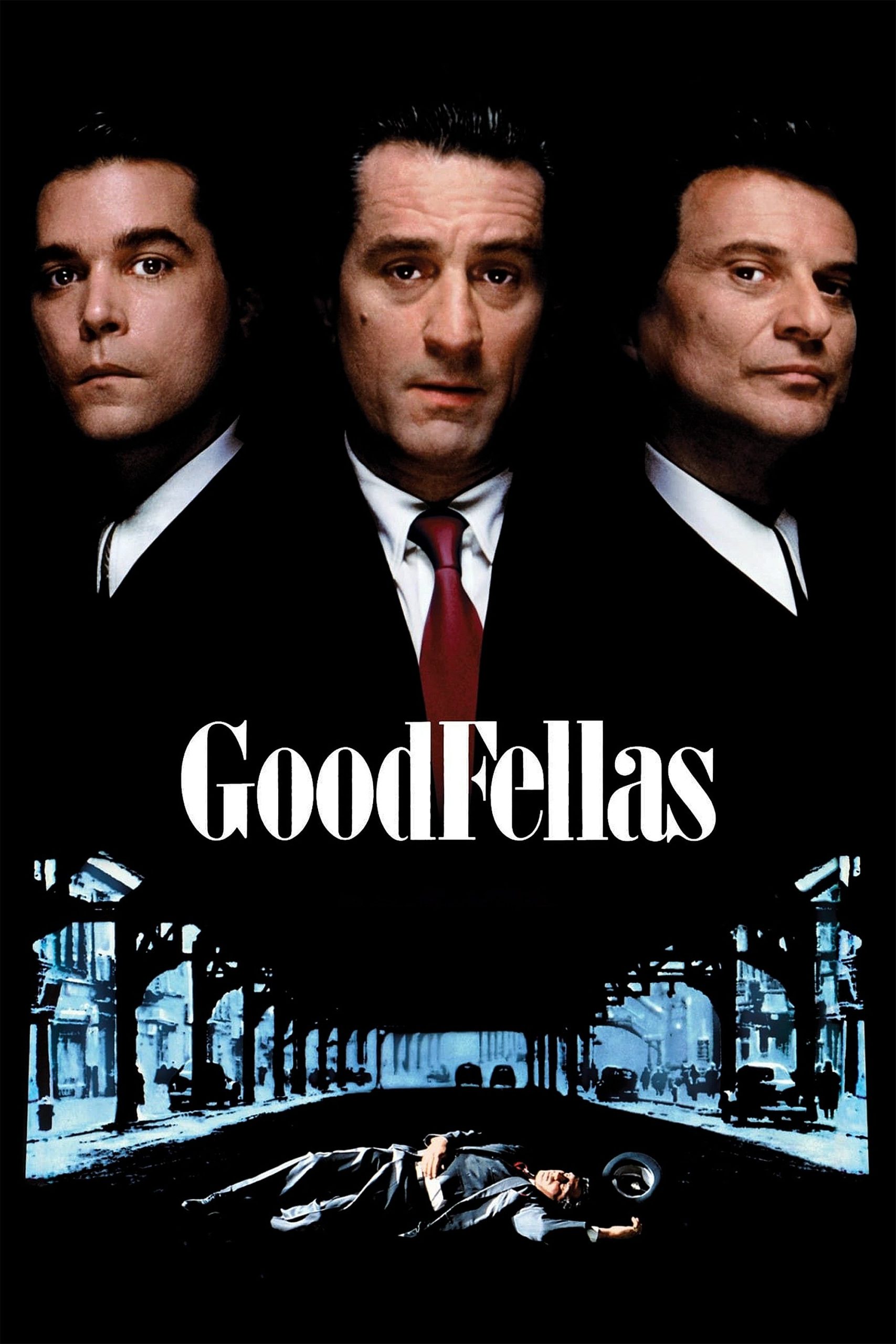
The Historical Landscape
Every time I revisit “Goodfellas,” I feel swept back—not just into the world of Henry Hill, but into the late 1980s and the dawn of the 1990s in America. I’m reminded instantly of the restless cultural weather hovering over that era: a period when old ghosts of crime-laden mythology collided with a sardonic, hyperreal sense of storytelling. For me, 1990 is a hinge-year. In the world outside the theater, the Berlin Wall had fallen just twelve months earlier. The Soviet Union was nearing its implosion, and the American psyche seemed buoyed by this sense of global victory—yet also tinged by anxiety at what would come next. The Reagan-Bush era of excess and prosperity was waning, suffused with its trademark gleam of consumer confidence and the darker hangover of widening social divides. When I watch “Goodfellas,” I can’t keep my mind from thinking about how the late eighties captured the public imagination with contrasts: the glitz of Wall Street, the crack epidemic, the rise of hip hop, and the simmering desire for gritty realism after a decade of glossy escapism in entertainment. This film was born amidst these paradoxes—a nation polishing its nostalgic myths even as it craved the shock of new realism, and I can’t help but see these tensions in each frame of the movie.
The world of cinema itself was in a moment of reckoning. By 1990, American film had traversed the grand antihero narratives of the 1970s, which themselves were reactions to the optimism of the postwar years. I remember hearing stories from older critics who felt the late-eighties movies had gone soft, with studio blockbusters favoring heroism over ambiguity. Yet “Goodfellas” dropped like a gauntlet—its verve and velocity proclaiming that audiences still craved raw, uncomfortable truths. Within the swirl of its release, I see the fingerprints of an era coming to terms with its dark obsessions: the cult of the self-made man, the dubious pursuit of the American Dream, and the underbelly of sprawling suburban affluence. There’s something profoundly American about the way Scorsese frames tradition and transgression, and as 1990 dawned, such questions hung palpably in the air—translating nostalgia for mid-century criminal myth into something more immediate, more dangerous.
Cultural and Political Undercurrents
What stands out to me most in “Goodfellas” is its deep entanglement with the anxieties and fascinations of its moment. I sense a pervasive cynicism lurking beneath the film’s glamour—a jadedness reflective of late-century America grappling with its principles. The late 1980s were infamous for their unabashed revelry in opulence. As I see it, the film’s parade of suits, silk shirts, expensive cars, and mountains of cocaine doesn’t merely recreate the mob’s reality; it distills a broader American atmosphere where success had become entwined with spectacle and moral drift. Watching these scenes, I can’t help but think of Wall Street’s archetypal “greed is good” era: the cult of the hustler, the investor, the one who bends the rules and wins, carving a kingdom out of little more than bravado and violence. In “Goodfellas,” these cultural obsessions are refracted through the prism of organized crime, casting an unflinching spotlight on the costs of such ambition.
But the film, for me, does more than reflect the materialistic pulse of its time—it also channels a mounting societal mistrust in authority and systems. I was born in a decade shaped by revelations about corruption in government and business, by the slow disintegration of faith in institutions. The Mafiosi of “Goodfellas” operate with a shadowy honor code that is always teetering on the edge of collapse, echoing the American public’s growing suspicions about the reliability of laws and mores. The omnipresent theme of betrayal—the wiretaps, informants, sneering disdain for “suckers” who follow the rules—mirrors the wariness I sensed in the culture at large, as scandals in politics and finance eroded old faiths. I’m struck by how Scorsese doesn’t merely recreate the past, but stages a dialogue with his own present, layering Henry Hill’s self-destruction onto the broader disenchantment permeating society in the years just before and after 1990.
Race, too, lingers powerfully at the film’s margins, in ways I still ponder today. From my vantage point, “Goodfellas” dwells in an overwhelmingly white, ethnic enclave—a world where Italian and Irish heritage are badges of belonging and exclusion. This closed system feels in step with contemporary dialogues of the eighties about who gets to chase (or even see) the American Dream, and who remains locked out. At a moment when American cities were roiled by racial tensions and the headlines bristled with talk of inequality, I notice that “Goodfellas” both enshrines and interrogates the insular codes of criminal brotherhood, forcing me to consider who has the privilege to break bad—and who simply lives with the fallout.
The Film as a Reflection of Its Time
When I dwell on what “Goodfellas” reveals about the era of its making, I go beyond the period details and see how it sets its sights squarely on the myths unraveling in real time. To me, the film’s dizzying energy—a narrative that never slows, scenes stitched together with bravura tracking shots and explosive cuts—inhabits the American mood of acceleration. The late eighties and early nineties saw not just economic booms and busts, but a mounting impatience for slow change. In Henry Hill’s fast-lane lifestyle, I read a metaphor for a society addicted to speed, to novelty, to a compulsive reinvention that is both thrilling and self-destructive. The film’s stylistic violence, breakneck editing, and raucous needle drops all feel to me like aesthetic cousins to the era’s restless sense of possibility, as well as its hidden rot.
Yet more than anything, I’m arrested by the way “Goodfellas” exposes the hollowness beneath the aspirational façade. Where earlier gangster films turned tragedy into opera, Scorsese’s vision is uncomfortably mundane: betrayals are petty, murders are messy, ambition yields anxiety and paranoia more than glory. Having lived through the aftermath of the “Decade of Decadence,” I see the film as a wry corrective to myths of upward mobility and criminal exceptionalism. The parade of brutality comes without moralizing, inviting me to witness the cost of obsession with success. There’s an unnerving resonance here with my memories of the time—America awash with motivational speakers and self-help mantras, even as headlines screamed about savings-and-loan scandals and urban decay. All of it hints at the film’s ability to refract the dark side of the Dream: the desire to rise, to belong, and to win at any cost.
I find myself drawn, too, to the film’s perspective on masculinity—a theme always shadowing the era’s psyche. Watching the male characters jockey for dominance, their drives shaped by violence and loyalty, I recall the crosscurrents of the late 80s: a culture fascinated both by the “tough guy” allure and by anxieties around the changing roles of men in society. The rise of feminism, the mainstreaming of therapy, the slowly shifting gender codes—all these cultural dialogues hover like ghosts over the film’s world. Scorsese doesn’t idealize his gangsters; he lets their lives unravel, exposing the paranoia and emotional emptiness lurking behind posturing facades. To me, “Goodfellas” is as much an autopsy of toxic masculinity as it is a study of criminality—one that resonates with a period hungry for both bravado and confession.
Finally, I see the film as a reflection of a seismic shift in storytelling itself. The antihero boom of late-century American cinema—think of the ways audiences cheered for, and recoiled from, ambiguous figures like Gordon Gekko, Tony Montana, or Alex in “Fatal Attraction”—is distilled here into a new language. By 1990, the cult of authenticity was rising; audiences no longer craved heroes or villains, but complicated figures who felt real, even in their worst moments. “Goodfellas” caught this mood precisely, finding drama and dark comedy in the instability of its characters’ lives. In that sense, every flourish in the film—the fourth-wall breaks, the dark laughter, the casual suddenness of violence—feels to me like a summation of the American cultural climate at the edge of a new decade.
Changing Perceptions Over Time
As I reflect on the shifting lens through which we all view “Goodfellas,” I see an evolution that’s both subtle and seismic. At its debut, the film felt almost shocking in its unfiltered realism, its refusal to coddle audiences or dress up its subjects as tragic heroes. I remember older critics fixating on its profanity and violence, debating whether Scorsese was glamorizing criminals or offering a devastating critique. Over the decades, though, I’ve noticed the discourse move past those surface arguments toward deeper questions about mythmaking and legacy. For viewers of my generation, raised amid the parodies and homages, the movie’s kinetic language has become part of film grammar itself—its tracking shots and bracing monologues etched into our collective movie-going memory. Yet, for newer audiences, I suspect some of the film’s sense of scandal has faded, replaced instead by a fascination with its authenticity, its granular detail, its anthropological eye for ritual and routine.
I also see generational divides shaping how people read the film. For those steeped in nostalgia for midcentury America, “Goodfellas” serves as both elegy and exposé, a gaze into a lost world whose codes were simultaneously alluring and corrosive. For younger viewers—those who came of age amid economic crises and the fragmentation of old narratives—the film can feel prescient: a chronicle of ambition run amok, a darkly comic survey of what happens when institutions break down and everyone is left to fend for themselves. I’ve encountered students who are less transfixed by the violence or swagger than by the film’s portrait of a society without trust, a universe where betrayal is inevitable and intimacy fleeting. This, to me, is a sign of its enduring depth: the movie yields new meanings as the country’s wounds and preoccupations change.
The film’s reception within Italian-American communities has also undergone transformation. In 1990, some critics and activists worried the film trafficked in tired clichés—reinforcing stereotypes about ethnicity and criminality. Yet as decades have passed, I’ve heard more voices describe the film as a complex document, capturing both the solidarity and suffocation of immigrant enclaves. The specificity of its world, from kitchen rituals to neighborhood geographies, offers a rare kind of immersion for viewers tired of both romanticization and broad caricature. In an era focused on authenticity and representation, I sense that “Goodfellas” has achieved a paradoxical status: both artifact and critique, both mirror and lampoon of its own mythos.
Contemporary conversations about violence and consent have also changed the way I interpret the relationships in the film, especially through Karen’s eyes. For years critics overlooked her narration, treating the story as a male odyssey—but I’ve come to see her voice as a crucial counterpoint, a sign of how cultural priorities have shifted. In our era, when power dynamics and gender are under sharper scrutiny, her perspective takes on a new gravity, and her decisions—once passed over as mere plot points—become key to the film’s tragic undertow. So, too, the film’s legacy as a key inspiration for everything from “The Sopranos” to modern true crime podcasts. Where once the focus was on shock and spectacle, today I sense a richer curiosity for its ethics, its nuances, its place in the long arc of American storytelling.
Historical Takeaway
As I step back and consider what “Goodfellas” can truly teach us about its own moment, I’m left mulling over the ways it distills both the brash energy and the hollow desperation of late-century America. For me, it is less a nostalgic throwback than a time capsule of contradictions: a society both intoxicated by the promise of the Dream and deeply aware of its costs. Every rewatch reminds me of how the era’s obsessions seep into the movie’s bones—its fixation on speed, status, and spectacle; its weariness over failed institutions; the psychic aftermath of decades of social change. In the film’s unflinching gaze, I find an emblem of American reckoning, a window onto a culture alternately seduced and shattered by its own myths. What lingers longest, though, is not just the violence or the wit, but the sense of unease—an unsettled question at the heart of a changing country, asking who we become when winning is all that matters.
To see how these real-world elements shaped the film’s impact, you may also explore its reception and legacy.
🎬 Check out today's best-selling movies on Amazon!
View Deals on Amazon