
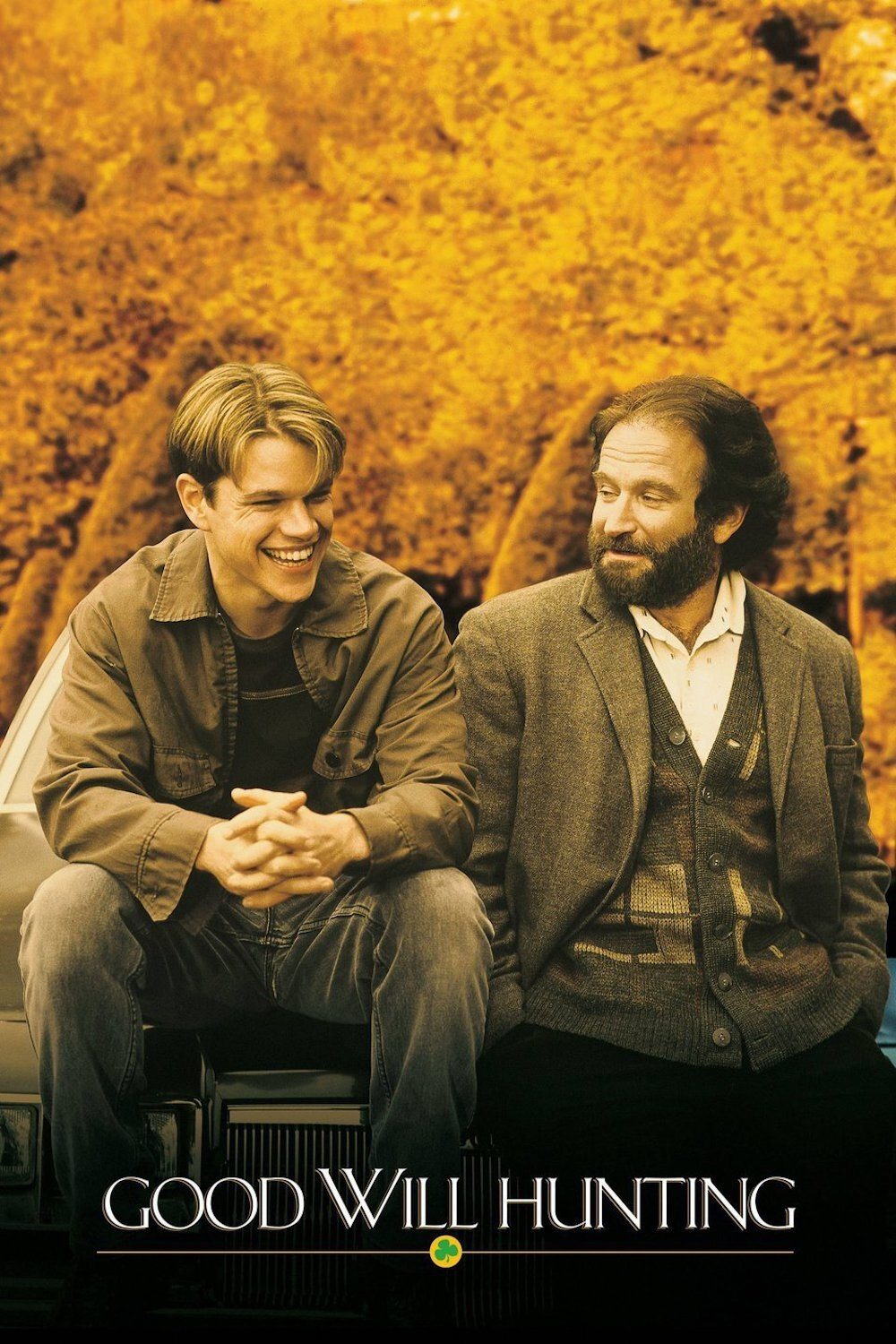
The Historical Era of the Film
When I first watched Good Will Hunting (1997), I was struck not just by its intimate Boston setting, but by the way it seemed to breathe the air of late twentieth-century America. The film’s story, characters, and even its unapologetic honesty all felt rooted in the mid-to-late 1990s, a distinct historical moment that shaped so many aspects of its creation. This era was one of both tremendous optimism and underlying uncertainty. Politically, the United States was under the leadership of President Bill Clinton, a time characterized by a rare sense of both domestic prosperity and international peace following the fraught years of the Cold War. Economic conditions were largely positive, buoyed by the tech boom and the so-called “dot-com” bubble, with unemployment reaching low levels and a general feeling that opportunity was accessible to anyone with enough talent or determination.
The social climate, however, wasn’t without complexity. The dividing lines drawn by class, privilege, and access to higher education were becoming more visible, even as the prevailing narrative told Americans that hard work would yield rewards. Social mobility was frequently discussed, with access to universities like Harvard and MIT symbolizing the ultimate gateway to this mobility. Yet, as I reflect on how these themes percolated through everyday life, it’s clear that many felt left behind by these economic winds of change, or struggled to reconcile their roots and personal trauma with society’s demands for success.
On a broader scale, American society was still grappling with some long-standing issues. The early 1990s had witnessed eruptions of racial tension and violence, such as the 1992 LA riots, and the vestiges of these conflicts were still felt in urban America. Crime rates, though declining by the mid-1990s, were still a fact of life in many inner cities. As I see it, this tension laid the groundwork for films that looked honestly at working-class struggle and the complexity of escaping cycles of hardship. Good Will Hunting felt like a product of this era—a film touched by both hope and honest confrontation of personal and social obstacles.
- Mid-1990s economic boom and optimism
- Class divisions and debates about social mobility
- Expansion of higher education discussions
- Aftereffects of earlier social unrest in American cities
Finally, in terms of the national mood, there was a movement toward self-analysis and therapy culture, evidenced by the growing visibility of mental health conversations and the proliferation of self-help books and talk shows. Looking back, I see these trends as integral; they resonate through the film’s focus on trauma, self-worth, and healing.
Social and Cultural Climate
Exploring the social and cultural climate of the late 1990s as it related to Good Will Hunting, I found myself reflecting on the profound tension between old and new values that defined the era. The 1990s, in my experience, were a time when therapy and emotional vulnerability began shedding their taboo, especially among young adults and men. The rise of the “talking cure” and increasing comfort with discussing trauma and personal pain coincided with wider access to counseling services on college campuses and in urban communities. This wasn’t yet the era of widespread destigmatization, but I could see the cracks beginning to appear in the hard shell of American stoicism.
At the same time, I recall how the cultural conversation around masculinity was shifting. Films began exploring new models of manhood, questioning the value of the traditional, emotionally detached archetype. Good Will Hunting’s focus on the gentle, persistent therapist Sean and the wounded Will mirrored these anxieties and hopes—it tapped into a hunger for compassion and guidance within the masculine sphere. This felt groundbreaking, and in reflecting on the era, it makes sense that such a story would resonate with so many.
Culturally, the late 1990s were also marked by debates around class and meritocracy. The ideal of the self-made individual persisted, but there was increasing criticism of entrenched social hierarchies. I noticed how the film captured a sense of frustration and resentment toward elite institutions, as well as the urge to break free from the limitations of background. Boston, with its iconic blend of working-class neighborhoods and world-renowned universities, was almost a microcosm of these tensions. As someone fascinated with class dynamics, I appreciated how social stratification was not only depicted, but felt in every frame.
Another element I observed was the growing visibility of therapeutic environments in popular culture. Group counseling, one-on-one sessions, and the idea of seeking help for emotional wounds became increasingly mainstream. The fact that much of the film’s narrative centers on Will’s sessions with his therapist spoke to broader debates about the place of psychology in American life. It’s not lost on me that by the late ’90s, daytime talk shows and self-help literature often led with stories of self-discovery, healing, and reconciliation—strikingly similar themes to those I see in the film.
How the Era Influenced the Film
Reflecting on how historical circumstances shaped Good Will Hunting, I am convinced that the late ’90s zeitgeist was more than mere background—it was an active force in the film’s DNA. In an America obsessed with the idea of the “American Dream,” the figure of the misunderstood genius who prefers working-class obscurity over elite recognition felt like a direct response to contemporary debates about talent, privilege, and what it means to “deserve” success. The political climate, tinged with relative peace and prosperity, made space for more introspective stories. Rather than the grandiose epics of earlier decades, the era favored the intimate, psychological realism that this film exemplified.
One of the ways the production era shaped the film was by enabling young, untested filmmakers and writers like Matt Damon and Ben Affleck to break into the industry. Independent film, fueled by the growth of boutique studios like Miramax, thrived in this period. I sense that this climate of opportunity and risk was integral to the creation of Good Will Hunting, a film whose raw authenticity probably would not have survived the more formulaic, corporate systems of earlier eras. The filmmakers, close in age to their characters, drew on their firsthand experience of both working-class Boston life and aspirations toward Hollywood success.
For me, the film’s setting in South Boston is another outgrowth of its historical moment. During the ’90s, the neighborhood was known for its Irish-American heritage, blue-collar culture, and struggles with crime and poverty. This backdrop—specific, textured, and at times mythologized—was well-suited to the era’s renewed interest in local, character-driven stories. The film’s authenticity comes through both in its details (accents, settings, attitudes) and in its broader themes of loyalty and escape.
The script’s exploration of therapy reflected the era’s growing (if still nascent) willingness to take mental health seriously, particularly among men. I see this as a crucial historical factor. The relationship between Will and Sean may have seemed radical, but it fit the contours of contemporary conversations about masculinity, vulnerability, and healing. It’s hard to imagine this dynamic emerging quite so powerfully from any decade before.
Audience and Critical Response at the Time
When I look back at the audience and critical reaction to Good Will Hunting, what stands out is how directly the film’s historical context colored its reception. The late 1990s were not just a boom time for independent cinema; they were a moment when stories about everyday struggle and triumph could catch the public imagination. I remember reading contemporary reviews that praised the film’s “raw honesty” and “authentic voice”—qualities that so many viewers and critics seemed hungry for after years of blockbuster spectacle.
Audiences, especially young adults, responded profoundly to the film’s blend of working-class realism and intellectual aspiration. The narrative of a young, undiscovered genius struggling to break free from his background spoke to those who felt both the allure and limitations of 1990s social mobility. Many saw the film as a counter-narrative to the relentless positivity of the era, offering a reminder that not everyone experiences prosperity in the same way. Will’s struggle felt emotionally real, and that authenticity was, in my experience, crucial to the film’s success.
Critically, Good Will Hunting was often called a “throwback” to character-driven dramas of the 1970s, while still feeling thoroughly contemporary. There was admiration for the unpolished sincerity of Damon and Affleck’s screenplay, and for Robin Williams’s performance as Sean—a character who embodied the very spirit of vulnerability that was just starting to gain currency in American life. I recall awards season coverage that highlighted how the film bridged the gap between indie grit and mainstream appeal, cementing it as a pivotal work of its era.
The film’s reception made it clear to me how much the late 1990s yearned for stories of hope, healing, and reconciliation, even against the grain of public prosperity. It felt, in a way, like the audience recognized its own anxieties and desires mirrored on screen.
Why Historical Context Matters Today
From my perspective, understanding the historical context of Good Will Hunting adds a crucial layer to any modern viewing. It is easy, years later, to see the film as simply a timeless story of brilliance and redemption, but for me, knowing its roots in the specific climate of the 1990s deepens its resonance. It’s a film that talks back to an era of optimism by exposing what lurks beneath, emphasizing that structural inequality and personal pain persist even in times of plenty. By recognizing how the film’s focus on therapy, masculine vulnerability, and the limitations of meritocracy responded to contemporary debates, I gain insight into not only what audiences were thinking in 1997, but why the story continues to feel urgent.
This context also helps me better interpret the film’s Boston setting, its depiction of academia, and its choice to center both therapy and working-class friendship. Rather than accidental details, these were deliberate reflections of the filmmakers’ world. Watching Good Will Hunting now, I find myself attuned to its subtle commentary on who gets to succeed, who gets left behind, and what healing from trauma looks like—messages shaped by a very particular moment in American history. Without that knowledge, I’d miss the texture and urgency that make the story more than a generic drama.
Most importantly, I see that the film’s enduring appeal comes from its dual nature: both specific to its time and universal in its emotional truth. Like so many films shaped by their historical moment, Good Will Hunting offers me a chance not just to witness the past, but to understand how history informs art—and how art, in turn, stimulates ongoing dialogue about class, privilege, and self-discovery.
After understanding the factual background, you may want to see how this story was received as a film.
🎬 Check out today's best-selling movies on Amazon!
View Deals on Amazon