
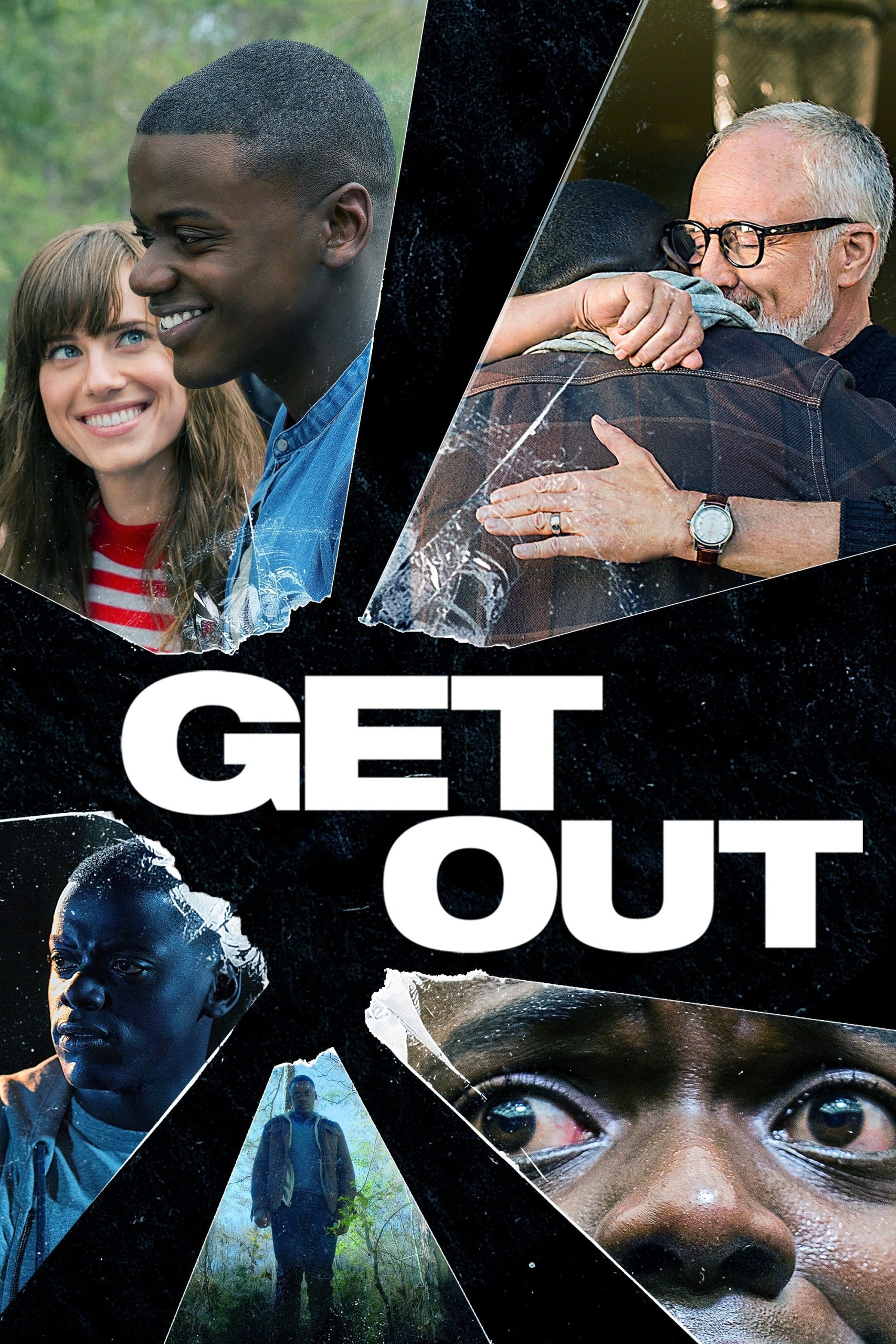
The Historical Landscape
Whenever I revisit Jordan Peele’s “Get Out,” I’m pulled right back into the mood of 2017—a year when the world, and especially America, vibrated with both distress and urgency about issues of race, identity, and hidden power structures. Back then, I remember feeling a kind of cultural static in the air. Headlines were relentless: clashes in Charlottesville, mounting skepticism over police accountability, and open debates over what “post-racial” America was supposed to mean versus what reality offered. Everyone in my circles seemed to be reconsidering the status quo; discomfort was no longer taboo but had become the currency of necessary discussions. I sensed people approaching their media with sharpened questions—what is this piece of art saying about us, and where do I fit into that story?
Social media, by 2017, had transformed into a town square, but one splintered into tight-knit echo chambers and sprawling, unending argument threads. The discussions weren’t just about political policy or celebrity scandal—there was an appetite for interrogating history’s reach into the present. I saw friends and colleagues, both Black and white, expressing either cautious hope or outright fatigue about whether real change was possible after the Obama era had ended. In this context, films were rarely “just entertainment.” Movies, especially those that broached the loaded subjects of racial prejudice and cultural anxiety, landed with extra gravity. “Get Out” emerged for me in that climate not simply as a horror film but as a kind of reckoning—a mirror held up to a society that often preferred to avert its eyes.
In the world of filmmaking, too, I sensed a restless creativity brewing. Studios, perhaps emboldened by the success of more offbeat blockbusters from the previous decade, were gingerly allowing new voices to bring “genre” films into unexpected territory. But for all the talk about diversity and inclusion, I also felt—and heard in the private conversations of industry friends—a persistent skepticism. Would Hollywood genuinely back stories that criticized polite society’s self-image, or would these narratives remain exceptions? When I first heard the premise of “Get Out,” my initial reaction was surprise combined with a cautious optimism: Could a Black filmmaker really turn the lens so starkly on liberal America and get both box office success and critical acclaim? In the mood of 2017, that question felt genuinely radical.
Cultural and Political Undercurrents
When I dig beneath the surface of “Get Out,” I recognize the unmistakable pulse of mid-2010s America—a place where tensions around the legacy of race had grown sharper, not softer, with time. For me, the film resonates with anxieties that had metastasized by 2017: the insidiousness of microaggressions, the performativity of allyship, and the festering sense that real change was being hindered not only by outright bigotry, but by the well-intentioned, smiling faces of those who prided themselves on being “woke.” At dinner parties, in college classrooms, in television debates, I repeatedly heard the refrain that America’s problem wasn’t just overt racism—it was the comfortable blindness of people who insisted that racism only belonged to the past, or to the “other” political tribe.
The ascendance of smartphone video, and with it, the viral sharing of police violence and racist rants, made it increasingly hard to ignore what had once lurked out of sight. I felt it myself—a gnawing realization that even the neatest, most progressive communities harbored rot beneath the facade. Campus protests, national movements like Black Lives Matter, and the public wrestling over Confederate monuments converged to signal that America was in the midst of an identity crisis. Jordan Peele seized on that moment, and what amazed me was how fiercely he laced that reckoning into the DNA of “Get Out.” In the film’s dialogue and visual cues, I caught the echo of a generation’s exhaustion with performative progressivism—the kind that pats itself on the back for supporting “good causes” without ever truly questioning its own complicity in systems of exploitation.
There’s a motif I kept returning to after my first viewing, one that went beyond literal events: the way “Get Out” uses the genre of horror to expose the everyday psychological violence inflicted by secret prejudice. I remember thinking about the Obama era and the supposed post-racial ideal—it seemed as if the country wanted desperately to believe that voting for a Black president had settled the moral debt of racism. But in the year leading up to and following “Get Out,” it became clear to me, and many others, that progress was neither linear nor consistent. In fact, it was just as likely to provoke a backlash. Watching the film, I recognized a biting, sometimes uncomfortable truth: that oppression does not always wear a hood or carry a burning cross; sometimes, it offers you tea and compliments your physique.
The film’s subversive take on the American family, and its foregrounding of themes like fetishization and colonization, reflected what I was seeing in real time—cultural debates around cultural appropriation, unchecked privilege, and the commodification of Black bodies, both in media and real life. “Get Out” seemed, to me, to braid together those cultural threads with acerbic wit and biting clarity, painting a portrait of a society still deeply haunted by its past, no matter how many times it repeated “I would have voted for Obama a third time.”
The Film as a Reflection of Its Time
What struck me immediately about “Get Out” was not just that it depicted racism, but that it captured the intensely modern flavor of ambiguity, gaslighting, and discomfort that defined my experience of social interactions in that decade. Rather than trotting out the same old images of hatred, the film crackled with a subtler, stickier unease—one that I recognized all too well from real life. Friends would invite me to weddings or dinner parties in affluent suburbs, and I, like the protagonist Chris, would find myself scrutinized for signs of approval or unspoken rules. Peele seemed to understand how the horror of racism, circa 2017, lived not just in grand gestures of violence, but in the creeping, shape-shifting small talk of everyday life.
“Get Out” felt to me like a critique of the “post-racial” mythology that had been, for years, quietly unraveling. The era was full of media narratives suggesting that old prejudices had been vanquished, replaced by a new culture of tolerance and opportunity. Yet there was always an undertow—for every national celebration of diversity, I saw just as many examples of the opposite in news coverage and daily reality. What Peele managed, with startling clarity, was to turn the genre tropes of the horror-thriller into an exposé of psychological warfare. I don’t think I’d ever seen a film that turned the traditional roles and anxieties on their head in quite this way—certainly not one that became both a pop culture touchstone and an academic talking point practically overnight.
That interplay between surface and depth extended to the film’s imagery: the “sunken place,” in particular, became for me an unforgettable metaphor. It was not only a clever narrative device but a chillingly effective symbol for what it felt like to be silenced and trapped by systems far larger than oneself. In my own reading, the film was screaming about the dangers of complacency—that everything from “colorblindness” to progressive platitudes could be another variation of the same silencing mechanism. “Get Out” doesn’t just tell its audience to beware the obvious monster; it asks us to interrogate the structures, gestures, and histories that create and sustain those monsters.
I’m also struck by the very existence of “Get Out” as a product of its moment. The film’s success forced the mainstream to sit with an unrelenting critique of its own self-image—something that, even a few years prior, seemed unlikely for a commercially successful thriller. I saw how audiences—Black, white, and everyone in between—left screenings buzzing with uncomfortable laughter and uneasy recognition. For me, this was proof that the era had shifted: people were more willing to embrace ambiguity, to question received narratives about who the “villains” and “heroes” really were. It was as if the movie gave language and imagery to a truth that had always hovered at the edge of polite conversation: that racism wasn’t just about overt hatred but about the thousand quiet cuts administered by those who claim to mean well.
On a deeper level, “Get Out” felt like a corrective to the prevailing cinematic traditions I’d grown up with. For so long, horror films had used Black characters as scenery, as comic relief, or as self-sacrificial lambs. Suddenly, here was a film that not only centered a Black experience but asserted that that experience was rich, complex, frightening, and—critically—not for anyone else’s validation or entertainment. There’s a confidence to that narrative stance that embodies its cultural moment: one of frustration, defiance, and the demand not just to be seen, but to be understood on one’s own terms.
Changing Perceptions Over Time
When I reflect on the years since “Get Out” premiered, I can trace a fascinating evolution in the way people talk about and interpret the film. At first, in those feverish early months after its release, reactions were heated and deeply personal. I remember heated discussions—some appreciative, others defensive, and a minority outright hostile. Some hailed it as a long-overdue corrective to sanitized portrayals of racism; others insisted Peele had exaggerated or made caricatures of liberal whites. That range of response, for me, was not a bug but a feature: the film demanded, almost provoked, a reckoning with personal biases and discomforts.
With some distance, I’ve noticed conversations grow more sophisticated, as new historical flashpoints have come and gone. In the wake of subsequent movements—#MeToo, the resurgence of Black Lives Matter after George Floyd, and worldwide protests addressing systemic oppression—I see critics and audiences re-examining “Get Out” with expanded frameworks. It has come up, for example, in university classrooms I’ve visited, used to illustrate power dynamics that extend far beyond simple binaries of Black and white. Younger viewers I’ve spoken to often find the film predictive—a kind of warning bell about the limits of surface-level progress, and about the continued risk of co-optation and erasure.
One of the most intriguing shifts for me is in the way the film’s metaphors have traveled into the broader culture. The “sunken place” turned into a powerful shorthand for both literal and figurative silencing, invoked in protests, on social media, and in think pieces addressing everything from mental health to institutionalized inequality. Where once I heard the phrase used as a sly joke, I now see it referenced with a seriousness that underscores how deeply “Get Out” has embedded itself in the public consciousness. It’s as if the film anticipated a national awakening about the limits of “respectability politics” and challenged a generation to push harder for recognition of invisible harms.
A fascinating development, in my view, is that “Get Out” is now often referenced in the context of media literacy and critical viewing. The film’s genre boundary-crossing—melding horror, satire, and social commentary—has become a kind of template. I’ve witnessed filmmakers and students cite Peele’s deft hand as an example of how to blend entertainment and activism without resorting to didacticism. Some detractors, of course, argue that the film is now studied more as a cultural artifact than as a source of shock or suspense. But to me, that underscores its historical weight. “Get Out” is not seen only as a product of its moment, but as a lens through which to understand how that moment came to be, and where those conversations have since traveled.
The diversity of interpretations, even years later, is a testament to the complexity of the cultural landscape in which “Get Out” was born. I’ve come to appreciate just how many entry points the film offers: a horror film with genuine scares for genre fans, a searing critique of post-racial ideology for social commentators, and a coded parable for anyone who has ever felt outnumbered in rooms designed for someone else’s comfort. Each viewing—my own included—seems to yield new layers, new questions about the power of suggestion, the politics of liberation, and the price of assimilation.
Historical Takeaway
Sitting with my memories of “Get Out,” I can’t avoid the conclusion that the film does more than merely reflect the anxieties of its time—it crystallizes them. Its historical lesson, for me, is not about a moment safely contained in the past, but about the persistence and adaptability of social structures that shape how we relate to each other. I’m struck, above all, by how Peele’s film holds space for discomfort and ambiguity, refusing to tie up the nightmare with easy solutions or glib moral lessons. It’s a film that insists on the necessity of vigilance and critical self-examination, both at the societal and the individual level.
What “Get Out” ultimately taught me about 2017 is that the cracks in the surface were always there, waiting for the right storyteller to illuminate them. In an era crowded by noisy declarations of progress and bitter, defensive retrenchment, the film dared to argue that real horror often lies in the unexamined assumptions we carry. Peele’s vision was to render visible what polite society preferred to keep invisible, and to ask his audience—myself included—to sit with that visibility rather than looking away.
To my eyes, “Get Out” remains a keystone for understanding the American cultural psyche of the late 2010s. It’s a reminder that art, at its best, doesn’t soothe but unsettles, prodding viewers to confront what is uncomfortable, unresolved, and ongoing. The fact that we are still debating, dissecting, and drawing inspiration from it years later speaks to its deep historical resonance. The era that birthed it was at a crossroads—hesitant between owning its legacy and averting its gaze—and “Get Out” pressed its finger into the wound, asking us all, directly and with unnerving humor: Are you sure you know whose side you’re on?
To see how these real-world elements shaped the film’s impact, you may also explore its reception and legacy.
🎬 Check out today's best-selling movies on Amazon!
View Deals on Amazon