
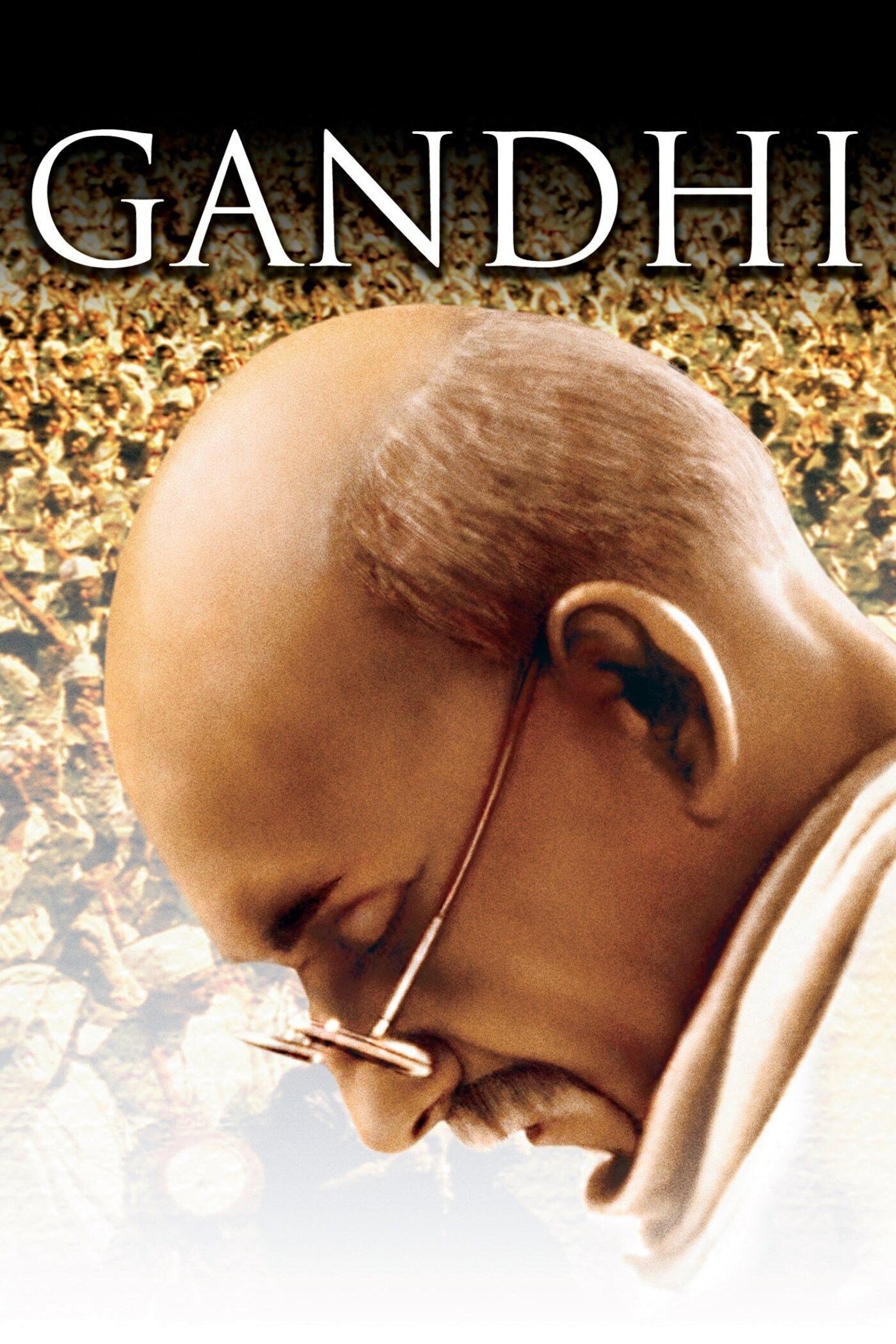
The Historical Landscape
Watching “Gandhi” for the first time on a flickering VHS tape in the early 1990s, I was immediately struck by how much the film itself seemed like a relic of a very particular historical moment—something grand, deeply earnest, and almost overwhelming in its ambition. Released in 1982, “Gandhi” exists at a crossroads of world events and cinematic transitions; I’ve always felt that its tone and scope say as much about the late 20th-century world as they do about its namesake. Growing up amid the end of the Cold War’s icy shadow, I saw Hollywood and British cinema beginning to grapple with legacies of colonialism and the collapse of old certainties, just as people all over the world were reassessing what liberation, identity, and moral leadership looked like as one century bled into another.
When “Gandhi” debuted, Britain was four decades out from India’s independence yet still wrangling with the ghosts of its imperial past. The United States, meanwhile, bristled with anxieties following the Vietnam War, its citizens torn between guilt and a fledgling desire for international atonement. In a broader sense, the early 1980s marked a period of global realignments: the Non-Aligned Movement was gaining momentum, and the Western bloc was being challenged not just militarily but morally. I see the film’s sheer scope and extended runtime as a deliberate mirror to that period’s search for epic meaning, for heroes and stories that could explain or redeem the profound turbulence of the recent past.
Politically and artistically, the era of “Gandhi” still belonged to grand narratives. Hollywood was less fragmented by niche interests and digital disruption, dominated instead by directors who believed—perhaps naively, perhaps bravely—in cinema’s power to move entire nations to new moral vistas. Looking back, I remember how British filmmakers were beginning to own the uncomfortable truth of imperialism, spurred partly by a new generation of postcolonial writers and activists. We were living through the stirrings of what would become “multicultural Britain,” yet nostalgia for old certainties—an imagined lost grandeur of orderly, imperial stewardship—clung to public discourse like ivy.
For me, “Gandhi” emerges out of that collective historical delirium. The film’s massive international co-production—echoed in its multinational cast and crew—also reveals a moment when the old imperial center and its former colony were renegotiating their artistic and cultural bonds. The creation of the film itself, financed in part by Indian state funds, signals both the enduring scars and the emerging possibilities of cooperation in a postcolonial world. When I watch “Gandhi,” I don’t just see quotes around a historical figure; I see the traces of a world anxiously trying to write its own ethical legacy after the storm of the 20th century.
Cultural and Political Undercurrents
I’ve always felt that every frame of “Gandhi” crackles with the electricity of far more than its surface story. For me, the deeper undercurrents—the things that aren’t always said aloud—offer the richest terrain for analysis. By the time the film arrived in theaters, the world was awash with debates about civil rights, anti-apartheid movements, and the place of spiritual versus material forms of power. I notice how the film’s reverent tone towards Gandhi’s nonviolence dovetails with a global mood of searching for antidotes to cycles of violence: Americans disillusioned by the aftermath of Vietnam, Britons facing unrest in Northern Ireland, and South Africans increasingly vocal against apartheid—all turning their gaze toward “moral leaders.”
The film doesn’t exist in a vacuum. The late 1970s and early 1980s were shaped by seismic shifts: Margaret Thatcher’s rise in Britain, the solidification of the Reagan era in America, and mounting economic crises that battered the certainties of the postwar welfare state. Against this backdrop, I see “Gandhi” as almost utopian—a plea for the redemptive power of conscience. I’m struck by how this quest for redemption comes wrapped in the trappings of old-fashioned epic cinema, echoing David Lean and Richard Attenborough’s own “Bridge on the River Kwai,” as though we might reclaim moral high ground simply by retelling stories on a sweeping enough scale.
What fascinates me most is the film’s tightrope act between British guilt and Indian pride. I read Attenborough’s direction as an expression of white liberal self-interrogation, a public acknowledgment, at last, that decolonization was not just an Indian triumph but also a British failure—one shot through with immense suffering. Yet, the script walks delicately: it is designed not to inflame but to soothe, to foster empathy and step softly around more radical critiques of empire. I sense a subtle tension in the film’s framing, reflecting a broader reluctance of the Western world to go further than the idea of a “good empire gone wrong.”
Of course, “Gandhi” isn’t just about Anglo-Indian reckoning. Watching it, I don’t miss how its endorsement of pacifism and civil disobedience feels tailor-made for audiences nervous about nuclear brinkmanship and spiraling arms races. The figure of Gandhi stands in for all the possibilities of nonviolent resistance, suddenly recharged during a decade that was simultaneously obsessed with the apocalyptic and the redemptive. When I look at Ben Kingsley’s performance, I see an everyman prophet, designed to speak not just to Indians or Brits, but to anyone desperate for a new paradigm. In this light, “Gandhi” reveals the 1980s as much more than an era of conservative resurgence—it was also a time when mainstream culture yearned for something transcendent and healing.
The Film as a Reflection of Its Time
To me, “Gandhi” is a film that unashamedly proclaims its faith in cinema’s ability to shape collective memory—and in doing so, it offers a kind of historical self-portrait of its own era. I’m struck by how the film’s narrative choices reflect the sensibility of 1982 rather than the early twentieth-century India it depicts. The pacing, the grandeur, the focus on personal moral development—these all speak to the late 20th-century urgency to find new kinds of heroism in an uncertain world.
Watching “Gandhi,” I see more than a historical chronicle; I see a fable built to bridge a chasm: between imperial nostalgia and postcolonial consciousness, between a desire for reverence and the fear of irrelevance. When the film devotes lavish attention to the minutiae of Gandhi’s transformation—from privileged barrister to ascetic sage—it echoes the era’s preoccupation with authenticity. In the aftermath of the counterculture’s collapse and the cynicism of Watergate and post-imperial decline, authenticity had itself become a precious, nearly endangered quality. The protagonist’s journey toward renunciation mirrors, in my eyes, a broader Western longing for moral clarity at a time when old dogmas—religious, cultural, and political—had come undone.
I find it telling that “Gandhi” focuses not on revolution but on conversion—not just the conversion of individuals, but of nations. The process of the British relinquishing power is depicted as painful yet civil, emphasizing reconciliation over retribution. This aligns closely with early 1980s sensibilities, which were wary of radical change but open to the possibility of moral growth. I can’t help but notice the film’s reluctance to indict the British ruling class too harshly. Shorn of sharp edges, the depiction of imperial policy leans toward the ruminative rather than the accusatory. In its restraint, I see both a strength—a genuine yearning for transnational empathy—and a limitation, a reflection of the period’s discomfort with full-throated critique of Western power structures.
Even the film’s aesthetics, its endless parades and mass demonstrations staged with thousands of extras, feel like a deliberate invocation of “classic” Hollywood. It is as though Attenborough sensed that the time for sprawling, populist “message movies” was nearing its end—an era before blockbusters became synonymous with sheer spectacle divorced from ethical urgency. For me, “Gandhi” stands as a beacon of that moment: where cinema still claimed, with straight-faced gravity, to shape history rather than merely sell tickets. The public response, which swept the film to multiple Oscars including Best Picture, only confirmed that people in 1982 were still willing—eager, even—to be admonished and inspired in the darkened theater.
Yet I also see the ways in which “Gandhi” skirts uncomfortable truths. Its depiction of sectarian violence, of the limitations of saintly leadership, is necessarily sanitized for a global audience. By restraining the historical pain to manageable dimensions, the film offers a vision that is as much about contemporary yearnings for unity as it is about the past. The absence of a sustained critique of Hindu nationalism, or a deep exploration of subaltern perspectives, mirrors what I see as the 1980s tendency—especially among the liberal establishment—to seek unity while avoiding painful ruptures. The film’s sentimentality, then, is less a weakness than a signal: it reveals a world hoping for healing but unsure how much truth it’s willing to bear.
Changing Perceptions Over Time
Looking back from the vantage point of today, I find my relationship with “Gandhi” transformed by the very debates and discoveries the film helped to set in motion. When I first viewed it, I accepted its reverence at face value—awed by Kingsley’s immersive performance and the gravitas of every tableau. Over time, though, I’ve grown attuned to the ways in which subsequent generations have pressed the film against the grain, asking harder questions about representation, agency, and the politics of storytelling.
I notice how, as the last few decades have unfolded, “Gandhi” has come under scrutiny from voices who see in its humanism a certain erasure of India’s complexity. Friends and colleagues from the diaspora have pointed out elements I once overlooked—the marginalization of Indian women’s stories, the limited inclusion of dissenting figures from the independence movement, and the film’s tendency to universalize Gandhi’s message in ways that can seem to flatten historical specificity. In university screenings, students raised on postcolonial theory and identity politics often express discomfort with what can be read as a white liberal framework: a British filmmaker, an Anglo-Indian lead, and an international production apparatus guiding an Indian narrative.
Reflecting on these evolving perspectives, I see that “Gandhi” now functions as a kind of cultural touchstone—a test of shifting sensibilities. Where it was once heralded as a victory for historical conscience, it is now interrogated for what it includes and omits. Some celebrate its globalism, the way it introduced countless viewers to Indian history and Gandhian philosophy; others lament its simplifications, its quiet sidelining of the messy aftermath of independence, and its failure to anticipate the rise of divisive nationalisms in India and elsewhere.
Yet, from my own vantage point, I find that these debates only enhance the film’s value as a historical document. “Gandhi” is not simply a window into India’s past; it is a mirror held up to the early 1980s, complete with all the anxieties, hopes, and blind spots of that era. Its universalizing, sometimes hagiographic tone tells me as much about the evolving needs of the West as it does about the actual contours of South Asian politics. When I rewatch the film now, I oscillate between admiration for its ambition and clarity about its limitations. I see it as a vital, if imperfect, artifact—a living record of transitional thinking on empire, race, spirituality, and modernity.
It strikes me that the film’s legacy is now inseparable from ongoing global movements for justice and representation. “Gandhi” stands at the threshold: one foot in a time of top-down storytelling and another reaching toward the plural, contested narratives that have become the hallmark of historical cinema in the digital age. For newer generations—mine included—watching “Gandhi” is no longer a passive act. It compels questions: Whose stories get told? By whom? For what purpose? I’m reminded every time I rewatch it that its impact lies in the provocations as much as the platitudes, in the dialogue it continues to spark rather than the lessons it seeks to settle.
Historical Takeaway
For me, the ultimate lesson of “Gandhi” is paradoxical. The film reveals less about Gandhi the man than about the world that summoned his likeness to its screens—a world struggling to reconcile the violence of its origins with the possibility of reconciliation. Watching the film with historian’s eyes, I see a product of the early 1980s: a time hungry for moral clarity but uncertain how to achieve it, yearning for grand narratives of redemption while quietly aware of the contradictions lurking beneath.
I find myself reflecting on how “Gandhi” captures a fleeting moment before the shattering arrival of multiculturalism, digital media, and postmodern skepticism. Its faith in epic cinema, in the power of “great men,” and in the possibility of spiritual transformation at national scales, seems almost quaint now—but also deeply moving. The film invites us to remember what a risk it was, in that era, to invest so thoroughly in the redemptive promise of one man, one movement, and one moral vision. It also reminds me of how much cinema—at least, at that turning point—still wanted to shape not just opinion, but identity.
Above all, I take away from “Gandhi” the sense that every historical film is as much about its own time as about the past it reconstructs. The 1982 film overlays India’s hard-won freedom with the uncertainties of a changing global order, asking audiences to reckon with both pride and unease. I sometimes wish the film took bigger risks, or foregrounded more radical voices—but I also see its cautious optimism as a testament to the hopeful exhaustion of a world emerging from decades of upheaval. In its very limitations, “Gandhi” reveals the values and anxieties of a generation on the cusp of something new, still haunted by the shadows of empire yet daring to imagine the light of nonviolent possibility.
To see how these real-world elements shaped the film’s impact, you may also explore its reception and legacy.
🎬 Check out today's best-selling movies on Amazon!
View Deals on Amazon