
The Historical Landscape
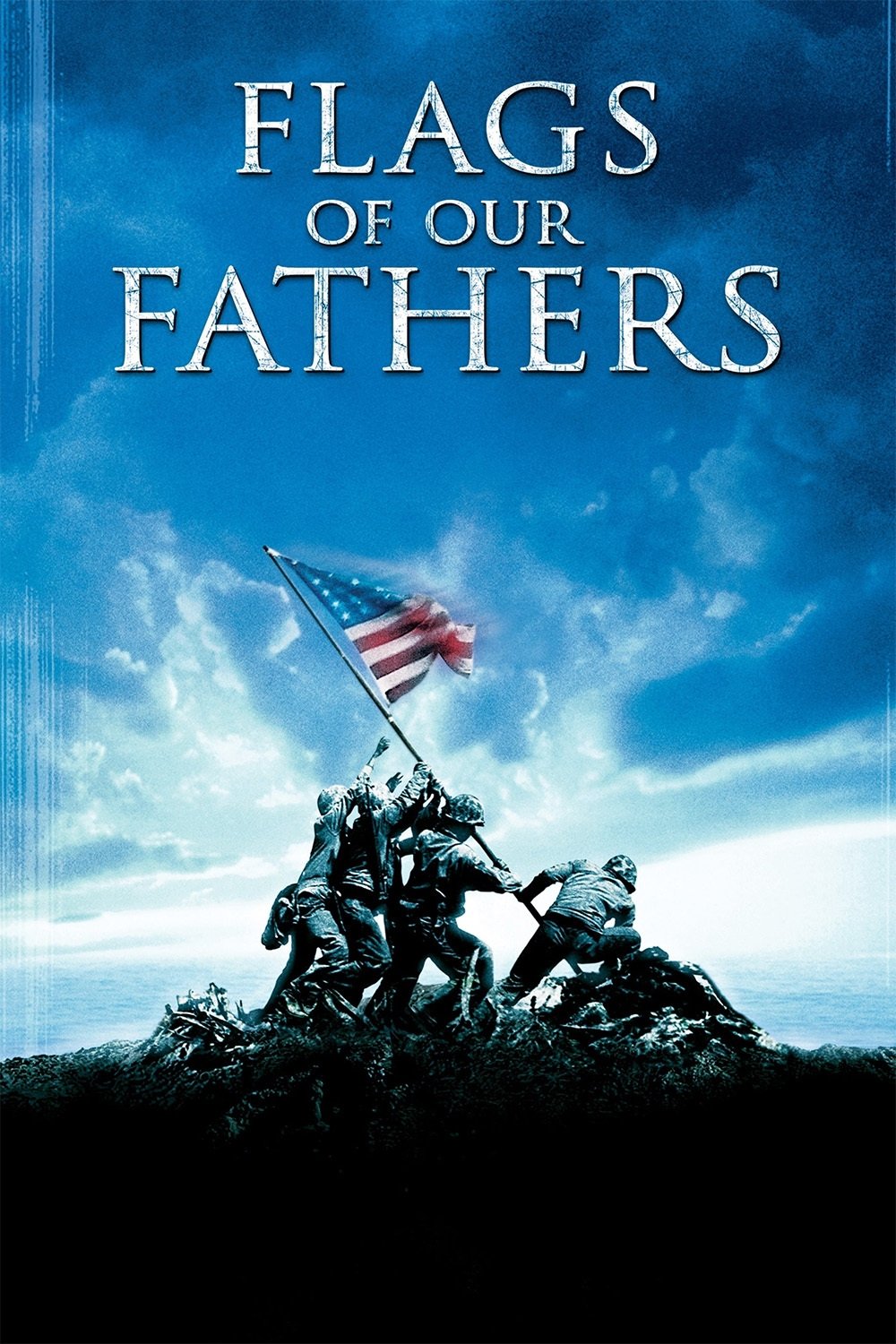
When I recall sitting in the theater in 2006, absorbing the somber tones and unrelenting humility of “Flags of Our Fathers,” what struck me most was the strangeness of the moment. America was in the throes of two drawn-out wars—Afghanistan and Iraq—a nation brimming with patriotic rhetoric yet burdened by growing disillusionment. Society was caught in a constant tug-of-war between reverence for military sacrifice and a dawning skepticism about the machinery that creates war heroes. In this landscape, Clint Eastwood’s approach to the famed Iwo Jima flag-raising felt like a direct confrontation with the country’s emotional contradictions.
It was a time defined by images: ubiquitous news coverage, digital snapshots from war zones, and viral moments that built a narrative of heroism or ignominy in a matter of hours. I remember thinking that the photo at the heart of “Flags of Our Fathers”—Joe Rosenthal’s legendary image—might be one of the first viral moments of the twentieth century, prefiguring the visual culture shaping the 2000s internet age. As the film played, I felt an uncanny alignment: the reverence for symbolism, the uneasy commodification of valor, and the nagging question of whose story was really being told echoed loudly in my everyday reality, inundated as it was with stories both real and manufactured.
In the broader historical sense, 2006 America was navigating a post-9/11 identity crisis, and I couldn’t help but feel how this impacted not just politics, but art. Films were serving as both mirrors and protest signs. Hollywood seemed to oscillate between reaffirming national myths and picking them apart. “Flags of Our Fathers” arrived not as a bold declaration of pride, but as an introspective murmur, unafraid to revisit the fragility beneath the bravado. I was struck by how out-of-step this felt with the spectacle of its contemporaries that sometimes thrived on simplistic sentiment. Instead, Eastwood’s film hunkered down in ambiguity, which spoke volumes about the uncertainty of the era itself.
Cultural and Political Undercurrents
If I reflect honestly, the persistent undercurrent guiding my viewing of “Flags of Our Fathers” was the subtle interplay of cynicism and nostalgia that defined American culture at the time. I sensed that, for many, faith in official narratives was eroding. Revelations about intelligence failures, the horrors of Abu Ghraib, and shifting rationales for war were in public discourse, erasing easy distinctions between right and wrong, hero and victim. Against this backdrop, I saw the film’s central theme—the manufacturing of heroes—as a quietly scathing indictment of the way societies seek comfort in legends, even at the expense of truth.
Personally, I couldn’t separate my experience from the saturation of media coverage of the military during this era. Television dramas and cable news commentators regularly invoked World War II comparisons to justify contemporary conflicts. Patriotism was often invoked as an obligation rather than a conviction. I interpreted Eastwood’s reserved, almost clinical presentation of the war and its aftermath as a direct answer to the bombast dominating the airwaves. There was no swelling theme to reassure me, no manufactured catharsis. Instead, the film met me with the somber reality that the manufacture of myth can eclipse the messy humanity of those at its heart.
What especially resonated with me was the way the film seemed to interrogate its own place in this legacy. Hollywood’s relationship with war stories has always been complicated; I’ve noticed a cycle of idealization and revisionism, each generation rewriting the mythos to suit its conscience. “Flags of Our Fathers” emerged at a peculiar moment when even the entertainment industry was battling industry-wide questions about responsibility and representation—think of the debates over the treatment of historical subjects, or the increasing scrutiny over accuracy and exploitation. When I walked out of the theater, I found myself reflecting on the burden borne by storytellers in shaping cultural memory. This self-awareness, I felt, permeated the film’s every frame.
The Film as a Reflection of Its Time
The images and emotional tone of “Flags of Our Fathers” impressed on me the sense that the early twenty-first century was struggling to reconcile its past with its uncertain present. I noticed that Eastwood, rather than indulging in triumphalism, gave us a fractured view of heroism: gritty, confused, manipulated. This was, in my view, a direct response to the national climate—one that craved authentic narratives even as it waded through a fog of spin and spectacle. The story of the Iwo Jima flag-raisers, used as living symbols for war bond drives, became a canvas for the anxieties and paradoxes of a society forever seeking meaning in its own mythology.
I was especially moved by the film’s exploration of the psychological aftermath of war. The returning soldiers, lauded and used for propaganda, could not slip easily back into civilian life; the laurels of fame became gilded cages. Watching them struggle amidst the machinery of public relations and government salesmanship, I saw unmistakable echoes of the experiences recounted by Iraq and Afghanistan veterans who were, at that very moment, returning to a home that did not understand them. The emotional and existential distance between the celebrated image and the traumatized reality felt like an indictment of a system too eager to simplify the pain of those it deifies.
I also saw in “Flags of Our Fathers” a cinematic reckoning with the power of visual icons. At a moment in which cell phone cameras and real-time reporting were reshaping the way events were recorded and remembered, Rosenthal’s iconic photograph was examined not just as a piece of history, but as a manufactured symbol—carefully staged, susceptible to reinterpretation, wielded to achieve political ends. This struck a profound chord in me as someone trying to navigate the fast-changing ethics of representation, during a time when skepticism about official stories was steadily rising. The film, as I saw it, held up a mirror to a country grappling with the role of storytelling: not simply to inspire, but also to persuade, manipulate, and obscure.
For me, the resonance with contemporary politics was most apparent in the film’s handling of public spectacle and private grief. As the surviving soldiers are paraded across America, compelled to relive and retell an experience never truly understood by those outside the battle, I was reminded of the ritualistic displays of support and mourning—yellow ribbons, flag pins, and televised tributes—that were omnipresent in the 2000s. I couldn’t help but sense a note of weariness in the film’s repetition of such symbols, asking whether society could reckon with the cost behind its favorite narratives, or if it would forever remain at arm’s length from the suffering at their core.
Changing Perceptions Over Time
Over the years, my perspective on “Flags of Our Fathers” has deepened, shaped both by distance from its original context and by the shifts in cultural discourse since its release. When I first viewed it, the film’s skeptical engagement with hero-making felt bracing—almost provocative. With time, especially as wars wound down and the nation’s attention drifted, I became more attuned to the ways the film’s message has evolved in public consciousness. At its debut, I remember heated debates about whether the film honored or undermined military sacrifice, which seemed to me a microcosm of America’s broader discomfort with moral complexity.
Now, when I return to the film, I sense that its unwillingness to settle for simple answers has become one of its great virtues. The subsequent wave of war films and retrospectives—many of them less ambivalent—now make Eastwood’s approach feel prescient: he anticipated not only the public’s wariness of propaganda, but also the rise of postmodern skepticism about the reliability of narrative itself. In a world awash with deepfakes, revisionist documentaries, and contested histories, I now see “Flags of Our Fathers” as quietly ahead of its time. It cautions not only about government myth-making, but also about the broader human tendency to seek comfort in legend and suppress the ambiguities that surround the real human costs.
I have also noticed shifts in how younger audiences respond to the film. For those who view World War II as increasingly remote—more legend than memory—the film’s stark gaze seems to work less as an intervention than as a reminder of the unpredictability of history’s afterlife. What for my generation was a pointed commentary on the present may, for newer viewers, serve as a prompt to question their own relationship with national mythologies. This evolution in interpretation, I think, mirrors the same process depicted onscreen: that of individuals and societies, over time, separating image from experience, and grappling with the responsibilities of memory.
Each time I revisit “Flags of Our Fathers,” fresh historical moments color my reading. In the aftermath of subsequent conflicts, amidst debates about monuments, statues, and public memory, the film’s interrogation of wartime storytelling acquires new resonance. I find myself more acutely aware of just how fragile and malleable collective memory can be. Eastwood’s restraint, once experienced as a rebuke to patriotic spectacle, now feels like an offering: an invitation to inhabit the gray areas often omitted from celebratory accounts of national history.
Historical Takeaway
Reflecting now, I see “Flags of Our Fathers” as a cinematic time capsule, encapsulating the contradictions and anxieties of early twenty-first-century America. What lingers most in my mind is the film’s insistence on questioning not just what we remember, but how and why we construct the icons that shape our self-image. In an era marked by crisis, insecurity, and soul-searching, I found Eastwood’s refusal to offer comforting answers both challenging and necessary. His film reminds me that every myth, no matter how noble, carries the risk of erasing the human complexities at its core.
What the film teaches me about its era, above all, is the enduring uncertainty that comes with living through history in real time. I recognize in its tones and textures the endemic doubt of the post-9/11 years—a period when the boundaries between narrative and reality were especially porous, and when the distance between the image of heroism and its reality was painfully wide. If anything, “Flags of Our Fathers” remains a testament to the courage required not simply to fight, but to remember honestly. To me, that is Eastwood’s most relevant and lasting message to his own moment in history—and to mine.
To see how these real-world elements shaped the film’s impact, you may also explore its reception and legacy.
🎬 Check out today's best-selling movies on Amazon!
View Deals on Amazon