
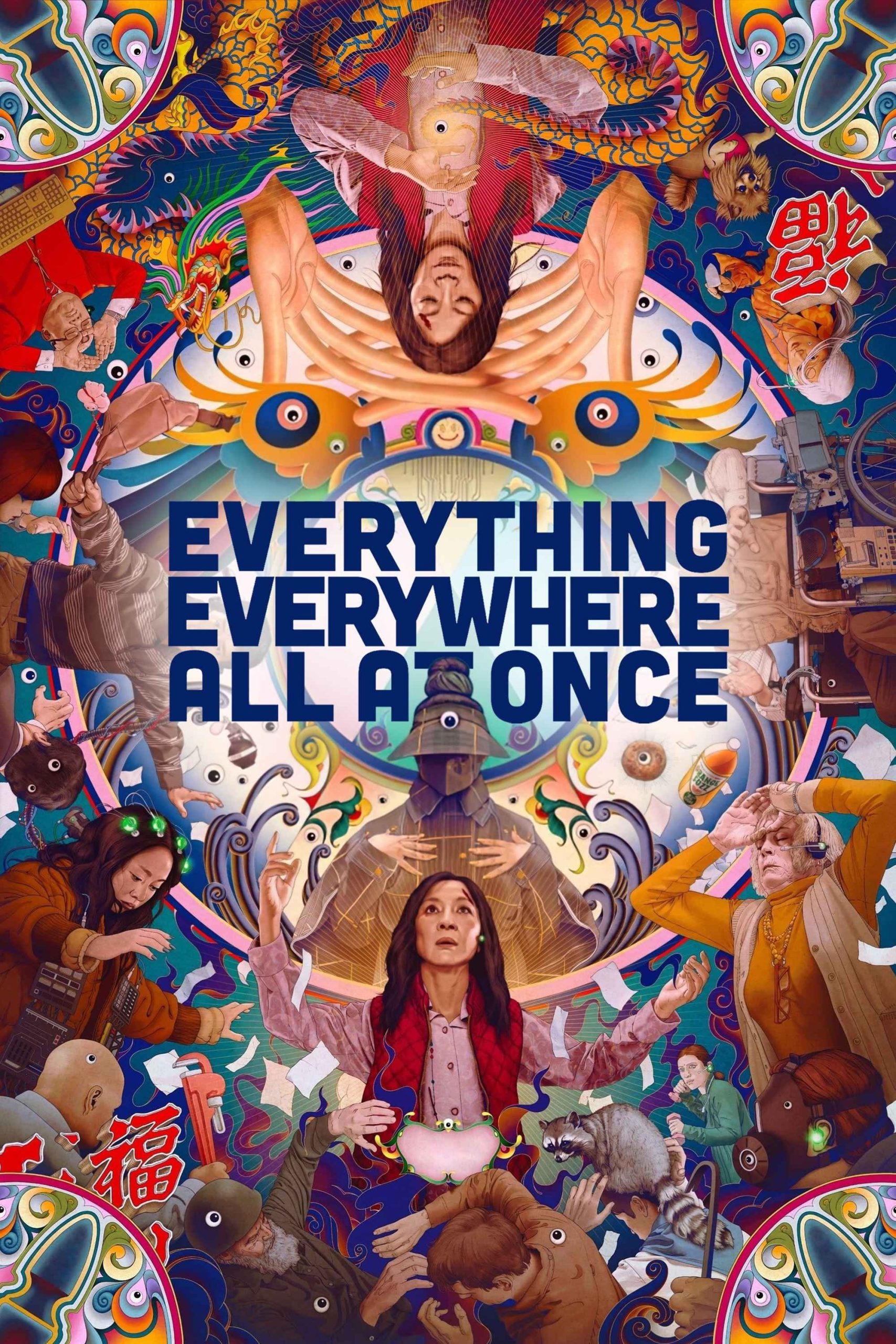
The Historical Era of the Film
If someone had told me in early 2022 that a wildly imaginative film like “Everything Everywhere All At Once (2022)” would cut through the noise of digital entertainment, streaming wars, and pandemic fatigue, I might’ve hesitated to believe them. Yet, as I look back on the production era that produced this film, it’s impossible to ignore the dense tapestry of historical context woven into that precise moment. The early 2020s were an era marked by tremendous upheaval—both politically and socially—especially in the United States, which shaped the economic structures and production realities of the film industry in newly profound ways. Amid the global COVID-19 pandemic, I witnessed widespread transformations, not just around public health and economics but also in the way we conceived of connectedness, identity, and social hierarchy.
From my vantage point, the political climate was especially turbulent. The late 2010s and early 2020s were years defined by divisive national politics, sharp ideological clashes, and heightened social activism. The backlash against anti-Asian hate, which escalated during the pandemic, was a central part of the social narrative. Economic challenges abounded as job markets shifted, and mass layoffs and uncertainty grew. Media industries like film, already under pressure from the dominance of streaming services, were forced to reimagine production schedules, work environments, and the very nature of distribution. For me, the films produced amidst these intersecting crises always carry the imprint of uncertainty, resilience, and rapid change, and “Everything Everywhere All At Once” is no exception.
When I speak to students or audiences about the production era, I find it essential to remember the unprecedented context: theaters closed, indie films struggled for space, and yet creative voices found new, often experimental forms of expression. With this film, I saw an explosive burst of creativity—possibly a result of pent-up artistic energy released after years of global tension. This historical period’s complex web of influences made the space for a film so singular, audacious, and utterly unpredictable. It’s as if the filmmakers responded directly to the chaos around them with their own brand of cinematic chaos—a choice that feels unmistakably anchored to the realities of that time.
Social and Cultural Climate
Reflecting on the social and cultural climate of the early 2020s feels a bit like trying to capture shifting sand. In my analysis, dominant social attitudes were under rapid transformation, continuously shaped by a hyperconnected digital world, the proliferation of social media activism, and crises that forced communities to redefine themselves. As someone who studies these patterns, I can’t separate “Everything Everywhere All At Once” from the sharp rise in discussions about race, immigration, and the complexities of identity—especially relating to Asian American experiences. The escalation of anti-Asian hate crimes and rhetoric during the pandemic deeply affected public discourse and, by extension, creative expression.
I became acutely aware of a shifting landscape where traditional generational divides within immigrant families—especially in Asian American contexts—were receiving new, overdue attention. This was the era of #StopAsianHate, a movement that amplified voices previously sidelined in mainstream media. Social conversations about inclusivity, representation, and intersectionality became part of everyday life, not just specialized academic debates. I saw young Asian Americans, in particular, claim space and language to articulate experiences of historical trauma, assimilation, and familial expectation. In entertainment, I observed an insistent demand for more authentic stories, breaking away from the confines of previous stereotypes.
The cultural climate supported an openness to genre experimentation and the surreal. Audiences, reeling from the uncertainty of global events, expressed a hunger for films that blended boundary-pushing narratives and emotional honesty. The multiverse trope, which for years had been the exclusive territory of superhero blockbusters, suddenly found more intimate, personal applications. For me, the film’s willingness to leap between realities, genres, and tones closely mirrored the collective sense of instability and possibility that dominated this cultural moment.
- Rapid increase in online activism and digital discourse
- Heightened awareness of anti-Asian racism and solidarity movements
- Resurgence of immigrant narratives in mainstream attention
- Critical debates about generational divides and identity
How the Era Influenced the Film
Looking at the film through the lens of its historical context, I see direct imprints of the production era’s anxieties and aspirations, particularly in the way the film deals with fragmentation and multiplicity. It makes sense to me that the directors, Daniels, would embrace a narrative and visual language that fractures traditional storytelling—mirroring how fractured and overwhelming life itself felt during those years. As a historian, I notice parallels between the film’s whiplash-quick tonal shifts and the sense of dislocation experienced by many, myself included, in a world where norms were crumbling and new ones yet to cohere.
The film’s characters, especially Evelyn and her family, are deeply embedded in the historical layers of immigration, generational trauma, and the multiplicity of cultural identities. In my interpretation, this reflects the wider social conversations about diaspora experience that reached fever pitch in the early 2020s. It’s no surprise to me that the film hinges on themes of multiverses—not just as spectacle but as a metaphor for the multitudes that define marginalized lives in America. This is a story born of a context where identities are asked to bend, split, and merge, whether in response to external racism or internal family dynamics. I personally identify with the way the film refuses to present a monolithic portrait of its characters, instead offering a fractured, prismatic view that echoes realities often unrepresented in mainstream cinema.
On a production level, I can’t help but think about how the pandemic’s disruptions made the filmmaking process itself an act of resilience. Much of the practical ingenuity I observed—small teams, tight budgets, and reliance on visual effects over extensive locations—emerged as creative responses to material constraints. The film’s very existence, for me, is a testament to the era’s technological resourcefulness and the persistence of independent filmmaking under economic pressure. In this sense, the direct influence of the historical moment becomes visible not only in the film’s narrative but in its making: I see it as a triumphant response to the challenges unique to the production era.
Audience and Critical Response at the Time
My memories of the film’s release are inseparable from a palpable sense of catharsis and exhilaration felt by many viewers and critics. I remember early screenings where audiences responded with startled laughter, audible gasps, and, in some cases, tears—signs of a work that struck deep, raw nerves. The reception was far from monolithic. Older viewers, especially those who felt distanced by the film’s relentless pace or surreal logic, sometimes expressed confusion or even frustration. But as I read reviews and spoke with colleagues, I recognized that “Everything Everywhere All At Once” found especially intense resonance among Asian American audiences and younger viewers hungry for stories outside the familiar Hollywood formulas.
Critically, the film attracted near-universal acclaim for its inventiveness, emotional depth, and subversive humor. I think a key reason for this lies in the way critics themselves were living through the same history—each of us, in our own ways, being shaped by the same anxieties, losses, and cultural reckonings. I noticed persistent praise for the film’s boldness in its representation of immigrant experiences and in tackling intergenerational trauma, two issues that had, by then, become central in the discourse surrounding race and identity in America. For me, the critical embrace was also a recognition of the film’s daring engagement with issues and forms that mainstream cinema often avoids.
What stands out most in my memory is how the film galvanized communities that often felt invisible. Asian American groups, progressive critics, and genre cinema fans all rallied to celebrate a film that, finally, seemed to speak in a language shaped by their own histories. And while not everyone responded with undiluted enthusiasm—some questioned its density or the extremity of its style—I saw this divergence as an honest reflection of a cultural moment that was itself unsettled, exploratory, and contentious. By any measure, the audience and critical response became a key chapter of the film’s historic legacy.
Why Historical Context Matters Today
For me, delving into the historical context of “Everything Everywhere All At Once” transforms the experience of watching it from mere entertainment into something far richer—almost archaeological in its depth. When I rewatch the film, I can’t help but trace the fingerprints of its production era: the anxieties of pandemic isolation, the wounds and pride of anti-Asian racism, and the restless aspiration for stories that reflect a world in flux. Understanding this background doesn’t just add color; it makes every frame, every joke, and every tear feel more urgent and of-the-moment. It’s as if the film itself is a living document of the time in which it was made.
In my view, contemporary viewers—especially those discovering the film years later—are given a vital entry point into the 2020s by recognizing these historical currents. The personal becomes historical, and the film’s imaginative leaps are grounded in very real social, political, and economic pressures. I often remind my students that film isn’t created in a vacuum; it’s always a response, conscious or unconscious, to history as it unfolds. With this film, the intersection of collective trauma and creative innovation is nowhere more apparent, inviting us to rethink not just the story on screen but also our own place in ongoing historical dialogues.
What I find especially important is that the history reflected here isn’t static. The tensions and issues that shaped the film’s making—racism, family dynamics, identity politics—remain alive and evolving. By engaging with the historical context, we’re not just looking backward; we’re participating in an ongoing process of cultural understanding. As I see it, the film remains profoundly relevant, both as a touchstone for what came before and as a lens through which new audiences can view the world. My appreciation, and I hope the appreciation of others, grows exponentially with a full awareness of the history to which “Everything Everywhere All At Once” belongs.
After understanding the factual background, you may want to see how this story was received as a film.
🎬 Check out today's best-selling movies on Amazon!
View Deals on Amazon