
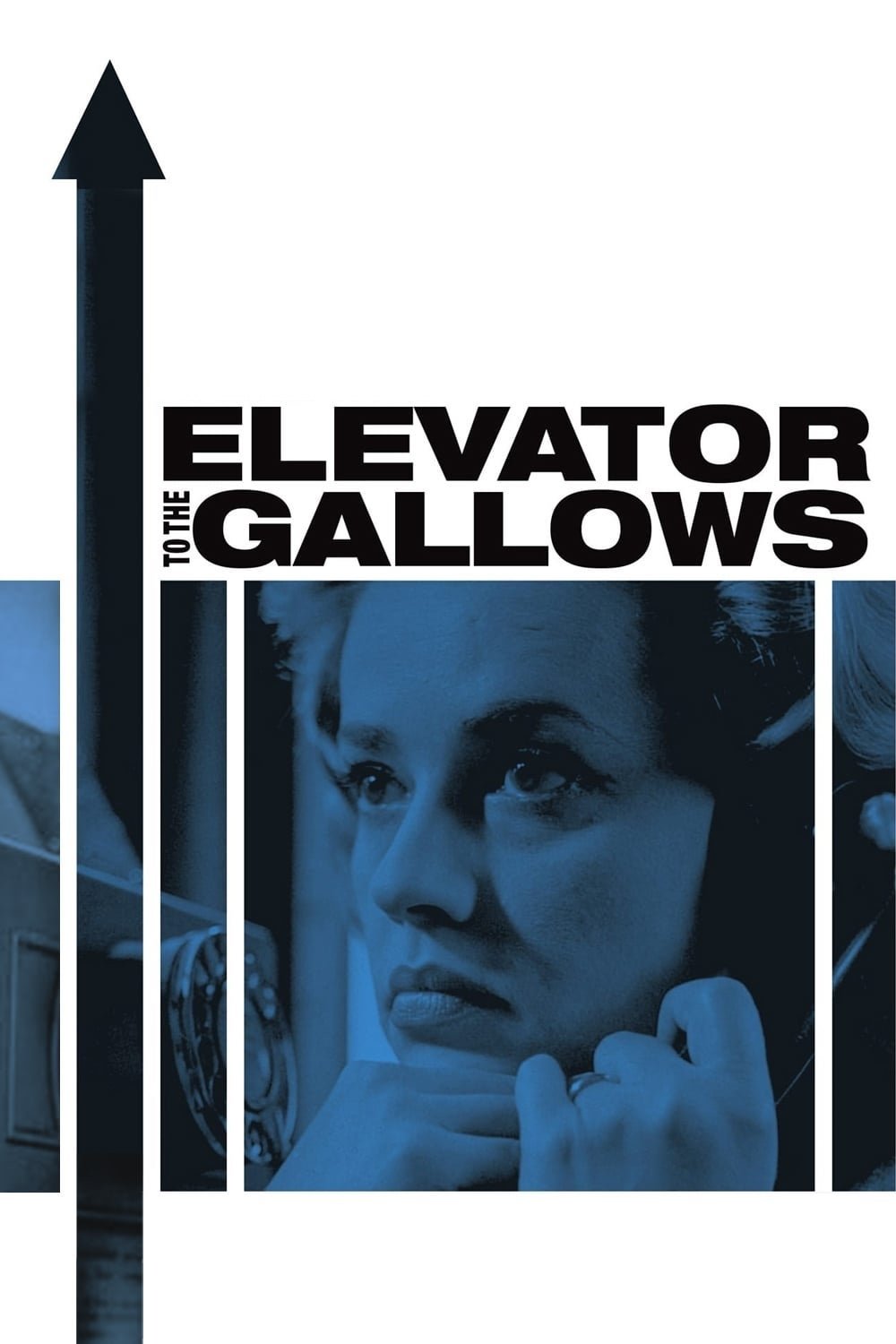
The Historical Era of the Film
Whenever I revisit Elevator to the Gallows (1958), I can’t help but feel immersed in the exact political and social transformation France was experiencing in the late 1950s. This wasn’t just a time of slick automobiles and smoky jazz clubs—it was a nation standing at the crossroads of its tumultuous postwar identity and the uncertainty of a rapidly modernizing world. For me, the air of 1958 always feels heavy with contradiction: France was still healing from the devastation of the Second World War, with memories of occupation just a decade old, yet already the country was beginning to stretch into the new shape formed by economic recovery and ambitious reconstruction. What fascinates me most about this period is how the so-called Fourth Republic was unraveling, marked by government instability and a society unsettled by both memory and change.
If I step into the shoes of a Parisian in 1958, I can almost sense how the legacy of imperial ambition and the reality of colonial conflict clashed in everyday consciousness. Economic optimism lingered just beneath the surface, driven by the Trente Glorieuses—that lengthy spell of economic expansion after the war. Yet, the headlines were dominated by the Algerian War of Independence, which forced the French public to re-examine their sense of national purpose and moral footing. These big questions trickled down into daily life, prompting a blend of existential anxiety and a restless hunger for authenticity.
The Paris of the late 1950s feels, in my mind, like a city suspended between eras: its elegant boulevards a reminder of resilience and its night clubs alive with the defiant beat of a new youth culture. Politically, France was in flux, uncertain about its leadership, its place in the new world order, and the viability of its own institutions—that fragile Fourth Republic soon to be replaced by De Gaulle’s Fifth Republic would be the very backdrop of the film’s making.
Social and Cultural Climate
When I reflect on the dominant social attitudes and cultural shifts framing the period, I see a country wrestling with profound internal divisions. The specter of the war in Algeria hung heavily over public discourse, splitting families and igniting passionate debates—sometimes even violence. For young Parisians in this era, as I see it, the optimism of peace was tempered by the cruel realities of ongoing colonial violence. This duality seeped everywhere: from the pages of newspapers to the circles of jazz musicians in the smoky backrooms.
Culturally, the 1950s in France were an extraordinary cocktail of artistic reinvention and bold social commentary. I often grasp how that creative restlessness paved the way for the birth of French New Wave cinema, even before it was given its name. There was a deep longing for new forms of self-expression—less staged, more authentic, impatient with the stiffness of traditional narratives. The cultural mood was skeptical of authority, critical of hypocrisy, and eager to dismantle old conventions. The rise of existentialist philosophy, championed by the likes of Jean-Paul Sartre and Simone de Beauvoir, colored social imagination as people questioned the purpose of existence and the value of traditional morality.
In the small details—the fashion, the music, the cigarettes—I sense the way French youth asserted themselves as distinct from their parents, craving a sense of modernity and internationalism. American jazz was pulsing through Parisian veins, signifying a connection to larger, global currents. At the same time, fears of moral decline and social disorder preoccupied the older generations. The tension between modernity and tradition was palpable.
- Lingering trauma from World War II and Occupation
- Deep political instability amid debates on colonialism
- Rise of existentialist and avant-garde cultural currents
- Youth culture challenging traditional French values
How the Era Influenced the Film
One of my strongest impressions is how deeply Elevator to the Gallows is rooted in its era—the shadow of political unrest and cultural experimentation seeps into the film’s every frame. I sense that the film was conceived amidst real-world tension and uncertainty, which helped imbue it with that sense of existential unease and moral ambiguity. I’m constantly reminded that in 1958, the genre boundaries of cinema were rigid, yet the emerging appetite for innovation—both stylistically and narratively—was impossible to ignore. It’s hard for me to imagine the film existing outside the context of a France that was both deeply anxious and cautiously hopeful for change.
Director Louis Malle strikes me as a product of this historical moment. I feel that he dared to break with the conventions of Classical French Cinema, opting for a raw authenticity that matches the disjointed, alienated mood in which he was living. The decision to film on real Parisian streets, to use natural lighting, and to cast Jeanne Moreau wandering in the night with wind-blown hair—all of it, to my eye, embodies the audacious spirit of the production era. For me, the improvisational score by Miles Davis is not just a stylistic flourish but a nod to the contemporary obsession with spontaneity and rebellion. That international touch—American jazz underscoring Parisian tragedy—speaks volumes about the era’s embrace of cross-cultural dialogue.
I find it impossible to disentangle the film’s atmosphere from the contemporary reality of unresolved conflict and moral uncertainty. The characters are not just individuals but reflections of a generation struggling to make sense of itself after war, betrayal, and the unspoken guilt of violence overseas. Even the film’s pacing and structure, with its moments of uncomfortable silence and unresolved tension, seem to echo the France of 1958: fragmented, unpredictable, and teetering on the edge of transformation.
Audience and Critical Response at the Time
Whenever I investigate how contemporary audiences and critics received the film, it strikes me how divided and electrified France was by its arrival. For some, the film’s stylistic innovations and refusal to follow the old rules of storytelling were exhilarating—a much-needed breath of fresh air in a cinematic landscape that felt increasingly stale. Critics attuned to the burgeoning movement of the New Wave, like those at Cahiers du Cinéma, saw “Elevator to the Gallows” as a sign that French cinema was once again capable of greatness.
Yet, I also sense a degree of puzzlement and even resistance among more traditional viewers. The film’s bleakness, its sparse soundtrack, and its ambiguous morality were controversial. It challenged the expectations of those raised on clear-cut dramas and melodramas, leaving some uneasy or dissatisfied. Through my research, I’ve found stories about viewers debating the film’s point, sometimes passionately, sometimes with an anxious edge wound tight by the uncertainties of the time. The jazz score in particular polarized opinion: for many, it was electrifyingly modern, but for others, it disrupted their sense of what a French film should feel like.
To me, the film’s box office performance and critical acclaim both reflect the unique crossroads at which France found itself. The same sense of crisis, invention, and cultural cross-pollination that defined the broader social climate helped the movie become a landmark, even if its success was anything but guaranteed. Its influence would only grow in retrospect, but the initial release was as much an experiment in audience patience and taste as it was a work of art.
Why Historical Context Matters Today
Every time I share my thoughts on “Elevator to the Gallows,” I insist that understanding its historical context dramatically transforms my appreciation of the film. It’s one thing to watch a suspenseful, noirish crime story, but it’s another entirely to view it through the lens of France’s postwar trauma and the birth pangs of a cultural revolution. For me, knowing that Malle and his contemporaries were surrounded by political uncertainty, artistic upheaval, and the constant, unsettling presence of war makes the film’s atmosphere of alienation feel richer and more poignant.
In my experience, viewers who recognize the echoes of the Algerian conflict, the existential dread permeating Parisian life, and the rejection of cinematic tradition find the film far more than a genre exercise. The very aspects that might appear dated or stylized—such as Jeanne Moreau’s wandering through deserted streets or the haunting improvisations of Miles Davis—become deliberate responses to the anxiety and restlessness of their time. To my mind, the historical context serves as the missing key that unlocks the urgency and innovation behind the film’s creation.
I’m always mindful that films are living artifacts, shaped by the moment of their birth as much as by their creators’ intentions. When I watch “Elevator to the Gallows” today, I don’t just see stylish cinematography; I see a society searching for meaning, a generation challenging its own conscience, and an art form being reborn in real-time. For anyone hoping to truly understand the film’s impact, grappling with its historical roots is as essential as following its plot.
After understanding the factual background, you may want to see how this story was received as a film.
🎬 Check out today's best-selling movies on Amazon!
View Deals on Amazon