
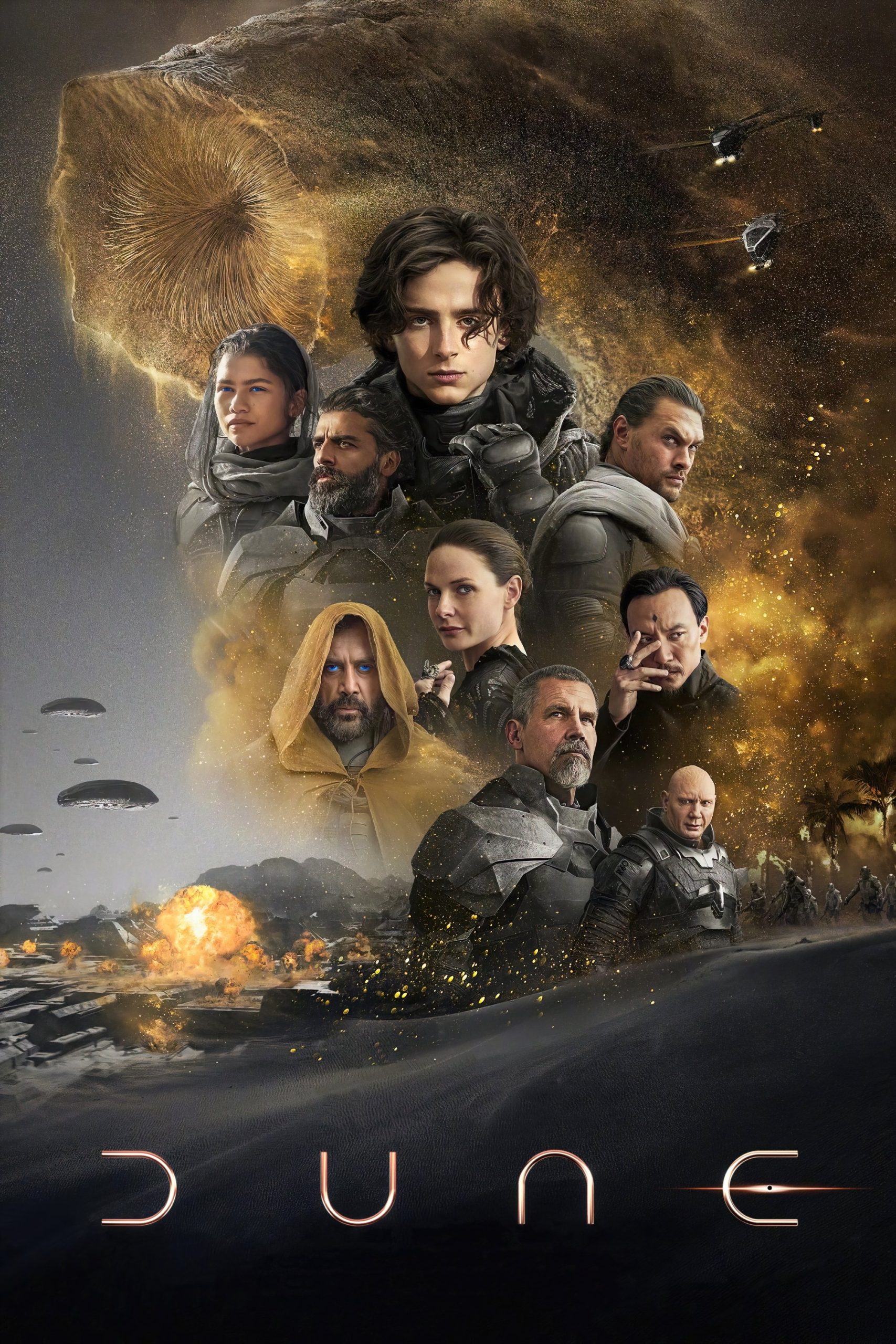
The Historical Landscape
Every time I return to Denis Villeneuve’s “Dune” from 2021, I can’t help but view it through the anxious, unsettled lens of the early twenty-twenties. I remember sitting in that dimly lit theater, acutely aware that the world outside was still grappling with a once-in-a-century pandemic. In that moment, the collective mood was—if I’m honest—fraught with uncertainty but also tinged with a strange, uneasy hope. The global disruptions caused by COVID-19, the increased digitization of our daily lives, and the mounting tension around issues like climate change and social disparity all seemed to seep into the pores of any cultural artifact released during this era, and “Dune” was no exception. The film’s release was a moment not only of cinematic anticipation, but also a reflection of how we, as a global society, were simultaneously craving escape and confrontation—with ourselves, with our systems, with our planet.
I noticed how the grand return of the epic-scale science fiction spectacle seemed almost a reclamation of communal experience; yet, we were tentatively adjusting to a “new normal.” I don’t think I was alone in wondering how movies, after months of streaming dominance and shuttered theaters, would ever feel the same. The spectacle of “Dune” stood at an intersection, suspended between the traditions of communal filmgoing and the realities of hybrid releases. This was an era obsessed with technological innovation—not just in cinema, but in every facet of life. We had virtual meetings, remote everything, an economy reeling under supply chain woes, and a pervasive sense of impermanence. When I watched “Dune,” I saw a film that existed because of these tensions: its production, distribution, even its visual language—imbued with the anxieties and aspirations of its time.
Political turbulence was everywhere during those years. I remember the 2020 elections in the United States rippling far beyond its borders, the racial reckoning following the murder of George Floyd echoing in streets worldwide, and a palpable hunger for change that hovered in every debate and demonstration. Technology companies consolidated power; misinformation campaigns undermined trust. Even before the pandemic, the world felt unstable, with crises erupting seemingly everywhere. By 2021, we were collectively asking: What comes next? Can we ever find balance again? “Dune” premiered as that question simmered in both public discourse and in the private anxieties of people around the world.
Cultural and Political Undercurrents
As I immerse myself in Villeneuve’s adaptation, I can’t help but feel that “Dune” operates as more than a futuristic fable—it is a coded conversation with the power dynamics of the present. The film’s portrayal of House Atreides and their forced stewardship of Arrakis isn’t just a matter of fictional succession. I see the undercurrents of oil politics, resource contention, and military intervention—parallels impossible to ignore in an era when the global economy remains tethered to fossil fuels. In the early twenty-twenties, arguments about energy independence, environmental catastrophe, and social justice were not only commonplace, but burning with urgency. That “Dune” returns again and again to the idea that whoever controls the “spice” controls the universe has always been resonant. But as I watched in 2021, it became an almost painfully on-the-nose allegory for the real-world scramble over resources, power, and narrative.
I also picked up on the way the film dances around themes of colonialism and imperial arrogance, concepts that rang especially sharp in an era when historical accountability was being demanded with increasing fervor. Statues fell, reckonings unfolded in boardrooms and lecture halls, and entire canons were being reassessed in the name of decolonization. I felt Villeneuve’s approach to the people of Arrakis—the Fremen—as a conscious departure from prior depictions. Their culture is not just an exotic backdrop, but given space to breathe, to evoke empathy rather than mere narrative utility. Still, I wrestled with the limitations of this approach, especially knowing the conversations about representation and authorship that were dominating the cultural sphere.
Another undercurrent I couldn’t fail to notice was a persistent skepticism toward charismatic authority, be it political, corporate, or religious. In the film, Paul Atreides is groomed as a messianic figure, yet there’s always an edge of ambiguity. For me, this resonated with the wary mood in the wake of populist surges and declining faith in institutions. Across the globe, former certainties seemed to unravel. The fragility of leadership, the double-edged sword of myth-making—they’re all right there in Paul’s anxious, ambivalent ascension. I see “Dune” as both echoing and questioning the nostalgia for “great man” narratives, offering instead a parable about the dangers of surrendering agency to prophecy, whether technological or traditional.
The Film as a Reflection of Its Time
What strikes me, every time I think of “Dune,” is how the film embodies the environmental anxieties of my era. The vast, desolate sands of Arrakis are more than scenery—they feel like a vision of Earth’s possible future, parched and desperate. In 2021, the climate crisis saturated news cycles. Wildfires raged from California to Australia. I saw governments wrestling with the limits of their own foresight and ambition at summit after summit. Watching “Dune,” I detected a certain haunted air in the stretches of desert and the Fremen’s careful stewardship of water—a precious, dwindling resource. It registered less as fantasy and more as a warning: this is a world built on the wreckage of short-term thinking and unaccountable extraction.
When I examine the aesthetics and production choices in “Dune,” I sense a deep-rooted skepticism about the notion of progress—a sentiment that was palpable among my peers and in the broader cultural discourse during those years. The technology in “Dune” feels deliberately archaic, all clunky bulk and tactile heft, eschewing the smooth, clean lines of earlier sci-fi spectacles. It’s as if the filmmakers are asking: after all our innovation, what has really changed about us? In an age addicted to digital quick fixes and seamless consumer electronics, the film’s emphasis on old-world craftsmanship and ritual feels like a rebuke, or at least a challenge, to our tech-utopian impulses.
There’s another aspect that stood out to me: the film’s emphasis on collective rather than individual struggle. Though Paul is at the center, “Dune” repeatedly steers our attention to powerless masses and fragile alliances. This mirrors what I witnessed in the real world, where collective action—from climate marches to mutual aid networks—seemed both necessary and fraught. By 2021, the myth of the solitary savior had lost much of its luster, replaced by a hunger for movements and coalitions. Watching “Dune”, I found its refusal to grant easy triumphs, or reductionist solutions, to be firmly in line with the uncertainties and ambiguities of the world outside the theater.
Even the film’s soundscape—its immersive, sometimes overwhelming design—reminds me of the constant information barrages of the pandemic era. I recall feeling, as the rumbling score washed over me, that this was what it felt like to live through the unrelenting noise of daily crises, breaking alerts, and social discord. The sensorial overload is not simply spectacle, but a reflection of the cognitive overload so many of us were experiencing, trying to process a world that felt forever on the brink.
Changing Perceptions Over Time
In the months and years since its release, I have watched as “Dune” drifted through different currents of interpretation. Initially, the film’s arrival was hailed as a long-overdue triumph of immersive blockbuster filmmaking—satisfying the hunger for shared experience after long isolation. Many, myself included, were intoxicated by its grand scale and seriousness, the way it insisted that popular cinema could still risk ambiguity and gravitas. But as the adrenaline cooled, subtler readings began to emerge.
I saw critics and fans alike revisiting the film’s stance on power and agency. What at first felt like a straightforward hero’s journey started to look more complicated; Paul’s messianic trajectory, with all its doubts and ambiguities, began to provoke uneasy questions about hero worship and the allure of strongman solutions. As debates around inequality, social justice, and postcolonial criticism deepened, many observers, myself among them, interrogated the film’s engagement with those themes. Did Villeneuve go far enough in interrogating the imperial gaze? Did the film’s reverential depiction of the Fremen offer meaningful critique, or simply relocate the old exoticism in a glossier shell? I found myself returning to these questions, recognizing how closely the film’s reception tracked with ongoing real-world conversations about representation and narrative authority.
The ongoing climate discourse also shaped how I and others came to read the film. As ecological disasters piled up, and as youth-led movements demanded accountability, “Dune” became less of a distant allegory and more of a contemporary reckoning. I heard friends speak of the film as a kind of prophecy—less about distant planets and more about looming reckonings on our own world. There was a sense of our collective future being written in Arrakis’ dunes; whether hopeful or despairing depended, I think, on the viewer’s own stance amidst rising tides and shifting winds.
Even the way we watch “Dune” has become a subject of reflection for me. The film’s hybrid release—simultaneously in theaters and on streaming—became a flashpoint in the ongoing battle over the future of cinema. Some, like me, felt the loss of the communal, immersive theatrical experience. Others argued that the changing landscape made film more accessible, more democratic. The debate over “Dune’s” release model became a mirror for deeper tensions: between past and future, nostalgia and innovation, stability and transformation. I find that the legacy of “Dune” is as much about how it was seen as what it portrays.
Historical Takeaway
When I look back on “Dune” and its reception, I see a film indelibly stamped by its historical moment—a time of cracks in the global order, of mounting environmental dread, and of a culture grasping for meaning in the face of uncertainty. For me, it stands as both a product and a critic of its era: born from the disruptions, anxieties, and transformative energies that defined the early twenty-twenties, but also asking—sometimes pleading—for different answers than those its world has so far provided.
In its world-building, I find a meditation not just on power or destiny, but on ecological precarity, the ambiguity of prophecy, and the cost of collective progress. The film forces me to consider what futures are thinkable and which stories we use to make sense of them. By refusing to resolve its conflicts too neatly, “Dune” echoes the protracted crises of my time—pandemic, climate change, the fraught reckoning with injustice—and asks whether old myths can truly inspire new ways of living.
If I learned anything from watching and re-watching “Dune,” it’s that cinema, at its most ambitious, does more than simply reflect its age. It participates in its urgent struggles, channeling worries and hopes into a sense of possibility, and sometimes, a warning. “Dune” doesn’t provide clear predictions or solutions, but invites a kind of restless searching. In those vast, empty deserts, amidst the fractured alliances and haunted prophecies, I find a mirror: not just of 2021, but of enduring questions—about survival, change, and our place in history.
To see how these real-world elements shaped the film’s impact, you may also explore its reception and legacy.
🎬 Check out today's best-selling movies on Amazon!
View Deals on Amazon