
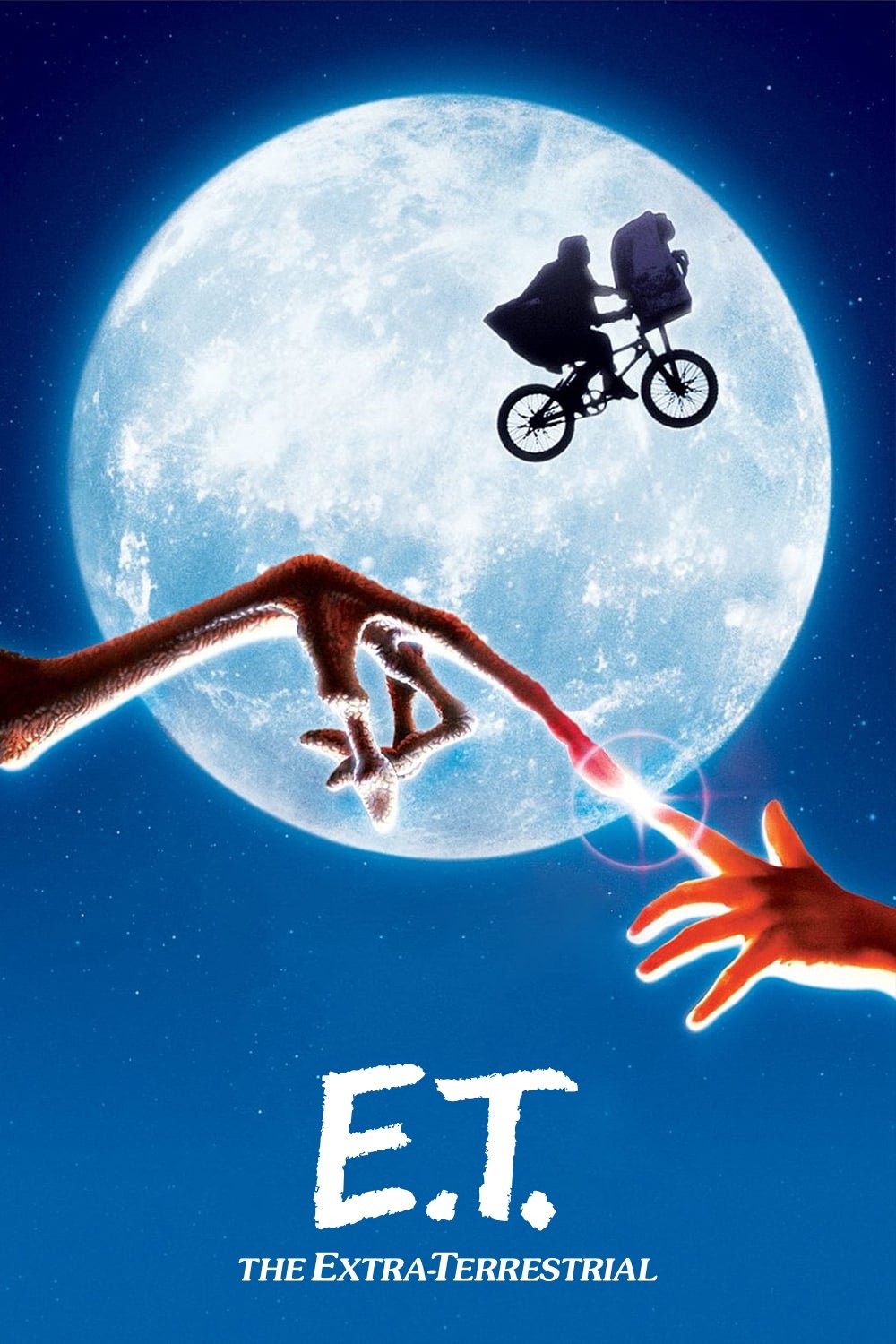
The Historical Era of the Film
When I sit down to think about what makes the historical context of E.T. the Extra-Terrestrial (1982) so compelling, I can’t help but remember the distinct flavor of the early 1980s in America. The country was in the midst of significant transition—politically, economically, and socially. Ronald Reagan had been president for just over a year, and the United States was shaking off the malaise of the previous decade. There was a strong sense of national uncertainty, paired with a raw drive for renewal and hope, which defined much of the era’s mood.
The economic situation was particularly precarious. Stagflation—the combination of stagnant economic growth and high inflation—had plagued the late 1970s. By 1982, the country was formally in a recession, with unemployment rates hitting levels not seen in decades. While the economy would soon rebound, I find it telling that families were budget-conscious, and there was an undercurrent of anxiety about the future. These conditions fostered a longing for innocence and stability that permeated everyday life.
Socially, the early 1980s marked a shift in family structures and norms. The “traditional” nuclear family was being re-examined, and I remember well how the divorce rate was on everyone’s mind. It was the highest it had ever been, and children grappling with separation and redefined family dynamics seemed to appear everywhere. In my experience, this kind of background noise shaped not just conversations in households but also the sorts of stories that resonated most with audiences.
Another factor I’m always drawn to is the influence of the Cold War. The superpower rivalry between the United States and the Soviet Union was at a fever pitch, fueling paranoia, patriotism, and a sense of vulnerability. The rapid technological advances of the era—personal computing, video games, emerging digital technology—created both excitement and anxiety about the direction civilization was taking.
- Recession and high unemployment rates influenced everyday life
- High divorce rates led to evolving family structures
- Cold War anxieties shaped perceptions of outsiders and authority
- Rapid technological and cultural changes transformed childhood experiences
Social and Cultural Climate
From my perspective, the early 1980s were marked by a strange combination of optimism and deep-seated unease. Popular culture was grappling with the fallout from movements of the 1960s and 70s—the drive for civil rights, gender equality, and the counterculture’s challenge to authority. I recall a widespread yearning for connection and innocence in this environment, with many people looking back longingly to what they imagined were simpler times.
Childhood was being redefined in the public imagination, and media began to center children not merely as passive figures, but as protagonists capable of real agency. This reflected a larger societal focus on the importance of emotional health and the inner lives of children—a major change from previous generations. I find it significant that the escapism offered by fantasy and science fiction became immensely popular, as audiences sought some relief from the pressures and uncertainty surrounding them.
There was also a pronounced fascination with the concept of the “outsider”—whether alien, immigrant, or simply different. With the ongoing Cold War, a sharp “us versus them” mentality permeated much of daily discourse. Yet, I noticed people seeking stories that challenged that binary, stories which suggested that perhaps the “other” could be a friend, or even a savior, rather than a threat. This complex relationship with the unknown seems fundamental to the times.
It’s impossible to ignore the role of mass media during this period. Cable television was on the rise, and the era saw the beginnings of the home video boom. New forms of entertainment—such as video games and blockbuster movies—entered living rooms and deeply influenced how families shared time together. The influence of the 1970s blockbuster model, established by films like Jaws and Star Wars, shaped what studios wanted to make and what audiences expected, leading to a cultural landscape where the spectacular and the emotional mingled freely.
How the Era Influenced the Film
The historical circumstances of the early 1980s left unmistakable imprints on E.T. the Extra-Terrestrial, as I see it. The film’s story of a young boy and his alien friend living in suburban California captures the yearning for connection that I associate with this period. Family dynamics, especially the theme of divorce, are woven into the film’s core—reflecting what I remember as a widespread and often painful social reality of the time. The emphasis on childhood wonder and innocence seems almost like a direct response to uncertainty and loss of faith in social institutions.
I’m struck by how the film’s portrayal of government officials—shrouded in anonymity, wielding power yet lacking understanding—echoes the Cold War anxiety and mistrust toward authority that hung over American life. Watching the film, I’m reminded of how political suspicion and fear of the unknown could be subtly incorporated into pop culture, often through the lens of children or the “family unit.” Yet, the story’s optimism and its faith in empathy and communication mark what I see as a crucial attempt to move beyond paranoia and isolation.
The look and feel of E.T. are rich with references to 1980s suburbia, a landscape that was, in my memory, rapidly expanding and idealized as a site of safety—a counterpoint to perceived urban decay. The bicycle culture, the toy-filled bedrooms, and the ever-present sense of possibility speak volumes about the social aspirations and uncertainties of the decade. Spielberg’s choice to ground the film in such a recognizable American setting makes it both a historical snapshot and a wish for the restoration of intimate, trusting communities amid the currents of change.
From a production standpoint, the film exemplifies the advances in practical effects and animatronics, which had started to define the era’s fantasies. The use of a puppet and mechanical effects instead of traditional costuming gives the alien an unprecedented sense of realism, and reflects the increasing importance—and public fascination—with emerging technology. I often think about how this technical innovation paralleled the social push toward embracing the future, even as people were uncertain about what it held.
Audience and Critical Response at the Time
Reflecting on what I’ve read and observed, the reaction to E.T. at the time of its release was nothing short of electric. Audiences were profoundly moved, and the film seemed to capture the imagination of people across generational lines. I recall stories of sold-out theaters, long lines, and people returning to see the film multiple times. For families in particular, the movie stood out as a rare occasion in which both adults and children could experience deep emotional resonance together—a testament, I think, to its rootedness in the shared anxieties and longings of the day.
Critics likewise responded with overwhelming praise, singling out the film’s sense of wonder and its uncommonly heartfelt treatment of childhood. Reviewers praised the emotional authenticity of the performances, the groundbreaking visual effects, and what many described as Spielberg’s unique ability to channel the innocence and confusion of youth. In the context of the blockbuster era—dominated by spectacle and scale—I see E.T. as having offered something more intimate, something that challenged the idea of the blockbuster as purely spectacle-driven.
There was, of course, some skepticism from sectors more wary of popular sentimentality. A few critics leveled charges of excessive sweetness or emotional manipulation, yet even they often admitted that the film’s technical artistry and cultural relevance were undeniable. The fact that E.T. quickly became the highest-grossing film of all time (until Spielberg’s own Jurassic Park surpassed it a decade later) tells me how deeply it resonated with its era’s collective imagination.
From conversations I’ve had over the years, it’s clear to me that the film’s ability to tap into both public anxieties and private hopes helped cultivate a remarkably broad and enduring appeal. It was, in many ways, a cultural phenomenon—a mirror to its times and a point of connection for countless audiences.
Why Historical Context Matters Today
Reflecting on why this historical context still matters, I find that understanding the backdrop of the early 1980s isn’t just an academic exercise—it fundamentally changes how I appreciate E.T. as a work of art. It’s easy to see the film as a simple, heartwarming story about childhood and friendship, but looking closer, I realize it’s deeply entwined with the era’s anxieties, hopes, and everyday realities. Knowing the economic challenges, the evolving family structures, the shadow of the Cold War, and the explosion of new technologies allows me to recognize the ways E.T. spoke directly to its original audience’s experiences and dreams.
For me, revisiting the film with this context in mind highlights its subtle commentary on alienation, trust, and the search for belonging. These themes didn’t arise in a vacuum: they were shaped by the pressures and possibilities of a society wrestling with rapid transformation. Understanding the importance of suburban life in 1982, the shifting roles of authority, and the era’s focus on childhood innocence all help explain why the film struck such a powerful chord—and why it has remained relevant for later generations.
I also see the historical context as a way to decode the emotional power of the film’s imagery and storytelling choices. The anxieties about the future, the longing for reconnection, and even the optimism that peeks through the uncertainty are not just relics of history, but living questions that continue to resonate in times of change. By appreciating how E.T. channeled the concerns and hopes of its era, I find my own understanding of the film—and the decades that followed—gaining new depth and richness.
After understanding the factual background, you may want to see how this story was received as a film.
🎬 Check out today's best-selling movies on Amazon!
View Deals on Amazon