
The Historical Landscape
Every time I revisit Downfall, it takes me back not just to the waning days of the Second World War, but also to the early 2000s—an era colored by anxieties about truth, memory, and the ethics of storytelling. I remember sitting in a dim art-house cinema during the film’s initial release in 2004, surrounded by an audience hushed not only by the gravity of the story but, as I sensed, by a certain trepidation: we were witnessing something rarely attempted on such a scale in mainstream European cinema. In this moment, Europe was grappling with its past in ways that felt freshly urgent. The Berlin Wall had been down for over a decade. Germany had reunified, yet the psychological scars were undeniably still there.
When I think about the global context of 2004, I recall how the world was both shrinking and fraying. The internet was steadily becoming everyone’s archive and confessor, and the idea of “history” was being democratized in previously unthinkable ways. In the wake of the September 11 attacks and the embroilment of the West in Middle Eastern conflicts, questions of good and evil, of fanaticism and responsibility, buzzed in intellectual circles and tabloid headlines alike. People were growing wary of simplistic moral binaries. I felt that the ability to dissect rather than mythologize the past had become not just permissible, but necessary.
Germany itself, I sensed, stood at a crossroads when Downfall premiered. This was the generation of grandchildren, not children, of the Reich—those distant enough that their reflection on the war came tinged more with critical questioning than personal shame. Museums and memorials were springing up; debates about collective guilt were being revisited. I could feel, even as a cinema historian, that the mood was shifting toward a more intimate engagement with national trauma. Downfall, with its focus on the faces behind closed doors in Hitler’s bunker, seemed almost fated for such a historical moment.
Cultural and Political Undercurrents
When I first encountered Downfall, what struck me was the palpable tension between the desire for historical authenticity and the fear of misrepresentation. In Germany, the depiction of Hitler had been, for generations, an almost sacred taboo—a living ghost keeping the cinema screen at arm’s length. There was a caution, even anxiety, about humanizing such a figure, lest it stray into the realm of apology or myth-making. Yet by the early 2000s, I noticed newer voices—both scholarly and artistic—who wanted to challenge the banality of distance. They argued that the true danger lay in the monstrous, faceless Hitler; that humanizing his evil, rather than ennobling it, made it all the more horrifying and less repeatable.
As a narrative writer drawn to stories at the intersection of memory and myth, I had spent years observing how postwar cultures struggled to depict perpetrators as more than shadows. The political climate in the early 2000s seemed charged with interrogations—people were looking back at state power, the seductions of leadership, and the complicities of everyday people. Debates about the “banality of evil” which Hannah Arendt had launched decades prior simmered afresh, often with a bitterness that had been absent during earlier periods of reticence. I saw Downfall as an outgrowth of this dialogue, a cinematic rendering of academic debates taking place in universities and cultural forums across Europe.
The cultural mood, at least as I felt it through the press and conversations with German colleagues, was defined by the question: Can a nation portray its deepest wound with unflinching honesty? Downfall’s release was presaged by intense discussions, some outright hostile, about the ethics of screen realism and the dangers of “normalizing” or “domesticating” evil. I remember contemporary editorials expressing concern about the risk of generating empathy for figures better left to the annals of horror. Yet this, paradoxically, was also the moment when documentary and dramatized history were merging in popular media—anxieties over truth, fake news, and collective amnesia simmered just below public consciousness. That Downfall would court both controversy and praise felt inevitable to me: it reflected the Europe of its day, both yearning for closure and terrified of misremembering.
The Film as a Reflection of Its Time
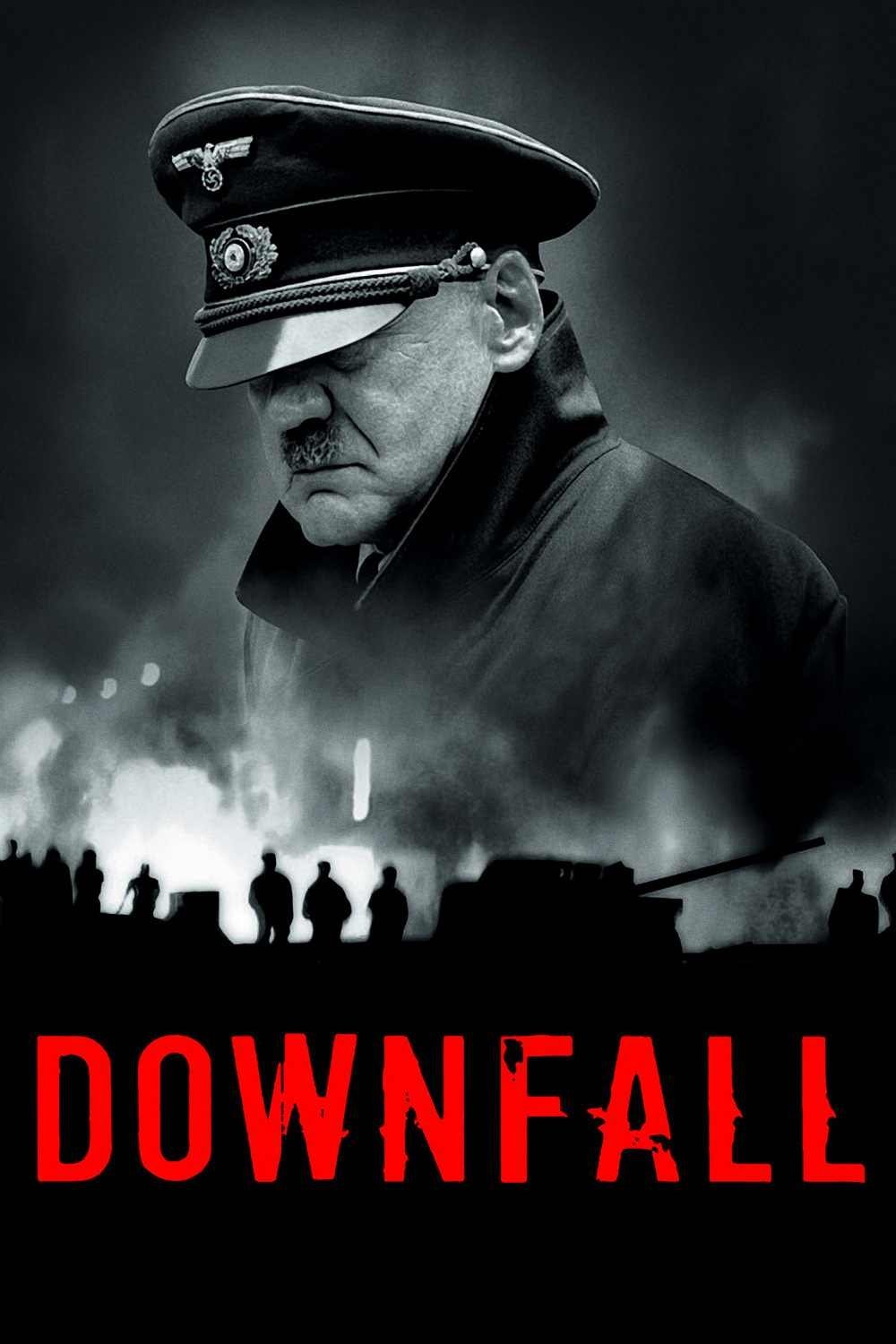
Having watched Downfall in its year of release, I found myself thinking repeatedly about how cinematic form and historical moment intersect in the film’s granular attention to detail. The camera’s unflinching proximity to its subjects, especially Bruno Ganz’s portrayal of Hitler, mirrored the appetite I sensed in the early 2000s for “radical transparency.” In so many spheres—politics, journalism, art—the era demanded revelations, exposure, stripping away of myth. Downfall’s bunker is claustrophobic not only because of the setting, but because of this relentless pursuit of the real, the humane, and the horrifying in close-up. I experienced the film as a product of a moment willing to look at monsters from inches away.
I also recall how the film’s structure, which eschews the broad canvas of battles and speeches for the psychological theater of collapse, felt like a direct response to the questions of individual responsibility swirling in the world outside the cinema. My own conversations with colleagues often turned to issues of culpability and resignation—not just among the “Hitlers” of the world, but the secretaries, generals, and doctors who orbit them. Downfall’s ensemble cast, with their moments of petty quarrel, resignation, and rationalization, seemed designed to force the audience—myself included—to confront the ordinariness of evil. The film’s refusal to grant the audience moral comfort aligned, I thought, with a broader societal hardening toward nuance, a reaction to the post-9/11 landscape where the search for “root causes” clashed with the temptation to caricature villains.
To me, Downfall’s almost documentary-like realism reflected how the boundary between fiction and nonfiction was dissolving in popular culture. I had just seen the rise of reality television and a new wave of memoirs grappling with historical trauma. There was a sense that old forms of story—tidy narratives with clear heroes and villains—could not do justice to the truths people were now seeking. The film’s matter-of-fact brutality, the banality of the bunker’s daily routine, seemed to channel the spirit of an age skeptical of easy answers and hungry for specificity, even at the cost of audience discomfort.
One of the most haunting aspects for me was the inclusion of Traudl Junge, Hitler’s secretary, whose presence framed the story as one of personal memory amid historical catastrophe. I could see how her perspective mapped onto a generation learning to deal with inheritances of guilt—the sense of waking up too late to the enormity of what one has witnessed. It was as if the filmmakers were channeling the voices of those coming to terms with histories not entirely their own, and yet inescapably inherited. I felt the film’s quiet moral questioning—sometimes delivered in a single glance, a wavering voice—embodied the uncertainties of the era more powerfully than any editorial could.
Changing Perceptions Over Time
At the time of its release, Downfall was hardly met by consensus, and watching the tide of commentaries change over the years has been as fascinating to me as the film itself. I remember the heated debates in newspapers, the shocked reactions at film festivals, and the anxieties among educators about using Downfall in classrooms. The feeling I had in 2004 was of a society unsure whether it could trust itself with unfettered honesty—it was a nervous permission, a fragile experiment in confronting humanity’s capacity for destruction without the protective screen of myth or melodrama.
What’s been remarkable, to my mind, is how the moral panic of that moment has softened over the years, replaced by more measured reassessments. I have watched students approach the film less as a provocation and more as a necessary tool for understanding how collective and individual failures intertwine. I remember, in the years following, asking younger audiences what they saw in Downfall. Their responses often reflected a sensitivity to complexity; they seemed less shocked by the human face of atrocity and more interested in how the film challenged the passivity of observers. This generational shift, I believe, reflects deeper currents in Germany and beyond, as societies come to terms with uncomfortable histories by refusing simplistic explanations.
Of course, Downfall’s unexpected afterlife as an internet meme—particularly the now-infamous “Hitler Rant” scene—has both complicated and, in an odd way, universalized its meaning. What began as a deeply serious historical meditation now circulates in online spaces as dark irony, parody, and satirical commentary on everything from sports to technology. At first, I cringed at these uses; it seemed to flatten the film’s intentions, but with time I have come to see this transmutation as part of the film’s endurance. The memeification of Downfall, in some ways, reflects the era’s desperation to process trauma through humor or irony—a tendency I associate with the internet age’s relentless remixing of symbols once considered sacrosanct. It reminds me that no artwork belongs wholly to its makers or its first audience; meanings slip and morph with culture.
In academic circles, I’ve noticed a shift from concerns about “humanizing Hitler” to debates about collective responsibility and the pedagogy of evil. I remember a conference panel, years after the film’s debut, where a younger scholar suggested that the true risk was not in depicting the dictator’s humanity, but in forgetting the systems and ordinary people who enabled him. Downfall, in this reading, is less about the uniqueness of Hitler than it is about the moral vulnerability of everyone in the bunker. That this conversation thrives after so many years is, to me, evidence of the film’s continued relevance: it has become a living part of historical discourse, not a monument set in stone.
Historical Takeaway
Looking back on Downfall and the world it emerged from, I realize what stands out most is the sense of reckoning—with history, with narrative, and with the ethics of remembrance. I see the film as a product of a moment when historical memory was both a battleground and a sanctuary, when societies sought to understand their own capacity for violence without retreating into abstraction or denial. Downfall taught me, viscerally, that the past is always with us—not as prescriptions for heroism or villainy, but as reminders of the frailties and rationalizations that mark every epoch.
I walk away from Downfall with a deeper sense of how my own era—rooted in skepticism, in a hunger for authenticity, in fears of collective amnesia—shaped the stories it dared to tell. To me, this film’s relentless focus on the microcosm of the bunker reveals not only the horror of totalitarian collapse but also the ambiguities of complicity and survival. It is a testament to the power of cinema to reflect the uncertainties of its makers and its audience, and to challenge each new generation to ask whose stories we are willing to face in the cold light of day.
Ultimately, sitting with Downfall leaves me with a humility about memory and narrative: the knowledge that each era finds its own language for truth, and that even the darkest stories demand to be seen not as cautionary tales locked in the past, but as living questions for the present. In this, Downfall’s era revealed itself to me—not just in what it remembered, but in how it chose to remember, and in how bravely it risked looking the devil in the eye, if only to say: “Never again, and not in silence.”
To see how these real-world elements shaped the film’s impact, you may also explore its reception and legacy.
🎬 Check out today's best-selling movies on Amazon!
View Deals on Amazon