
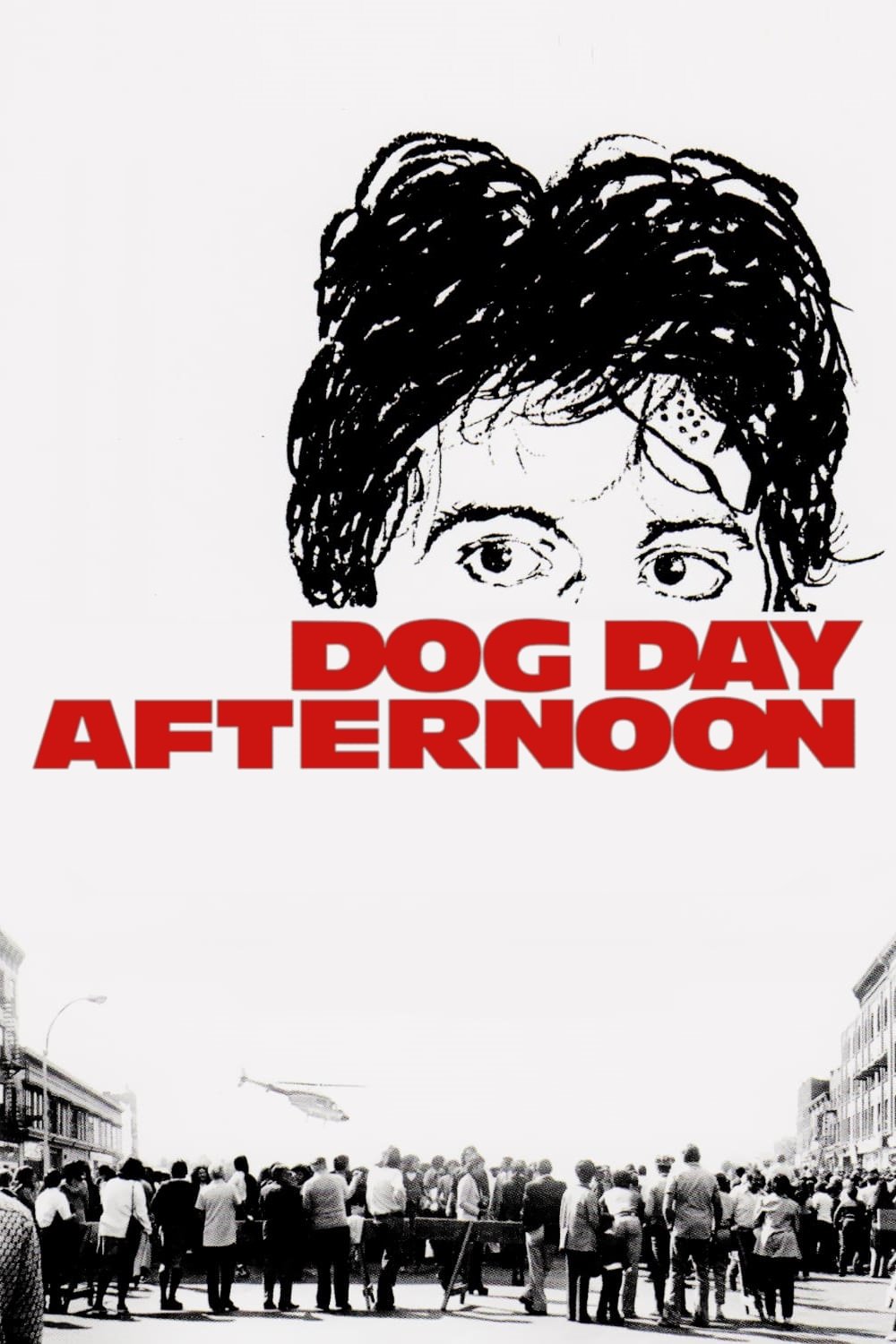
The Historical Landscape
Stepping back into the grimy mid-1970s through the lens of “Dog Day Afternoon” never fails to feel like walking into a sticky summer afternoon in old New York, with sweat dripping down my back and a restless, twitchy energy thrumming through the city streets. What I experience in watching this film isn’t just a crime drama playing out—it’s as if I’m peering through a window fogged with the anxieties and disillusionment that so defined post-Watergate America. The film, released in 1975, lives alongside relentless inflation, nationwide oil shocks, a general sense of political betrayal, and the complex aftertaste of the Vietnam War’s bitter conclusion.
To me, New York looked practically battered during this era—newspaper headlines screamed of fiscal crisis as the city teetered near bankruptcy, and sirens didn’t so much puncture the quiet as become white noise themselves. The stacks of garbage in the unrelenting heat, the growing crime rates, and a population losing faith in once-revered institutions were more than just aesthetic backdrops. The growing sense of social and economic unraveling is something that pulses through the veins of “Dog Day Afternoon,” gifting it an authenticity and urgency that I feel every time the first frame flickers.
This was a moment when the American Dream, with its glossy surface of hope, was showing deep cracks. I remember how, by 1975, the optimism of the previous decades felt like a relic. Cities like New York struggled with blight, labor unrest, and a tone of deep distrust. Hollywood began reflecting this darker, more ambivalent national mood, trading out the grandeur and certainty of prior years for narratives seeped in confusion and unrest. Movies like “Taxi Driver” or “Serpico” punctuated my understanding of the period: protagonists weren’t superheroes or devoutly moral men—they were wounded, conflicted, sometimes desperate; often, as I watch “Dog Day Afternoon,” I see that same sense of moral ambiguity and sheer desperation painted on Pacino’s Sonny as he sweats through his fateful day.
It was also, I’d argue, a time of unique creative ferment. Amid budget cuts and eroding trust in government, artists—cinematic and otherwise—seemed to find a peculiar freedom in dismantling American mythologies and interrogating everyday survival. The urban malaise, the disintegration of the family unit, the rise of identity politics—all these threads are woven directly into the atmosphere of “Dog Day Afternoon.” When I revisit the film, I don’t just see a bank robbery gone wrong; I glimpse the malaise of a city—and a country—in existential freefall.
Cultural and Political Undercurrents
What has always struck me about “Dog Day Afternoon” is how it bubbles with the anxieties of its cultural moment. The mid-1970s, in my mind, were awash with a complicated interplay of forces: the gay rights movement was finding its legs, but not without fierce opposition; gender roles were being contested with growing urgency; and the hard shadow of Watergate still fell across America’s idea of itself. Watching the film now, I’m acutely aware of how these undercurrents shape Sonny’s story—it’s not just the drama of an attempted heist, but a barometer for a nation in flux.
Seeing Sonny take a stand in front of chanting crowds, I sense echoes of the burgeoning activism of the era—an outsider, thrust by circumstance into the chaos of mainstream attention, forced to negotiate personal and political dilemmas in real-time. The film’s real-life inspiration, a bank robbery carried out in part to fund a gender-affirming operation, seemed almost unimaginable for mass-market cinema just a few years earlier. As I reflect, it’s clear that “Dog Day Afternoon” wasn’t just exploiting a sensational story—it was channeling the era’s most urgent questions about sexuality, personal freedom, and the right to live openly in a still-hostile world.
At the same time, I find the portrayal of authority—whether police, the media, or the government—to be tinged with suspicion and frustration. This was not a film where law and order figures as an anchor of stability; rather, the endless negotiations, the lack of true understanding, the spectacle created by cameras all suggest a system broken down by its own self-importance. I often wonder if audiences then—steeped in headlines about police corruption and leaks from the Capitol—saw themselves in the anxious, sweating faces of the crowd outside the bank, more fascinated by Sonny’s performance than invested in justice.
Beyond the politics, though, there’s something deeply human and contradictory about the film that feels very much of its moment. I am drawn in by the way “Dog Day Afternoon” refuses to indulge in either easy heroes or simple villains. The characters are complicated, motivated by desperate love, self-loathing, fleeting hope, and moments of sheer panic. There’s room for humor, for tragedy, and above all, for empathy. That radical empathy, in my opinion, mirrors a culture still reckoning with the costs of wars—literal and psychological—and searching for a sense of meaning on the other side of upheaval.
To me, the film encapsulates the tense tug-of-war between tradition and change. On the one hand, conservative panic about social breakdown loomed large in the background (the so-called “urban crisis”), while, on the other, new forms of solidarity were emerging. The film’s crowd scenes, the media circus, the flashes of joy or rage, seem to crystallize a moment in which America was asking itself—sometimes shouting to itself—what it truly wanted to become.
The Film as a Reflection of Its Time
Every time I rewatch “Dog Day Afternoon,” I’m struck all over again by how it refuses to let the viewer settle comfortably into binary categories. What I see is a cinematic response to 1970s disillusionment—one that captures uncertainty without surrendering to nihilism. The film’s approach to storytelling, with its loose, almost documentary style, immediately places me in a world where control is fleeting and clarity is hard-won.
I find it invaluable that the film, unlike so many from earlier decades, seems to fling open its windows and let the chaos and contradictions of the outside world rush in. The staging feels unpredictable, as if events are unfolding in real time, which perfectly matches the unpredictability of the actual era. When I watch Sonny attempt to negotiate, to plead, to perform for the television cameras, I see a microcosm of America’s existential negotiation—with itself, as much as with its institutions.
The open acknowledgment of sexuality, especially through Sonny’s motives, feels incredibly risky for the 1970s. It’s not lost on me how unusual it was for a major studio to embark on a production that foregrounded a queer romance, not merely as salacious detail, but as a complex, sympathetic motivation for criminality. I’m reminded of the visible but often marginalized presence of gay rights activism at the time; here, in cinema, those private battles surge into public view. For me, that’s one of the most potent reflections of the era—a time when identity was beginning to assert itself as a legitimate matter for mainstream storytelling, even if the rest of the country lagged behind.
I’m also drawn to the depiction of media in the film, which swaggers through the narrative like another opportunistic character. The relentless gaze of reporters, the way events become spectacle before the actual facts emerge, all resonate strongly with an audience growing ever more aware of news as performance. In my own reading, this acute self-consciousness—of being watched, mediated, even manipulated—mirrors 1970s anxieties about who controls the narrative, and how truth itself might be shaped by the lens through which it’s seen.
The soundtrack, the gestures, even the sweaty close-ups emanate a kind of rawness that marks a departure from polished, traditional Hollywood fare. Everything feels exposed—emotionally, politically, physically. This exposes not only the vulnerability of the individual, but of a society whose old certainties, whether about the family, masculinity, or authority, are unraveling before our eyes. Sitting with “Dog Day Afternoon,” I often feel I’m experiencing a moment of reckoning—a moment when the old stories are being challenged, but the new ones have yet to find their shape.
Changing Perceptions Over Time
I’ve noticed that how people talk about “Dog Day Afternoon” has changed just as profoundly as the nation itself over the past decades. When I hear from older audiences who watched it during its original run, they recall the film as gritty, disturbing, and startlingly fresh—a film whose antiheroic perspectives embodied a deep cynicism toward institutional power and a sympathy for those living on society’s margins. For many in the queer community, I imagine it offered a rare glimpse of their lives on the big screen, even if those depictions came with a heavy dose of pathos and tragedy.
By the time I encountered the film in later decades, newer waves of commentary were examining it through the double lens of representation and social critique. The significance of Sonny’s sexuality, and the film’s reluctant, fraught compassion for it, became a focal point for discussions about how Hollywood’s depiction of queer life has shifted. I hear younger viewers sometimes critique its melodrama or dated dialogue, while others celebrate its authenticity and honesty. In the era of social media discourse, I find that debates now swirl not just around realism but around questions of agency: was the film exploiting tragedy, or was it handing the microphone to voices seldom heard?
As I listen to conversations about the film today, I’m struck by how much context influences interpretation. For some, the film is an uncompromising critique of policing, reflecting a perpetual distrust of crackdown tactics and public relations maneuvers that still echoes in today’s headlines. For others, it’s a time capsule, capturing a moment on the cusp of change—before queer rights entered the mainstream, before mass media became the air we all breathe.
What’s surprising to me is how the film’s relevance seems to ebb and flow with each new crisis or shift in cultural priorities. When fears about public institutions spike, or when debates about visibility and identity flare up once again, “Dog Day Afternoon” feels newly urgent. And yet, as sensibilities change, the narrative’s imperfections—its handling of trauma, its melodramatic edges—spark new questions about who gets to tell these stories and how.
Personally, I think the film’s enduring power comes from its refusal to tie up its dilemmas with a neat bow. As history’s tides have pulled public opinion in every direction, I find that “Dog Day Afternoon” asks me—as it seems to ask everyone—whether there is still hope for redemption, understanding, or liberation in a world too messy to predict. Each new era brings its own answers and its own questions, refracted through the sweaty chaos of a story that never quite resolves.
Historical Takeaway
What “Dog Day Afternoon” teaches me as a historian of cinema and as a witness to changing cultural atmospheres is profound. It’s a film that insists the personal is inseparable from the political—Sonny’s desperate act is not just an anomaly, but a symptom of national malaise. Watching the characters navigate bureaucracy, police pressure, prejudice, and the leering eyes of the public, I feel not so much transported to a different era as confronted with the recurring challenges of America in crisis.
If I distill one lesson from the film, it’s that the search for dignity and survival in desperate times cuts across every boundary: class, sexuality, family, law. The movie’s insistence on showing characters at their most vulnerable and complex has, for me, made it an enduring lens through which to understand the psychic toll of the mid-1970s. It shows me that America’s crises are never just “out there”—economic, political, cultural—but lived and suffered one person at a time, even as the world watches.
Looking back, I appreciate how the film challenged prevailing taboos and invited conversation about sexuality and social justice, while exposing the performative aspects of both policing and media. It illuminates, with painful intimacy, the contradictions of a society approaching the end of one story and groping for the start of another.
Ultimately, “Dog Day Afternoon” leaves me convinced that history is made up of ordinary people, forced by circumstances far beyond their control, to take extraordinary—and sometimes tragic—actions. The era that produced the film may have passed, but the film’s questions echo on: who speaks, who is heard, and who bears the cost of our collective struggle for change?
To see how these real-world elements shaped the film’s impact, you may also explore its reception and legacy.
🎬 Check out today's best-selling movies on Amazon!
View Deals on Amazon