
The Historical Landscape
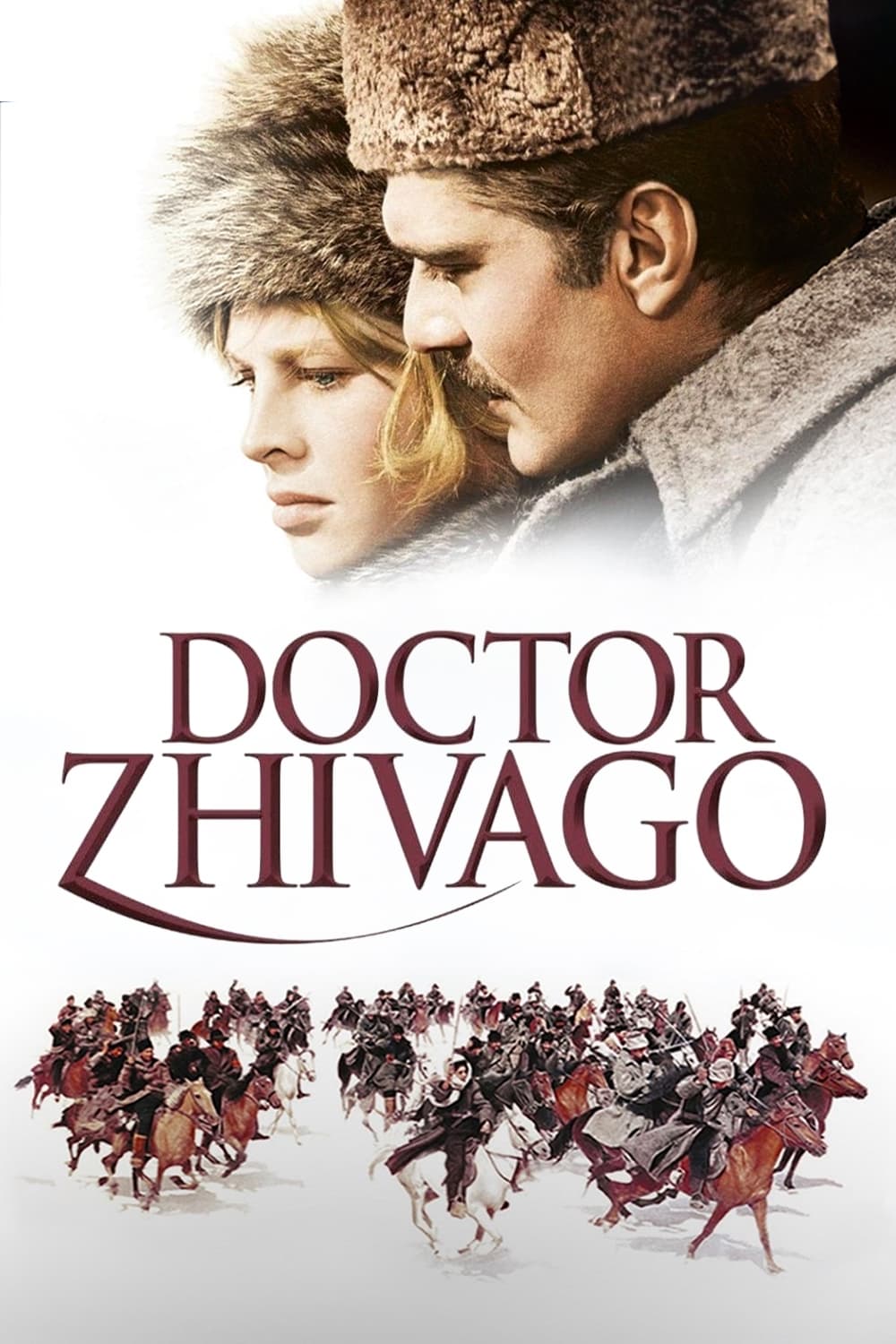
When I first encountered Doctor Zhivago, I was struck not simply by its cinematic scope but by the way it seemed haunted by the ghosts of its own era. The film was released in 1965—a year seething with contradictions, transformations, and anxieties that colored every frame in ways that felt palpable even decades later. This was not just a cinematic adaptation of Boris Pasternak’s acclaimed novel; it was, to my eyes, a grand, conflicted mural painted on the wall of a rapidly changing world. The mid-1960s existed within the shadows of the Second World War, yet were boldly illuminated by the space race and the sobering specter of the Cold War—when the ideological battle lines between East and West were as taut as violin strings.
The sheer ambition of the film echoed a period where the old Hollywood studio system teetered on collapse, making way for new voices and visions. The Vietnam War dominated headlines and shaped the fears and ideals of an entire generation. In America and across Western Europe, the 1960s were defined by anti-establishment protest, civil rights battles, and a youth culture eager to rip down tradition and start anew. On the other side of the Iron Curtain, the Soviet Union remained cryptic but omnipresent in the Western imagination, its silence as unnerving as its proclamations. In this climate, a Western-produced epic about the Russian Revolution—told through sweeping romance and personal tragedy—struck me as both a challenge and an overture; the movie seemed intent on crossing ideological divides not merely for drama, but for cultural dialogue, however indirect.
What always fascinates me is the contrast between the lush romanticism that suffuses director David Lean’s vision and the gritty realities of contemporary life in the 1960s. The Western world was collectively re-examining its foundations: questions about authority, love, and the individual’s place within society were animating art and politics alike. In this way, Doctor Zhivago came into being as more than a historical epic; it was part of a broader existential search, a beautifully filmed echo of a tumultuous era that never quite found its peace.
Cultural and Political Undercurrents
I can’t separate my feelings about Doctor Zhivago from the political current running just beneath its surface. To me, the decision to adapt Pasternak’s novel in the mid-1960s was highly provocative. This was a period when Cold War rhetoric was pervasive, even seeping into pop culture. The mere act of bringing a banned Soviet work to cinemas in the West had a subversive weight. I interpret this, not as just a safe retelling of someone else’s revolution, but as a quiet act of cultural defiance. Pasternak’s story—already controversial for its refusal to glorify the Bolshevik Revolution—became a cinematic Rorschach test for Western anxieties about communism, state power, and the loss of individuality under totalitarian rule.
Watching Lean’s film, I’m always aware of how carefully its human story is woven into the larger tapestry of geopolitics. The love between Yuri and Lara feels to me like an embodiment of desperate resistance to political conformity—a subtle suggestion that personal desire, emotional truth, and intimate connection are becoming endangered species under the weight of ideology. In retrospect, I’m struck by how the film’s sumptuous production values—a stark contrast to the bleakness of the Soviet reality it depicts—doubled as commentary on the Western world’s own affluence and creative license. Even the snow-glazed landscapes and candlelit interiors hint at nostalgia for a kind of romantic heroism that the modern age, in its efficiency and suspicion of sentiment, risks extinguishing.
And then there’s the question of censorship, which, for me, looms large. The Soviet government denounced both Pasternak’s novel and by extension the film, essentially framing Lean’s adaptation as an act of Western propaganda. Knowing this, the entire enterprise takes on the air of political theater: a lush costume drama doubling as a safe, if sumptuous, encampment for anti-communist sentiment within the guise of a tragic romance. It’s impossible for me to watch the film without considering the way it navigates this perilous balance, honoring the spirit of artistic freedom that felt both endangered and intoxicatingly new in the sixties.
What endures in my memory is the way Doctor Zhivago became a vessel for Western audiences to project their own ideals and apprehensions onto a distant revolution. The film, unintentionally or not, reinforced the Western trope of the individual hero stifled by collective dogma—a convenient mythos during a decade obsessed with personal liberation, from the Beatles to the student movements surging across campuses in Paris and Berkeley.
The Film as a Reflection of Its Time
Every time I revisit Doctor Zhivago, I realize that its overwhelming beauty and epic length are not incidental—they are products of their time, mirrors of 1965’s own ambivalence. For me, the film’s grandiosity is a form of yearning: yearning for meaning, for artistic gravitas, for proof that cinematic art could stand tall amidst seismic changes in society. It was a time when old certainties—empire, hierarchy, tradition, even narrative—were collapsing, not just in Russia’s distant past but in the lived experience of its viewers.
I see Lean’s treatment of time and memory in the film as deeply resonant with the mid-sixties mindset. The narrative, heavily fragmented and obsessive about flashbacks, mirrors a collective Western nostalgia for a romanticized pre-revolutionary past—a longing that, in many ways, parallels the West’s own anxiety about losing innocence and grandeur in the march toward modernity. I find it telling that audiences then flocked to see a film that, for all its focus on love, is ultimately haunted by a sense of irretrievable loss.
It’s equally striking to me that the sweeping images—snow fields, crowded trains, frozen landscapes—seem intent on overwhelming the individual protagonists. This visual motif resonates with my sense of the times, when many people felt dwarfed by social movements, government behemoths, and technological advances. The fragility of Zhivago’s poetry, the tentative bond between him and Lara, these shine most brightly not just as personal dramas, but as allegories for the precariousness of individuality in an age of mass identity and social turmoil. The film, at heart, becomes a meditation on survival, not just of people, but of personal vision and memory, in a century perpetually upending itself.
The soundtrack by Maurice Jarre feels to me like another historical marker. Its lush romanticism and melancholy waltzes echo the pop culture of the sixties—an age enchanted by big, emotionally charged gestures, whether in music, protest, or personal identity. The film, while set in Russia, pulses with the heartbeat of a contemporary West alternating between idealism and disillusionment, where love itself is often seen as the last act of rebellion.
Every time my mind drifts through its scenes, I believe Doctor Zhivago is as much about the sixties as it is about 1917. The revolution outside is inseparable from the revolution within—a truth that seemed obvious to a generation charting new paths in politics, art, and emotional life.
Changing Perceptions Over Time
Rewatching Doctor Zhivago after half a century of shifting attitudes almost feels like speaking with a different voice than the one I first brought to its viewing. My grandparents’ generation saw it as a grand, defiant epic; their children, as a deeply romantic escape. But nowadays, my experience is tinged with a subtle melancholy; so much of what the film took for granted—about art, heroism, and even filmmaking itself—feels remote from the world I inhabit now.
Over the decades, what truly stands out to me is how the film’s politics have faded into the background for modern audiences. When the Cold War was a living reality, every line about personal freedom or tyrannical systems seemed to bristle with double meaning. Today, those same moments read more like poetic abstraction, inviting viewers—myself included—to focus less on the revolution’s ideology and more on the private agonies of dislocation, memory, and love. I find it fascinating how generational distance can turn a coded political message into a universal story about longing and loss.
There’s also the shift in cinematic taste. In 1965, audiences had the patience for slow, deliberate storytelling, sumptuous visuals, and sweeping scores. Watching it now, I sometimes feel a disconnect from its measured tempo, yet I also find a new appreciation in the artistry, in the authenticity of its spectacle, compared to today’s digital landscapes. The film’s own historical context makes it a time capsule—ironic, considering its intense focus on the forward churn of history and revolution.
I also notice the evolution in our approach to romantic storytelling; recent generations question the gender dynamics, the passivity of certain characters, and the very notion of love as salvation that saturated mid-twentieth-century epics. For me, these are valid critiques, but I also see them as reflections of how cultural change always flows outward, recasting old narratives in an endless dialogue with the present. The film’s emotional sweep, once accepted at face value, now invites skepticism, yet also nostalgia—a complicated yearning for a kind of grand storytelling that, in today’s fragmented media, rarely finds expression.
Strikingly, the collapse of the Soviet Union and the subsequent rewriting of Russian history have transformed the cultural ground on which the story rests. I am reminded, as I watch, that what once served as an imagined exposé of a closed society now feels more like a romantic period piece, its historical urgency dissolved. Nevertheless, the personal struggles at its core—alienation, hope, loss—continue to resonate, testimony to the way a single film can grow older, yet never quite outlive the need for meaning.
Historical Takeaway
If I try to distill what Doctor Zhivago reveals most powerfully about its era, it is a sense of profound uncertainty dressed in luxurious spectacle. My journey through its images and music, its aching silences and crowded trains, always leads me back to the peculiar duality at the heart of the 1960s. Here was a society both exhausted by the great movements of the past and intoxicated with the possibility of redefining its future. The film’s obsessive preoccupation with memory, with the desire to preserve love and poetry amid relentless political change, is to me a perfect echo of the profound anxieties and idealisms of 1965.
I have come to view Doctor Zhivago as more than a love story or political allegory; it is a lens—sometimes distorted, sometimes clear—through which to see the hopes and fears not only of characters but of whole societies on the brink. Its extravagant romanticism, far from escapism, feels more like a defense against the profound vulnerability of the age that produced it. Lean’s adaptation stands as a monument to both the ambitions and doubts of Western culture on the cusp of transformation.
The film endlessly circles the question: What remains of us when the tide of history subsides? My answer, sprung from my immersion in both the film and its era, is that what persists is the stubborn desire to find meaning, to resist obliteration by forces larger than oneself, whether they be historical revolutions or the shifting winds of cultural change. As a historian and a lover of cinema, I see Doctor Zhivago as a reminder that our most personal stories are inevitably shaped—and haunted—by the collective stories of our time. The resonance of the film endures because it is more than a period piece; it is an emotional archive of 1965 itself, with all its contradictions etched into every frame.
To see how these real-world elements shaped the film’s impact, you may also explore its reception and legacy.
🎬 Check out today's best-selling movies on Amazon!
View Deals on Amazon