
The Historical Landscape
Whenever I revisit “Dirty Harry,” I immediately feel myself drawn back into the specific storm of anxiety and contradiction that defined urban America in the early 1970s. To me, the film is saturated with the remnants of the 1960s’ breakdown—a residue that, even today, is as tangible as the San Francisco fog that shadows Harry Callahan’s every move. I don’t just see the city streets in the film; I see a country at a crossroads, battered from within by civil unrest, shifting norms, and a fight for the soul of law and order. There’s almost an audible hum of confusion underneath each frame, a pulse that for me speaks volumes about the tense, even paranoid atmosphere that characterized Nixon-era politics and the palpable distrust brewing in America’s cities.
I often think about how the violence and tension onscreen seemed eerily synced with televised coverage from the time—footage of protests fractured by riot police, headlines blaring about serial killings and hijackings, neighborhoods in transition. My sense is that the film both drank from and deepened the well of public concern about safety, crime, and justice. The late ’60s had turned major cities into flashpoints for social change and counter-revolution. The optimism that briefly flared in earlier years had been dashed by the ongoing Vietnam conflict, the assassinations of Robert Kennedy and Martin Luther King Jr., and the slow, painful unraveling of political faith.
It strikes me that “Dirty Harry,” premiering in 1971, arrived at a watershed moment: the optimism of the postwar boom was being replaced by economic uncertainty and the crumbling of faith in institutions. Crime rates soared—statistics, which I always find stark, showed violent crime more than doubling between 1960 and 1970. For many, the sense of social cohesion had given way to fear and isolation. I see the film as both a product and an amplifier of those tensions, reflecting the collective sense of unease that gripped the country.
Even before the opening credits, I sense that the San Francisco of “Dirty Harry” is less a character than an organism in distress. The city’s cosmopolitan façade—its steep hills and modern glass—is offset by the lurking threat of unseen violence. It echoes the feelings I’ve encountered in firsthand accounts, memoirs, and social commentaries of the era, describing a collective anxiety about whether anyone was truly safe anymore. In the public imagination, the urban landscape had shifted from a promise to a threat, and I believe that’s the essential backdrop to what makes the film so charged and uneasy to this day.
Cultural and Political Undercurrents
What fascinates me most about “Dirty Harry” is the way its story refuses to exist in a vacuum. I can’t separate the gruff determination of Clint Eastwood’s character from the relentless debates of the time over law enforcement, civil rights, and the limits of authority. I often think about how the Supreme Court’s Miranda ruling still rankled many Americans when the film was released. There was a pervasive fear, which I find controversial but revealing, that criminals somehow benefited from evolving social reforms more than ordinary citizens. To me, Harry Callahan personifies this tension—he’s a walking embodiment of frustration with the system’s seeming incapacity to protect its people.
My readings on the period often reiterate how deeply divided Americans became over the issue of policing and justice. The backlash against perceived leniency toward suspects—fueled by changes in interrogation procedures and courtroom protections—shows up, almost word for word, in Harry’s growled laments to his superiors. Watching these scenes, I can’t help but see real-world echoes, such as Ronald Reagan’s gubernatorial crackdown or the Nixon administration’s “law and order” platform. Here, the film rides a razor’s edge between advocating a tough stance and flirting, sometimes dangerously, with the abandonment of due process altogether.
I also sense a broader disillusionment beneath the film’s classic confrontations. For so many Americans of the era, faith had been shaken not only by rising crime, but by the sense that liberal reforms and radical activism had created a society without moorings. “Dirty Harry” distills, for me, that yearning for clarity amid chaos—a desire for boundaries when all borders seemed to be dissolving. The Scorpio Killer, as the narrative’s engine, isn’t just a villain to be stopped; he’s a personification of a world unmoored from traditional certainties.
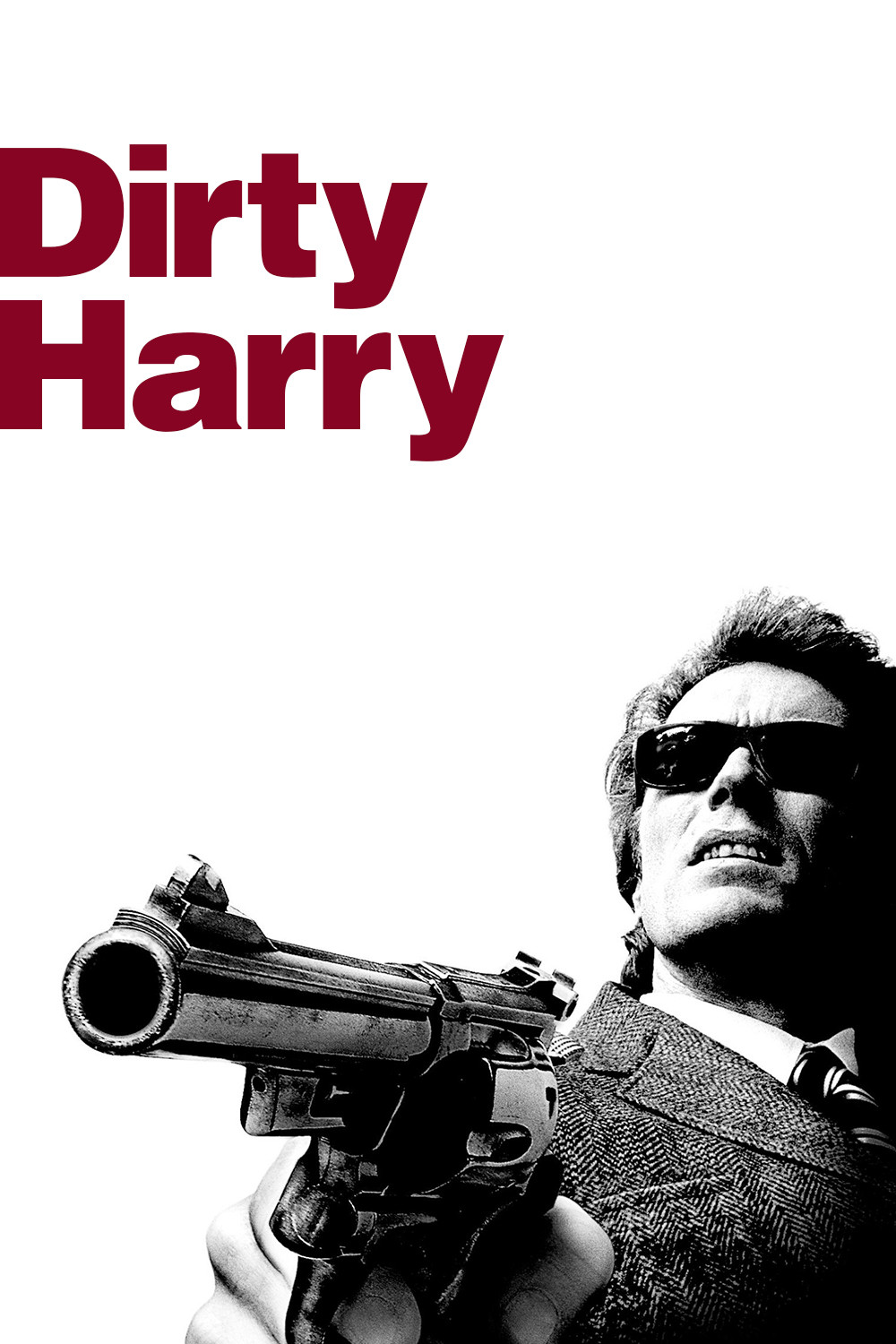
But it’s not only about the political divisions over crime. I read in the film hints of anxiety around masculinity and authority. Callahan’s stoicism, his preference for direct action over deliberation, resonates with a certain strain of American nostalgia for rugged individualism—the idea that solutions to new, overwhelming problems could be found in a return to “old-fashioned” toughness. The film’s iconic .44 Magnum is more than a weapon; to my eye, it becomes a symbol of a desire for unambiguous power in a time thick with ambiguity and compromise.
Sexual and racial anxieties simmer in the film’s background as well. Watching Harry’s endless confrontations with bureaucratic ineptitude, I feel as though I’m peering into a moment where America couldn’t decide if social progress was to be trusted or feared. The city depicted is diverse but uneasy, and moments of overt or covert stereotyping crop up in ways that mirror the social tensions of the time. It speaks, I believe, to the ways in which fear of change can so quickly curdle into retrenchment and reaction.
The Film as a Reflection of Its Time
When I immerse myself in “Dirty Harry,” I’m struck by how the film edits the world around it—not only recording, but making meaning from the raw material of its era. I don’t see it as merely a byproduct of its time; rather, it feels as if the film is in active, tense dialogue with the moment of its creation. The scenes of Callahan’s battles with bureaucracy and his struggles against a killer who seems always one step ahead give voice to the collective feeling that the system was breaking down—a theme that, for me, is as unnervingly relevant today as it was in 1971.
The perpetual frustration coursing through Harry’s character—his impatience with regulation, his willingness to skirt legal norms—reads as a direct response to what many perceived as the paralysis of the justice system. Through my historian’s lens, I consider the period’s repeated images of overburdened courts and police “hamstrung” by liberal reforms. Eastwood, with his squint and quiet rage, essentially holds up a mirror to a society torn between its founding ideals and its immediate fears. Is Harry a corrective, or a warning sign? I find this question pulsating beneath every scene he inhabits.
I find the film’s style almost as revealing as its substance. Its gritty, verité-inspired cinematography and occasionally unsettling violence, to me, mark a clear break from the sanitized crime dramas of previous decades. By refusing to shield audiences from the ugliness onscreen, “Dirty Harry” aligns itself with the emergent New Hollywood, which I see as a wave of filmmakers determined to force viewers to confront the world’s messiness head-on. This, I believe, was not only an aesthetic choice but also a political one—a deliberate statement about the authenticity, and alarm, of the times.
There’s also the matter of heroism, which has always interested me. Unlike the infallible heroes of earlier crime fiction, Harry Callahan is messy and morally compromised. His willingness to break rules, often for an arguably greater purpose, invites us to grapple with the costs of expedience and the dangers of unchecked authority. I can’t help but frame this within broader debates about the very meaning of justice at the time—as the civil rights movement redefined who deserved protection and the anti-war movement questioned who had the right to use force, “Dirty Harry” stages these dilemmas within the tight choreography of action cinema.
I also see the film’s antagonists as more than pulp villains. The Scorpio Killer is cast not simply as a madman, but as the logical endpoint of social disorder—his methods, both random and ritualistic, echo the public’s fear of crime that seemed senseless, unstoppable, pulled from the very headlines of the late ’60s. This blurring of fact and fiction is, for me, the film’s most enduring power: it refuses any tidy reassurances. Instead, it suggests an endless, unresolved contest between those who protect order and those who threaten it—a zero-sum morality that has haunted American discourse ever since.
My personal reading of the film also takes in how it withholds easy answers. Harry’s journey is not triumphant; it is deeply ambivalent. By the final shot, I sense more a loss than a victory, as if the struggle for order carries its own cost, eroding the hero in the process. This, to me, is the ultimate reflection of the era’s pessimism—a sense that even noble causes are inevitably compromised by the context in which they arise.
Changing Perceptions Over Time
What I find most compelling about “Dirty Harry” is the way it refuses to sit still in cultural memory. When I speak with those who first saw the film in theaters, many recall the electric sense of recognition—the validation of deeply held frustrations with the world as it was. Yet, when I reflect on today’s responses, I’m struck by how the film has shifted in the public eye, embroiled now in decades of debate over the ethics and consequences of its central message.
In the 1970s, I sense that many took Harry Callahan as a necessary corrective—a figure who dared to act when others would not. The movie found sympathetic ears among those who felt left behind by rapid social changes or threatened by rising crime rates, who saw bureaucracy and new social protections as sources of vulnerability rather than progress. Yet, as policing itself came under more sustained scrutiny from the 1980s onward, and as conversations about racism and police violence deepened, I noticed a clear change in how audiences and critics grappled with the film’s message. What was once seen as righteous now appeared, to many, as reckless or even dangerous.
I often reflect on how the early wave of critical backlash—accusations of fascism, vigilantism, and reactionary politics—has only intensified over the decades. It’s not just academic critics who ask these questions; contemporary viewers, informed by decades of changing norms and new tragedies, often find themselves disturbed by the film’s apparent endorsement of summary justice. I’ve spoken with younger filmgoers who find the film’s central premise—that effective justice may require breaking the rules—troublingly close to the rationalizations used to excuse real-world abuses of power.
Yet, for all this, I’ve also witnessed a persistent affection for the film’s complexity. My own engagement with “Dirty Harry” has deepened over time precisely because it doesn’t offer clean resolutions. I see Harry Callahan less as an ideal and more as a question mark—a provocation, rather than a prescription. Discussing the film with students of cinema, I’m struck by how often they uncover in it layers of ambiguity that earlier audiences may have overlooked, reading Callahan’s violence not as straightforward heroism, but as a warning about what happens when order is pursued at any cost.
The broader legacy of the film, I think, lies in the way it continues to incite debate. I often find myself returning to newspaper editorials, letter columns, and later think pieces reflecting both pride in Callahan’s tough stance and horror at what his example might unleash. The movie’s influence on subsequent representations of policing in media—both reinforcing and interrogating the “tough cop” archetype—remains part of its controversial afterlife. Whether embraced or repudiated, “Dirty Harry” has become a touchstone, a reference point against which shifting attitudes toward authority, violence, and justice are measured anew.
Historical Takeaway
After all my engagement with “Dirty Harry,” I’ve come to see it as less a film about a single lawman, and more a historical document—one that preserves, in cinematic amber, the anxieties and hopes of a moment when America seemed poised on a knife’s edge. For me, the film teaches us that the desires for safety, order, and certainty are as potent as ever, but always tangled up with questions of power, fairness, and the cost of expedience. Watching the film now, I feel the weight of those contradictions more acutely than ever before.
I don’t believe “Dirty Harry” offers a solution to the challenges of its era, but rather exposes the fault lines with unmistakable clarity. It is a movie born out of fear—a fear shaped by social upheaval, shifting values, and the erosion of trust in government institutions. Yet at the same time, I sense, it’s a film about resilience: the stubborn refusal to accept disorder, even as the means of restoring order become morally ambiguous, even corrosive. In this sense, it compels me—not simply to judge, but to wrestle with the ways societies perform triage on their fears, and with the uncomfortable reality that every quest for safety carries a price.
Reflecting on the film’s ultimate lesson, I’m often reminded that history rarely provides reassurance. Instead, “Dirty Harry” asks us to examine our own trade-offs, to reconsider how our anxieties shape the stories we tell and the heroes we choose. Its enduring impact lies not in offering comfort, but in holding up a mirror to an America that, for all its changes, still grapples with many of the same urgencies that first brought Harry Callahan to life.
To see how these real-world elements shaped the film’s impact, you may also explore its reception and legacy.
🎬 Check out today's best-selling movies on Amazon!
View Deals on Amazon