
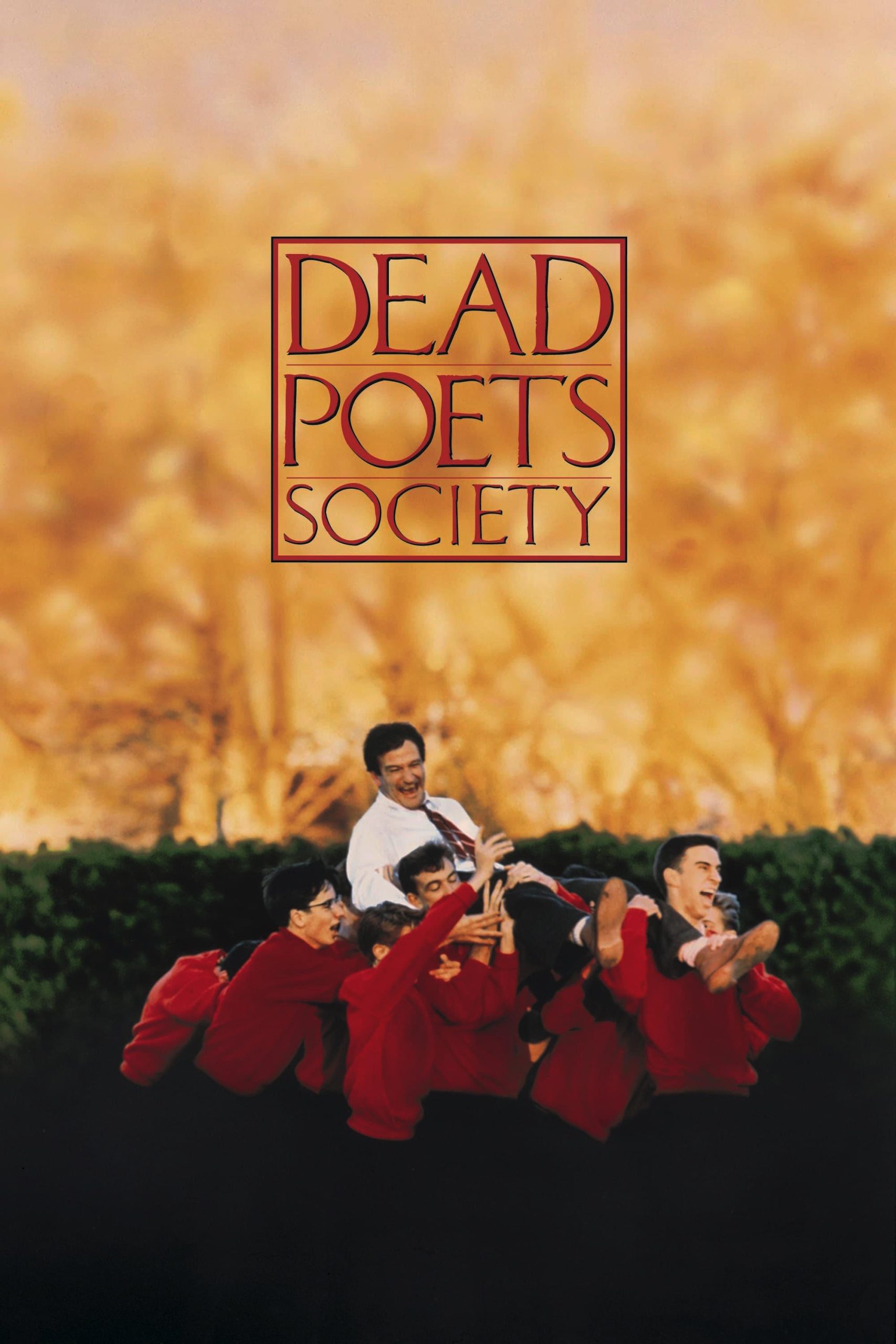
The Historical Landscape
The late 1980s always linger in my memory as a time of contradictions—an era staring down the end of one millennium and yet wrestling with the older values that had defined much of the twentieth century. When I think back to 1989, the release year of Dead Poets Society, I sense America caught in the throes of transformation, yet haunted by tradition. The Cold War curtain was lifting, its shadow stretching thin but still coloring how we saw authority, conformity, and rebellion. I, like so many others, felt both the excitement of impending change and a certain anxiety; it almost seemed as if every cultural product—every song, book, or film—had its finger on the pulse of something about to break free.
In cinema, audiences oscillated between nostalgia and a desire for boundary-pushing. Blockbusters such as Back to the Future Part II reflected an imaginative future, while more contemplative films like Field of Dreams expressed yearning for lost innocence. The economic optimism of the Reagan years was still echoing, but there was an undercurrent of questioning. I always found that stories set in earlier decades, such as Dead Poets Society with its 1959 boarding school setting, were less about history for its own sake and more a lens through which contemporary fears and aspirations could be projected.
This was also the period before technology really swept into every home and classroom. I remember classrooms cluttered with chalk, notebooks, and a rigidity that seems almost quaint today. Education, as I experienced and observed in the late eighties, was generally upholding inherited norms—from gender roles to literary canons—while also facing challenges from parents and students who sensed something vital was missing. Dead Poets Society, arriving as it did, seemed directly tapped into this age-old tug-of-war between tradition and the desire for individuality that so defined the end of the decade.
Cultural and Political Undercurrents
As someone who came of age just before the internet democratized knowledge, I recall how debates around authority and free expression were reaching a fever pitch in both politics and the arts. Dead Poets Society arrived in theaters as the Berlin Wall fell and as Soviet Communism began to dissolve. We were encouraged to believe that old systems—political, social, educational—could, and perhaps should, be questioned. When I watched Robin Williams’ John Keating urging his students to “seize the day,” I recognized a spirit not just of the late fifties but very much of the late eighties: a restless urge to upend whatever seemed arbitrary, stifling, or obsolete.
On the home front, America of 1989 wasn’t a monolith. Culture wars brewed quietly, whether in heated school board meetings or on the op-ed pages. There was talk of the “canon”—what books, what voices, what ideas would take center stage in the classroom. The push for multiculturalism in curricula was gaining steam; I recall teachers hesitating between tradition and experimentation, much as the Welton Academy’s faculty resists and is ultimately threatened by Keating’s methods in the film.
On a more personal level, the eighties were a time when expectations were often defined by institutions: family, school, and faith were to be deferred to. Yet, I felt—and films like Dead Poets Society affirmed—that a quiet, tenacious rebellion was brewing, especially among the young. This was the age of punk lingering into new wave, of expressive self-fashioning through music, art, and, increasingly, through the movies we cherished. Keating’s plea for authenticity mirrors the longing I saw in my classmates’ eyes and my generation’s search for meaning inside and outside of approval.
It wasn’t just the world that was changing; inside classrooms and households, the expectations for young men, young women, and authority figures were under review. To me, much of the film’s subtext is sculpted by this cultural negotiation—a silent yet profound battle being waged by and for members of a new, more self-aware generation.
The Film as a Reflection of Its Time
Whenever I revisit Dead Poets Society, I’m struck less by the antique trappings of its prep-school setting and more by what lies beneath: a contemporary angst, a question of purpose and identity that haunted almost every young person I knew. Unlike glossy nostalgia pieces, the film uses its 1959 backdrop as a mirror—one in which I see the late eighties grappling with the meaning of progress.
Keating, to me, isn’t just a maverick teacher from another era; he represents the collision point between postwar security and the late twentieth century’s hunger for joy, insight, and self-discovery. By 1989, the “sage on the stage” model of education, so familiar to older generations, was being actively contested. Pedagogical theories were changing, but more importantly, so was the belief in what education was for: not just the transmission of knowledge, but the unlocking of selfhood. As I watched the boys tear out pages instructing them how to “measure” poetry, I thought of my own high school classes, where teachers both inspired and limited us with their own fears and hopes for the future.
The film’s emotional heart, for me, is the conflict between youthful daring and the crushing weight of expectation. Parental ambition, institutional pride, even the idea of “success” as defined by others—all these forces feel not only historically specific to 1959 but eerily resonant with the economic and psychological pressures that shaped the 1980s. There’s a sense, viewing the movie now, that its critique of conformity and its plea for authenticity were steeped in a frustration I associated with the tail end of that decade. The rich, private world of the boys’ club—their secret meetings, their affinity for verse and dangerous ideas—echoes the real-world yearning that many of us felt for safe spaces where we could reveal our unvarnished selves.
What’s more, the film’s tragedy—the high price of rebellion in the face of inflexible authority—reflected the real anxieties of the late eighties: that even as the world claimed to be opening up, so many doors would be closed to those who risked too much. It’s easy, I think, to view Keating’s message as sentimental or naïve, but I always see it as tinged with the tough realism of a society sniffing the limits of its newfound freedoms. For every celebration of “carpe diem,” there’s the cautionary tale of what happens when change is mishandled or punished. There’s something almost eerily prescient about that, knowing as I do how the nineties—and later decades—would bring both more freedom and deeper complexities to the promises of self-assertion.
To my eyes, then, Dead Poets Society isn’t just a time capsule; it’s a living document of the uncertainties, hopes, and fears that defined its era. It reveals less about life in 1959, more about the quiet, thrilling, and sometimes painful evolution of values at the end of the 1980s.
Changing Perceptions Over Time
With the passing of years, I’ve watched as interpretations of Dead Poets Society have ebbed and flowed, betraying as much about our own times as about the era of its birth. When I first encountered the film, I was immediately swept up in Keating’s exhortations—a believer in the gospel of creative defiance. For me, and for many in my generation, the movie seemed a clarion call: trust yourself, question authority, and do not let your life be dictated by others’ definitions of worth.
But the longer I live, and the more I talk with younger viewers, the more I sense shifts in how Keating and his students are perceived. Where once I saw a romantic hero, many now glimpse an ambiguous figure. Modern critiques, often voiced by those who have sat in classrooms reimagined by decades of educational reform, question whether Keating’s methods are as liberating as they once appeared. Is it enough to urge “carpe diem,” or does real change require deeper, systemic critique and a care for the vulnerabilities of the young? In conversations and in essays, I’ve read younger critics suggest that the film’s glorification of nonconformity sometimes ignores the emotional landscape of those for whom such defiance is simply not safe or desirable.
I’m always fascinated to note how, as mental health conversations have moved from shadows to sunlight, the tragic storyline at the center of the film is now seen through new and urgent lenses. The anguish of Neil’s struggle—his desperation to find space to breathe within the tight fit of family and institutional expectation—feels to me ever more relevant and ever more heartbreaking with each viewing. Where once individual will seemed triumphant, many now pay closer attention to networks of support, to community, and to the limits of what a single charismatic teacher can do.
At the same time, as I track the resurgence of interest in educational philosophy, I see the film invoked both as a model of inspired teaching and, ironically, as a warning against hero worship and the neglect of institutional responsibility. I find myself revisiting Keating’s classroom—his standing on tables, his half-mocking, half-reverent treatment of the canon—through the filter of a society more aware that change isn’t always about one person upending old rules, but often the collaborative, painful, ongoing project of building new ones.
And yet, the film endures. I am repeatedly struck by how, whatever the generational divide, Dead Poets Society invites all viewers into a conversation about what it means to be alive, to belong, to create, to resist, and to mourn. Every viewing, in every era, seems to awaken different questions, tug different heartstrings. I often wonder if this malleability—a kind of emotional and intellectual flexibility—is precisely what marks the film as an artifact of a transitional time. It can be read as a story of triumph, or as a warning. Each generation, as I see it, wrestles with the balance between self-expression and responsibility, between the need for courage and the need for care.
Historical Takeaway
In quiet moments reflecting on Dead Poets Society, I find it yields an unexpectedly sharp picture of its era—a time when the tectonic plates of societal values were slipping, sometimes violently, beneath our feet. For me, the film is a testament to a generation yearning to break free from inherited forms, to speak in voices their parents had not authorized, to live lives that might matter by criteria their ancestors never imagined. It documents, with both pointed idealism and underlying sorrow, the distinctly late-1980s debate: whether authenticity could truly flourish inside old institutions or whether it was always doomed to pay a price.
Watching it now, I hear the anxieties of my youth: Will there be space for difference? Will authority listen? Can imagination truly survive scrutiny? The questions are timeless, but their urgency, I think, was particular to the years surrounding the film’s emergence. The barriers that Keating’s students encounter in 1959 are not just historical—by 1989, and even now, they function as symbols for every societal gatekeeping mechanism facing reconsideration. What lives on, for me, is the sense of possibility tempered by loss, of victories shaded by fragility.
As a piece of historical evidence, the film is not a flawless mirror of the fifties but rather a refraction of the 1980s—a plea, a challenge, and a eulogy all in one. It tells me that even as societies lurch forward, we remain entangled in the same old wars over expression and belonging. Its moral—however one interprets it—is that courage and conformity are never distant cousins; their dance shapes every age. In this way, Dead Poets Society transcends its own period yet remains, for me, a true child of its tumultuous, searching time.
To see how these real-world elements shaped the film’s impact, you may also explore its reception and legacy.
🎬 Check out today's best-selling movies on Amazon!
View Deals on Amazon