
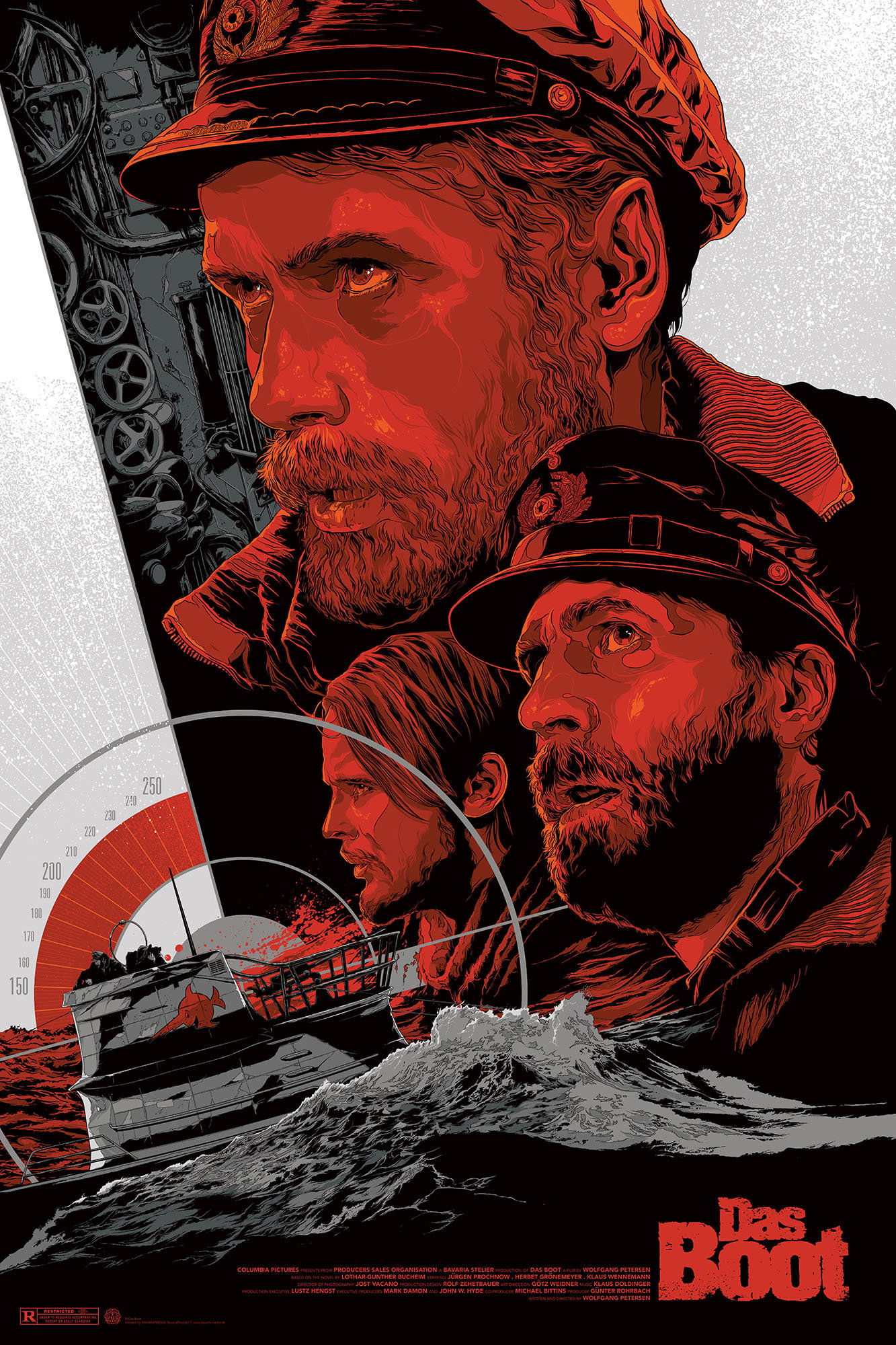
The Historical Era of the Film
I’ve always believed it’s impossible to separate a film from its moment in history, and nowhere is that more evident than with Das Boot (1981). To me, this film is indelibly tied to the climate of West Germany in the late 1970s and early 1980s—a period marked by restlessness, introspection, and recovery from both recent and distant wounds. The Germany that produced Das Boot was a divided nation, split physically and ideologically by the Berlin Wall, still coping with the aftermath of World War II and the turbulent social upheavals of the 1960s and 1970s. Politically, the Cold War permeated every aspect of society. American and Soviet influence dominated international affairs, and Germany’s internal tensions reflected the anxieties of the broader world.
Economically, West Germany had undergone what I see as a remarkable transformation. The “Wirtschaftswunder” or “economic miracle” had catapulted the nation to stability, and yet, beneath the surface, people were uneasy—haunted by memories of Fascism, Nazism, and the Holocaust. The country may have reinvented its image, but the scars of conflict and complicity lingered. The late seventies saw stagnation set in, with energy crises and inflation challenging the optimism of the previous decades. This backdrop is crucial to understanding Das Boot—both in the mood it evokes and the anxieties it channels.
Socially, I feel Germans of the era were torn between confronting the past and forging a new identity. The process of Vergangenheitsbewältigung—coming to terms with the past—wasn’t merely an academic or artistic exercise; it played out in living rooms, parliaments, and streets across the country. The Nazi period cast a long shadow, and cultural products from this era are impossible to interpret without acknowledging that weight. While young people sought to challenge the generation who lived through the war, older Germans often preferred silence or downplayed discussions, deepening the generational divide.
Social and Cultural Climate
When I look back at West Germany’s social and cultural climate during Das Boot’s production era, I see a nation caught in the throes of redefining itself. There was a palpable hunger for honest storytelling, a push to strip away decades of myth-making and face up to uncomfortable histories. The previous generation had largely avoided confronting its role during the Nazi era, but by the late 1970s, artists, filmmakers, and intellectuals were challenging that silence.
Cinema played a unique role in this reckoning. Through projects like the New German Cinema movement, filmmakers such as Fassbinder and Herzog carved out a distinct space for experimentation and political engagement. The air was thick with tension between nostalgia for a “simpler” time and the need to confront what that “simpler” time had actually entailed. I always felt that this tension colored every aspect of West German culture—books, music, and, above all, film.
There was also an undercurrent of suspicion toward militarism and authority generally—a legacy of National Socialism and the recent trauma of the 1968 student movement, which had highlighted the unresolved wound left by the older generation’s silence. Many Germans had grown weary of being defined by their grandparents’ actions during the war, but they couldn’t escape the ghosts of the past. This tension made stories about the Second World War not just emotionally resonant but politically charged. It was no accident that filmmakers treated historical narratives with a new sense of skepticism and urgency.
The atmosphere was, to me, electric with possibility and peril. Creative expressions often doubled as acts of social commentary. Films became battlegrounds for collective memory and conscience—would Germany look away, or truly face itself? The national conversation swirled with questions about culpability, victimhood, and moral compromise, with Das Boot emerging as a lightning rod for those debates.
- Generational division over confronting the Nazi past
- Influence of the New German Cinema movement
- Skepticism toward authority and nationalism
- Desire for authenticity and historical accuracy in media
How the Era Influenced the Film
Every time I watch Das Boot, I’m struck by how deeply it bears the imprint of its production era—especially in its approach to World War II. To me, the movie eschews propaganda and easy conclusions, focusing instead on the psychological and physical toll suffered by ordinary men. The submarine becomes less a weapon of war and more a crucible for human endurance and existential dread. This feels like a deliberate product of the late twentieth-century German mindset, which was no longer willing or able to romanticize its military history.
The political and social climate directly shaped how director Wolfgang Petersen adapted Lothar-Günther Buchheim’s semi-autobiographical novel. I see the choice to frame most characters as deeply flawed, skeptical, and often opposed to the Nazi ideology as a product of the era’s critical stance toward fascism. It would have been unimaginable, in the early postwar years, to render German soldiers as multidimensional, ambivalent figures—but by 1981, the audience expected and demanded complexity.
On a technical level, Das Boot’s realism—its claustrophobic set design, naturalistic performances, and relentless attention to detail—reflects the New German Cinema’s ethos. I have always admired how every bolt, every bead of sweat, every whispered doubt contributes to a sense of authenticity. This was in keeping with the broader cultural demand for “truth-telling” about the German wartime experience. The horrors are neither amplified for melodrama nor erased in the name of nostalgia; instead, Petersen grounds the entire narrative in mundane, lived experience. Any romance that might have surrounded the U-boat myth is carefully, almost ruthlessly, deconstructed.
It’s hard for me to ignore the sense of national catharsis at work. With Das Boot, I see a film that doesn’t just entertain or inform but actively participates in the work of memory and self-examination. The decision to humanize the crew—while refusing to whitewash their actions or the broader political context—is a product of an era that was finally ready to look itself in the mirror, however uncomfortably.
Audience and Critical Response at the Time
As I’ve pored over contemporary reviews and talked to filmgoers who saw Das Boot upon its release, I’m always struck by how polarizing and yet unifying its reception was. In the early 1980s, German audiences were still acclimating to works that scrutinized the war from within, especially those that treated German soldiers without resorting to caricature. The response, as I see it, was a mix of pride in the film’s technical accomplishment, discomfort with its unvarnished realism, and relief at its refusal to glorify the Nazi cause.
For many Germans, seeing themselves depicted not as monsters but as deeply compromised, suffering, and sometimes heroic individuals was both jarring and validating. I’ve spoken with viewers who recall a collective intake of breath during the premiere—a sense that something unspoken was finally being aired publicly. The authenticity and rigor of the film’s depiction of U-boat warfare earned praise, both within Germany and abroad. However, some critics and older viewers worried that the film might elicit sympathy for the Kriegsmarine or minimize the atrocities associated with Nazi Germany.
Internationally, the film benefited from the growing interest in European cinema and anti-war narratives. I can personally attest to the impact it had on American audiences, who were accustomed to Second World War films told from an Allied perspective. Das Boot’s immersive, human-centric approach offered a startling counterpoint, challenging notions of heroism and villainy. Critics lauded its technical achievements, claustrophobic tension, and refusal to indulge in triumphalism.
For me, what stands out most is how the film became a touchstone in debates about national identity, memory, and the responsibilities of representation. People debated it in cafes, universities, and editorial pages. Das Boot wasn’t just a movie—it was a catalyst for a much larger conversation.
Why Historical Context Matters Today
Every time I revisit Das Boot, I’m convinced that understanding its historical context remains essential for contemporary viewers. The film is inextricably wrapped up in the identity crisis and collective soul-searching of postwar West Germany. If we watch it without an appreciation for the political, social, and cultural climate of its production, we risk missing the point: that it isn’t just about a doomed submarine crew, but about how nations reckon with their past and build a future.
The issues that gripped Germany in the late 1970s and early 1980s still resonate today: the dangers of authoritarianism, the complexity of collective guilt, and the need for honesty in confronting national trauma. I think it’s especially important to understand how the skepticism of the era—toward militarism, propaganda, and simplistic narratives—infused every frame of the film. That skepticism speaks to a universal, ongoing struggle over how history is remembered and retold.
Modern viewers, particularly those outside Germany, may not realize how radical it was for a German film to climb inside the mind of wartime Germans without judgment or exoneration. By immersing myself in the historical context, I better appreciate the courage and subtlety of Petersen’s approach, and I find my perspective on the film enriched by the knowledge of what was at stake for its makers and its original audience.
For me, Das Boot is more than a historical drama; it’s a living document from a society at a crossroads. Its commitment to authenticity and moral complexity emerged from a production era uniquely positioned between memory and history. By exploring the political and social climate that nurtured it, I find that even decades later, the film continues to have something urgent and relevant to say—not just about war, but about the perils and possibilities of honest storytelling.
After understanding the factual background, you may want to see how this story was received as a film.
🎬 Check out today's best-selling movies on Amazon!
View Deals on Amazon