
The Historical Landscape
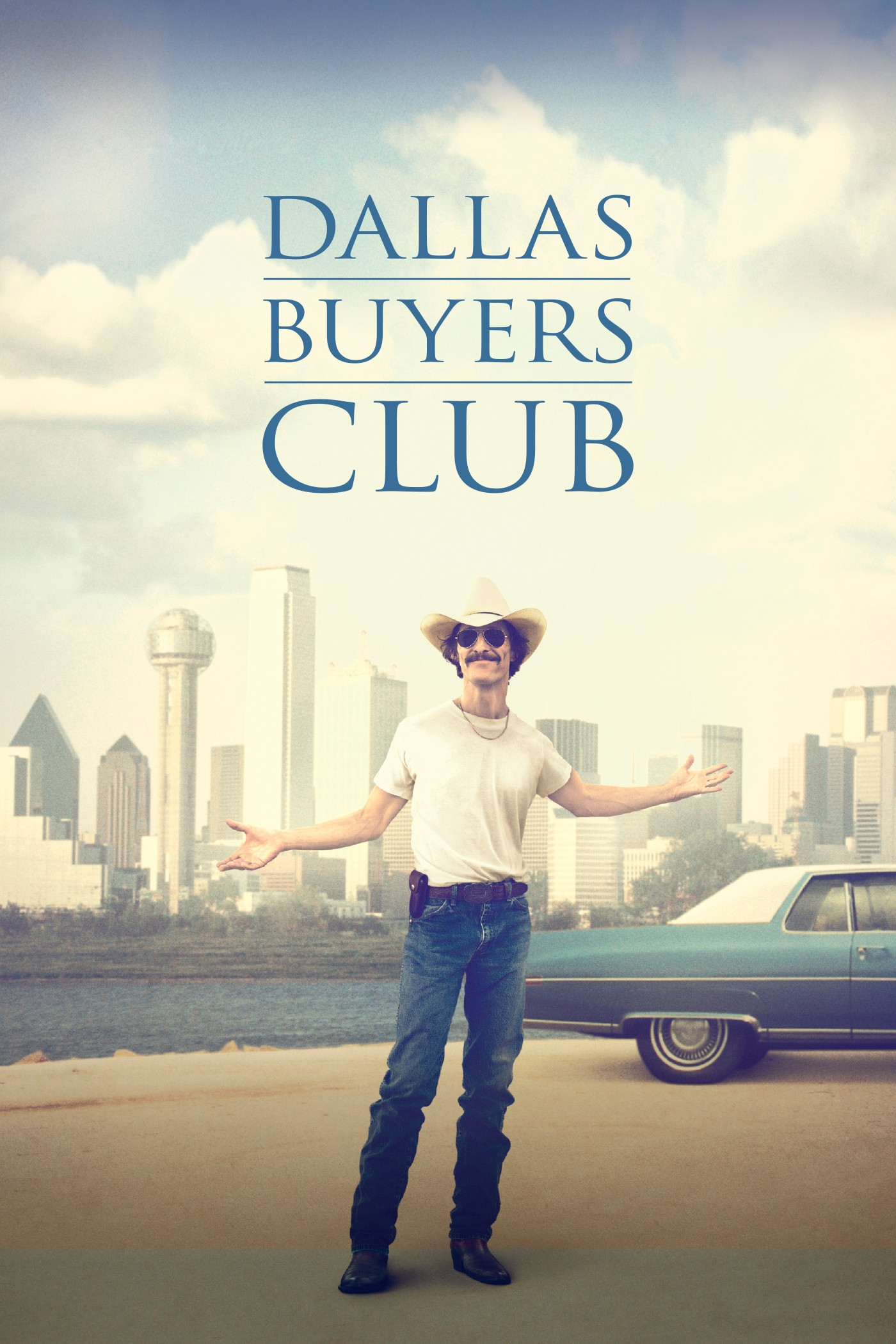
Walking out of the theater after watching Dallas Buyers Club for the first time, I remember feeling like I’d just caught a glimpse of something deeper than a single story—something that reached into the marrow of the decade in which it was made. The film, released in 2013, emerged at a moment when American cinema was embracing both retrospection and reckoning. I felt this convergence as the world around me seemed haunted by its own recent past. The recession of 2008 had only recently loosened its grip, and people I knew were still talking about lost jobs, foreclosed homes, and the sense that the ground beneath us had shifted in ways we barely understood. The air thrummed with anxieties both economic and existential.
Looking back, it’s almost impossible for me to separate Dallas Buyers Club from the wider cultural crosscurrents of its time. The early 2010s were an age of transparency and exposure—the era of Wikileaks, “Don’t Ask, Don’t Tell” being repealed, and the earliest waves of the modern LGBTQ rights movement peaking into the mainstream. Social media platforms gave everyone a public voice, and yet it never seemed harder for people to really hear one another. Debates over healthcare and the role of government often spilled out of the news and into grocery-store lines or living room discussions, coloring every conversation with a certain tension. So when I first saw the scrappy, desperate world of Ron Woodroof onscreen—battling for survival against a bureaucratic, impersonal medical system—I recognized echoes of my own era’s battles. It was as if the film had distilled the frustrations, fears, and stubborn hopes of an entire generation onto celluloid.
Just as the 1980s hang heavily over the narrative itself, 2013 brought its own historical weight to bear on how the film was made and received. I felt the reverberations of nearly thirty years’ worth of struggle over the AIDS epidemic, which had by then moved from being a death sentence to—at least for some—something manageable and treatable. But the memory of neglect, stigma, and activism had not faded, and Dallas Buyers Club seemed to invite me (and countless others) to assess where we had been and what, if anything, we had learned. From my vantage point, watching in the early 2010s, it felt as if the past was not dead, but rather looming at my shoulder, demanding to be reckoned with anew.
Cultural and Political Undercurrents
When I reflect on the undercurrents that shaped Dallas Buyers Club, I keep returning to the sense of both progress and backlash that defined its moment. The film painted a nuanced portrait of how personal autonomy collided with institutions—how individuals like Ron Woodroof could be ground down or galvanized by indifferent systems. This was a theme that, for me, felt uncomfortably contemporary. The Affordable Care Act—known popularly as Obamacare—was in the throes of its rollout in 2013. Around kitchen tables and in crowded barbershops, people debated the limits of government intervention in healthcare, accessibility for marginalized populations, and the value (or danger) of medical regulation.
In this climate, the movie’s depiction of the FDA and pharmaceutical companies resonated far beyond its period setting. I saw that same suspicion of “official channels,” that same hunger for self-determination, in every public debate about vaccines, insurance, or medical access. The narrative’s focus on an outsider—a straight, working-class Texan who ended up fighting not just for his life but for the rights of others—struck a raw nerve not because it belonged to the distant past, but because it so clearly reflected the tensions of its own era. I was reminded, watching Woodroof’s story, of how often collective change in this country began with those society least expected to lead.
The cultural forces brewing outside the theater also colored how I interpreted the film’s approach to gender and sexuality. The early 2010s, for me, marked a period when American culture began—finally, tentatively—to contend with complexity in identity. I saw this in the rise of trans visibility and activism, long before these topics became media fixtures. The casting of Jared Leto as Rayon, a trans woman, was controversial even then, raising debates about representation that would only gain strength in the years to follow. The film, for all its historical trappings, seemed wedded to the present-day struggle over who gets to tell whose story, and how.
I also couldn’t help but reflect on the enduring legacy of the AIDS epidemic, which by 2013 felt simultaneously close and far away. Friends a few years older than me could recall firsthand the fear and loss that defined the 1980s and ‘90s. For those of us born later, living in the shadow of those years, Dallas Buyers Club offered a visceral evocation of stigma, desperation, and survival. I saw, through its lens, a society still reckoning with its failures—to care, to listen, to act. That reckoning, as I felt it, was not just historical but immediate, shadowing conversations about who matters in America, and who is left to suffer alone.
The Film as a Reflection of Its Time
I want to be clear: what struck me most about Dallas Buyers Club was how it wielded history as both a mirror and a warning. The film did not merely depict the 1980s—it used the past to comment on the present, to hold up a lens through which I could examine my own era’s contradictions. As I watched Ron Woodroof’s struggle against medical inertia and bureaucratic hostility, I heard echoes of contemporary debates over access, equity, and autonomy. I realized the film was less about one man’s battle with AIDS, and more about a society grappling with the messy, costly reality of change.
For me, the film’s gritty aesthetic—muted colors, sweaty, lived-in spaces, unvarnished physicality—felt perfectly attuned to the early 2010s’ “post-crisis realism.” I saw the influence of other movies from that decade—films that eschewed polish for pain, that catalogued the cost of survival in a world seemingly stacked against ordinary people. This wasn’t only about verisimilitude; it was about ethos. Dallas Buyers Club, like so many of its contemporaries, invited me to question official narratives, to view every authority figure with a jaundiced eye. The world it painted was one where rules were arbitrary and compassion was scarce, a world I recognized from years spent watching headlines charting abuses of power in finance, healthcare, and beyond.
I found the film’s focus on community—improvised, imperfect, but vital—deeply moving. The buyers’ club itself became, in my mind, a symbol of what happens when institutions abandon the vulnerable. I thought of grassroots movements, mutual aid networks, and activist organizations springing up in response to government inaction, whether in health, housing, or migration. The mistrust at the heart of the film was familiar, but so too was the creativity and resilience it captured. Dallas Buyers Club was not just an indictment, but an invocation: it showed me the power of people banding together, and forced me to question why such alliances remain necessary in an era of supposed progress.
Representation—by which I mean who gets to be fully human onscreen—was another flashpoint where the film felt utterly of its time. Even as it won praise for its performances, I watched debates bubbling up around the choice of a cisgender actor for a trans role, the sidelining of queer perspectives, and the persistence of harmful tropes in mainstream cinema. These conversations felt urgent in 2013, part of a broader questioning of who gets to tell whose story. As I sat with the discomfort and complexity of these arguments, I was reminded how cinema does not just reflect society—it helps shape expectations, limits empathy, and determines whose lives are deemed worthy of attention.
Ultimately, Dallas Buyers Club functioned for me as a sort of reckoning. It demanded that viewers reckon with the politics of health and the price of dignity in a country that often congratulates itself on both, despite long histories of exclusion. I came away convinced that the film, while set in decades past, was a direct commentary on the unfinished business of the present.
Changing Perceptions Over Time
If I revisit Dallas Buyers Club today, I find my reactions subtly but unmistakably altered. When the film first appeared, it felt timely—a jolt meant to awaken audiences to histories too often glossed over. But time, I’ve learned, always reshapes how art lands. The film’s central metaphors—of mavericks defying authority, of communities saving themselves—have shifted in meaning as my world has changed.
In the years since its release, the conversation about representation has sharpened. Back in 2013, I noticed a growing awareness around the importance of trans actors playing trans roles, but the full cultural weight of that demand had not yet galvanized Hollywood. Now, more than a decade later, it is impossible for me to watch Dallas Buyers Club without a sense of unease about the limits of that progress. Every time I encounter Rayon’s story, I feel the tension between moving depictions and the missed opportunity for authentic voices to be centered. The film that once seemed progressive to me now feels—at least in regard to casting and narrative agency—behind the curve of the culture it helped catalyze.
Health crises, too, have multiplied since 2013. Living through the COVID-19 pandemic, I saw how issues the film addressed—medical gatekeeping, stigma, race and class inequities—are hardly relics of the past. Some days I watch Dallas Buyers Club and wonder if the lessons it tried to teach were ever fully learned. The skepticism of institutions, which felt urgent but justified a decade ago, can now, for me, feel like a double-edged sword. Mistrust of expertise may fuel vital activism and community care, but in a world rife with misinformation, it can also be exploited. The line between resistance and denialism seems thinner to me than it did then.
Yet, even as my relationship to the film has grown more complicated, its emotional force endures. I still recall the raw vulnerability of its characters, the anger that pulses beneath the narrative, the way it asks viewers—asks me—to witness both brutality and resistance. I can trace, too, how the ongoing evolution of LGBTQ representation in media has changed the way I talk about the film. Younger audiences I’ve spoken with often approach it with both appreciation and critique, recognizing it as a bridge between eras: imperfect, essential, and open to debate. The film’s status as a touchstone has perhaps waned, but its fingerprints, for me, are visible across a decade of cultural change.
Historical Takeaway
If there is a single lesson Dallas Buyers Club imparts about its era—a lesson I carry after years of reflection—it is the uneasy coexistence of hope and disillusionment at the core of the early 2010s. The world the film captured was not just a chronicle of the 1980s, but a portrait of a society wrestling with its own limits. Watching the film, I was left with a sense of both how much had changed and how much remained painfully the same. Questions over healthcare, justice, representation, and dignity continue to echo through public life, as urgent as ever.
For me, the film’s greatest strength lies in its refusal to offer easy solace. It does not pretend that progress is inevitable, nor does it gloss over the cost of neglect. Instead, it focuses on those who, despite systemic apathy, forged new ways of surviving—and sometimes thriving—through collective action. I felt, then and now, a deep resonance between the film’s narrative and the social movements of my own time, from Occupy Wall Street to Black Lives Matter to the struggle for trans rights. In each, I see individuals resisting dehumanization, demanding recognition, and refusing to be silent.
Dallas Buyers Club, in my eyes, is a cinematic document of its moment—messy, passionate, flawed, and insistent that stories of suffering and resilience be told. Its legacy is neither straightforward nor uncontested. It reminds me that culture does not simply reflect history, but actively participates in crafting it, and that every story told sparks questions about whose pain and whose courage will be remembered. In the end, what I learn from Dallas Buyers Club is that the battle for dignity, access, and truth is unending, and that the cinema of my era, at its best, dares to confront that hard fact with open eyes and a restless conscience.
To see how these real-world elements shaped the film’s impact, you may also explore its reception and legacy.
🎬 Check out today's best-selling movies on Amazon!
View Deals on Amazon