
The Historical Landscape
There’s a shiver in my memory whenever I think back to the late 1970s, as if the very atmosphere of that decade whispers through the celluloid of Close Encounters of the Third Kind. Those years, in my mind, were a crossroads—standing between the long shadow of Vietnam, the disillusionment after Watergate, and an uneasy optimism that space might still hold answers. When I first watched Spielberg’s film, I felt deeply the peculiar mixture of anxiety and hope that underpinned that era. The country seemed to be collectively searching for something elusive in the stars, fueling the surging fascination with UFOs, cosmic exploration, and the possibility of contact with “the other.”
I remember the sense of being perched on the edge of a technological leap. The Apollo missions had ended, leaving in their wake both awe and a void—a need to ask, “What comes next?” Popular imagination latched onto the sky. Headlines were peppered with reports of unexplained phenomena, government secrecy, and a distinct flavor of paranoia stirred up by the Cold War. I could sense, even as a child, how every mention of flying saucers and satellite launches felt like more than entertainment; it was a collective ritual, a kind of secular prayer for answers and connection beyond the globe’s tumult.
On the ground, the world was crackling with tension. The oil crises and economic uncertainty of the mid-70s sapped American confidence, while the Bicentennial in 1976 seemed to offer a momentary balm—American pride strained through nostalgia. In films, television, and magazines, I noticed a curious dance between escapism and confrontation: fantasy and science fiction thrived as the world around us became unpredictable. Spielberg’s film emerged from this charged zone, transcending the simple notion of “aliens” and instead capturing the era’s rollercoaster of yearning and unease.
Cultural and Political Undercurrents
What most struck me about Close Encounters is how the film’s surface-level spectacle is powered by far deeper social forces bubbling beneath the late 70s. When I contemplate the America that birthed this film, I’m aware of a society with battered optimism, reawakening curiosity, and a gnawing mistrust toward authority. Watergate had left institutions tainted. My own kitchen-table conversations with family often swerved into the realms of “what they’re not telling us.” Spielberg taps into this skepticism, conjuring government operatives enshrouded in secrecy—at once protectors and gatekeepers of transformative knowledge.
Yet, even more personal than political mistrust, the film steeps itself in the cultural currents of the time. I see, threaded through every luminous frame, a deep longing for transcendence. America, in the aftermath of the social revolutions and traumas of the 1960s, found itself grappling with spiritual uncertainty. I recall how the counterculture had urged the shedding of norms, and by the mid-70s, many were left with questions that neither church nor state could easily answer. UFO mythology, with its suggestion of rescue or enlightenment from above, captured the public’s imagination. The film doesn’t just reflect this; it renders it with a dreamy reverence, as if the mysteries of the cosmos are a modern stand-in for religious salvation.
There’s another layer that always resonates with me—a meditation on family and identity. Watching Roy Neary’s journey, I’m struck by the portrayal of suburban malaise and the hunger for meaning amidst mundane routines. The postwar American dream, by the late 70s, had grown threadbare in the eyes of many of my peers. Divorce rates were climbing; families were reconfiguring themselves in real time. The film’s depiction of domestic friction, and Roy’s compulsion to abandon everything for a higher calling, feels like an echo of an era wrestling with the boundary between duty and self-discovery.
Of course, I cannot ignore the Cold War’s invisible hand. In every scene where government agents scramble to maintain control or manipulate public perception, I feel the fingerprints of a society wound tightly against external threat. The possibility of contact with a force beyond our comprehension mirrors, in some sense, the pervasive dread and anticipation of the unknown “other” in geopolitics—sometimes enemy, sometimes potential ally.
The Film as a Reflection of Its Time
I view Close Encounters as both a mirror and a lamp—reflecting the moment’s anxieties while illuminating its hidden dreams. One of the film’s most striking characteristics, for me, is its refusal to give in to outright cynicism. Despite an atmosphere thick with suspicion, Spielberg fills his narrative with wonder, vulnerability, and awe. I remember thinking, at the time of release, that the film’s faith in communication—literal and metaphorical—cut through the ambient noise of mistrust. The iconic sequence where humans and aliens use tonal patterns to connect evoked, for me, an almost utopian belief in bridging divides, in contrast to the ideological stalemates elsewhere in the world.
What I find especially evocative is the way the film grapples with disruption—not just of society, but of the self. When Roy is compelled to seek out the truth behind his visions, I sense the pulse of 1970s self-discovery movements. Encounter groups, therapy, New Age thinking—all were gaining traction among people disillusioned by traditional hierarchies. Roy’s breakdown is not simply a product of alien intervention; to me, it is a metaphor for the internal ruptures so many experienced in those years. The revelation, the quest, the transformation—these are not just science fiction tropes, but prominent themes encapsulating a generation’s search for purpose.
I often reflect on the film’s handling of government and authority. In contrast to the darker, more conspiratorial flavor exemplified by films like All the President’s Men or Network, Spielberg balances menace with a measure of benevolence. The authorities are opaque and sometimes threatening, yet not wholly villainous. This ambiguity, to me, perfectly captures the historical moment: residual faith in the system was giving way to skepticism, but had not yet curdled into the deep cynicism that would dominate the next decade. The film seems, in my eyes, to be pleading—can we trust anyone to mediate our fears and hopes, or must we forge our own path to truth?
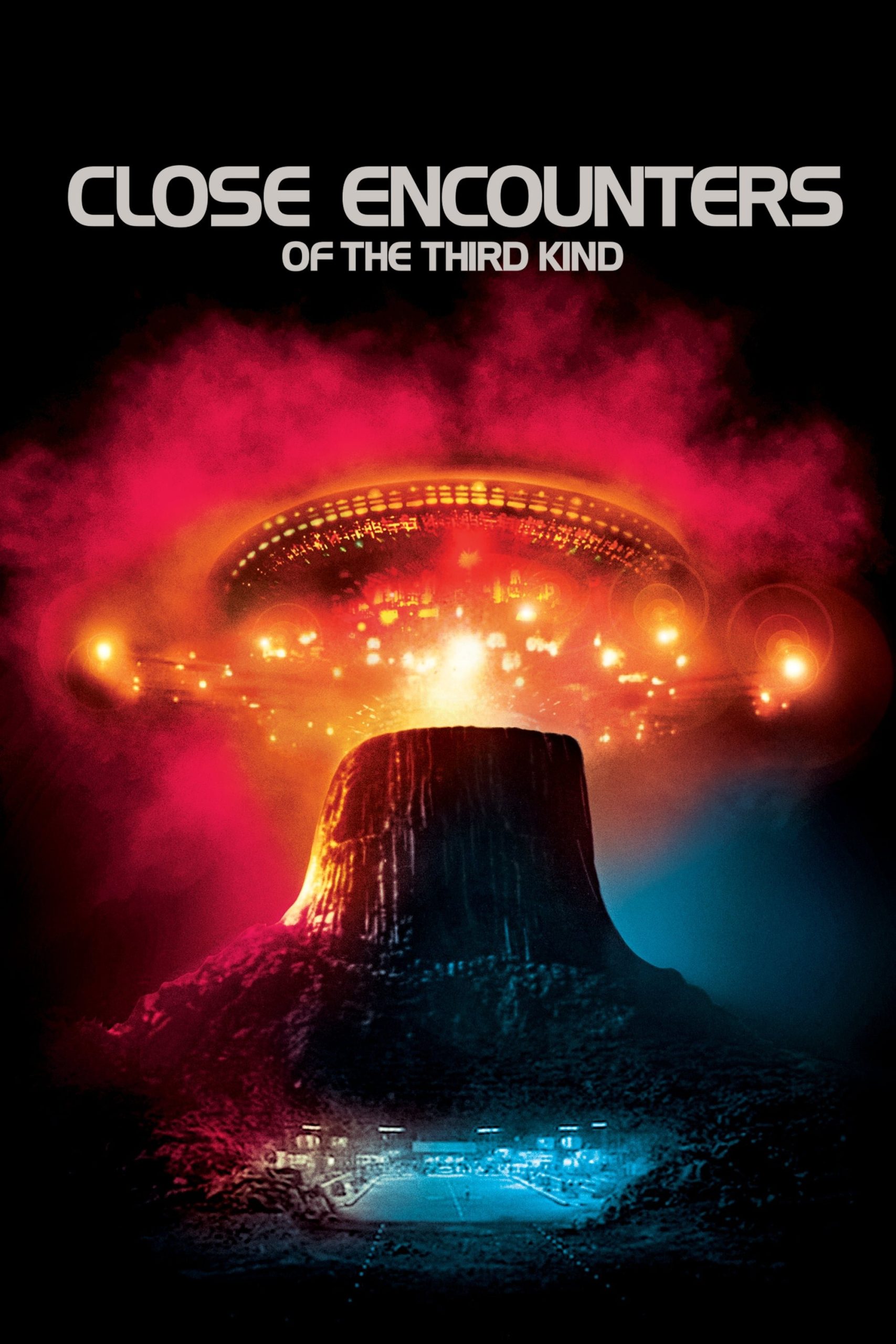
On a more visceral level, the film’s visual and auditory language stirs memories of the era’s popular culture. Spielberg’s almost reverential depiction of the UFO, bathed in dazzling light, calls to mind the era’s penchant for blending the technological with the mystical. Synthesizers and special effects, themselves on the bleeding edge in the late 70s, echo the larger societal leap into an unknown future. I’m reminded of my first encounters with electronic music, the promise of personal computers, and the advent of new cinematic technologies. All of these felt, in their own way, as if the future wasn’t merely being imagined—it was breaking into the present.
For me, there is something indelibly 1977 about the film’s emotional core. The hopeful awe at its conclusion—where difference is greeted not with violence, but anticipation—feels almost radical for its time. The film’s finale is not a battle, but a communion. It’s as if Spielberg is channeling the era’s bruised optimism, suggesting that, despite all evidence to the contrary, human beings might still be capable of grace and curiosity in the face of the truly unknown.
Changing Perceptions Over Time
As the years have passed, my own view of Close Encounters has evolved, shaped by both personal growth and broader cultural shifts. Initially, I saw it primarily as a fantasia—a departure from the more grounded or grittier works that soared through the 70s. As the 1980s and 90s unfurled, with Reagan-era triumphalism, then spirals of consumerism and technological dependency, the film’s meditative pace and emotional honesty stood out as increasingly rare. I recall conversations in the 90s, as conspiracy culture boomed, where friends and I revisited the government plotlines, seeing them as precursors to the more sinister treatments in works like The X-Files.
For a time, skeptical viewers reinterpreted Roy’s quest less as inspirational, and more as troubling—a man’s obsession so complete that it destroys his family. My own discussions with cinephile friends grew more nuanced, as we debated whether the film endorsed abandonment or reckoned honestly with its costs. This mirrored a broader trend, as successive generations, less burdened by the “great silence” of Cold War existentialism, brought new lenses of psychology, gender, and power to bear on works like this. I found myself appreciating its ambiguity—it refuses neat answers, inviting us to wrestle with meaning the way its characters do.
Recently, I am struck by how the film’s sincere wonder feels almost radical in an era crowded with irony and digital saturation. Modern science fiction tends to circle around dystopian themes, anxieties around surveillance, rapidly fraying civic trust. When I watch Close Encounters today, it feels almost like an artifact from a lost age—an age when the unknown was not just to be feared, but welcomed. The film’s hopeful gaze outward, its climactic handshake with “the other,” seems to speak from a different, perhaps more innocent, epoch.
Still, the film’s grappling with domestic instability retains relevance. In our current moment, as families come in myriad forms and as individuals grapple with the push-and-pull of obligation and individuation, Roy’s journey continues to resonate, albeit controversially. Some see him as a cautionary figure; others, as a romantic visionary. My own sympathies shift, depending on the year, the mood, and the headlines.
Whereas audiences in 1977 may have looked to the stars for answers to earthly disillusionment, now I sense a more fraught relationship with the unknown. The film’s childlike hopefulness, its willingness to believe in transformative connection, strikes me as a provocation, a counterpoint to contemporary skepticism. In this way, the film has grown in stature—less a document of its time, now, than a touchstone for ongoing questions about faith, knowledge, and the refusal to surrender to cynicism.
Historical Takeaway
For me, Close Encounters of the Third Kind is both a window and a mirror to a moment in history when anxiety and innocence were uneasily entwined. The film captures, with elegant precision, what it felt like to live in an era of both skepticism and longing. Watching it now, I am reminded of a society battered by scandal, trauma, and uncertainty, yet not bereft of hope. It invites me to imagine that outstretched hands—even towards the absolute unknown—might be an act of healing, rather than violence.
When I reflect on its legacy, I recognize a rare openness radiating from its frame—a willingness to admit not only fear of the other, but awe, humility, and the hope for understanding. Its message, articulated through luminous spectacle and intimate drama, is at once timeless and indelibly marked by its era. The film does not simply emerge from the late 1970s; it encapsulates the period’s deepest yearnings and anxieties, offering a vision of what it might mean to be both lost and found at the edge of all we know.
To see how these real-world elements shaped the film’s impact, you may also explore its reception and legacy.
🎬 Check out today's best-selling movies on Amazon!
View Deals on Amazon