
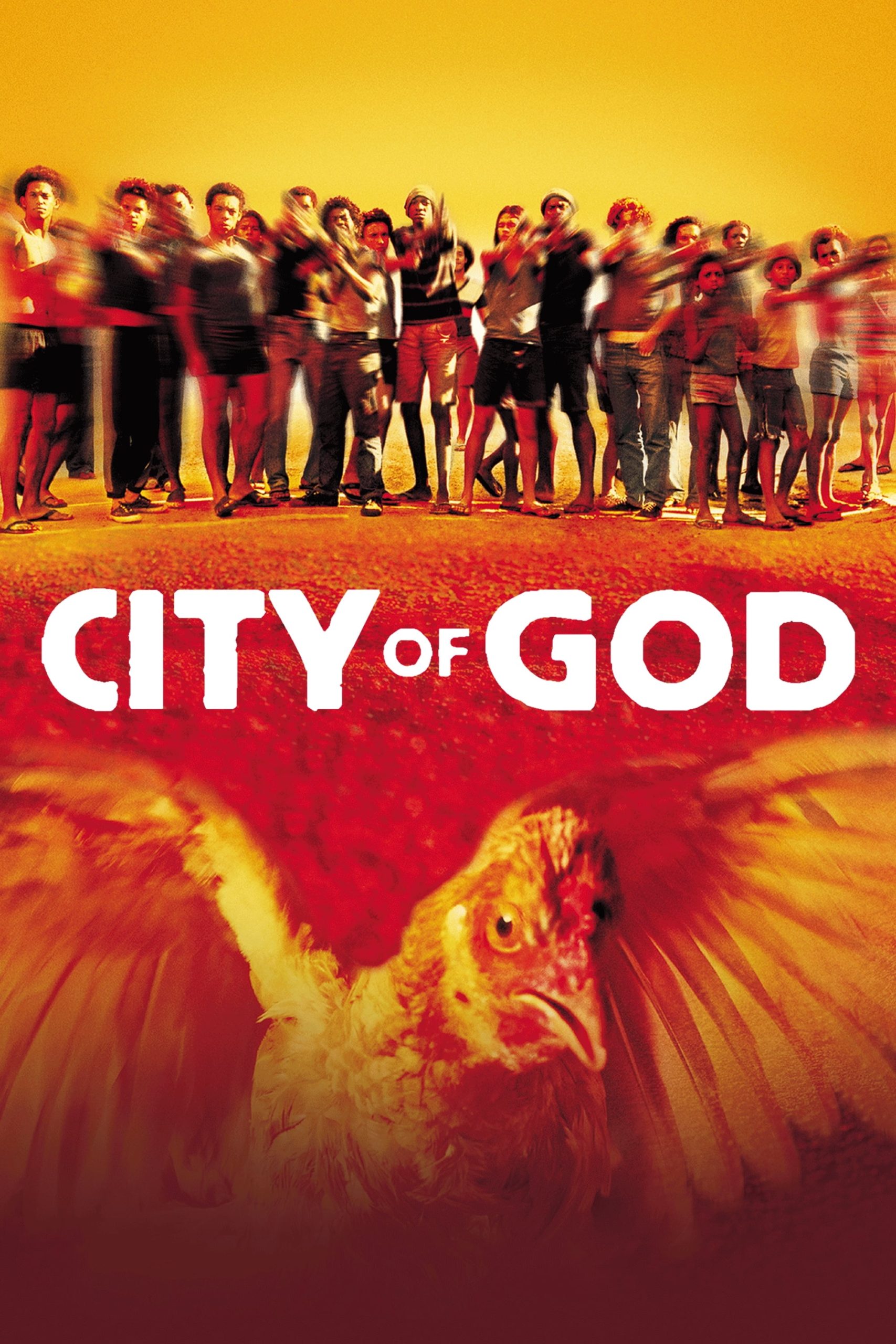
The Historical Era of the Film
My first experience watching City of God (2002) left me with a raw sense of urgency to look beyond the film’s explosive storytelling and immerse myself in the context that shaped those images. That context, for me, is inseparable from Brazil’s turbulent second half of the twentieth century. The film’s time frame stretches across the 1960s, 1970s, and 1980s—periods marked by rapid urbanization, deepening poverty, and a political climate constantly shifting between hope and repression. When I think of the favelas—densely populated urban slums—I can’t help but see them as a product of Brazil’s developmental ambitions gone awry. The migration of people from rural communities into metropolitan areas like Rio de Janeiro, searching for jobs and better lives, led to the explosive growth of these sprawling, informal settlements.
As I dug further into the political backdrop, I was struck by Brazil’s authoritarian regime, which lasted from 1964 to 1985. During this military dictatorship, democracy was suspended, censorship became commonplace, and dissent was frequently met with violence. Yet, economic policy during the “Brazilian Miracle” years of the 1970s created a paradox: while the country experienced some industrial growth, that wealth bypassed the poorest, deepening inequalities. My research illuminated how the authorities, instead of addressing social needs, often turned a blind eye—or actively colluded with local powers—to the soaring violence within the favelas.
I can’t separate the lived experiences of the era from the rise of organized crime and drug trafficking, which reshaped urban landscapes well into the 1980s. Law enforcement’s corruption, sporadic intervention, and occasional brutality turned neighborhoods like Cidade de Deus into battlegrounds. When I look at the way children and adolescents became soldiers in this urban war, I see the devastating result of systemic neglect and the loss of social safety nets.
From my perspective, these conditions—poverty, rapid urbanization, political authoritarianism, and the emergence of violent gangs—formed the air the film’s real-life characters breathed. The social fabric of Rio was being torn and re-stitched by unchecked forces of modernization, and City of God’s actual neighborhood became a symbol of both opportunity lost and resilience tested to its breaking point.
Social and Cultural Climate
As I reflect on the dominant social attitudes that permeated Brazilian society in the decades depicted—and during the film’s production in the late 1990s and early 2000s—I see a nation in dialogue with itself, often painfully so. Those years were shaped by class tensions and a growing consciousness of racial, economic, and cultural divides. For me, the persistence of inequality—sharpened by Brazil’s colonial legacies, deep-rooted class stratification, and unresolved tensions over race—was a driving force shaping the film’s world.
Popular culture, especially through television, music, and telenovelas, often glossed over the reality of favela life, focusing instead on sanitized and aspirational portrayals of Brazilian identity. Yet, by the late 1990s and early 2000s, I noticed a shift. Samba and funk were gaining global attention, and voices from marginalized communities were becoming louder in national conversations. The emergence of favela art—music, literature, and independent cinema—challenged stereotypes and demanded recognition. Still, for many middle-class citizens, the favelas remained “no-go zones,” associated with crime and danger rather than culture and humanity.
What stands out to me is the tension between invisibility and spectacle. Favela residents were often either ignored by the mainstream or depicted as sensationalized sources of violence, never allowed to represent themselves. This fed into a cycle where fear and prejudice justified tough-on-crime policies, while the underlying needs for education, healthcare, and opportunity were sidelined. In countless conversations and articles, I detected how “the marginal” became a central theme: there was a growing realization, within artistic circles, that Brazil had to come to terms with all tiers of its society.
During the film’s actual production era at the turn of the millennium, I saw increasing public concern over crime rates and the perceived impunity of drug lords. The social climate was one of both fascination and anxiety—on the one hand, a glamorization of outlaw culture in music and media, on the other, mounting fear and demand for order. Against this backdrop, I witnessed a surge in community activism in favelas, with residents pushing back against both external prejudice and internal violence.
- Militarized policing and an “iron fist” approach shaped daily life in many communities.
- Cultural production from the favelas began breaking through to national audiences.
- Societal polarization deepened, often along class and racial lines.
- The myth of the “cordial Brazilian”—a harmonious society—was increasingly scrutinized.
With this, I became keenly aware of the cultural climate’s impact, not just on the individuals depicted in the film, but also on the filmmakers, who navigated these tensions during the creative process.
How the Era Influenced the Film
Whenever I return to City of God, I see the stamp of its historical circumstances in every frame. For me, the decision to cast mostly nonprofessional actors from the favelas themselves was nothing short of revolutionary—a direct response to the invisibility I described earlier. This wasn’t just about authenticity; it was a deliberate act to empower those most impacted to tell their own stories. The energy and credibility these actors brought spoke directly to the lived experiences of an entire generation caught between state neglect and gang dominance.
The film’s structure and frenetic pacing, as I see it, reflect the volatility of the times: the breakdown of order, rapid shifts in power, and the impossibility of long-term plans in such precarious circumstances. I identify a deep resonance with the experience of growing up in post-dictatorship Brazil, witnessing rapid social change and abrupt swings in fortune. The unvarnished depictions of police, for instance, are influenced by the era’s legacy of authoritarian policing—at times as ruthless as the criminals they fought.
Even the cinematography and editing speak volumes about the historical period. Every time I watch the film, that kinetic camera work pulls me into the chaos, evoking newscasts and sensational coverage that were common in Brazilian media at the dawn of the 21st century. The urgency, the sense of always being on the edge, mirrors not only the characters’ circumstances but also the national psyche of an era defined by uncertainty and survival instinct.
Production-wise, I am struck by how the late 1990s and early 2000s in Brazil marked a revival in local filmmaking. Economic stabilization following the tumultuous 1980s allowed for renewed state support and greater international investment. City of God’s success, in my view, was enabled by this cinematic rebirth—a moment when Brazilian filmmakers had the means and the will to interrogate their society’s darkest corners and bring them to the global stage. Without this intersection of funding, political openness, and international curiosity, I doubt the film could have achieved its scale, scope, or authenticity.
As I see it, the era’s social fragmentation, coupled with a restless energy for truth-telling, was absorbed by the filmmakers and radiated outward, shaping not only the story and characters but also the very language of the film. The urgency to probe historical wounds, to ask where cycles of violence began and whether redemption was possible, arose directly from lived experiences across several decades of fraught Brazilian history.
Audience and Critical Response at the Time
Looking back at the film’s reception, I remember a sense of both astonishment and disquiet among Brazilian and international audiences. For those outside Brazil, the film delivered a shocking window into a world largely hidden from mainstream consciousness—at once exotic, tragic, and disturbingly real. My sense is that foreign critics were quick to praise the film’s raw intensity, dynamic style, and devastatingly honest performances. Many, like myself, saw it as a breakthrough: a work that bridged the gap between documentary realism and cinematic spectacle.
Within Brazil, however, I observed a far more complex reaction. Some viewers from privileged backgrounds recoiled at the violence and found the depiction of underclass life unsettling. Others, especially those with connections to the favelas, saw the film as overdue validation—a rare act of recognition and a platform for voices too often silenced. Criticism came too: I recall strong debates in the press about whether the film exploited its subjects, perpetuated negative stereotypes, or served the interests of international audiences more than local ones. These conversations made it clear to me that the film had struck a nerve, forcing a reckoning with uncomfortable truths.
From my position as an observer, I found fascinating the way the film’s style—its breakneck editing, nonlinear storytelling, and energetic visuals—became as much a talking point as its subject matter. The director’s choices drew international comparisons to gangster epics, sparking dialogue about form and substance in the depiction of urban violence. For younger Brazilians, I remember it influencing fashion, speech, and even music, as well as inspiring a wave of aspiring actors and filmmakers from marginalized communities.
There was an undeniable sense, for me, that City of God arrived at a tipping point for Brazilian culture and global cinema. Its multiple award nominations and festival appearances crystallized a long-standing desire for more inclusive, realistic, and urgent storytelling. More than a sensation, I saw it as a catalyst for broader debates about crime, justice, race, and memory in Brazil’s contemporary social fabric.
Why Historical Context Matters Today
Each time I revisit City of God, I’m convinced that grasping its historical context completely transforms the experience. Understanding the origins of the favelas, and how Brazilian society shaped—and was shaped by—their realities, allows me to appreciate the film not just as an isolated work but as part of a much larger conversation. The stories within it aren’t merely entertainment or cautionary tales; they are repositories of lived trauma, resilience, and the ongoing struggle for dignity among Brazil’s most marginalized.
For me, exploring the film’s era brings to light why its images still resonate today. Issues of urban poverty, social exclusion, and state violence remain unresolved in both Brazil and other countries caught up in similar cycles. The film’s depiction of youth drawn into the orbit of organized crime feels, if anything, more relevant as cities face expanding inequalities in the twenty-first century. When I put the film in its historical frame, I see parallels everywhere: from American inner cities to global struggles over housing, opportunity, and the narratives we choose to elevate or ignore.
I find that understanding the social and political climate of Brazil during the film’s inception also dispels simplistic readings. Rather than seeing its violence as gratuitous or sensational, I’m able to contextualize it as an outgrowth of structural abandonment. The genuine performances, the unvarnished setting, and the refusal to provide easy hope all make sense once I apprehend how hard-won every moment of reprieve or tenderness in the favela truly was.
Finally, I recognize that City of God’s ongoing stature as a cinematic landmark rests on its historical accuracy and the courage to name uncomfortable truths. By grounding my viewing in the real experiences—of dictatorship, transition, and survival—I discover layers of meaning and emotion that would otherwise be lost. That historical lens is essential: for me, it transforms the film from a spectacle of violence into a profound act of witness and remembrance, connecting Brazilian realities to the world at large.
After understanding the factual background, you may want to see how this story was received as a film.
🎬 Check out today's best-selling movies on Amazon!
View Deals on Amazon