
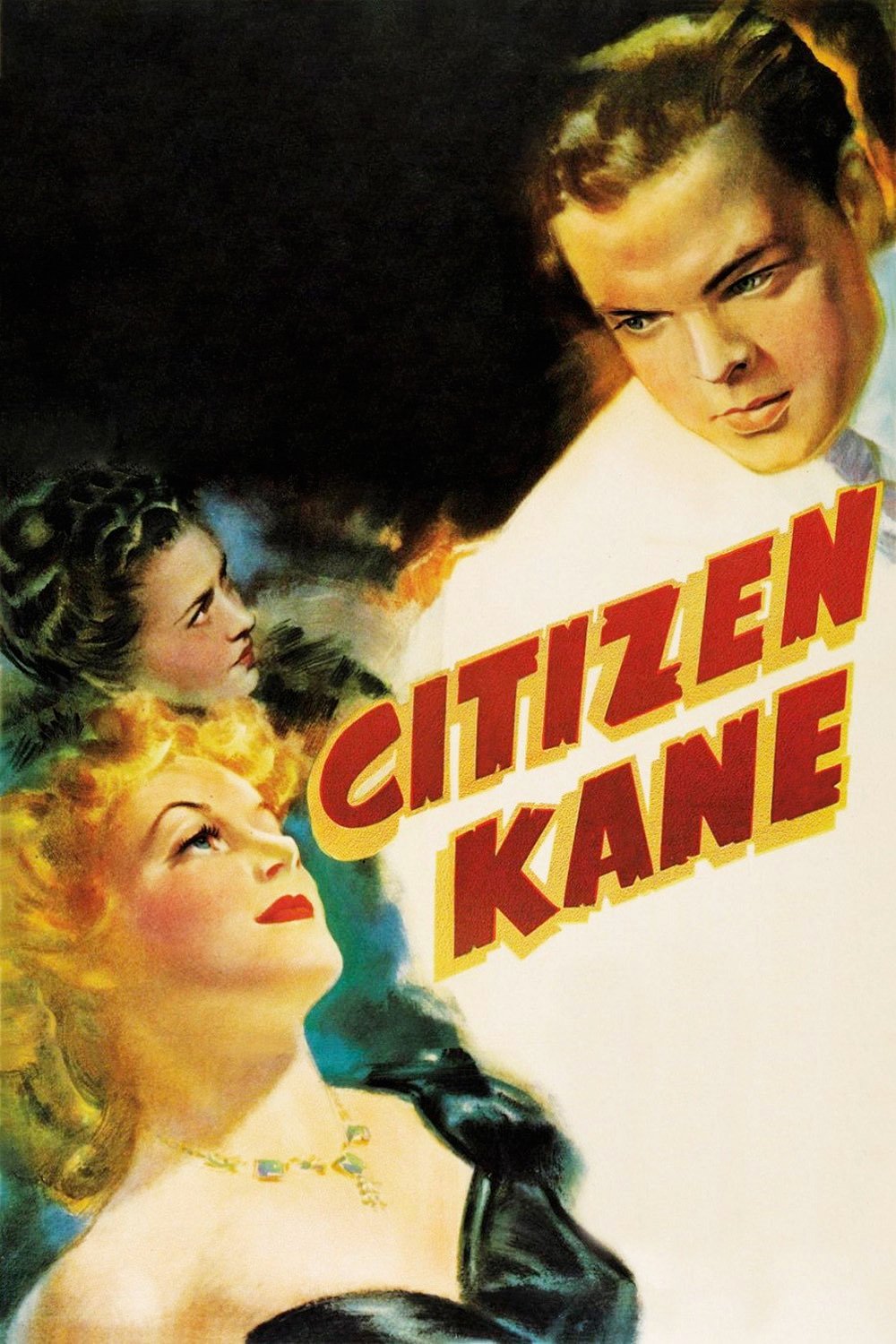
The Historical Era of the Film
I always find myself drawn to the extraordinary tensions that shaped the early 1940s in the United States, the moment in which Citizen Kane (1941) emerged. This was a nation perched on the edge of transformation, with the world at war and the Great Depression’s residue still haunting economic life. On the eve of America’s formal entry into World War II, there was both anxiety and resolve in the atmosphere, with the political climate dominated by President Franklin D. Roosevelt, whose New Deal policies were still very much shaping discourse. When I look at this era, I see a country balancing conflicting desires: a yearning for the stability of pre-Depression prosperity, but also a suspicion of unchecked power and wealth, given what had just transpired in Wall Street crashes and bank failures a decade earlier.
Socially, I sense that America was reckoning with shifting ideas of class mobility, journalism, and the power of mass media. There was a fascination with technology—specifically, the radio and the ever-more influential newspaper empires. Having studied American society in this period, I realize the fundamental mistrust that ordinary people harbored towards vast fortunes: magnates and media tycoons like William Randolph Hearst were widely discussed, scrutinized, even feared for their ability to shape public opinion and political outcomes. In cinematic terms, I see this as the age before television, when movies were not just a pastime but a prime vehicle for both information and escapism. The daily papers and newsreels were central to forming the American worldview.
The economic conditions were especially fraught. Although some sectors were benefiting as war production increased, many Americans had experienced a decade of unemployment and poverty; the New Deal had changed the role of government in citizens’ lives, but anxieties about economic security still lingered. Industrial cities thrummed with activity, and labor conflict was common as workers sought a better share of the pie. With the world at war elsewhere, there was an underlying apprehension about America’s place on the global stage, and what responsibilities or opportunities that might entail.
Social and Cultural Climate
When I immerse myself in the social and cultural climate that gave birth to Citizen Kane, I am always struck by the era’s complex morality and the sharp questions surrounding ambition and success. The early 1940s represented a crossroads for American culture: traditional ideals of individualism, success, and the ‘American Dream’ were still lauded, but their darker undercurrents were beginning to be interrogated. The widespread influence of newspapers and radio stations meant that figures like Hearst transcended mere business executives—they became personalities capable of real social engineering. It is fascinating to me that the power of media barons was so palpable that ordinary citizens could both revere and deeply distrust them at once.
What often stands out to me is the onset of modern celebrity culture. Magazines, gossip columns, and radio gossipmongers (think of Hedda Hopper and Louella Parsons) had a profound influence on the public image of both entertainers and the elite. The blurred line between private life and public image was becoming a subject of speculation and even anxiety. Culturally, Hollywood was at its golden apex: studios wielded enormous power over the stories told and who told them, and there was a kind of paradoxical optimism—despite global crisis, movies remained uplifting, glossing over life’s gloomier realities for the sake of entertainment. Yet, as I look closer, I see cynicism seeping in around the edges.
Racial, gender, and class divides remained firmly entrenched during this period, and the existing social order was not often openly challenged in mainstream cinema. Still, the seed of discontent and the questioning of tradition were beginning to germinate. When I think about Citizen Kane in this context, it becomes clear that the film both reflects and subverts the dominant values of its day. The idea that a man’s fortune and influence might ultimately bring him isolation or emptiness—rather than the fulfillment promised by the myth of success—felt quietly radical to me for its time.
- Escalating influence of mass media and newspaper barons
- Growing skepticism toward American exceptionalism
- Persistence of class divisions and economic insecurity
- Ascendancy of Hollywood as cultural tastemaker
How the Era Influenced the Film
Whenever I analyze Citizen Kane, I am always drawn to the immense shadow that its historical context casts over every creative decision. Orson Welles, in my view, was both a product of and a reaction to the studio system, a machine built on tight control and formulaic storytelling. As a filmmaker granted unprecedented creative freedom by RKO, Welles seized the chance to craft a story that borrowed from the headlines: the notoriety of William Randolph Hearst loomed inescapably large. The script’s choice to center on a newspaper magnate immediately signaled a confrontation with one of the era’s most controversial symbols of power.
The public’s preoccupation with wealth and influence shaped not just the plot but the very structure of the movie. I see in Kane’s rise and fall an allegory for how the American public viewed the real titans of business—figures who, for all their public generosity and grand gestures, were connected with corruption, manipulation, and a certain emotional bankruptcy. The relentless scrutiny of a man’s private versus public persona feels, to me, a direct response to the tabloid culture of the day, where personal tragedy and scandal were fodder for national debate.
I am especially fascinated by the film’s innovative techniques, which draw deeply from the technological advances of its time. The experimentation with deep focus photography, layered sound, and non-linear storytelling appears to mirror the complexity and fragmentation that so many Americans felt as the world around them shifted. Welles and his team channeled the nervous energy of their historical moment—the war abroad, the skepticism at home, the rising sense that even the powerful were not immune to tragedy or critique. I cannot separate the film’s audacity in form from this climate of uncertainty and change.
Audience and Critical Response at the Time
Delving into the initial reception of Citizen Kane, I find it impossible to ignore how its historical context shaped early opinions. Many people expected a film more in line with contemporary entertainments—escapist, uplifting, carefully sanitized. Instead, audiences encountered a movie that openly attacked one of the nation’s most powerful men and challenged prevailing narratives of success. I have read accounts suggesting that ordinary moviegoers were both intrigued and unsettled by the movie’s flashback structure, journalistic investigation, and bleak portrayal of the American Dream.
The response from critics was more enthusiastic, with many hailing Welles’s ingenuity and the movie’s technical breakthroughs. Still, I cannot overlook the consequences of the era’s media moguls wielding real power; William Randolph Hearst’s efforts to undermine the film, including pressuring theaters not to book it and using his newspapers to tarnish Welles’s reputation, became legendary. This campaign of intimidation itself became part of the story of Kane. I have always thought it remarkable how quickly the film’s reputation became colored by battles over press freedom and artistic autonomy—battles that were alive, political debates of the time.
Some studios refused to advertise or screen the film, and the resultant controversy likely suppressed box office returns, even as the critical establishment largely praised the movie’s innovation. For many, especially those sensitive to the mood of the times, Citizen Kane felt less like entertainment and more like a bold provocation.
Why Historical Context Matters Today
As I return to Citizen Kane now, decades removed from its production era, I am continually struck by how much richer my understanding becomes when I factor in its historical context. The anxieties about media manipulation, the ethical ambiguities of power, and the corrosive potential of fame and fortune were not abstractions for Welles or his audience; they were lived realities. Appreciating this adds a deeper resonance to the film’s every choice, from characterization to visual style. Knowing how a society on the brink—of war, of technological revolution, of profound self-scrutiny—influenced the production makes every scene more layered for me.
I find that grounding the film’s innovations in its time helps me appreciate the true magnitude of its achievement. Those groundbreaking techniques, which seem commonplace to the modern eye, were then exhilaratingly new—responses to the moment’s cultural pressure and technical possibility. Even more, understanding the social and political forces Welles tangled with gives me a sense of the personal and artistic risk involved. I see the story of Citizen Kane not only as a narrative about one man’s losses and ambitions but as an object lesson in what it meant to challenge powerful interests in the pre-war United States.
The historical context isn’t just a backdrop for me—it’s the soil from which the film’s significance grows. Recognizing the courage and urgency of the filmmakers, and the polarized environment in which they worked, has continually sharpened my appreciation. Each time I watch Citizen Kane, knowing its roots in this pivotal period of American history, I perceive more clearly the interplay of past and present—a reminder that the fault lines of power, media, and ambition are never far from the surface.
After understanding the factual background, you may want to see how this story was received as a film.
🎬 Check out today's best-selling movies on Amazon!
View Deals on Amazon