
The Historical Landscape
Watching Cinema Paradiso for the first time transported me not just into the gentle rhythms of a Sicilian village, but back into the very heart of Europe’s uncertain final years of the 1980s. I’m always struck by how the film’s 1988 release also marked a threshold: a period when the old world confronted the dizzying onset of the new. Living through the closing act of the Cold War, Italy found itself reflecting on decades of transformation—a nation shaped by war’s aftermath, years of social protest, an economic boom, and the turbulence of modernization. I remember how the late ‘80s were a period rife with nostalgia, almost as if the continent as a whole was reaching back for a sense of stability amid the swirl of political changes.
For me, Cinema Paradiso distilled that collective yearning for lost innocence. When I consider the movies or public discourse from that era, the theme of memory seemed pervasive: not just in Italian cinema, but in British, French, and American films as well. There was a desire to reconstruct the past, to make sense of it before entering the uncertainties of the 1990s. Italy, having weathered domestic terrorism in the so-called Years of Lead and adjusting to new social freedoms, was particularly introspective. The cinema, always a national obsession, became a safe space for working out these complexities. I see the film as firmly rooted in this environment, elegantly poised between the soft glow of recollection and the bracing winds of change.
Economically, this was a moment of both confidence and anxiety: the “Made in Italy” brand had attained international cachet, yet local communities felt the strain of urbanization and emigration. By 1988, Italy’s filmmaking landscape was itself embattled, with once-proud studios losing ground to international productions and the lure of television. The sense of a communal gathering place—whether a piazza or a cinema—was starting to erode. When I revisit Cinema Paradiso’s opening moments, the ache for what was lost becomes palpable; its melancholy is the culture’s own.
Cultural and Political Undercurrents
What really resonates with me is how Cinema Paradiso taps into the quieter, deeper currents beneath the surface of Italian life in the late 1980s. The Italian Republic, founded in the ashes of fascism and war, had settled into a kind of brittle pluralism. But beneath that calm, I sensed, as many did, anxieties about tradition, identity, and progress. Church and state still jockeyed for moral authority in everyday life. The distinctive mores of small towns, haunted by poverty and governed by local strongmen, continued to exert a subtle pull—even as modernity crept in via television aerials and consumer culture.
This film, for me, is laced with the politics of remembering and forgetting. Its reverence for village rituals and Catholic ceremonies struck me as both genuine and lightly ironic. I see how it captures a subtle resistance to the flattening forces of mass media. When I watched the priest’s scissors snipping away at the risqué scenes in American imports, I was reminded that censorship wasn’t merely institutional; it was a communal performance, a negotiation between public morality and private desire. The communal experience of cinema provided a brief respite from quotidian struggles; the theater became a church of the everyday. In the faces crowded beneath the flickering light, I saw a metaphor for Italy’s fragile cohesion—a unity forged as much in illusion as in shared reality.
It’s also impossible for me to forget the political climate that suffused the creative world. Many directors of the time were products of postwar neorealism, heirs to De Sica and Rossellini, but there was a growing tension between cinematic artistry and political or commercial imperatives. As I reflect on Cinema Paradiso, I feel this tug-of-war within every lovingly reconstructed scene: the gentle satire of local officials, the weight of postwar reconstruction, the bittersweet taste of emigration. The film doesn’t spell out these tensions; it lets them simmer, allowing us to sense the broader currents driving individual fates.
The Film as a Reflection of Its Time
What strikes me most profoundly as I watch Cinema Paradiso—and return to it over the years—is how it manages to be at once timeless and an unmistakably precise product of the 1980s. For me, the film doesn’t simply evoke an era long past; it is part of the era in which it was made, responding instinctively to its specific anxieties and hopes. I’m reminded of how Italy, and much of Europe, found itself in a moment of transition, poised between the analog collective and the individualism promised by digitization and global capitalism.
My personal sense is that the film’s structure—woven through flashbacks, still haunted by a lost love—mirrors the complicated, nonlinear relationship Italians had with their history at that time. The collapse of grand political visions, from communism to Christian democracy, had left many adrift. Nostalgia, I find, functions as both comfort and critique here. In Toto’s eventual return to his roots, I see the dilemma of the era writ small: the creative spirit (Italy’s, perhaps) longing to honor origins but wary of becoming trapped within them. The very act of remembering is tinged with a mournful awareness of all that has been irretrievably changed by progress and ambition.
When I consider the market forces at play, Cinema Paradiso’s international acclaim seems especially telling. Italy’s 1980s cinema was fighting to retain its relevance, so the film’s lush score, sentimental arc, and loving gaze backward were not just personal but strategic. I interpret this as a form of cultural ambassadorship; it’s no accident that the film found adoring audiences abroad just as Italy itself became a global symbol for artful living. As I see it, the film’s celebration of the projectionist Alfredo becomes a tribute to an entire generation whose skills and labor underpinned the miracle of Italian creativity, now under threat.
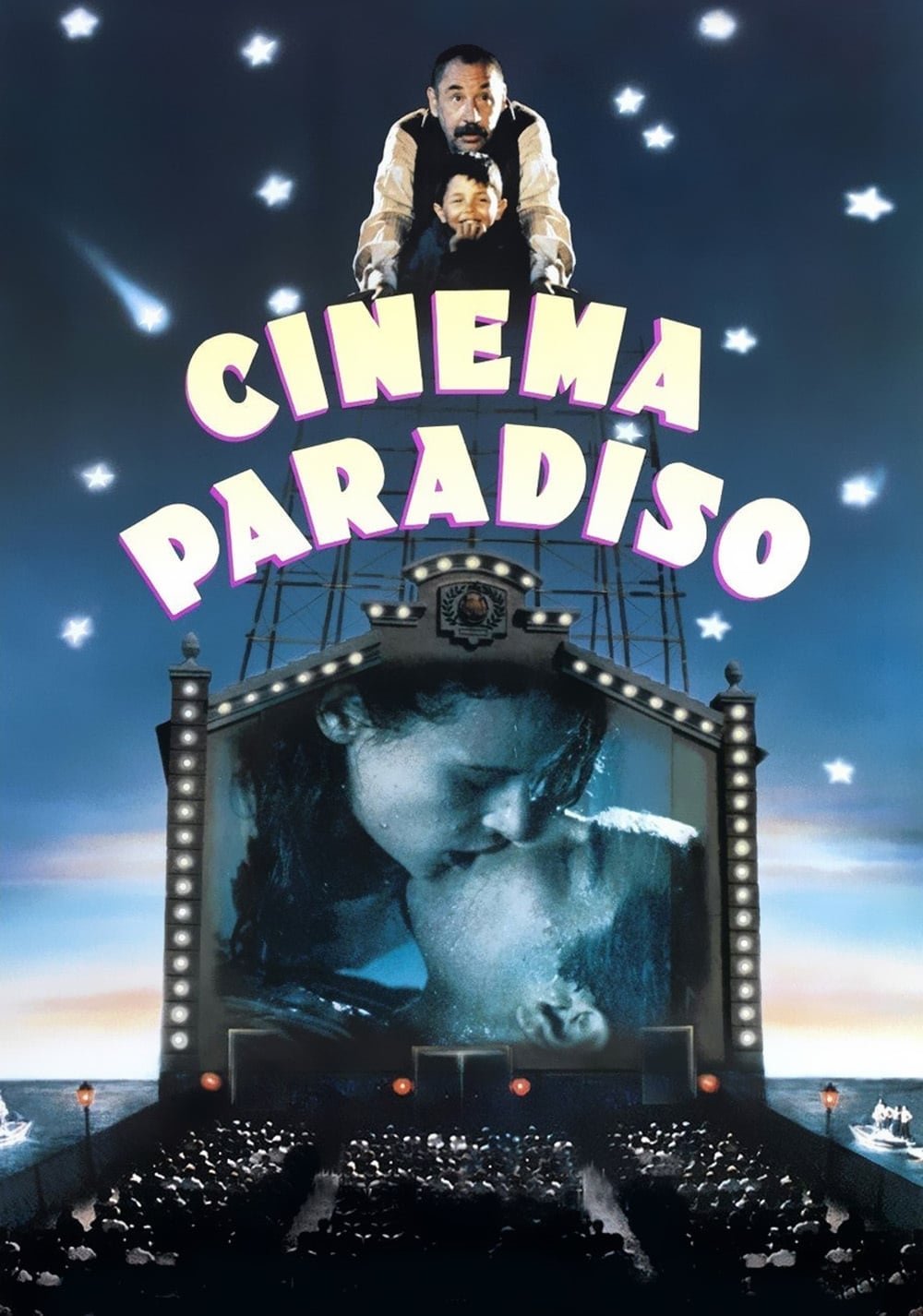
The most moving realization for me comes in the film’s closing moments: the montage of excised kisses, the forbidden fragments of cinematic love, projected at last. That bold, wordless sequence sums up everything I remember feeling from that transitional period—the pent-up longing, the nostalgia for simpler codes, the simultaneous hope for freedom and fear of what it might unleash. In focusing so lovingly on the rituals of cinema itself, I find the film making a quiet plea for the preservation of communal spaces and collective dreams, even as it acknowledges they are slipping away.
Changing Perceptions Over Time
I find it fascinating how Cinema Paradiso has meant different things to me—and to audiences at large—as the decades have rolled on. When I first watched it, not long after its release, I was swept up by its lush emotion and transportive power. At the turn of the 1990s, the film seemed to offer a gentle rebuke to an emerging world where stories were becoming transient, flickering images on TV instead of cherished communal rituals. The older generation, with its bittersweet tales, struck me then as tragic and noble, the very emblems of what “progress” threatened to erase.
As the new millennium dawned, my reading of the film began to shift. With cinema itself undergoing seismic changes—digital projection, omnipresent streaming—I started to appreciate the film’s meditation on loss less as nostalgia and more as prophecy. Toto’s journey away from home and return mirrors the fate of cinema itself, battered by technological change yet clinging to emotion as its saving grace. The sequence with the montage of kisses, once a simple celebration of romance, took on new meanings for me: a covert critique of censorship but also an elegy for lost modes of intimacy, both on and off the screen.
More recently, amid a fragmented cultural conversation and seemingly endless new content, I turn to Cinema Paradiso with a mixture of yearning and skepticism. Its sweetness can feel at times overripe. Yet, unlike the nostalgia of many contemporary films, I sense here a deep ambivalence—almost a warning about the dangers of longing for a past that may never have existed. I now see Alfredo, not just as a wise mentor, but as a symbol of a generation that kept faith in community and art, no matter how battered these became. This shifting perspective is, I suspect, widely shared: the film’s reassessment parallels how each wave of viewers interrogates its own relationship with memory, community, and cultural change.
The soundtrack of my own life has danced in tandem with Cinema Paradiso’s: the thunder of social media, the quieting of small-town life, the insistent drumbeat of global modernization. Each time I return to the film, I find myself oscillating between comfort and grief—a testament, perhaps, to the complex truths embedded in its gentle narrative style. The movie’s original context, so fresh in 1988, now feels historic and precious, a telegram from one era to the next.
Historical Takeaway
If I had to distill what Cinema Paradiso teaches me about its era, it would be this: the past is never simply gone, nor is it uncomplicatedly golden. The film’s sentimental embrace of memory, so inviting and immersive, is riddled with contradiction—just as Italy of the late ‘80s was itself a paradox of modernity mingled with tradition. For me, the film is not a straightforward celebration of a lost world but a meditation on the risks and rewards of change. In every frame, I feel the ache of an Italy trying to reconcile its cinematic legacy with its uncertain present; I sense the wider European unease as borders dissolved and identities blurred; I hear an echo of the universal question—what, truly, is worth holding onto?
I find that the film’s longing for the communal cinema, for rituals shared and secrets mutually kept, serves as a lens through which I can view the era’s larger battles: between globalization and local identity, innovation and continuity, consumption and creativity. Cinema Paradiso does not simply indulge in nostalgia; it interrogates it, gently but insistently. The young Toto, the aging Alfredo, the wizened villagers, and the far-off grown man—each become avatars for a nation and a continent teetering between remembrance and reinvention.
From this vantage, Cinema Paradiso’s enduring popularity is more than sentimentality. It is a reminder—especially potent for me as a historian—that every age dreams about what it fears to lose, and that art, at its best, can grant those dreams a fleeting eternity. In capturing the closing moments of an older Italy, the film opens a window onto the anxieties and aspirations of the late twentieth century: its battles over meaning, its confessions of longing, its fragile faith in the power of shared stories. That, to me, is its deepest historical gift.
To see how these real-world elements shaped the film’s impact, you may also explore its reception and legacy.
🎬 Check out today's best-selling movies on Amazon!
View Deals on Amazon